
Cats communicate a wide range of emotions through their body language, but many owners struggle to interpret these subtle cues. Biting, often perceived as negative behavior, is actually a form of feline communication. Understanding the underlying reasons for a cat’s bite is crucial for addressing and managing it effectively. Samantha Bell, a cat expert from Best Friends Animal Society, emphasizes that biting is instinctual and not a sign of a cat being “bad.”
Key Takeaways
- Cats bite to express themselves, and understanding their signals is key.
- Biting is a natural feline behavior that can be redirected with proper management.
Reasons Behind Cat Bites
A cat’s bite should not be disregarded. Several factors can contribute to this behavior:
Love Bites and Overstimulation
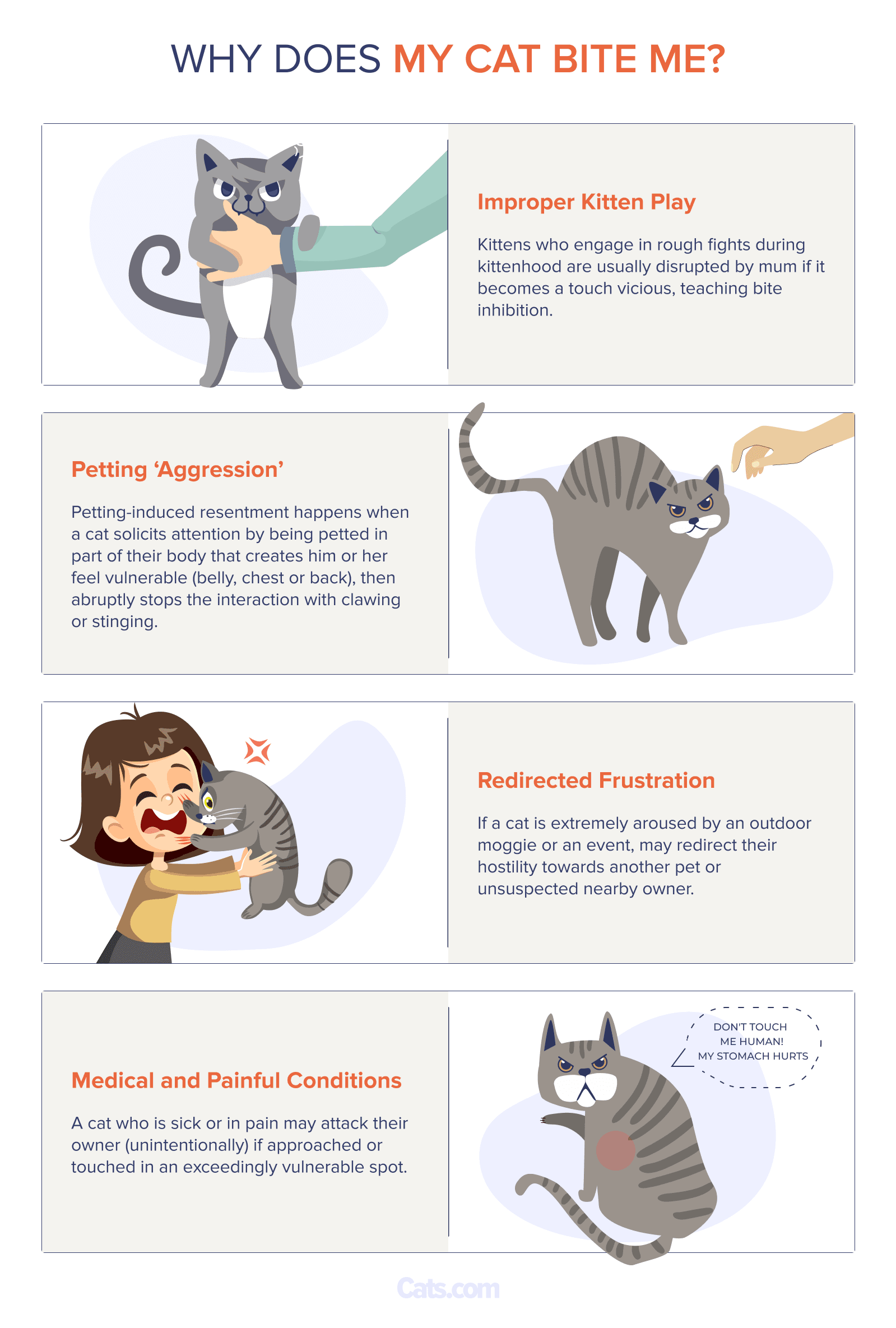
A “love bite” can be an expression of affection, but it often signals that a cat is becoming overstimulated during an interaction. This may start with gentle licking and escalate to soft nibbling, serving as a polite indication that the cat is nearing its limit and wishes for the petting session or interaction to conclude. Interpreting these subtle signals can be challenging, requiring owners to be attentive to their cat’s comfort levels.
Overstimulation, also known as petting reactivity, can occur when a cat becomes overexcited, either from enjoyable petting or unwanted touch. Prior to biting or swatting, cats often display clear warning signs. These include ears turned outwards, tail flicking, rippling skin, and quick head turns, all indicating they are reaching their threshold.
Pain and Discomfort
If biting is a new behavior for your cat, it could indicate they are experiencing pain. Look for other signs of discomfort, such as increased sensitivity when a specific area is touched, a hunched posture, hiding, changes in appetite, or neglecting their grooming habits.
Fear-Induced Aggression
Fear is a significant motivator for cat bites, stemming from a feeling of being threatened or harmed. This can happen at home if a cat feels trapped or forced into a situation. Providing cats with an escape route can prevent them from feeling like prey. Due to their size difference, humans can sometimes intimidate unsocialized cats. Before resorting to a bite out of fear, cats typically exhibit strong warning signals such as flattened ears, dilated pupils, raised fur, hissing, spitting, or snarling, clearly indicating they feel threatened and need space.
Seeking Attention and Playfulness
Cats learn that biting can effectively grab their owner’s attention. A cat might playfully attack your feet if they are seeking interaction or are bored. To curb destructive behaviors like scratching furniture, providing appropriate outlets such as scratching posts is essential.
During play, a cat might nip. Redirecting this behavior towards a toy is recommended. Playful biting between cats usually involves less vocalization and a mutual engagement. Non-playful biting often results in yowling and one cat attempting to escape.
Managing and Redirecting Biting Behavior
While cats will always retain their instinct to bite, owners can significantly reduce instances and ensure a harmonious relationship by implementing these strategies:
- Redirect Biting: Offer an appropriate toy, such as a catnip toy, when your cat bites. Praise them when they engage with the toy instead.
- Engage in Play: Dedicate time for daily interactive play sessions using wand toys or other prey-mimicking toys to satisfy their natural biting instincts.
- Respect Touch Preferences: Learn your cat’s individual preferences for petting. Avoid areas that tend to provoke a negative reaction, such as the belly or legs, and focus on preferred spots like under the chin and near the ears.
- Heed Body Language: Pay close attention to your cat’s signals indicating they want to be left alone or are becoming overstimulated.
- Offer Choices: Allow your cat the freedom to choose their activities and to leave situations they find uncomfortable.
- Consider a Companion: Adopting two kittens can be beneficial, as they learn early on to direct their biting behaviors towards each other during play, rather than their owners.
Punishing a cat for biting is counterproductive, can damage your bond, and may lead to increased fear-based reactions.
What to Do If You Are Bitten
If a cat bite breaks the skin, it’s crucial to act quickly. Wash the wound thoroughly with soap and water, apply pressure to control bleeding, and seek prompt medical attention. Cat bites carry a significant risk of infection and disease, and a doctor may prescribe antibiotics to prevent complications.
