
Bringing a new cat or kitten into your home is an exciting experience, but it also comes with responsibilities, including ensuring your new companion knows where to do their business. Unlike dogs, cats aren’t born with an innate understanding of litter boxes. Kittens typically learn this crucial habit from their mothers. When you introduce a litter box, it’s your role to teach your cat to use it as their designated bathroom. Positive reinforcement is key; praise your cat, offer a treat, or engage in play every time they use the litter box correctly. Never punish your cat or scare them for inappropriate elimination, as this can lead to anxiety and further behavioral issues. Recognizing the signs of a problem and addressing it proactively is essential, as your cat might avoid the litter box due to medical, behavioral, or emotional reasons.
Steps to Litter Train Your Cat
1. Strategic Litter Box Placement
The location of your cat’s litter box significantly impacts their willingness to use it. Choose a spot that is quiet, easily accessible, and away from high-traffic areas or noisy appliances. Ensure the litter box is appropriately sized for your cat. A good rule of thumb is that the litter box should be at least one and a half times the length of your cat from nose to base of tail. When in doubt, opt for a larger box.
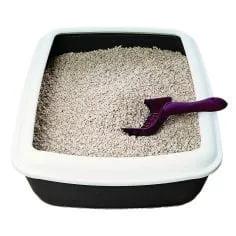 A litter box and scoop.
2. Selecting the Right Cat Litter
Most cats have a preference for soft, small-grained litter. You might need to experiment with different types to discover what your feline friend likes best. One effective method is to place several litter boxes side-by-side, each containing a different type of litter, and allow your cat to choose. If you have multiple cats, the general recommendation is to have one litter box per cat, plus an additional one. This ensures that each cat has their own space and reduces the likelihood of territorial disputes.
3. Guiding Your Cat to the Litter Box
Consistency is crucial when training. Take your cat to their litter box regularly, especially after meals, naps, and during playtime. If the litter box is in a separate room, place your cat inside and close the door for a short period after these key times. This gentle guidance helps them associate the box with their elimination needs. Teaching kittens to use a litter box often requires more frequent trips to the box initially.
4. The Power of Positive Reinforcement
Positive reinforcement plays a vital role in successful litter training. When you observe your cat using the litter box correctly, offer immediate praise, a small treat, or a favorite toy. This positive association encourages them to repeat the behavior. Building a positive experience around the litter box is far more effective than any form of punishment.
5. Maintaining Litter Box Cleanliness
Cats are fastidious creatures, and a dirty litter box is a common reason for them to seek an alternative elimination spot. Scoop the litter box daily to remove waste. Depending on the type of litter you use, the entire box should be washed thoroughly every one to two weeks. A clean litter box is more appealing to your cat and contributes to a harmonious living environment. Proper litter box maintenance is a cornerstone of successful house training your cat.
6. Understanding “No Bad Cats”
It’s essential to remember that your cat is not acting out of spite when they have an accident outside the litter box. There’s no such thing as a “bad cat” in this context. Instead, an accident is a signal that something is amiss. If your cat has an accident, never yell at or hit them. Instead, calmly clean the area thoroughly and try to identify the underlying cause. You may need to revisit the earlier steps, reassess litter box placement, or consult resources like “My cat won’t use the litter box, what should I do?”.
Your cat’s litter box is a significant part of their daily life. By keeping it clean, conveniently located, and appealing, you can ensure they enjoy using it. Learning about cat litter box maintenance is an ongoing process that supports your cat’s well-being and your relationship with them. For more in-depth information and strategies, consider downloading the PDF guide “Litter box problems treating and reducing cat inappropriate elimination”. Remember, patience and understanding are key to helping your feline friend master how to train kittens to use a litter box.
