
The age-old saying, “you can’t teach an old dog new tricks,” often leads to the misconception that cats are untrainable. However, this couldn’t be further from the truth. Cats are indeed capable of learning a variety of behaviors, though their training requires a different approach than that used for dogs. Understanding their unique motivations and natural instincts is key to successful feline training. Cats can very much be trained, and the process can be a rewarding experience for both pet and owner.
 Relaxed cat and dogs sitting on sofas looking out the window.
Debunking the Myth: Cats Are Trainable
The idea that cats are untrainable likely stems from their perceived independence and a less overt eagerness to please compared to dogs. However, cats are constantly learning from their surroundings and experiences. Whether it’s learning to use a scratching post instead of furniture, responding to their name, or even performing tricks, cats are intelligent creatures capable of learning a wide range of behaviors. Any time a cat modifies its actions based on your input, it’s a sign of learning and training in progress.
Key Differences in Training Cats vs. Dogs
Successful cat training hinges on recognizing the fundamental differences between feline and canine behavior, motivation, and preferred rewards.
Natural Behaviors and Instincts
Dogs, as social pack animals, often have a strong innate drive to bond with their human companions and are adept at reading human body language. Their social nature makes them responsive to cues and praise. Cats, conversely, evolved from more solitary ancestors. Their primary focus is often on feeling safe and secure in their environment rather than social group dynamics. This difference in priorities means that while cats can be trained, the methodology must be adapted to their more independent nature.
Motivations and Rewards
Motivation is the cornerstone of any training regimen, and for cats, it often differs from dogs. While some cats appreciate social rewards like petting or praise, many are more strongly motivated by food or play. Identifying what your individual cat finds most rewarding is crucial. This could be a specific high-value treat, a favorite toy, or a short play session. Variety in rewards can also help maintain a cat’s engagement and prevent boredom. Treats are particularly effective as they are easily dispensed, can be given in small quantities for immediate reinforcement, and are highly motivating for most cats.
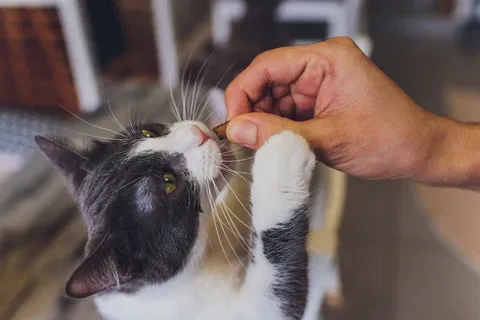 Cat being fed a treat by their human.
Essential Cat Training Techniques
Once you understand your cat’s motivations, you can begin implementing effective training techniques. Patience, consistency, and adapting to your cat’s individual needs are paramount.
1. Positive Reinforcement
This is the most effective training method for cats, mirroring successful dog training strategies. Positive reinforcement involves rewarding your cat immediately after they perform the desired behavior. For instance, if you’re teaching your cat to come when called, offering their favorite treat as soon as they approach you will create a positive association, increasing the likelihood of the behavior being repeated.
2. Shaping Behavior
Shaping is a technique where you reward successive approximations of the desired behavior. For example, if you want to train your cat to sit, you might start by rewarding them for simply remaining still. Gradually, you would only reward them when they begin to lower their hindquarters, eventually rewarding only a full sit. Using a treat to lure them into position can also be an effective part of this process.
3. Consistency and Patience
Cat training is a marathon, not a sprint. Short, frequent training sessions, ideally lasting 3-5 minutes, are more effective than long, infrequent ones. Using the same cues and commands consistently will help your cat understand what is expected of them. Patience is essential, as cats learn at their own pace.
4. The Importance of Avoiding Punishment
Punishment is counterproductive in cat training. It can lead to anxiety and frustration, making your cat less receptive to learning and potentially damaging your bond. Instead of focusing on what your cat does wrong, concentrate on rewarding the behaviors you want to encourage.

5. Creating a Calm and Reassuring Environment
A cat’s ability to learn is significantly enhanced when they feel safe and relaxed. Ensuring your home environment is conducive to calmness can boost training receptiveness. Products like FELIWAY® Optimum can help create a more serene atmosphere, allowing your cat to better focus during training sessions.
6. Utilizing Clicker Training or Marker Words
A clicker or a consistent marker word (like “yes!”) can serve as a precise signal to your cat that they have performed the correct action and a reward is forthcoming. This marker bridges the gap between the behavior and the reward, ensuring your cat understands exactly what they are being praised for. Precise timing with a clicker or marker word prevents confusion that can arise from simply relying on delivering a treat.
Training Your Cat: A Tailored Approach
Can you train a cat like a dog? In principle, yes, using positive reinforcement. However, the application must be adapted to the cat’s distinct motivations, which lean more towards direct benefits rather than social affirmation. By understanding these differences and employing patience, consistency, and the right motivators, you can successfully train your cat and strengthen your bond.
Would you like to delve deeper into understanding your feline companion’s world? Explore our fantastic blogs online for more insights. If you have any questions, please don’t hesitate to get in touch. Remember to sign up to our newsletter for the latest updates from FELIWAY.
