
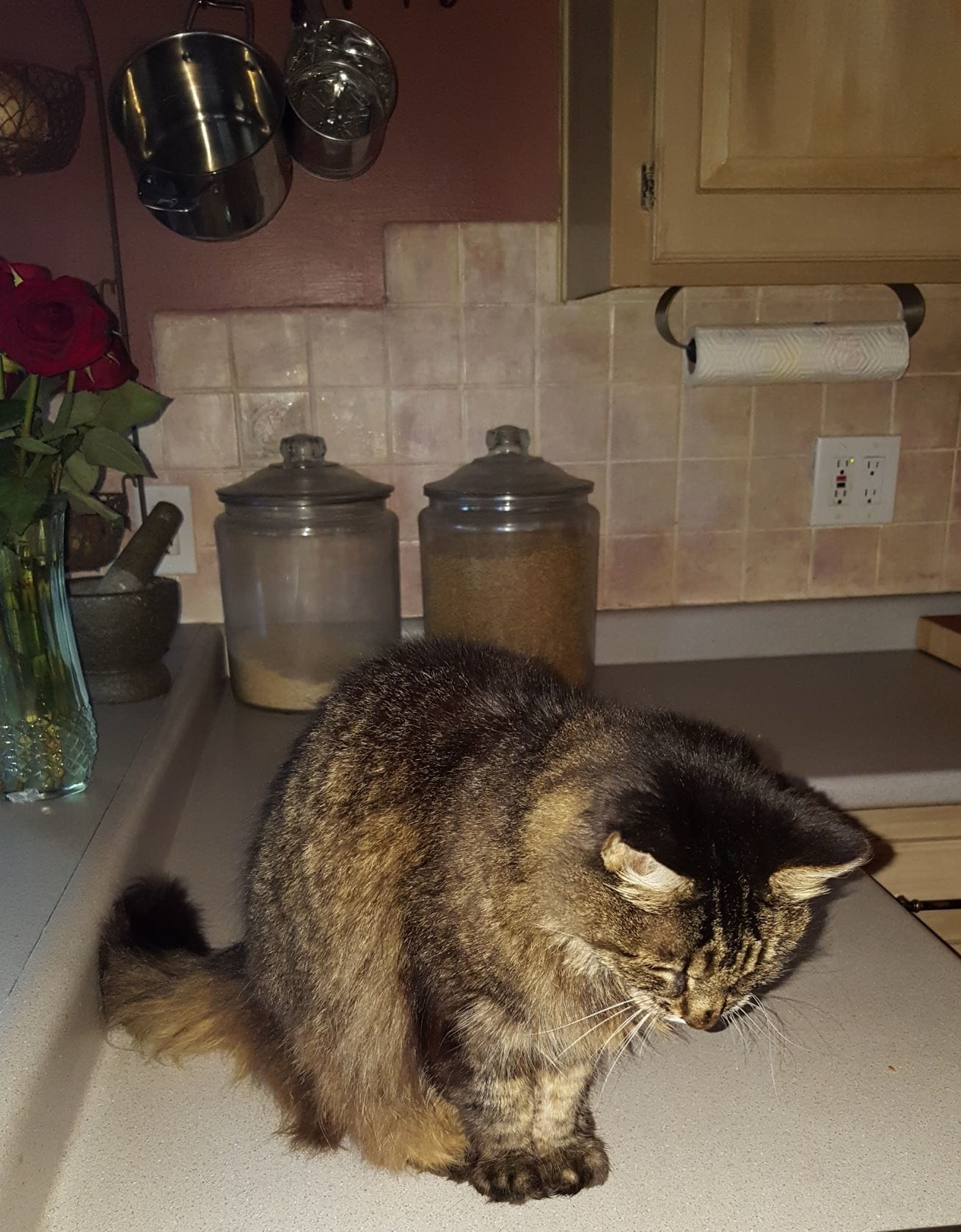
Ever find yourself asking, “Can Cats Be Trained To Stay Off Counters?” It’s a common question among cat owners, leading to frustration and the constant battle against feline curiosity. While cats are known for their independent spirit, the answer is a resounding yes! With the right approach, patience, and consistency, you can certainly teach your cat to respect boundaries and keep off those forbidden surfaces. This guide will walk you through effective strategies to train your cat, turning your kitchen counters from a feline playground into a no-go zone.
Understanding Why Cats Love Counters
Before we dive into training, let’s understand the “why” behind your cat’s counter-surfing habit. It’s not about defiance; it’s about instinct and opportunity.
- Height and Vantage Point: Cats naturally seek high places to survey their territory, feel safe, and observe their surroundings. Counters offer an elevated perch with a great view of the home.
- Food and Smells: Kitchen counters are often where food is prepared or stored. The enticing smells of meals, crumbs, or even forgotten spills can be a powerful draw for a curious cat.
- Curiosity and Exploration: Cats are naturally curious creatures. Counters provide a new landscape to explore, full of interesting objects and textures.
- Seeking Attention: Sometimes, a cat might jump on the counter to get your attention, especially if they’ve learned that this behavior gets a reaction from you, even if it’s negative.
Key Principles for Training Your Cat
Training a cat requires a different approach than training a dog. They respond best to positive reinforcement and understanding their natural behaviors.
- Positive Reinforcement: Reward desired behaviors. When your cat is on the floor or their designated perches, offer praise, treats, or playtime.
- Consistency is Crucial: Everyone in the household needs to be on the same page. Inconsistent training will confuse your cat and make the process much longer.
- Never Punish: Punishing your cat after the fact is ineffective and can damage your bond. Cats don’t associate punishment with past actions. Instead, focus on redirecting and rewarding good behavior.
- Patience: Training takes time. Some cats are quicker learners than others. Celebrate small victories and don’t get discouraged by setbacks.
Effective Strategies to Keep Cats Off Counters
Now, let’s get practical. Here are several methods you can employ to train your cat to stay off counters.
1. Make Counters Unappealing
The easiest way to stop a cat from going somewhere is to make it an unpleasant experience.
- Sticky Surfaces: Cats generally dislike sticky textures. You can use double-sided sticky tape (like Sticky Paws) on the edges of your counters. Place it strategically where your cat usually jumps up.
- Aluminum Foil: Many cats are startled by the crinkly sound and texture of aluminum foil. Cover sections of your counter with foil when you’re not using them.
- Motion-Activated Deterrents: Devices like the Ssscat spray a harmless puff of air when motion is detected. This can be very effective in startling cats away from the area without causing them harm or fear of you.
2. Provide Attractive Alternatives
If you want your cat to avoid the counters, you need to give them better options.
- Vertical Space: Cats love to climb. Install cat trees, wall shelves, or window perches. Place these in areas where your cat can still observe their surroundings but are far from the kitchen counters.
- Designated “High” Spots: If your cat enjoys being at a higher level, provide them with a comfortable cat bed or perch on a sturdy piece of furniture that is not the counter.
- Interactive Play: Engage your cat in regular play sessions using wand toys or laser pointers (used responsibly). This helps fulfill their need for activity and hunting behavior, reducing the urge to explore forbidden areas out of boredom.
3. Redirect and Reward
This is the core of positive reinforcement training.
- Redirecting: The moment you see your cat about to jump or already on the counter, gently redirect them. Clap your hands softly, make a gentle “psst” sound, or use a toy to lure them away. As soon as they are off the counter, praise them and offer a treat.
- Rewarding Good Behavior: Consistently reward your cat when they choose their designated spots or stay on the floor. This positive association makes them more likely to repeat the desired behavior.
4. Manage Food and Attractants
Eliminate the primary reason many cats head for the counters: food.
- Clean Up Promptly: Wipe down counters immediately after preparing food or eating. Don’t leave food scraps, dirty dishes, or pet food bowls on the counter.
- Secure Food Storage: Ensure all food is stored in sealed containers or cabinets.
- Feed Your Cat Elsewhere: Feed your cat in their designated food station on the floor, away from the kitchen counters. This helps break the association between the counter and mealtime.
5. Training for Specific Behaviors: Can Cats Be Trained to Sit or Stay?
While “staying off counters” is a behavioral goal, understanding that cats can be trained for specific commands can be helpful. If your cat can be trained to sit on command, they can certainly learn to associate the counter with a negative experience or a better alternative. The principles of clicker training and positive reinforcement apply here. When your cat successfully stays off the counter, or chooses their cat tree instead, use a clicker (if you use one) followed by a high-value treat and praise. This association reinforces the desired action.
Addressing Specific Scenarios
- Kitten Counter Surfing: Kittens are naturally more energetic and exploratory. Be extra diligent with redirecting and providing alternative play spaces. Early training is key.
- Multi-Cat Households: Ensure all cats understand the new rules. Consistent application across all pets is vital. If one cat is a persistent counter-surfer, you might need to temporarily place deterrents even when you’re home to reinforce the message.
- What If My Cat Jumps Up When I’m Not Home? This is where deterrents like sticky tape or motion-activated air spray become invaluable. They act as a consistent deterrent when you cannot supervise directly.
How to Train Your Cat to Stay Off Counters When You’re Not Home
This is perhaps the most challenging aspect. Since you can’t directly reward or redirect, you rely on making the experience unpleasant.
- Deterrents: As mentioned, sticky tape, aluminum foil, or motion-activated air cans are your best friends. Place them on the counters before you leave.
- Minimize Attractants: Ensure absolutely no food or food smells linger on the counters. Even a single crumb can be an invitation.
- Provide Enrichment: Leave out puzzle feeders or safe chew toys to keep your cat entertained and less inclined to seek out “adventures” on the counters.
Frequently Asked Questions About Cats and Counters
Q1: How long does it take to train a cat to stay off counters?
A: Training times vary greatly depending on the cat’s age, personality, and the consistency of the training. Some cats may learn within a few weeks, while others might take a couple of months. Patience and consistency are key.
Q2: Is it okay for my cat to be on the counter if I’m watching them?
A: While it might seem harmless, allowing your cat on the counter sometimes can confuse them. It’s best to have a consistent rule – either always off-limits or always allowed (though the former is generally recommended for hygiene and safety). If you want to allow them on a specific elevated spot, ensure it’s clearly distinct from the kitchen counters.
Q3: My cat ignores the deterrents. What else can I do?
A: Try a different type of deterrent. Some cats are more sensitive to sound, others to texture. You might also need to increase the “reward” for staying on the floor or their cat tree. Ensure their alternative spaces are highly appealing and located in areas they find interesting.
Q4: Can I train my cat to only be on the counter for food?
A: This is extremely difficult and generally not recommended. Cats don’t differentiate well between “food time” and “play time” on the counter. It’s more effective to train them to stay off entirely and provide food in a designated, appropriate area.
Q5: What if my cat is trained to sit or stay, but still goes on the counter?
A: This indicates that the counter itself is a stronger motivator than the command. You need to reinforce the “off-limits” rule more strongly using deterrents and by making their alternative spots exceptionally rewarding.
The Takeaway: A Counter-Free Life for Your Cat
Teaching your cat to stay off counters is achievable with the right strategy. By understanding their natural instincts, employing consistent positive reinforcement, making counters unappealing, and providing fantastic alternatives, you can create a harmonious living environment. Remember, the goal isn’t to punish your cat but to guide them towards acceptable behaviors, strengthening your bond in the process. With a little effort, you can enjoy a home where both you and your feline friend can coexist peacefully, with your kitchen counters remaining firmly off-limits to curious paws.
