
Have you ever marveled at the sleek, aerodynamic design of a high-speed bullet train? It might surprise you to learn that a significant portion of its revolutionary design was inspired by a creature that navigates the skies with effortless grace: the kingfisher bird. This fascinating intersection of biology and engineering has not only made bullet trains quieter and more energy-efficient but also showcases the incredible power of biomimicry in solving complex human challenges. Let’s dive into the captivating story behind the Bullet Train Bird Design.
From Avian Grace to High-Speed Innovation
The original Shinkansen, Japan’s iconic bullet train, faced a significant problem: sonic booms. As the trains exited tunnels at high speeds, the rapid compression of air created a loud, disruptive noise. Engineers sought a solution, and their attention turned to the natural world, specifically to the humble kingfisher.
The Kingfisher’s Secret: A Streamlined Beak
The Japanese research team, led by Eiji Nakatsu, a renowned ornithologist and engineer, observed the kingfisher’s remarkable ability to dive into water with minimal splash. This seemingly simple feat is a testament to the bird’s perfectly evolved beak shape. The kingfisher’s beak is highly streamlined, allowing it to transition from air to water—two mediums with vastly different densities—with hardly any disturbance.
Applying Nature’s Blueprint to Trains
Nakatsu and his team realized that the principles behind the kingfisher’s dive could be applied to the nose cone of the bullet train. By redesigning the train’s front to mimic the kingfisher’s beak, they aimed to reduce air resistance and, consequently, the sonic boom.
The original bullet train’s nose was a blunt, cylindrical shape, causing significant air pressure to build up as it entered a tunnel. This pressure wave would then expand violently as the train emerged, creating the boom. By reshaping the nose cone to be more tapered and curved, similar to the kingfisher’s beak, the air pressure could be managed more smoothly.
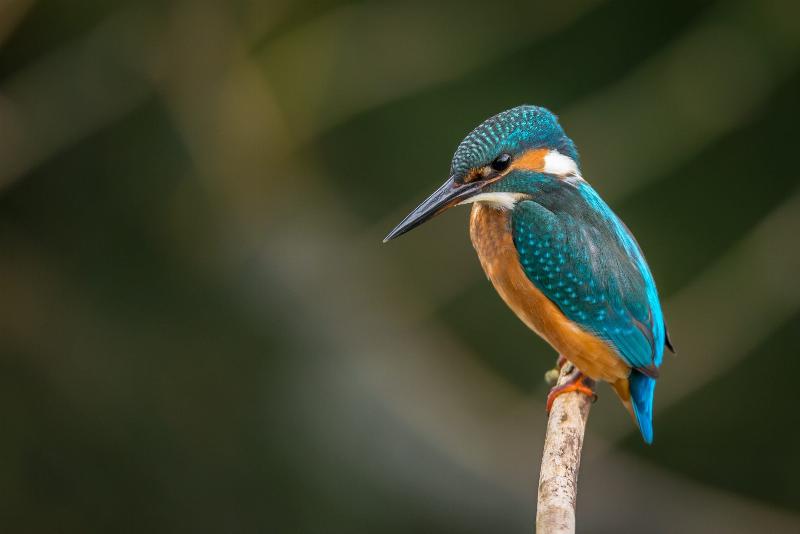 The aerodynamic nose of a Japanese bullet train, inspired by a kingfisher's beak, reducing noise and improving efficiency.
The Impact of the Bullet Train Bird Design
The implementation of the kingfisher-inspired design brought about several significant improvements:
Reduced Noise Pollution
The most immediate and noticeable benefit was the dramatic reduction in the sonic boom. The streamlined nose cone allowed the train to enter and exit tunnels with a much gentler pressure wave, making the journey quieter for passengers and less disruptive to surrounding communities. This aspect of the bullet train bird design was a major success in improving the quality of life around railway lines.
Increased Speed and Energy Efficiency
Beyond noise reduction, the improved aerodynamics also allowed the trains to travel faster. With less air resistance, the trains required less energy to reach and maintain high speeds. This not only translated to quicker travel times but also significant energy savings, contributing to the sustainability of the high-speed rail network. The efficiency gains derived from the bird that inspired the bullet train are a testament to nature’s optimization.
A Paradigm Shift in Design Thinking
The success of the bullet train bird design served as a powerful example of biomimicry. It demonstrated that by studying and emulating the solutions found in nature, engineers could overcome complex design challenges. This approach, often referred to as ‘bio-inspiration,’ has since influenced various fields, from aerospace to architecture. Understanding the bullet train design bird connection opened new avenues for innovation.
Biomimicry: Learning from Nature’s Genius
The bullet train’s design is just one of many examples of how nature’s engineering prowess can be harnessed. From the structure of termite mounds influencing ventilation systems to the flight of birds inspiring aircraft, biomimicry offers a sustainable and effective path for innovation. The bullet train design bird connection highlights this principle beautifully.
Other Examples of Biomimicry
- Velcro: Inspired by burrs that stick to animal fur.
- Sharkskin-inspired swimsuits: Designed to reduce drag in water, mimicking the patterns on shark skin.
- Lotus effect: Surfaces that are self-cleaning, inspired by the water-repellent properties of lotus leaves.
These examples, much like the bullet train bird beak, showcase nature’s ability to develop elegant and efficient solutions over millions of years of evolution. The rdr2 shoot birds from train gameplay, while fictional, highlights the presence of birds in dynamic environments, a theme echoed in the aerodynamic principles at play.
The Future of Design: A Collaborative Evolution
The story of the bullet train bird design is more than just an engineering success; it’s a narrative about humility and collaboration between humans and the natural world. It reminds us that sometimes, the most advanced solutions are not born in a lab but are waiting to be discovered in the intricate details of nature. As we continue to push the boundaries of technology, looking to creatures like the kingfisher for guidance—the bird that inspired bullet train—will undoubtedly lead to even more innovative and sustainable designs for the future. The synergy between the bullet train design and the bird’s natural form is a powerful reminder of our interconnectedness with the environment.
