
The sight is instantly recognizable: a team of majestic bay horses, their white-blazed faces held high and their feathered, white legs marching in perfect synchrony. They pull a classic red, white, and gold beer wagon, a Dalmatian perched proudly near the driver. The Budweiser Clydesdales are more than just a marketing symbol; they are a cherished piece of American heritage. But behind the effortless grace and power seen in parades and Super Bowl commercials lies an intricate, dedicated, and surprisingly gentle world of Budweiser Horse Training. This isn’t about breaking a spirit; it’s about building a partnership based on trust, patience, and generations of expertise.
More Than a Pretty Face: The Clydesdale Selection Process
Before a single harness is fitted, the journey to becoming a Budweiser Clydesdale begins with a strict selection process. Not just any Clydesdale can make the cut. The standards are incredibly high, ensuring the uniformity and majestic presence the brand is known for. It’s a genetic and conformational lottery that few will win.
To even be considered, a Budweiser Clydesdale prospect must meet a demanding set of criteria:
- Appearance: They must have a bay coat, a white blaze on the face, four white stockings, and a black mane and tail. This specific look is the cornerstone of the brand’s image.
- Size: These are true gentle giants. A mature Clydesdale in the hitch stands at least 18 hands high (that’s 6 feet at the shoulder) and weighs between 1,800 and 2,300 pounds.
- Conformation: They must have the powerful build characteristic of the breed, with a strong back, broad chest, and the signature “feathering” on their lower legs.
- Temperament: Perhaps most importantly, every horse must have a calm, gentle, and willing disposition. Given their public-facing role amidst crowds and noise, a placid nature is non-negotiable.
This rigorous selection ensures that only the most suitable horses enter the specialized Budweiser horse training program, setting the stage for success from day one.
The Journey Begins: Early Life at Warm Springs Ranch
The heart of the Budweiser Clydesdales operation is Warm Springs Ranch, a sprawling 300-plus-acre breeding and training facility in Boonville, Missouri. Here, the foals are born and spend their formative years in a pastoral paradise, learning the very first lessons of what it means to be a Budweiser Clydesdale.
From a very young age, the foals are handled daily by the expert staff at the ranch. This early and consistent interaction is crucial for desensitization. They learn to be comfortable with human touch, to have their feet picked up, and to wear a halter. This process is unhurried and built on positive reinforcement, ensuring the young horses view humans as trusted leaders rather than figures to fear. As they grow, they are introduced to the feel of a harness and the basic voice commands that will one day guide them as part of an eight-horse hitch. This foundational training builds a bedrock of confidence that is essential for the more complex work to come.
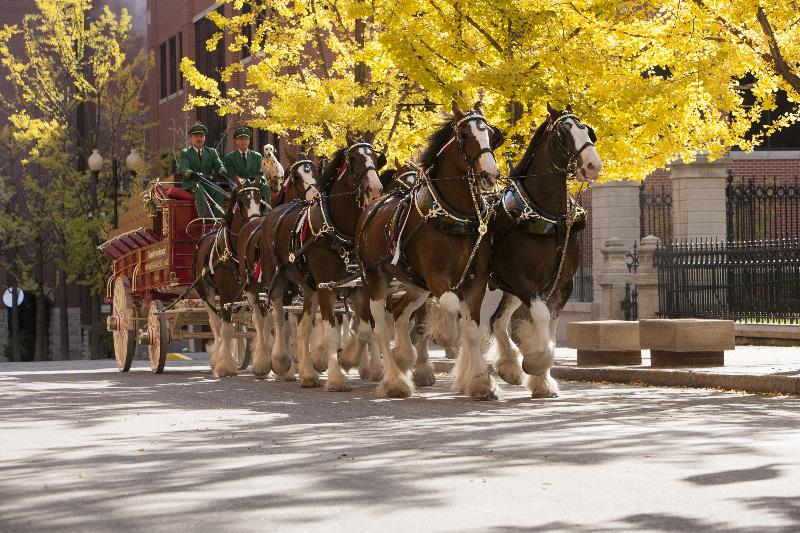 A team of Budweiser Clydesdales in a training hitch, showcasing the Budweiser horse training process in a large field
Mastering the Hitch: The Core of Budweiser Horse Training
The transition from a promising young horse to a full-fledged member of a traveling hitch is a long and methodical process. At around four years old, the Clydesdales that have demonstrated the right combination of size, strength, and temperament begin their serious driving training. The ultimate goal is to work seamlessly as part of the iconic eight-horse team.
This phase of Budweiser horse training is about precision, teamwork, and trust. The horses first learn to pull a training vehicle in pairs. They are carefully matched with a partner of similar size and gait to ensure the team moves as a single, fluid unit. The handlers focus on teaching them to respond to subtle cues from the driver’s reins and voice.
As equine behavior specialist Dr. Sarah Miller notes, “The training philosophy for the Budweiser Clydesdales is rooted in classical horsemanship. It’s about clear communication and building a horse’s confidence. The drivers are not just steering; they are communicating with each horse individually and as a collective. It’s a remarkable display of interspecies teamwork.”
The Voice of Command
The drivers of the Budweiser hitches are master horsemen, possessing a unique blend of skill, patience, and intuition. They use a complex set of rein and voice commands to guide the massive team. The horses learn to walk, trot, stop, and stand perfectly still for extended periods, often amidst the chaos of a public event. This level of obedience is not achieved through force but through thousands of hours of repetitive, gentle instruction. The horses learn that the driver is a reliable leader, and this trust is what allows them to perform their duties with such calm and confidence.
Life on the Road: The Traveling Hitches
Only the most experienced and reliable horses earn a spot on one of the three traveling Budweiser Clydesdale hitches. These teams, based in St. Louis, Missouri; Merrimack, New Hampshire; and Fort Collins, Colorado, travel across North America for hundreds of appearances each year.
Life on the road is a highly organized affair. The horses travel in custom-designed tractor-trailers equipped with air-cushion suspension and video monitoring to ensure their comfort and safety. A team of expert handlers travels with them, responsible for their daily care, which includes meticulous grooming, feeding, and polishing the intricate brass and leather harness—a process that takes several hours for each appearance.
And, of course, they are always accompanied by their loyal companions: the Dalmatians. Originally bred to be coach dogs, Dalmatians ran alongside horse-drawn fire wagons, guarding the equipment and calming the horses. Budweiser has continued this tradition, and the Dalmatians have become as much a part of the hitch’s identity as the horses themselves.
Frequently Asked Questions about Budweiser Horse Training
To provide a deeper insight, here are answers to some of the most common questions about this unique equine program.
How long does it take to train a Budweiser Clydesdale?
The entire process, from birth to becoming a fully trained member of a traveling hitch, takes about five years. This includes their early years of growth and basic handling, followed by intensive driving training that begins around age four.
Where are the Budweiser Clydesdales trained?
The primary breeding and training facility is Warm Springs Ranch in Boonville, Missouri. This is where the horses are born and receive their foundational training before being sent to one of the hitch locations for more advanced work.
What are the requirements to be a Budweiser Clydesdale?
The requirements are very strict. A horse must be a gelding, at least four years old, stand 18 hands high, weigh around 2,000 pounds, have a bay coat, four white stockings, a white blaze, and a gentle, willing temperament.
Do they use real horses in the commercials?
Yes, all of the horses featured in the famous Budweiser commercials are real Budweiser Clydesdales from their esteemed program. The commercials often showcase the deep emotional bond between the horses and their handlers, which is a genuine reflection of their daily reality.
What is the role of the Dalmatians?
The Dalmatians are a historical part of the team. They were originally coach dogs that protected the horses and wagon. Today, they are beloved mascots and companions to the horses, continuing a tradition that dates back over a century.
A Legacy of Excellence and Gentle Horsemanship
The Budweiser horse training program is far more than a corporate branding exercise; it is a testament to a deep respect for the Clydesdale breed and a commitment to humane, patient horsemanship. It’s a living tradition where expertise is passed down from one generation of handlers to the next. The magnificent horses that captivate audiences around the world are the result of meticulous breeding, dedicated care, and a training philosophy that prioritizes trust and partnership above all else. They are a powerful reminder that true strength is found not in dominance, but in a gentle and willing spirit.
