
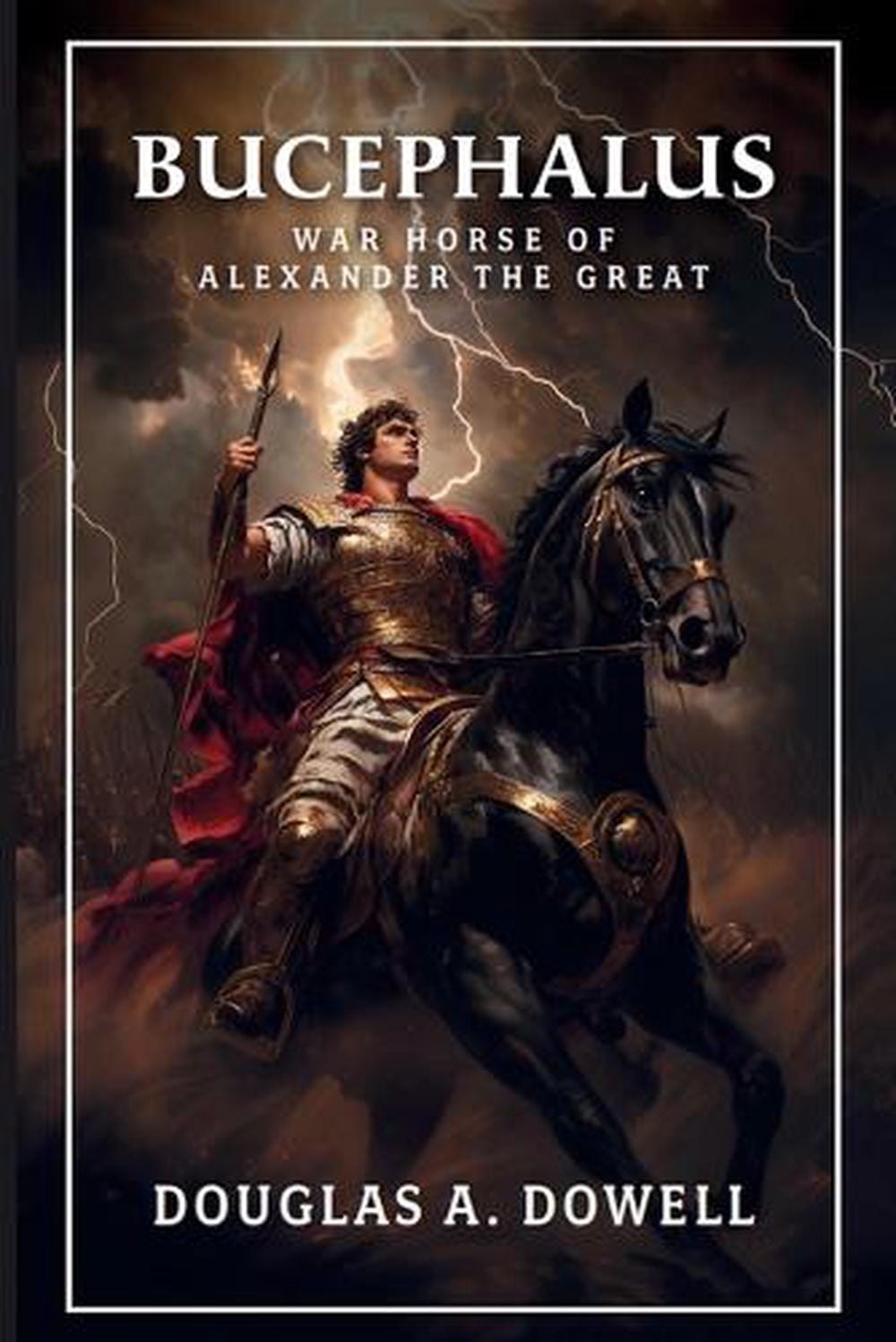
The bond between a great leader and their steed has been a timeless theme throughout history, but few partnerships are as iconic as that between Alexander the Great and his magnificent horse, Bucephalus. More than just a mount, Bucephalus was a symbol of power, loyalty, and the unwavering spirit of conquest that defined Alexander’s legendary campaigns. This is the story of a horse that transcended its animal nature to become an integral part of one of the world’s most significant historical narratives.
The legend of Bucephalus begins not on the battlefield, but in the dusty plains of Thessaly, where a shrewd horse dealer presented a formidable steed to King Philip II of Macedon. Philip, a formidable ruler himself, was eager to acquire the finest horse for his son, Alexander. However, the horse, a powerful dark-coated creature with a distinctive white marking resembling a bull’s head (hence “Bucephalus,” meaning “ox-head”), proved untamable. No one could mount him; he would rear and throw off any rider. Frustrated, Philip ordered the horse to be taken away, deeming him wild and uncontrollable.
Young Alexander, present at the time, was captivated by the powerful animal. He noticed that the horse seemed distressed by its own shadow. “What a horse they are losing,” Alexander reportedly exclaimed, “because they do not know how to handle him, nor to follow it!” Intrigued and confident, Alexander offered to ride the horse, wagering that he could succeed where all others had failed. Philip, amused and perhaps a little impressed by his son’s boldness, agreed. Alexander, with remarkable calm and understanding, turned Bucephalus towards the sun, thus eliminating the shadow that had frightened him. He then spoke soothingly to the horse, gently stroked him, and with a smooth motion, mounted his back. Bucephalus, sensing the boy’s confidence and lack of fear, became surprisingly docile. From that moment on, the pair were inseparable. This pivotal event showcased not only Alexander’s innate courage and intelligence but also his deep understanding of animals, a trait that would serve him well in his future conquests. The story of Bucephalus’s taming is a classic example of empathetic leadership, demonstrating that understanding and patience can overcome brute force.
Bucephalus: A Warrior’s Companion
From that day forward, Bucephalus was Alexander’s constant companion. He was not merely a mode of transport; he was a warhorse of unparalleled strength, stamina, and courage. Bucephalus carried Alexander through countless battles across Asia, from the Hellespont to the Indian subcontinent. His sheer presence on the battlefield was often enough to inspire Alexander’s troops and strike fear into the hearts of his enemies.
The horse’s loyalty to Alexander was legendary. In the heat of battle, when Alexander was in mortal danger, Bucephalus would fight ferociously to protect him. Accounts describe the horse charging into enemy lines, biting and kicking, a true warrior in his own right. Alexander, in turn, treated Bucephalus with the utmost respect and affection, ensuring he received the best care and was never mistreated. This deep bond between man and horse was a testament to the extraordinary nature of their relationship. It is said that Alexander would not allow anyone else to ride Bucephalus, and that the horse was especially trained for battle, responding to Alexander’s commands with remarkable precision.
Bucephalus played a crucial role in many of Alexander’s most significant victories. His powerful frame and unwavering spirit were vital in the cavalry charges that broke enemy formations. Imagine the thundering hooves of Bucephalus leading the charge at the Battle of the Granicus River or the Battle of Issus, his white marking a beacon of Macedonian might. The horse’s endurance was equally remarkable, covering vast distances alongside Alexander’s army as they marched through diverse and often challenging terrains. The sheer scale of Alexander’s empire, built in a little over a decade, was made possible by the incredible stamina of both man and horse.
The Founding of Bucephala
The deep affection Alexander had for his horse is perhaps best illustrated by the founding of the city of Bucephala (modern-day Jhelum in Pakistan). After a particularly grueling campaign in India, where Bucephalus had served Alexander faithfully, the noble steed died. The exact cause of death is debated by historians; some suggest old age, while others believe it was due to wounds sustained in battle or exhaustion from the arduous journey. Alexander was devastated by the loss of his lifelong companion.
In his grief, Alexander decided to honor Bucephalus by founding a city on the banks of the Hydaspes River, naming it Bucephala in his horse’s memory. This act underscored the profound significance Bucephalus held in Alexander’s life. The city served as a testament to their shared journey and the indelible mark the horse had left on Alexander’s heart and his historical legacy. The establishment of Bucephala also served a strategic purpose, marking a significant point in Alexander’s easternmost conquests and becoming a center for Hellenistic culture in the region. This act of founding a city in remembrance of an animal is unparalleled in its scale and significance, highlighting the extraordinary nature of Alexander and Bucephalus’s story.
Legacy of a Legendary Horse
The tale of Bucephalus is more than just a footnote in the annals of Alexander the Great’s conquests; it is a story that resonates through centuries, symbolizing the powerful connection between humans and animals, courage, loyalty, and the pursuit of greatness. The legend of Bucephalus has been immortalized in ancient texts, art, and literature, continuing to inspire awe and admiration.
Bucephalus remains a potent symbol of equine excellence and the ideal partnership between a warrior and his steed. His story reminds us that greatness can be found not only in human endeavors but also in the noble spirit and unwavering loyalty of an animal. The legend of Bucephalus and Alexander the Great serves as a powerful narrative about ambition, destiny, and the enduring impact of a truly exceptional bond. The story is often retold, cementing Bucephalus’s place not just as a historical figure but as a legendary entity in the collective human imagination. His legacy endures as a powerful reminder of the profound impact animals can have on human history and emotion.
