
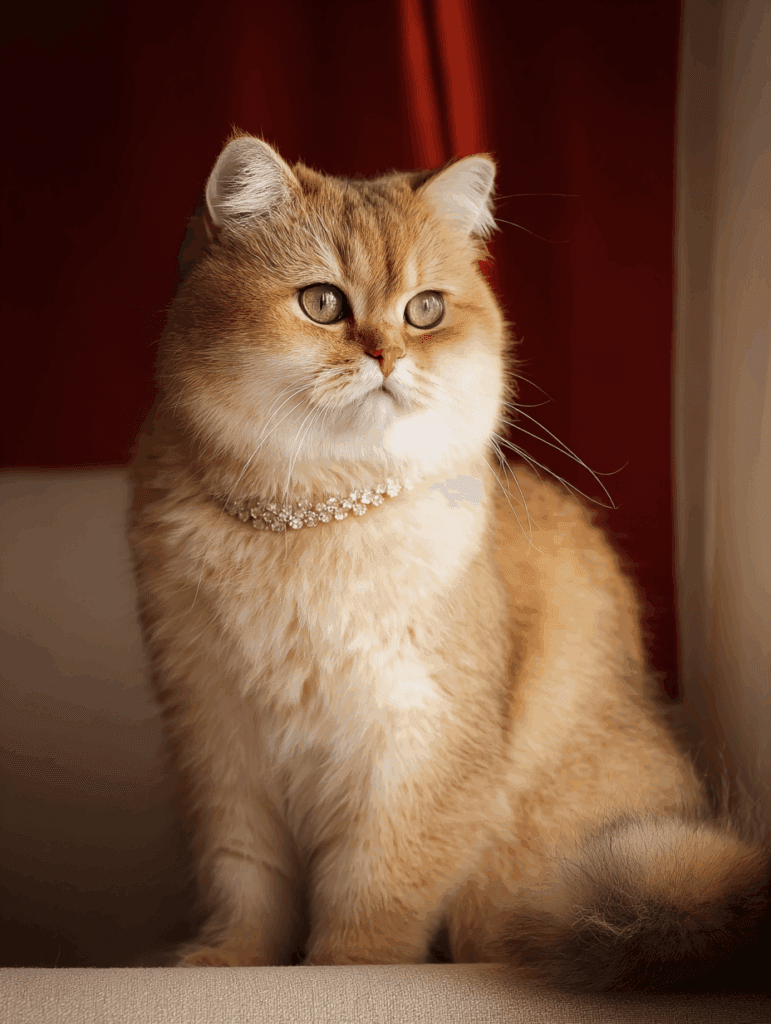
The British Shorthair is a beloved breed known for its robust build, dense coat, and calm demeanor. Understanding the breed’s standards is crucial for breeders, owners, and enthusiasts. This comprehensive guide delves into the official breed standards, detailing physical characteristics, coat requirements, and the extensive array of accepted colors and patterns.
Physical Characteristics
The British Shorthair is a medium to large cat, characterized by a compact, well-balanced, and powerful physique. It exhibits a deep body, a broad chest, and short to medium-length, strong legs with rounded paws. The tail is thick at the base and tapers to a rounded tip.
Head and Facial Features
The head is round and massive, with a rounded face and underlying bone structure. It’s set on a short, thick neck. Key features include:
- Skull: Rounded with a slight flat plane on top, and a rounded forehead that should not slope.
- Profile: Features a gentle nose dip with no discernible stop or break.
- Nose: Medium and broad, with wide-open nostrils when viewed from the front.
- Muzzle: Distinctive and well-developed, with prominent, rounded whisker pads that do not droop.
- Chin: Firm and well-developed, aligning with the nose and upper lip.
- Ears: Medium-sized, broad at the base, with rounded tips. They are set far apart, conforming to the head’s rounded contour.
- Eyes: Large, round, and well-opened, set wide apart and level.
Body and Coat
The body is medium to large, well-knit, and powerful, with a level back and a deep, broad chest. The legs are well-boned, strong, and proportionate to the body, appearing straight. The paws are round and firm, with five toes in front and four behind.
The coat is a defining characteristic: short, very dense, and full-bodied. It should feel firm to the touch with a crisp, resilient texture, lacking a double coat or woolliness. When brushed against the grain, the coat should naturally return to its original position.
Development
It’s important to note that British Shorthairs mature slowly, typically taking a full three to five years to reach their full development. The overall impression should be one of balance and proportion, without any exaggerated features.
Penalties and Disqualifications
Specific faults are noted in the breed standard, including overlong or fluffy coats, soft coats lacking resiliency, rangy bodies, foreshortened legs, weak or overly prominent chins, and foreshortened heads in profile.
Certain conditions lead to disqualification, such as a definite nose stop or break, incorrect eye color or green rims in adults, eyes set on the bias, tail defects, droopy whisker pads, incorrect number of toes, lockets or buttons, improper pigment in nose leather and/or paw pads, and any evidence of illness or poor health. Jaw wryness, poor dentition, malocclusion, and hybridization resulting in specific patterns or colors (like cinnamon, fawn, or Himalayan patterns) are also disqualifying.
Accepted Colors and Patterns
The British Shorthair boasts an extensive and diverse range of accepted colors and patterns, each with specific requirements for coat color, eye color, nose leather, and paw pads.
Solid Pattern Colors
This category includes:
- White: Pure white with deep sapphire blue, gold, or copper eyes. Odd-eyed whites are acceptable. Pink nose leather and paw pads.
- Black: Jet black to the roots, with gold or copper eyes. Black nose leather and black or brown paw pads.
- Blue: A level shade of blue, with gold or copper eyes. Blue nose leather and paw pads.
- Red: Deep, brilliant red, with gold or copper eyes. Brick red nose leather and paw pads.
- Cream: Rich cream, with gold or copper eyes. Pink nose leather and paw pads.
- Chocolate: Rich, warm chocolate-brown, with gold or copper eyes. Brown nose leather and cinnamon-pink paw pads.
- Lilac: Rich, warm lavender with a pinkish tone, with gold or copper eyes. Lavender-pink nose leather and paw pads.
Shaded and Chinchilla Pattern Colors
These patterns involve color restricted to the ends of the hair, with variations in tipping length and undercoat color. Recognized patterns include Shaded Silver, Chinchilla Silver, Shaded Golden, and Chinchilla Golden, each with specific color distributions and undercoat requirements.
Smoke Pattern Colors
In smoke patterns, a white or pale silver undercoat is deeply tipped with a specified color (solid, tortoiseshell, or blue-cream). The undercoat becomes apparent in motion, providing maximum contrast. Various smoke colors are recognized, including Black Smoke, Blue Smoke, and Cream Smoke.
Tabby Pattern Colors
Tabby patterns are categorized into Classic, Mackerel, and Spotted. Each has distinct marking requirements, including density, clarity, and pattern distribution. Accepted tabby colors include Silver Tabby, Brown Tabby, Blue Tabby, Red Tabby, Cream Tabby, Chocolate Tabby, and Lilac Tabby, with variations like patched and silver variations.
Parti-Color Pattern Colors
These include Tortoiseshell, Chocolate Tortoiseshell, Blue-Cream, and Lilac-Cream, characterized by a mingling of colors rather than distinct patches.
Bi-Color and Calico Pattern Colors
This broad category encompasses cats with white in combination with other colors or patterns. It includes:
- Bi-Color: Solid color with white, with specified white distribution.
- Van Bi-Color: White with color confined to extremities.
- Smoke and White: Smoke pattern with white.
- Tabby and White: Tabby pattern with white, including Van Tabby and White variations.
- Calico: White with unbrindled patches of black and red.
- Van Calico: White with color confined to extremities.
- Dilute Calico: White with unbrindled patches of blue and cream.
- Van Dilute Calico: White with color confined to extremities.
- Chocolate Calico: Tri-color of chocolate, red, and white.
- Lilac Calico: Tri-color of lilac, cream, and white.
- Variations of patched tabbies with white are also recognized.
Class Numbers for Shows
For show purposes, British Shorthairs are categorized into specific classes based on their color and pattern. These include Solid Color, Tabby, Parti-Color & Bi-Color, and a category for other British Shorthair colors like Smoke, Shaded, and Chinchilla patterns.
