
Discovering the right dog training club in Brevard County can be a game-changer for your canine companion’s behavior and your relationship with them. Whether you’re looking to teach your puppy basic obedience, address challenging behavioral issues, or engage in advanced canine sports, Brevard County offers a variety of reputable clubs and trainers dedicated to helping dogs and their owners thrive. This guide will navigate you through the essential aspects of choosing and benefiting from a local dog training club, ensuring your furry friend becomes a well-behaved member of the family and community.
Why Choose a Dog Training Club in Brevard County?
A dedicated dog training club provides a structured and supportive environment for both dogs and owners. Unlike relying solely on online resources or a single trainer, a club setting offers:
- Professional Guidance: Certified trainers with expertise in various training methodologies are often available to offer tailored advice and address specific concerns.
- Socialization Opportunities: Regular classes allow dogs to interact safely with other dogs of different breeds, sizes, and temperaments, which is crucial for developing good social skills and reducing anxiety.
- Consistent Learning: Structured classes ensure a progressive learning curve, building upon foundational skills week after week.
- Community Support: Connecting with other dog owners who share similar goals provides a valuable network for advice, encouragement, and shared experiences.
- Variety of Programs: From puppy kindergarten and basic obedience to advanced agility and specialized behavior modification, clubs typically offer a wide array of programs to suit different needs and skill levels.
Many owners find that the structured approach and peer support offered by a club significantly accelerate their dog’s learning and improve overall compliance and happiness. The consistent exposure to different environments and canine social dynamics is invaluable.
Finding the Best Brevard County Dog Training Club for You
When selecting a training club, consider the following factors to ensure it aligns with your goals and your dog’s needs:
Certified and Experienced Trainers
Look for clubs that employ trainers certified by reputable organizations such as the Certification Council for Professional Dog Trainers (CCPDT), the Association of Professional Dog Trainers (APDT), or the Karen Pryor Academy. Experienced trainers often have a deep understanding of canine behavior and can adapt their techniques to individual dogs. Don’t hesitate to ask about their training philosophy and experience with specific breeds or behavioral issues you might be facing.
Training Methodologies
Different clubs may utilize various training philosophies, from positive reinforcement to more traditional methods. Positive reinforcement, which focuses on rewarding desired behaviors, is widely recognized for its effectiveness and its ability to build a strong, trusting bond between dog and owner. Understanding the club’s approach will help you choose one that resonates with your personal training style and ethical considerations.
Class Structure and Size
The ideal class size can vary depending on the type of training. Smaller classes may offer more individual attention, while larger classes can provide more diverse socialization opportunities. Inquire about the typical class size and the structure of the lessons. A good club will offer well-paced classes that build upon previous knowledge, ensuring that both you and your dog are comfortable with the progression.
Program Offerings
Evaluate the range of programs offered. If you have a specific goal in mind, such as preparing for a dog sport or addressing a particular behavioral problem, ensure the club has specialized classes or can accommodate your needs. Puppy socialization classes are particularly important for young dogs, providing them with crucial early experiences.
Location and Schedule
Convenience plays a significant role. Choose a club with a location and schedule that fits your lifestyle. Regular attendance is key to success, so opting for a club that is easily accessible will increase your commitment and consistency.
Reviews and Testimonials
Seek out reviews from past and current clients. Testimonials and online reviews can offer insights into the club’s effectiveness, the quality of instruction, and the overall client experience. Talking to other dog owners in Brevard County who have used local training services can also provide valuable firsthand accounts.
Popular Dog Training Programs and What to Expect
Most dog training clubs in Brevard County offer a variety of programs designed to cater to different stages of a dog’s life and owner’s experience levels.
Puppy Kindergarten/Socialization
This foundational class is typically for puppies between 8-16 weeks old. The primary goals are safe socialization with other puppies and people, and introduction to basic commands like sit, stay, and recall. It’s also a great opportunity for new owners to learn about puppy-raising essentials.
Basic Obedience
Building on puppy classes or for dogs of any age, basic obedience courses focus on solidifying essential commands such as sit, stay, come, down, and loose-leash walking. These classes emphasize clear communication and consistent reinforcement to ensure your dog responds reliably in various situations.
Advanced Obedience and Canine Good Citizen (CGC)
For dogs who have mastered the basics, advanced obedience classes refine commands and introduce more complex skills. The CGC program, often offered by clubs, tests a dog’s ability to behave politely in public, encouraging responsible dog ownership and strengthening the human-animal bond.
Agility and Dog Sports
If you’re looking for a fun and challenging activity to do with your dog, consider agility, flyball, or other canine sports. These programs not only provide excellent physical and mental exercise but also enhance teamwork and communication between you and your dog. Brevard County has a vibrant community for these activities.
Behavior Modification and Problem Solving
For dogs exhibiting specific behavioral issues like excessive barking, leash reactivity, separation anxiety, or aggression, specialized behavior modification classes or private consultations with a professional trainer are essential. These programs focus on understanding the root cause of the behavior and implementing targeted strategies for improvement.
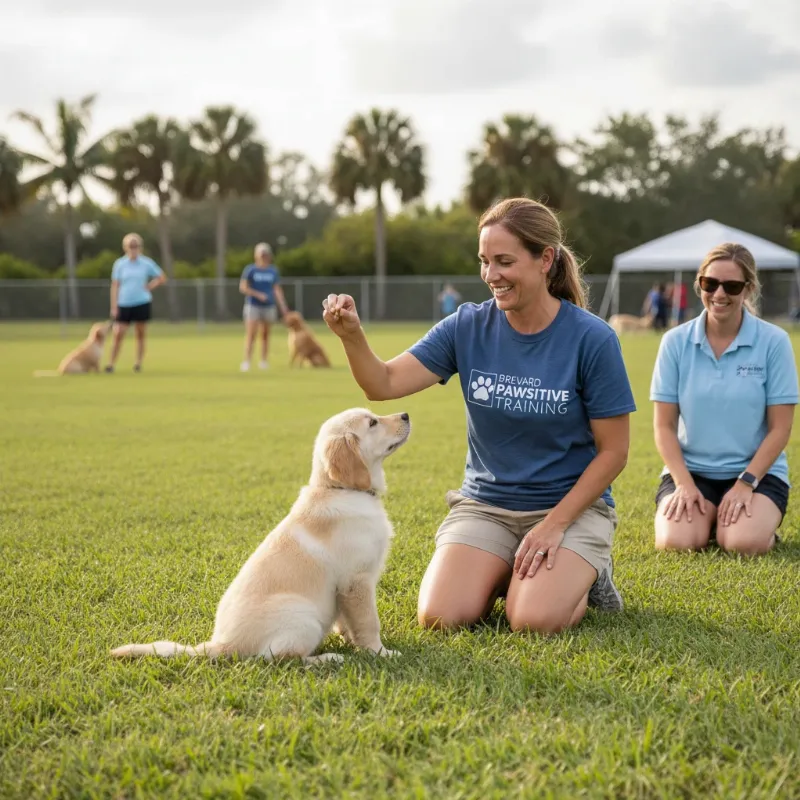 Expert advice from a Brevard County dog trainer to a dog owner with their puppy.
The Role of Positive Reinforcement in Brevard County Training
Positive reinforcement training has become the gold standard in modern dog education. This method centers on rewarding desired behaviors, making them more likely to occur in the future. Rewards can include treats, praise, toys, or petting.
Key benefits of positive reinforcement:
- Builds Trust and Confidence: Dogs trained with positive methods tend to be more confident and have a stronger bond with their owners.
- Reduces Stress and Anxiety: It avoids the fear and anxiety associated with punishment-based methods, creating a more enjoyable learning experience for the dog.
- Enhances Motivation: Dogs are motivated to learn and please their owners when training is associated with positive outcomes.
- Addresses Behavioral Issues Effectively: It provides tools to redirect unwanted behaviors and reinforce alternatives in a humane and effective manner.
Most reputable Brevard County Dog Training Clubs embrace positive reinforcement techniques, recognizing their efficacy and ethical superiority.
Making the Most of Your Dog Training Club Experience
To maximize the benefits of joining a Brevard County dog training club:
- Be Consistent: Attend all scheduled classes and practice the training techniques at home regularly. Consistency is key to reinforcing learned behaviors.
- Be Patient: Every dog learns at its own pace. Celebrate small victories and avoid getting discouraged by setbacks.
- Communicate with Your Trainer: Don’t hesitate to ask questions or discuss any challenges you’re facing. Your trainer is there to support you.
- Socialize Appropriately: Ensure your dog has positive interactions with various people, dogs, and environments outside of class, under controlled circumstances.
- Reinforce at Home: Apply the training methods learned in class during everyday life. For example, practice “sit” before meals or “stay” before opening the door.
- Have Fun: Training should be an enjoyable experience for both you and your dog. Keep sessions positive and engaging.
By actively participating and applying what you learn, you’ll find that your dog will not only become better behaved but will also be a happier, more confident companion. The journey of training is an ongoing one, and a supportive club environment in Brevard County can make all the difference.
Frequently Asked Questions about Brevard County Dog Training Clubs
Q1: What is the best age to start training my dog?
The best time to start is as soon as you bring your puppy home, typically around 8 weeks old. Puppy socialization classes are specifically designed for this age group. However, dogs of any age can learn and benefit from training.
Q2: How long does it take to train a dog?
Training is an ongoing process. While basic obedience can often be achieved within a few months of consistent training, mastering advanced skills or addressing significant behavioral issues can take longer. Patience and consistency are crucial.
Q3: What should I bring to my first dog training class?
Typically, you’ll need high-value treats (small, soft, and enticing), a standard leash (no retractable leashes), a properly fitted collar or harness, and a positive attitude. Some clubs may require proof of vaccinations. Always check with the specific club beforehand.
Q4: My dog is fearful/reactive. Can a club still help?
Yes, many clubs offer specialized classes or private sessions for fearful or reactive dogs. It’s important to choose a club that uses positive, force-free methods and has trainers experienced in handling such cases. Communicate your dog’s specific needs to the club beforehand.
Q5: How do I choose between a club and private training?
Group classes at a club are excellent for socialization and learning in a distracting environment. Private training is ideal for addressing specific, severe behavioral issues or for owners who prefer one-on-one attention. Often, a combination of both can be highly effective.
Joining a Brevard County dog training club is an investment in your dog’s well-being and your harmonious life together. With the right guidance and commitment, you can unlock your dog’s full potential and strengthen the unique bond you share.
