
Iberian horses, with their captivating movements, strong work ethic, and rich history, are unmistakable in the equestrian world. These majestic animals have served as invaluable partners in a wide array of activities, from parades and fairs to fieldwork, ranching, and even warfare. While often grouped together, there are distinct differences between the breeds that fall under the “Iberian horse” umbrella, primarily stemming from their Spanish and Portuguese ancestry. Understanding these nuances is key to appreciating the unique heritage and characteristics of each type.
The Broad Category: Iberian Horses
At the broadest level, Iberian horses are those whose ancestry originates from the Iberian Peninsula. This encompasses horses with lineage tracing back to Spain, Portugal, or a combination of both. While commonly referred to simply as Andalusians or Lusitanos, these terms can be misleading as they don’t always capture the specific registration and breed purity.
Pura Raza Española (PRE) – The Pure Spanish Horse
The Pura Raza Española, or PRE, is the quintessential Spanish horse, with a lineage that dates back to the early eighteenth century. The ideal PRE is characterized by its balance, sound mind, striking appearance, willingness to work, intelligence, and remarkable versatility. The official registration for the PRE began in 1912, with its management initially falling under the Ministry of Agriculture and part of the Cria Caballar. In 2007, the responsibility for the Studbook was transferred to the Real Asociación Nacional de Criadores de Caballos de Pura Raza Española (ANCCE), also known as the National PRE Breeders Association of Spain.
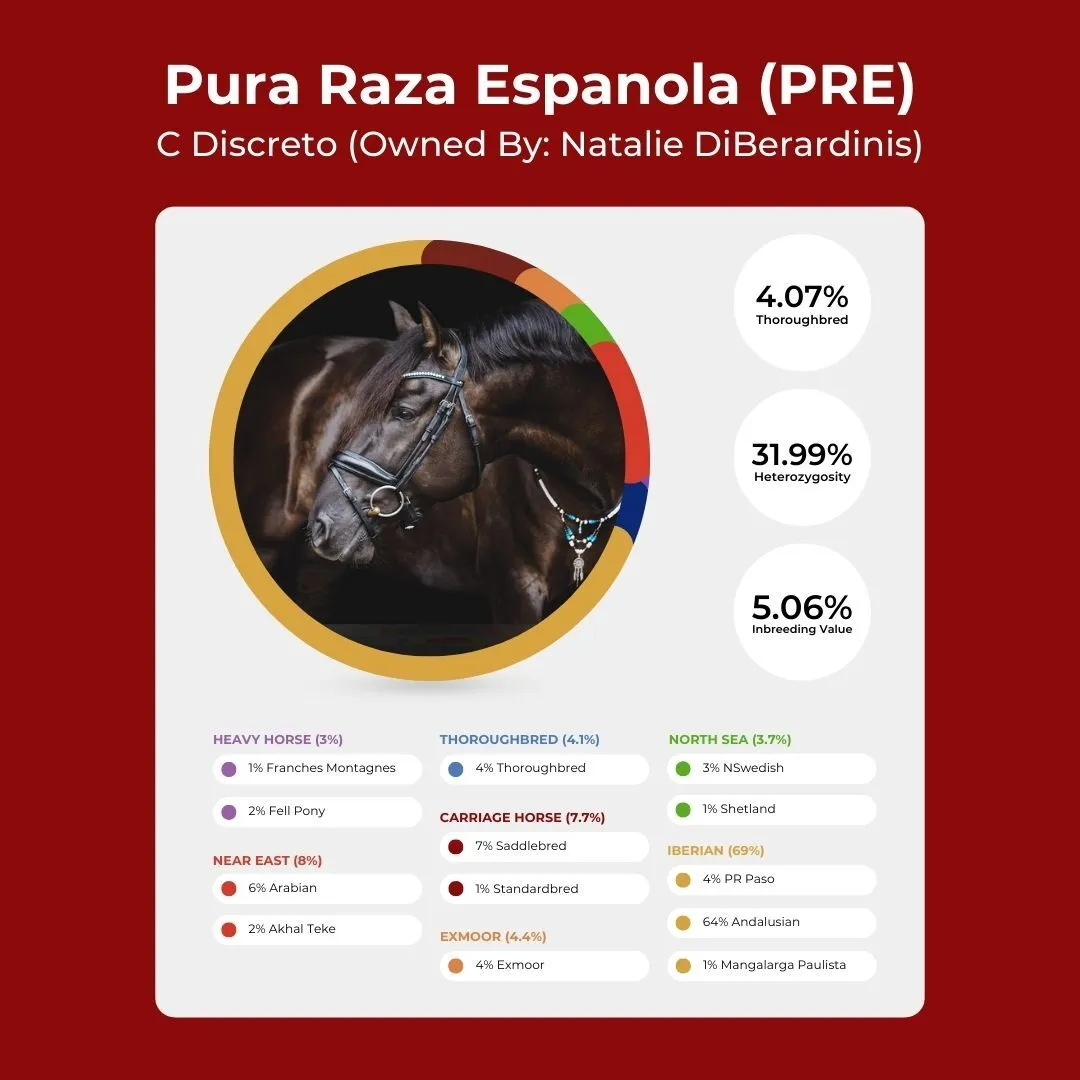 A Pura Raza Espanola (PRES) stallion is shown with his Etalon Equine Genetics Ancestry DNA test results.
For a horse to be officially recognized as a PRE, both its sire and dam must be registered with ANCCE, and the horse itself must have undergone an official inspection and acceptance by ANCCE. Registered PREs are identifiable by ribbons next to their names on the studbook website, indicating their approval status, with yellow representing basic approval and gold signifying the most prestigious. The breed’s rich history is further categorized into four main ancestral lines: Carthusian, considered the oldest and guarded by Carthusian monks; Bocado, a rare and closed line also established by Carthusian monks; Militar, originating from the military Spanish stud farm; and Escalera, maintained by a single family and widely distributed globally.
Andalusian: A Broader Spanish Heritage
The term “Andalusian” is often used colloquially to refer to Spanish horses, named after the southern region of Spain. While Andalusians share a Spanish pedigree with PREs, the distinction lies in their registration status. An Andalusian may have at least one parent not registered with ANCCE, or may not be registered with the studbook themselves. Consequently, such horses cannot be officially labeled as PREs, regardless of their underlying Spanish heritage.
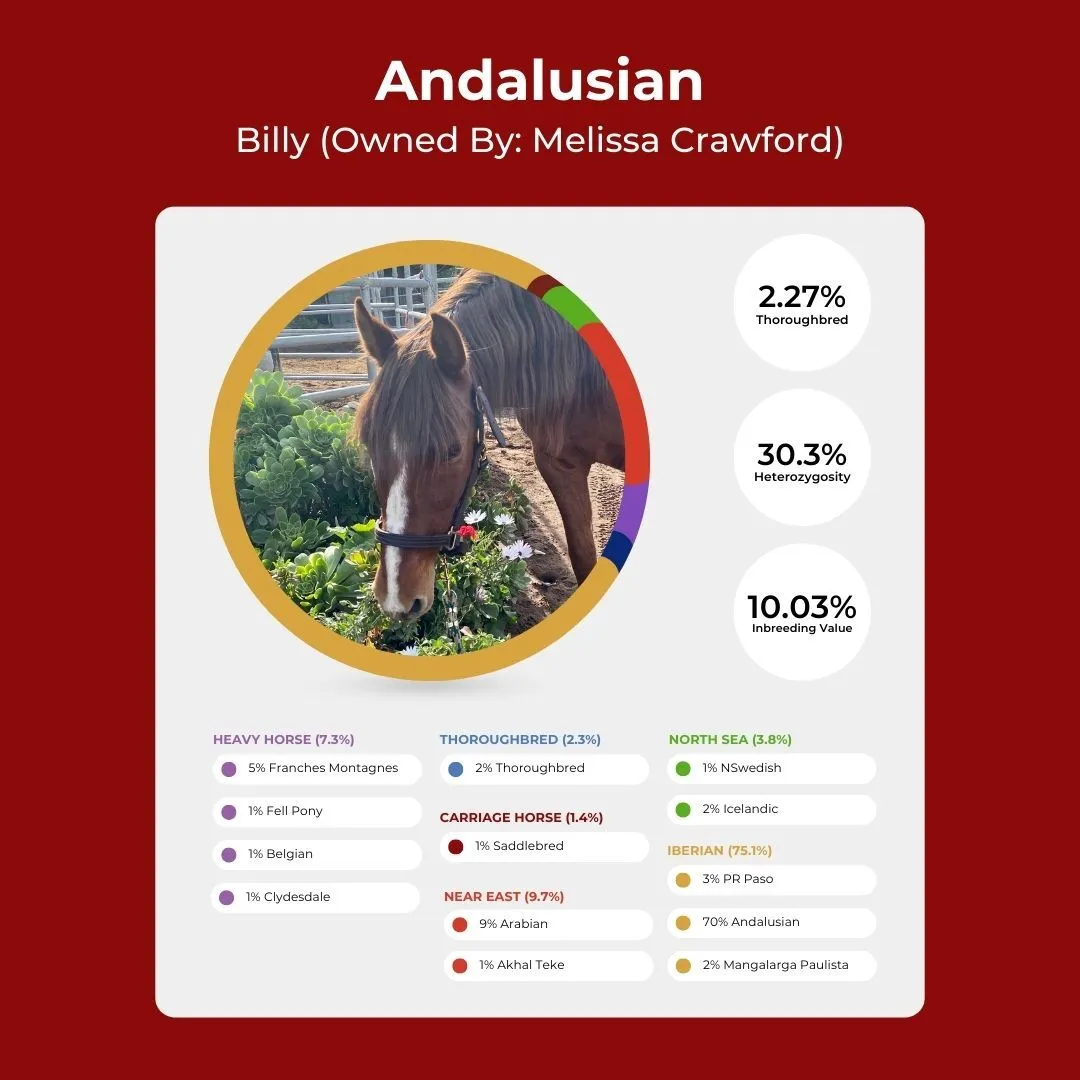 An Andalusian horse is shown with his Etalon Equine Genetics Ancestry DNA test results.
Puro Sangue Lusitano (PSL) – The Lusitano
The Lusitano breed is named after Lusitania, the ancient Roman province that encompassed modern-day southern Portugal. PSL horses have their origins firmly rooted in Portugal. A horse is officially registered as a Puro Sangue Lusitano (PSL) if both of its parents are registered within the studbook maintained by the Portuguese Association of Breeders of the Purebred Lusitano Horse (APSL).
Portuguese pedigree records date back as far as 1824, documenting many generations. The first official Lusitano Studbook was established in 1942, incorporating several Portuguese-born PREs. By 1966, a formal agreement between the Portuguese and Spanish Studbooks was made to distinguish horses born in Portugal as PSLs and those born in Spain as PREs. This agreement allowed both studbooks and their respective associations to develop independently, even though the horses themselves had been evolving together for various purposes since the early eighteenth century. In 1967, the APSL was founded, taking over the responsibility of preserving the quality of these magnificent and adaptable horses from the Portuguese government. Key Lusitano bloodlines are often associated with four prominent stud farms: Andrade, Veiga, Alter Real, and Coudelaria.
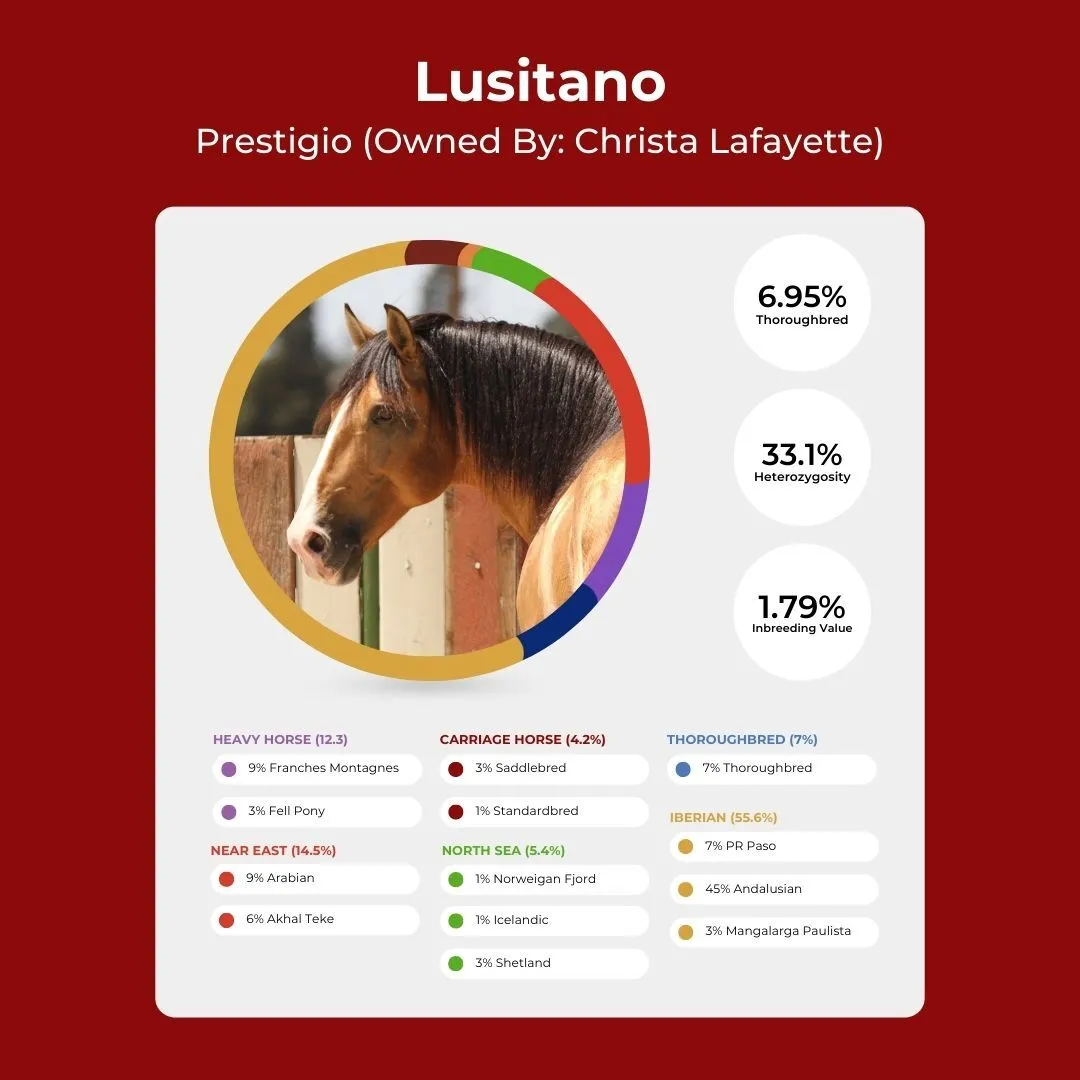 A Lusitano stallion is shown with his Etalon Equine Genetics Ancestry DNA test results.
Cruzado: The Iberian Crossbreed
When exploring Spanish and Portuguese horses, you may also encounter the Cruzado. This Iberian breed is the result of a cross between a Lusitano (PSL) and an Andalusian (PRE), effectively blending Spanish and Portuguese pedigrees. However, Cruzados are not officially recognized by either ANCCE or APSL as distinct breeds.
By understanding the distinctions between the PRE, Andalusian, and Lusitano, equine enthusiasts can gain a deeper appreciation for these unique horses. Each breed contributes to the captivating allure of Iberian horses, known for their powerful yet graceful movements, inherent courage, and gentle dispositions. Whether for sport, work, or companionship, these horses have a legacy of providing exceptional service to their human partners. Armed with this knowledge, you can now more confidently identify and appreciate the specific heritage of a Spanish or Portuguese-bred horse.
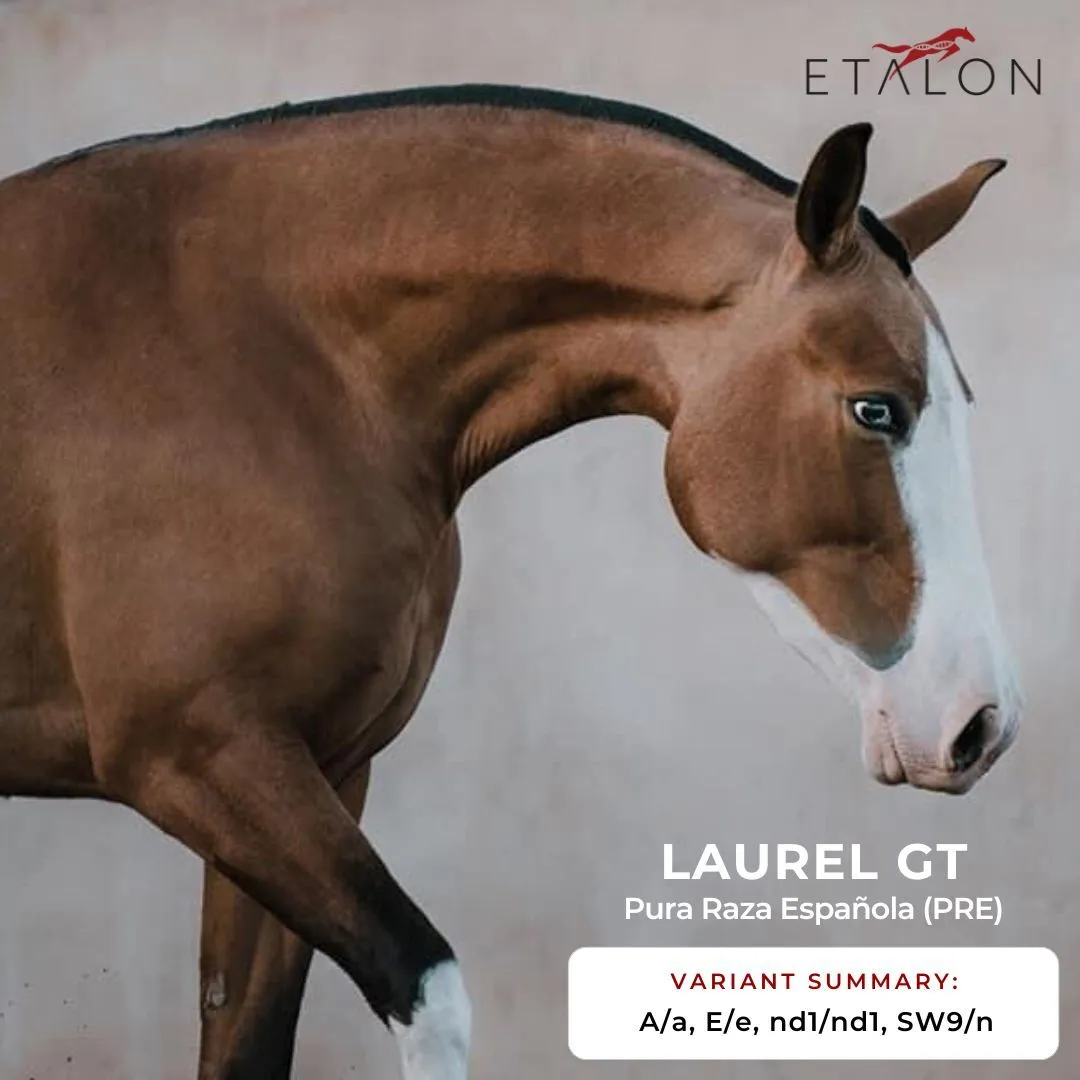 A Pura Raza Espanola (PRE) horse is shown with their Etalon Equine Genetics DNA test results.
For those keen to delve further into their horse’s genetic makeup, Etalon’s Ancestry Package offers the opportunity to discover the precise composition of your horse and quantify any Iberian contribution to its lineage. Explore the versatile beauty of Iberian horses and uncover the majestic features that make them truly extraordinary!
Learn more about your horse’s breed composition with our Ancestry Package testing today!
Shop Now
