
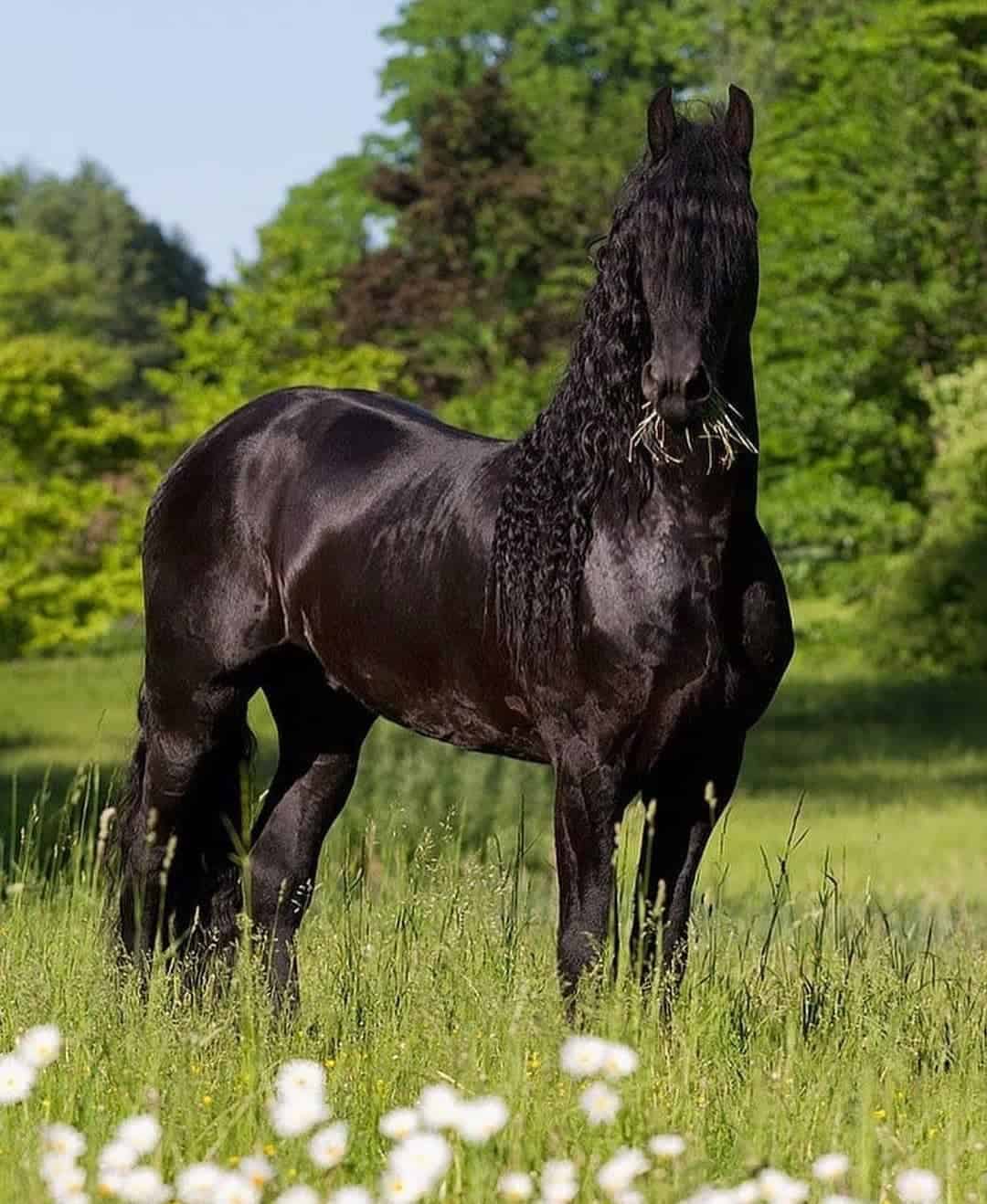
The Friesian horse, a breed renowned for its striking charisma and fairytale-like appearance, has captivated hearts for centuries. Often gracing the silver screen, these magnificent animals have seen a surge in popularity in recent decades. Originating from Friesland in the Netherlands, the Friesian’s lineage traces back to formidable war horses of the Middle Ages. Their appeal has spread globally, making them a sought-after breed worldwide. However, a history of crossbreeding in the 20th century nearly led to the extinction of the purebred Friesian. While the population has since recovered, inbreeding has unfortunately contributed to several genetic health issues within the breed. This profile delves into the rich history, distinctive characteristics, potential health concerns, and specific nutritional requirements of the Friesian horse, offering insights for those interested in their care.
A Glimpse into Friesian Horse History
The Friesian stands as a testament to enduring breed type, with a history stretching back centuries. Their reputation as a highly desirable breed has remained consistent throughout their existence.
Origins and Early Development
Illustrations featuring horses that bear a striking resemblance to modern Friesians date back to the 11th century. More significantly, historical military records indicate that Friesland’s native horses were utilized by troops as early as the 4th century. The influx of Arabian horses, brought back by crusaders during the Middle Ages, introduced Eastern bloodlines to the native Friesian population. Further influence came from Andalusian horses imported from Spain during the 16th and 17th centuries. Intriguingly, genetic studies reveal that the modern Friesian horse is largely a distinct breed, having developed in relative isolation from other Dutch horse populations. Unlike many European riding horse breeds, Friesians do not trace their ancestry to English Thoroughbreds. The Friesian horse, as we recognize it today, evolved from a landrace that was shaped naturally by its environment and cultural influences over millennia. A landrace refers to a domesticated animal species that has developed primarily through adaptation to its natural and cultural surroundings, rather than through directed selective breeding. Despite their ancient roots, the Friesian breed as officially described was first formally recognized in 1879.
Historical Utility
The early ancestors of the Friesian served as versatile working and riding horses for the inhabitants of Friesland. Over time, the breed gained renown as powerful war mounts for knights during the medieval period, with early depictions often showcasing knights astride horses resembling contemporary Friesians. Historians suggest that notable historical figures, such as William the Conqueror, may have ridden horses of the Friesian type. King Louis II of Hungary also utilized Friesians in battle. Furthermore, European nobility frequently employed Friesians as elegant coach horses. By the 18th and 19th centuries, Friesians were favored as trotting and harness horses across Europe. However, their popularity waned towards the end of the 19th century, leading to a significant decline in the breed’s numbers. By 1902, only 15 approved Friesian stallions remained in Friesland, highlighting the precarious state of the breed at the time. While Dutch settlers introduced large numbers of Friesians to North America, extensive crossbreeding almost led to the disappearance of purebred Friesians on the continent. The breed was eventually reintroduced in the 1970s, and since then, Friesians have become one of the most sought-after breeds for recreational riding and driving.
Breed Registry and Standards
The Friesian Horse Association of North America (FHANA) serves as the sole North American affiliate of the Koninklijke Vereniging “Het Friesch Paarden-Stamboek” (KFPS), also known as the Royal Association of the Friesian Horse Studbook, headquartered in the Netherlands. The KFPS is the original and definitive registry for the Friesian horse breed, tasked with preserving the breed’s purity and upholding the standards established since its official recognition in 1879. FHANA’s mission is to adhere to the standards and practices set forth by the KFPS for Friesian horses within North America. This includes ensuring that all registered horses are purebred, with documented lineage tracing directly back to the original Dutch studbook. To qualify for registration with the KFPS, a Friesian horse must be born from a dam (mother) listed in the main section of the studbook and sired (fathered) by an approved stallion. Approved stallions undergo rigorous evaluation and testing to confirm they meet the breed’s high standards and can contribute positively to the gene pool. Both FHANA and KFPS conduct regular inspections, during which horses are assessed on various criteria, including conformation (the horse’s physical structure and appearance), movement, and overall breed characteristics. These inspections are crucial for identifying horses that embody the breed standard and are thus suitable for breeding.
Distinctive Friesian Breed Characteristics
Friesian horses are instantly recognizable, possessing an elegance that sets them apart. Beyond their captivating looks, the breed exhibits several other characteristics that make them stand out in equestrian disciplines.
Conformation and Build
Friesians typically stand between 15.2 to 16 hands high on average. Mares and geldings must measure at least 15 hands to be eligible for studbook entry. Stallions, by four years of age, must be at least 15.3 hands, though some Friesians can reach up to 17 hands. The ideal Friesian head is expressive, featuring small ears, large eyes, and wide nostrils. The head should connect elegantly to the neck, with ample space for the throat and broad-set jawbones. These horses possess high-set, arched, large, and well-muscled necks that transition smoothly into muscular backs of moderate length. Slightly lower-set backs are permissible. Strong loins and sloping croups are broad and muscular. The shoulders are also long and sloping, contributing to a strong chest that is neither too narrow nor excessively wide. The ribs should provide sufficient space for the lungs without being overly rounded. Legs are typically correct and straight, terminating in wide, sound hooves. Overall, Friesians exhibit a rectangular build and balanced physique. Their gaits are characterized by lightness, elevation, good stride length, joint flexion, and a powerful hindquarter engagement.
Coat Color and Markings
Black is the sole recognized coat color for the modern Friesian breed, although gray and bay variations appeared in the breed’s earlier history. A small white star on the forehead is permissible, but no other white markings are allowed on the body or legs. The Friesian’s distinctive long, heavy black manes and tails, along with abundant fetlock feathering, are key breed characteristics.
Temperament and Disposition
Friesian horses are generally known for their genuine character and strong work ethic. They possess excellent stamina and energy levels without being overly reactive or spooky. Typically intelligent, they learn quickly with consistent and positive training. Their friendly and easy-going nature makes them suitable for a wide range of riders. However, as with all horses, individual personalities can vary.
Suitable Disciplines
The Friesian’s elegant appearance and distinctive movement make them highly sought-after show horses. Their natural charisma allows them to excel in various disciplines. These horses demonstrate considerable aptitude in harness shows and driving disciplines, owing to the high-action trots and powerful pulling ability inherited from their carriage horse ancestors.
Dressage is perhaps the most popular riding discipline for Friesians. While warmbloods often dominate at the elite levels of modern dressage, many riders find great enjoyment competing with their Friesians across all levels of the sport.
Health Considerations for Friesian Horses
Modern purebred Friesian horses are descendants of a relatively small founding population, a factor that has led to significant inbreeding and a propensity for certain genetic health problems. However, through diligent breeding practices and informed horse management, the breed can lead healthy lives.
Genetic Disorders
Dwarfism, an autosomal recessive disorder, is a recognized condition in Friesians. Affected individuals exhibit a broad chest and a shortened stature, with limbs disproportionately short compared to their body size. DNA testing is available to identify carriers of the dwarfism mutation who may not display clinical signs of the condition. Responsible breeders should avoid breeding two carriers together to prevent the occurrence of dwarfism in foals. Dwarf Friesians often experience tendon laxity and fetlock hyperextension, which can lead to gait abnormalities and an increased risk of soft tissue injuries. Despite these challenges, these horses can still achieve average lifespans.
Hydrocephalus, characterized by an excessive accumulation of fluid within the brain, affects approximately 0.25% of Friesian foals. This condition results in severe cranial distention and frequently leads to stillbirths or difficult deliveries (dystocia). Live foals born with hydrocephalus are typically euthanized due to severe neurological deficits. DNA testing is available to identify the gene responsible for this autosomal recessive disorder, aiding in breeding decisions.
Connective Tissue Abnormalities
A significant number of health issues affecting Friesian horses are linked to abnormalities in their connective tissues. Researchers suggest that a predisposition to these conditions may stem from the selective breeding for horses with high-stepping gaits and increased tendon laxity. One study identified breed-specific differences in collagen breakdown within Friesian horses, indicating a higher susceptibility to collagen degradation. This predisposition may contribute to the prevalence of connective tissue disorders within the breed.
Other Health Concerns
Megaesophagus in Friesian horses is a serious condition involving the enlargement and reduced motility of the esophagus, leading to difficulties with swallowing, weight loss, choke, and potential aspiration pneumonia. The risk of megaesophagus in the breed is thought to be related to suspected collagen abnormalities, resulting in chronic esophageal dilation and muscle tone loss.
Aortic rupture, another condition associated with collagen disorders, can lead to sudden death. Some Friesians may exhibit pre-existing signs such as recurrent colic, elevated resting heart rate, peripheral swelling, and increased body temperature. Prompt veterinary attention is crucial if these signs are observed.
Friesian horses also experience a high incidence of skin disorders. Chronic pastern dermatitis (mud fever) can develop due to their abundant feathering, and studies indicate that 18% of Friesians suffer from insect bite hypersensitivity (sweet itch).
Friesian mares have a notably high rate of retained fetal membranes after foaling, occurring in up to 54% of births, compared to less than 10% in the general equine population.
While formal research is limited, veterinarians observe that the breed is at risk for Equine Metabolic Syndrome (EMS), with reports of hyperinsulinemic Friesians. This predisposition may be linked to the breed’s origins in harsh environments and the influence of Arabian and Andalusian bloodlines. Consequences of EMS include obesity and laminitis.
Essential Care and Management for Friesians
Despite the potential health challenges, Friesian horses can lead healthy and fulfilling lives with appropriate care and management strategies tailored to their specific needs. A collaborative approach involving veterinarians, farriers, and other equine professionals is key to developing a proactive wellness plan.
Hoof and Leg Care
While most Friesians possess good-quality hooves, their susceptibility to connective tissue problems underscores the importance of expert farrier care. Regular trimming and corrective shoeing can help maintain soundness and prevent undue stress on tendons, ligaments, and joints.
Exercise and Turnout
Adequate free exercise through turnout is crucial for maintaining healthy bones and connective tissues. Minimizing stall confinement and maximizing turnout time allows horses to exhibit natural grazing and social behaviors, reducing stress.
Grooming and Skin Health
Friesians generally require more extensive grooming due to their long, heavy manes and tails. Keeping the fetlock feathers clean and dry is particularly important to prevent pastern dermatitis.
Performance and Monitoring
Many Friesians achieve success in various sports disciplines. However, research suggests they may fatigue more quickly than other breeds. Developing an appropriate training program in consultation with a trainer and veterinarian is advisable. Owners should consistently monitor their Friesians for signs of diminished performance or cardiac issues. If an abnormal heart rate is detected, immediate veterinary assessment for the risk of aortic rupture is recommended.
Nutritional Guidance for Friesian Horses
A balanced diet is fundamental to the overall well-being of a Friesian horse, playing a critical role in preventing common health conditions and supporting their athletic performance.
Weight Management Strategies
Given the breed’s predisposition to connective tissue disorders, vigilant weight management is paramount to avoid excessive stress on their musculoskeletal system. Many Friesians are “easy keepers,” meaning they can maintain weight readily on a balanced diet. However, this characteristic also makes them prone to obesity and related complications, necessitating careful dietary control to prevent overfeeding. Friesians diagnosed with metabolic syndrome face a heightened risk of obesity and laminitis. These individuals may exhibit a characteristic fatty crest on their neck, deviating from the breed’s typical arched and muscular neck. Fat deposits may also be noticeable in the hollows above the eyes. Suspected cases of metabolic syndrome warrant immediate veterinary consultation for diagnostic testing.
Body condition scoring, a method assessing fat accumulation in specific areas like the neck and ribs, is an essential tool for owners to track their horse’s weight and condition over time. An ideal body condition score is 5 on the 9-point Henneke scale. Scores indicating excessive fat on the neck or ribs suggest a higher body condition, which correlates with insulin resistance. Overweight horses may develop a cresty neck, which should not be confused with the breed’s natural arched neck.
Sample Diet Considerations
The following sample diet is designed for a mature 590 kg (1,300 lb) Friesian horse in normal body condition, maintained at a non-exercising level. This nutrient analysis is based on an average North American forage sample and NRC (2007) requirements. For a more precise assessment, submitting forage for analysis and consulting with an equine nutritionist is recommended.
| Feed | Amount per day |
|---|---|
| Mid-Quality Hay (8% crude protein) | Free-choice |
| Salt | 30 g (2 tbsps) |
| Omneity® Pellets | 225 g (2.25 scoops) |
Diet Analysis:
- Digestible Energy (% of Req): 105%
- Protein (% of Req): 127%
- HC (ESC + starch; % Diet): 8.8%
Most Friesian horses engaged in light work can meet their energy and protein requirements through hay alone. However, hay often lacks essential amino acids, vitamins, and minerals. Therefore, forage-based diets require supplementation with a comprehensive vitamin and mineral supplement to ensure balanced nutrition for Friesians.
Mad Barn’s Omneity® is a vitamin and mineral supplement formulated to address common nutritional deficiencies in equine diets. This formula provides essential nutrients that support hoof health, digestion, coat condition, performance, and overall well-being.
[Customer Reviews for Omneity® P – Pellets:
- 5 stars: 87%
- 4 stars: 7%
- 3 stars: 3%
- 2 stars: 2%
- 1 star: 2%
1043 Reviews
