
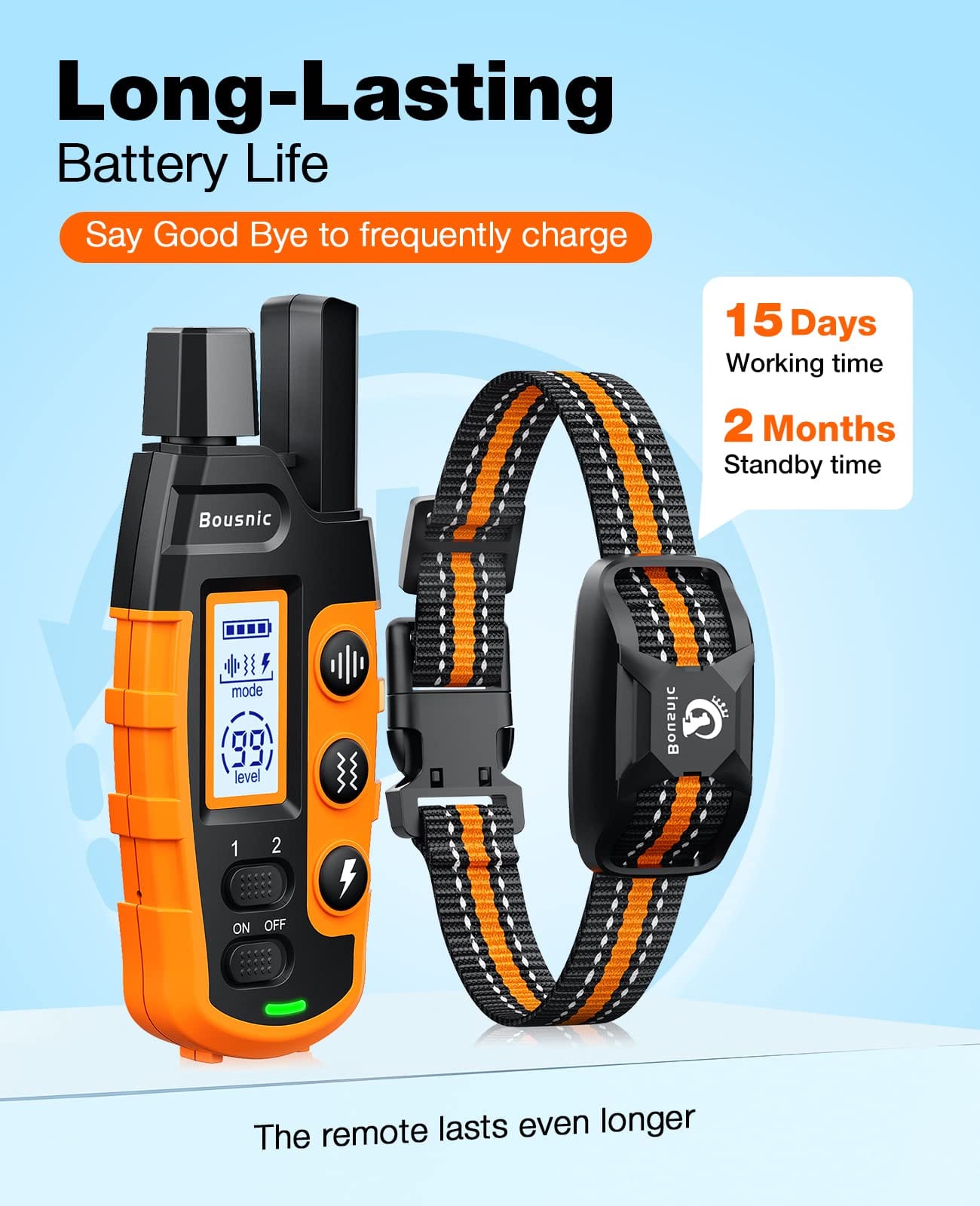
Understanding how to properly use a dog training collar is crucial for effective and humane training. The Bousnic Dog Training Collar offers a range of features designed to help dog owners communicate with their pets and modify behavior. This manual aims to provide a clear, step-by-step guide to help you get the most out of your Bousnic collar, ensuring a positive training experience for both you and your canine companion. Whether you’re dealing with basic obedience or specific behavioral issues, this guide will walk you through setup, operation, and best practices.
Understanding Your Bousnic Dog Training Collar
The Bousnic Dog Training Collar is designed with versatility and ease of use in mind. It typically includes a remote transmitter and a receiver collar. The transmitter allows you to send training signals to the collar, which then delivers these signals to your dog. These signals can include vibration, sound (beep), and electronic stimulation (shock). It’s vital to understand that the electronic stimulation is intended as a communication tool, not a punishment, and should always be used responsibly and ethically. The intensity levels for each mode can usually be adjusted to suit your dog’s sensitivity and the specific training situation.
Key Components and Features
- Remote Transmitter: This handheld device is your control center. It typically features buttons for each function (vibration, beep, stimulation), an intensity dial or buttons, and often a display screen showing the selected mode and level.
- Receiver Collar: This lightweight collar fits around your dog’s neck and contains the electronic components that receive signals from the transmitter. It also houses the contact points that deliver the chosen stimulation to your dog’s skin.
- Adjustable Strap: Ensures a comfortable and secure fit for various dog neck sizes.
- Rechargeable Batteries: Most modern collars come with rechargeable batteries for both the transmitter and receiver, offering convenience and cost savings.
- Water Resistance: Many Bousnic models are water-resistant, allowing for use in various weather conditions, though submersion is usually not recommended.
Setting Up Your Bousnic Collar
Proper setup is the first step to successful training. This involves fitting the collar correctly and pairing the transmitter with the receiver.
1. Fitting the Collar Correctly
A well-fitted collar is essential for the device to work effectively and safely.
- Placement: The receiver collar should be worn on your dog’s neck, positioned so that the contact points are in direct contact with the skin. It should be placed on the front or side of the neck, away from the voice box.
- Tightness: You should be able to comfortably fit two fingers between the collar strap and your dog’s neck. It should not be so loose that it slides around, nor so tight that it restricts breathing or causes discomfort.
- Contact Points: Ensure the metal contact points are clean and pressing gently against your dog’s skin. If your dog has thick fur, you may need to trim a small area around the contact points to ensure good conductivity.
2. Pairing the Transmitter and Receiver
The transmitter and receiver need to be synced, or “paired,” to communicate. The exact pairing process can vary slightly between Bousnic models, so always refer to your specific product manual. Generally, it involves:
- Turning on both the transmitter and the receiver.
- Pressing a specific button combination on the transmitter or receiver to initiate pairing mode.
- Following on-screen prompts or indicator lights to confirm successful pairing.
Example of a pairing process (refer to your manual for exact steps):
- Turn on the transmitter and ensure the receiver collar is charged.
- Press and hold the power button on the receiver collar until an indicator light starts flashing.
- On the transmitter, press and hold a specific pairing button (often the channel button or a combination of buttons) for a few seconds.
- A beep from the receiver or a change in its indicator light will confirm successful pairing.
Operating the Bousnic Training Collar
Once set up, you can begin using the collar for training. It’s crucial to introduce the collar and its functions gradually and positively.
Understanding the Modes
- Beep (Audible Tone): This is a non-aversive alert that can be used to get your dog’s attention or as a warning before applying other stimulation. It’s often the first mode to introduce.
- Vibration: This mode delivers a vibration to the collar. It’s a more noticeable sensation than a beep but is still non-aversive and can be effective for dogs who are sensitive to electronic stimulation or for specific cues.
- Electronic Stimulation (Shock): This mode delivers a mild electrical impulse. It should be used as a last resort and at the lowest effective level. Start with the lowest intensity and gradually increase only if necessary, always observing your dog’s reaction.
Setting the Intensity Levels
Each dog is unique, and their sensitivity to stimulation varies.
- Start Low: Always begin with the lowest intensity level for the chosen mode (especially for electronic stimulation).
- Observe Your Dog: Pay close attention to your dog’s reaction. A slight head turn, ear twitch, or momentary pause in activity might indicate they feel the stimulation. This is your cue that the level is effective.
- Gradual Increase: If your dog doesn’t react to the lowest setting, gradually increase the intensity level by one increment at a time until you see a consistent, mild response. Avoid using levels that cause yelping, fear, or panic.
Introducing the Collar to Your Dog
- Positive Association: Before starting formal training, let your dog wear the collar for short periods during enjoyable activities, like playing or going for a walk, without using any stimulation. This helps them associate the collar with positive experiences.
- Initial Training Sessions: Keep initial training sessions short (5-10 minutes) and focused on simple commands. Use the beep or vibration function first. If you need to use stimulation, ensure it’s at a very low, effective level and immediately follow it with praise or a treat when your dog performs the desired action.
- Consistency is Key: Use the collar consistently for specific commands and behaviors you are training. Avoid using it randomly, as this can confuse your dog.
Best Practices for Using the Bousnic Collar
Ethical and effective use of a dog training collar involves more than just operating the device. It requires understanding your dog and employing sound training principles.
Use Collar as a Communication Tool, Not a Punishment
The primary goal of a training collar is to communicate with your dog. Think of the stimulation as a way to get their attention or redirect their focus, much like a gentle tap or a verbal cue. Avoid using it out of anger or frustration, as this can create fear and anxiety in your dog.
Combine with Positive Reinforcement
Training collars are most effective when used in conjunction with positive reinforcement methods, such as treats, praise, and play. When your dog responds correctly to a cue delivered via the collar, reward them immediately. This strengthens the association between the cue, the desired behavior, and the reward.
Understand Your Dog’s Temperament and Sensitivity
Every dog is different. A high-energy German Shepherd might require a different approach and intensity level than a sensitive Cavalier King Charles Spaniel. Observe your dog closely and adjust settings and methods accordingly. If your dog shows signs of stress, fear, or excessive anxiety, discontinue use and consult a professional trainer.
When to Seek Professional Help
While training collars can be useful tools, they are not a substitute for professional guidance. If you are struggling with persistent behavioral issues, or if your dog is exhibiting extreme fear or aggression, it is highly recommended to consult a certified professional dog trainer or a veterinary behaviorist. They can assess your dog’s specific needs and provide a tailored training plan.
Troubleshooting Common Issues
Even with the best care, you might encounter minor issues with your Bousnic training collar.
- Collar not responding:
- Ensure both the transmitter and receiver are charged.
- Check if the transmitter and receiver are properly paired. Re-pair them if necessary.
- Verify that you are within the effective range of the collar.
- Make sure the contact points are clean and making good contact with your dog’s skin.
- Dog is not reacting to stimulation:
- Check the charge of the receiver.
- Ensure the contact points are clean and making good contact. You may need to adjust the fit of the collar.
- Gradually increase the intensity level.
- Collar accidentally delivering stimulation:
- Ensure you are not accidentally pressing the stimulation buttons on the transmitter. Some transmitters have safety covers or require multiple button presses to activate.
- Store the transmitter securely when not in use.
Maintenance and Care
To ensure the longevity and proper functioning of your Bousnic Dog Training Collar, follow these maintenance tips:
- Cleaning: Regularly clean the contact points with a soft cloth and mild cleaning solution. Wipe down the transmitter and receiver collar to remove dirt and debris.
- Charging: Keep both the transmitter and receiver charged. Avoid letting the batteries completely drain, as this can reduce their lifespan.
- Storage: Store the collar and transmitter in a cool, dry place when not in use.
- Inspection: Periodically inspect the collar strap for any signs of wear or damage.
By following this comprehensive guide, you can effectively and responsibly use your Bousnic Dog Training Collar to enhance communication and strengthen the bond with your beloved dog. Remember that patience, consistency, and a positive approach are the cornerstones of successful dog training.
