
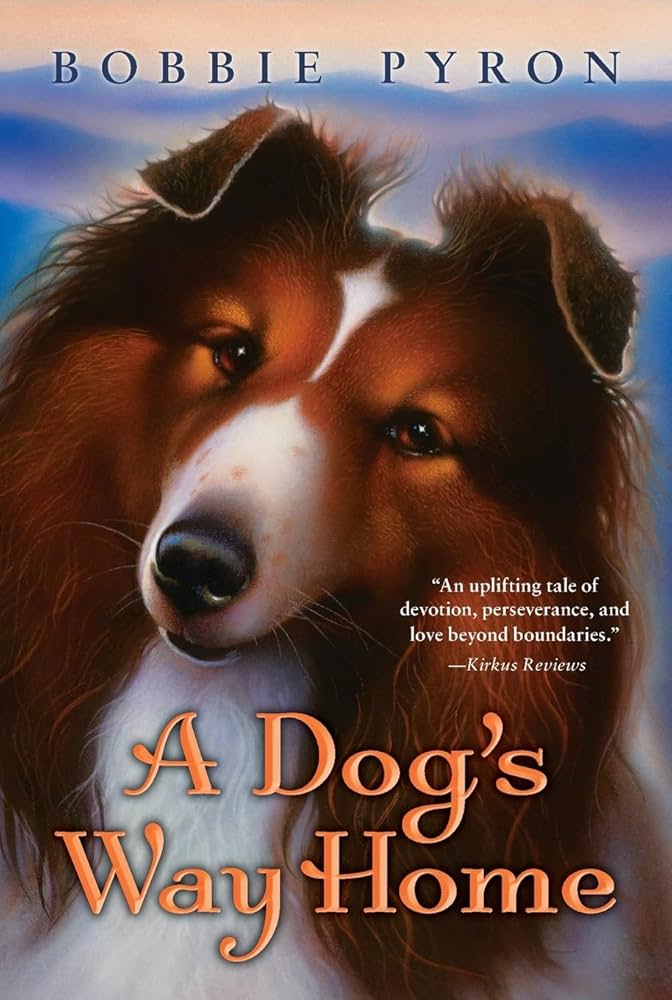
The arrival of a signed hardcover copy of A Dog’s Way Home by Bobbie Pyron felt like an early Christmas. This novel, centering on eleven-year-old Abby and her champion sheltie Tam after a car accident separates them, echoes the classic “Lassie Come Home.” However, Pyron’s work carves its own unique path among lost dog narratives by employing alternating viewpoints, transforming the story into a riveting, emotional journey. This tale, spanning over 300 pages, delves into an intense love story, exploring complex relationships and profound themes that resonate deeply with dog lovers.
The enduring appeal of lost dog stories lies in the powerful bond between a human and their canine companion. As Abby’s father explains, everyone has a “North Star” that provides guidance and meaning; for Abby, this guiding light is her dog, Tam. Conversely, Abby is Tam’s entire world – the focus of his dreams, his obedience, and his deepest affection. The premise of their separation, therefore, sets the stage for an unbreakable determination to reunite, regardless of the miles or hardships that stand in their way. This inherent drive fuels a narrative that is bound to elicit a spectrum of emotions, from nail-biting suspense to tearful moments and triumphant joy.
What sets A Dog’s Way Home apart from other canine narratives is its dual perspective. While many stories focus solely on the dog’s experience, Pyron masterfully invites readers into the emotional landscapes of both Abby and Tam. This approach significantly amplifies the story’s emotional impact. When Abby’s parents initially fail to keep their promise to return to the accident site, Abby takes matters into her own hands, skipping school and boarding a bus to find her beloved dog. Even when her parents locate her, Abby’s resolve doesn’t waver; she embarks on a relentless quest, making numerous calls to shelters and parks. Meanwhile, Tam is equally driven by the instinct to find Abby. His journey is fraught with peril, including encounters with formidable wildlife, harsh weather conditions, and dangerous human encounters. Yet, none of these obstacles deter his singular focus. Even when a coyote offers companionship or an elderly woman nurses him back to health, and later when a shelter attempts to adopt him out, Tam remains steadfast in his goal to return to his girl.
Pyron’s narrative structure allows readers to intimately understand the actions and proximity of both Abby and Tam, intensifying the suspense. A compelling example of this is when Tam, escaping his crate and collar, makes his way back to the accident scene, awaiting Abby’s return. Tragically, his reunion is thwarted by his parents’ own struggles with a broken-down vehicle and injuries, delaying their search. When they finally do return, Tam has been driven away by hunger. Later, when Tam’s microchip is scanned and a shelter attempts to contact the family, their messages go unanswered as the family has relocated for a new job. By the time the voicemails are retrieved, Tam is once again on the road, continuing his search for Abby. This motif of being so close, yet so far, underscores the emotional rollercoaster of their separation.
While the novel is deeply moving, certain stylistic choices occasionally verge on excessive sentimentality, attempting to overtly manipulate the reader’s emotions. Additionally, the repeated instances of Tam being threatened or shot at, seemingly because he resembles a fox, might raise questions for some readers. However, Pyron notes that shelties can indeed share certain physical characteristics with foxes. Abby’s own reactions, particularly after her family moves to Tennessee and her father pursues a career as a country star, can feel somewhat jarring. Her lack of familiarity with basic elements like lockers or cell phones, contrasted with her unexpected academic success in a larger school, might seem improbable. Furthermore, Abby’s criticism of her new classmates’ focus on fashion, technology, and social lives could be interpreted as a touch of snobbery, potentially overshadowing the narrative’s emotional core.
Much like author Bobbie Pyron, I grew up with a fondness for dog stories. Yet, A Dog’s Way Home is the first to make me contemplate the intricate complexities involved in a dog’s disappearance. While Abby’s parents do prioritize their careers over an immediate search for Tam, this reflects a harsh reality of life’s demands. Similarly, the veterinarian who treats Tam doesn’t immediately check for a microchip, a decision that prompts reflection on how individuals might react in similar stressful situations. Ultimately, A Dog’s Way Home strikes a deep emotional chord because Pyron bravely portrays the often messy and complicated truth of life. This exploration of loyalty, resilience, and the unbreakable bond between humans and animals makes it a compelling read for anyone who has ever experienced the unconditional love of a dog.
Reprinted from Allison’s Book Bag. This article is original in content and not to be reproduced without permission. Copyright 2011.
Share this:
- Click to share on X (Opens in new window) X
- Click to share on Facebook (Opens in new window) Facebook
Like Loading…
