
Reactive dogs, often misunderstood and challenging to manage, can significantly benefit from specialized board and train programs. These programs offer intensive, structured environments designed to address the root causes of reactivity and help your dog develop more appropriate responses to triggers. If you’re struggling with a reactive dog, understanding the board and train option can be a crucial step towards a more harmonious life together.
Understanding Dog Reactivity
Before diving into board and train programs, it’s essential to understand what dog reactivity truly is. Reactivity in dogs is not aggression, but rather an over-the-top response to a perceived threat or stimulus. This response can manifest as barking, lunging, growling, or even snapping. Common triggers include other dogs, people, bicycles, cars, or even specific noises.
What Causes Reactivity?
Reactivity often stems from a combination of factors:
- Fear and Anxiety: Many reactive behaviors are rooted in fear or insecurity. A dog that feels threatened may react defensively.
- Lack of Socialization: Insufficient or negative early socialization can lead to a dog that is unsure and fearful of new things.
- Past Traumatic Experiences: A bad encounter with another dog or person can leave lasting fear-based reactions.
- Medical Conditions: Sometimes, underlying pain or medical issues can contribute to a dog’s irritability and reactivity.
- Frustration: Dogs that are kenneled too much or don’t get enough mental and physical stimulation can become frustrated, leading to reactivity.
It’s crucial to remember that reactivity is a learned behavior and, with the right approach, can be managed and modified.
Why Choose Board and Train for Reactive Dogs?
Traditional training methods can be difficult to implement consistently, especially when dealing with a highly reactive dog. Board and train programs offer a unique advantage by immersing the dog in a controlled, professional environment.
Immersive, Consistent Training
A board and train program provides 24/7 professional oversight. This means your dog receives consistent, structured training sessions throughout the day, every day. Trainers can work with your dog in a controlled setting, gradually exposing them to triggers at a level they can handle, and teaching them alternative, calm behaviors. This level of intensive, focused work is difficult to replicate in short, weekly training sessions.
Professional Expertise
Experienced trainers specializing in behavior modification are adept at understanding the nuances of reactivity. They can identify specific triggers, assess the underlying causes, and implement evidence-based training techniques tailored to your dog’s individual needs. This expertise is invaluable when dealing with complex behavioral issues.
Controlled Environment
The controlled environment of a board and train facility is a significant benefit. Trainers can manage your dog’s interactions and exposures, preventing overwhelming or negative experiences that could worsen reactivity. They can also ensure the dog is not practicing the unwanted reactive behaviors, which is critical for modification.
Reduced Trigger Exposure at Home
For many owners, the home environment is filled with constant triggers. A board and train program removes your dog from these high-stress situations, giving them a break and allowing them to learn new coping mechanisms in a neutral space.
What to Expect from a Board and Train Program
When considering a board and train program for your reactive dog, it’s important to know what to look for and what the process typically entails.
The Initial Assessment
Most reputable programs begin with an in-depth assessment of your dog. This usually involves discussing your dog’s history, behavior, triggers, and your training goals. Some programs may also conduct an in-person evaluation to observe your dog’s behavior directly.
Training Methods and Philosophy
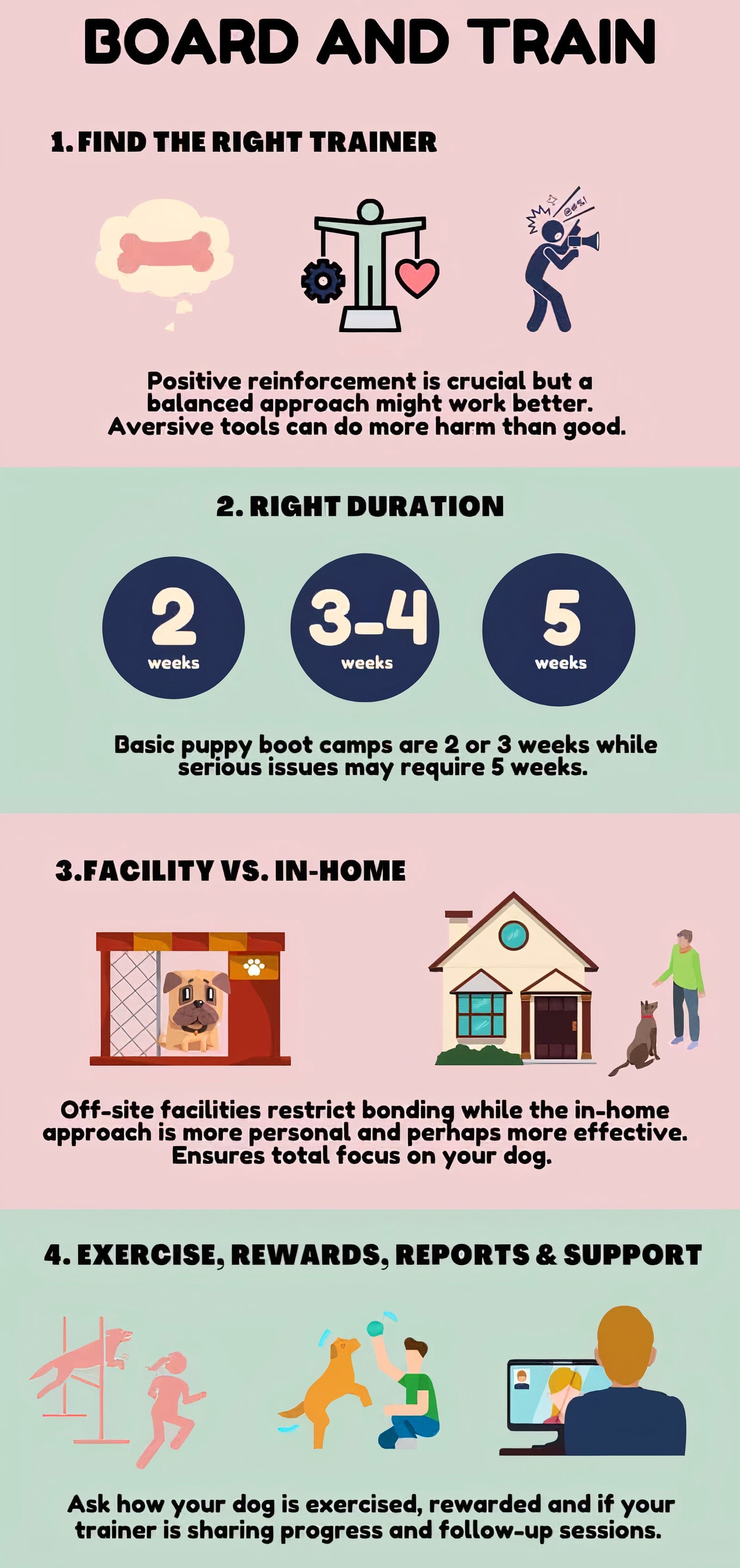
Inquire about the training methods used. For reactive dogs, positive reinforcement and force-free techniques are generally considered the most ethical and effective. These methods focus on rewarding desired behaviors and managing the environment to prevent unwanted ones, rather than using punishment, which can exacerbate fear and anxiety. Understanding the trainer’s philosophy will help you ensure it aligns with your own values.
Daily Training Regimen
A typical board and train program for reactive dogs will involve:
- Structured Training Sessions: Multiple daily sessions focusing on impulse control, desensitization, counter-conditioning, and obedience.
- Environmental Management: Learning to recognize and manage triggers in the training environment.
- Behavioral Modification Techniques: Applying specific strategies to change your dog’s emotional response to triggers.
- Exercise and Enrichment: Ensuring your dog’s physical and mental needs are met to reduce overall stress.
Communication and Updates
Good board and train programs will keep you informed about your dog’s progress. This might include regular email updates, photos, videos, or even scheduled video calls. Open communication is key to building trust and understanding how the training is progressing.
Transition and Follow-Up
The training doesn’t end when you pick up your dog. A crucial part of a successful board and train program is the transition back home and ongoing support. This often includes:
- In-home transition sessions: A trainer works with you and your dog in your home environment to practice skills.
- Follow-up training sessions: Scheduled appointments to reinforce learned behaviors and address any new challenges.
- Guidance on trigger management: Education on how to continue managing your dog’s environment and triggers at home.
Choosing the Right Program
Selecting the right board and train program is critical for the success of your reactive dog.
Key Considerations:
- Trainer Experience and Credentials: Look for trainers with specific experience in behavior modification and working with reactive dogs. Certifications from reputable organizations can also be a good indicator.
- Program Length: The duration needed varies depending on the dog’s issues, but programs for reactive dogs often range from 2 to 6 weeks or more.
- Facility Environment: Ensure the facility is clean, safe, and provides ample space for dogs to exercise and decompress.
- References and Reviews: Ask for references from previous clients, especially those with reactive dogs, and read online reviews.
- Your Involvement: Understand how involved you will be during and after the program. A good program emphasizes owner education and participation.
Addressing Common Concerns
“Will my dog forget me?”
This is a common worry. Professional trainers understand the importance of the bond between a dog and its owner. While your dog will be learning new behaviors and building trust with the trainers, the goal is always to strengthen your relationship through better understanding and communication. Most programs encourage owner involvement, and your dog will be happy to see you upon return.
“Is board and train a magic fix?”
No training program is a magic fix. Board and train provides intensive foundational work and teaches your dog new skills and coping mechanisms. However, success relies heavily on the owner’s commitment to continuing the training at home, managing triggers, and applying the learned techniques consistently. The program equips both you and your dog for a better future, but it requires ongoing effort.
“What if my dog is too reactive for board and train?”
Reputable programs will be honest about whether they can help your specific dog. Some dogs may have extreme fear or aggression that requires a more specialized approach, potentially involving veterinary behaviorists. A thorough initial assessment should determine if a board and train program is the right fit.
Conclusion
Board and train programs can be a transformative solution for owners struggling with reactive dogs. By providing intensive, expert-guided training in a controlled environment, these programs offer a structured path towards helping your dog overcome their reactivity. Remember to do thorough research, choose a program that aligns with your values and goals, and commit to continuing the training at home to ensure lasting success. The journey to a calmer, happier dog is achievable, and a well-chosen board and train program can be a vital part of that journey.
