
The world of horse coat colors is vast and fascinating, with each shade and pattern telling a unique story. Among the most captivating is the blue roan, a color that commands attention with its unique blend of hues. But what exactly defines a blue roan? How can one differentiate it from similar-looking coat patterns? And in which horse breeds can this striking color be found? This article delves into the intricacies of the blue roan coat, exploring its characteristics and the breeds that proudly display it.
What Constitutes a “Roan” Horse?
The foundation of a horse’s coat color lies in two primary pigments: black and red (a reddish-brown). These combine to form the three base coat colors: chestnut (red only), black (black only), and bay (a mix of both). White hairs, which lack pigment, also play a crucial role. The interplay of these elements gives rise to the diverse array of horse coat colors and patterns.
Roan is a specific combination where an even mixture of base coat hairs and white hairs covers the horse’s body, excluding the head and points (lower legs, mane, and tail). This distribution creates distinctive visual effects. There are three main types of roan:
- Red Roan: A combination of a chestnut base coat with white hairs.
- Bay Roan: A bay base coat mixed with white hairs. Historically, this was sometimes categorized as a type of red roan, but it’s now recognized as a distinct category.
- Blue Roan: A black base coat interspersed with white hairs. While this is the strict definition, the term “blue roan” is sometimes used more broadly for any roan coat that exhibits a bluish appearance.
True roan coloration is present from birth, though it might not be fully apparent until after the horse sheds its foal coat. A key characteristic of true roan is that the color remains consistent throughout the horse’s life, without fading with age. However, the coat’s appearance can fluctuate seasonally due to changes in hair length.
Breeds Capable of Producing True Blue Roans
Many horse breeds can exhibit the beautiful blue roan coat. Here are some of the most common breeds where you might encounter this striking color:
1. American Quarter Horse
Renowned for their speed over short distances, American Quarter Horses come in almost every color imaginable, including blue roan. While sorrel (a type of chestnut) is most common, blue roans are also frequently seen. These versatile horses are popular in rodeos, western riding, ranch work, and even disciplines like show jumping and dressage.
2. Percheron
Typically seen in gray or black, Percherons also present in roan varieties, including blue roan. Originating from northwestern France, these powerful draft horses were historically bred for warfare, later serving in agricultural work and as beasts of burden. They are admired for their strength, endurance, and amiable disposition.
3. Brabant and Belgian Draft Horses
These large, muscular draft breeds are among the strongest. Brabants hail from Belgium, while the closely related “Belgian” breed is a North American development. Although light chestnut is common in American Belgians, both breeds can appear as blue roans. They are valued for their pulling power, suitability for shows, and pleasure riding.
4. Welsh Pony and Cob
Originating from the mountains of Wales, these small horses possess distinctive features like small heads, large eyes, and strong hindquarters. Known for their stamina and friendly nature, they are excellent mounts for children. While black, gray, chestnut, and bay are common, roan Welsh ponies, including blue roans, also exist.
5. Paso Fino
Developed in Puerto Rico from horses brought by Spanish explorers, the Paso Fino is an elegant and versatile gaited horse. Bred for the challenging local terrain, they are known for their sure-footedness and dependability. While bay, chestnut, brown, and black are common, the roan gene is present, allowing for blue roan individuals.
6. Breton
This small but sturdy draft horse from Brittany, France, comes in two types: the lighter Postier and the heavier Trait. Chestnut is the most common color, but blue roans can occur, albeit less frequently. Historically used as workhorses, many are now bred for their meat.
7. Mustang
Descended from horses introduced by the Spanish, Mustangs are technically feral animals roaming freely in the Americas. This freedom results in a wide range of characteristics and coat colors, with blue roan being one possibility.
8. Standardbred
Primarily bred for harness racing in North America, Standardbreds are also favored for pleasure riding due to their solid build and calm temperament. While bay, brown, and black are most prevalent, other colors like chestnut, gray, and roan, including blue roan, are possible.
9. Tennessee Walking Horse
Famous for its unique “running-walk” gait, the Tennessee Walking Horse is a gaited breed prized for its smooth movement, calm disposition, and friendly character. It’s a popular choice for pleasure riding and competition. Bay, black, and chestnut are common, but roans, including blue roans, also appear.
10. American Saddlebred
Dating back to the Civil War era, the American Saddlebred is a classic American gaited breed valued for its gentle yet lively temperament. It’s a popular pleasure riding horse and a competitor in various disciplines. Any color is accepted in the breed registry, and roans, including blue roans, can occur.
Distinguishing True Roan from Mimics
While a blue roan coat is striking, several other coat types can produce similar visual effects, leading to confusion. It’s important to distinguish true roan from these “imposters.” True roans have a uniform mixture of colored and white hairs across their body, with the exception of the head and points. They also exhibit an inverted “V” pattern above the knee, a characteristic not found in other coat types. Genetically, the roan gene is dominant, meaning two non-roan parents cannot produce a roan foal.
Here are some coat types commonly mistaken for true roan:
Gray
Gray horses are frequently mistaken for roans. A key difference is that while roans’ coloration may vary slightly with the seasons, gray horses progressively lighten as they age. This lightening process, due to an increasing amount of white hair, can make a gray coat remarkably resemble a true roan, especially in mature horses. Some gray horses eventually become almost entirely white.
Dun (Grullo)
Blue dun, also known as “grullo,” can easily be confused with blue roan. However, they are caused by different genes. Grullo coloration results from a low amount of pigment in each hair, creating a uniform coat color, rather than the interspersion of colored and white hairs seen in roans.
Rabicano
Rabicano is a form of roaning where white hairs are mixed with colored hairs, but the pattern is not uniform across the entire body. The roaning effect is typically most pronounced at the base of the tail and can also appear as striping on the ribcage.
Sabino
Sabino refers to a pattern of white spotting on a horse’s coat. While these white spots may sometimes show a mix of white and colored hairs, this effect is confined to the spotted areas and not spread uniformly over the body.
Varnish Roan
Varnish roan is part of the leopard complex pattern and can resemble true roan due to its all-over mix of colored and white hairs. However, genetically, they are distinct. Varnish roans often display “varnish marks”—darker patches with less white hair, typically near the bone—which are never seen in true roans. Varnish roans also lack the characteristic inverted “V” pattern found above the knee in true roans.
A Beautiful and Distinctive Coat Color
The blue roan is undoubtedly one of the most distinctive and attractive horse coat colors, appearing across a wide range of breeds. While other coat types may share similarities, understanding the specific characteristics of true roan—its genetic basis, uniform distribution of white hairs (excluding head and points), and the distinctive inverted “V” marking—makes identification straightforward for those who know what to look for.
For those who appreciate the unique charm of horses, Wild Jolie Cowgirl Boots offer the perfect blend of durability and style for any equestrian pursuit. Whether you’re mucking out stalls or preparing for a show, these boots provide the resilience needed for daily horse care while ensuring you look the part. Their versatile design seamlessly transitions from casual barn work to more formal equestrian events, complementing any outfit with their equestrian-inspired styling.
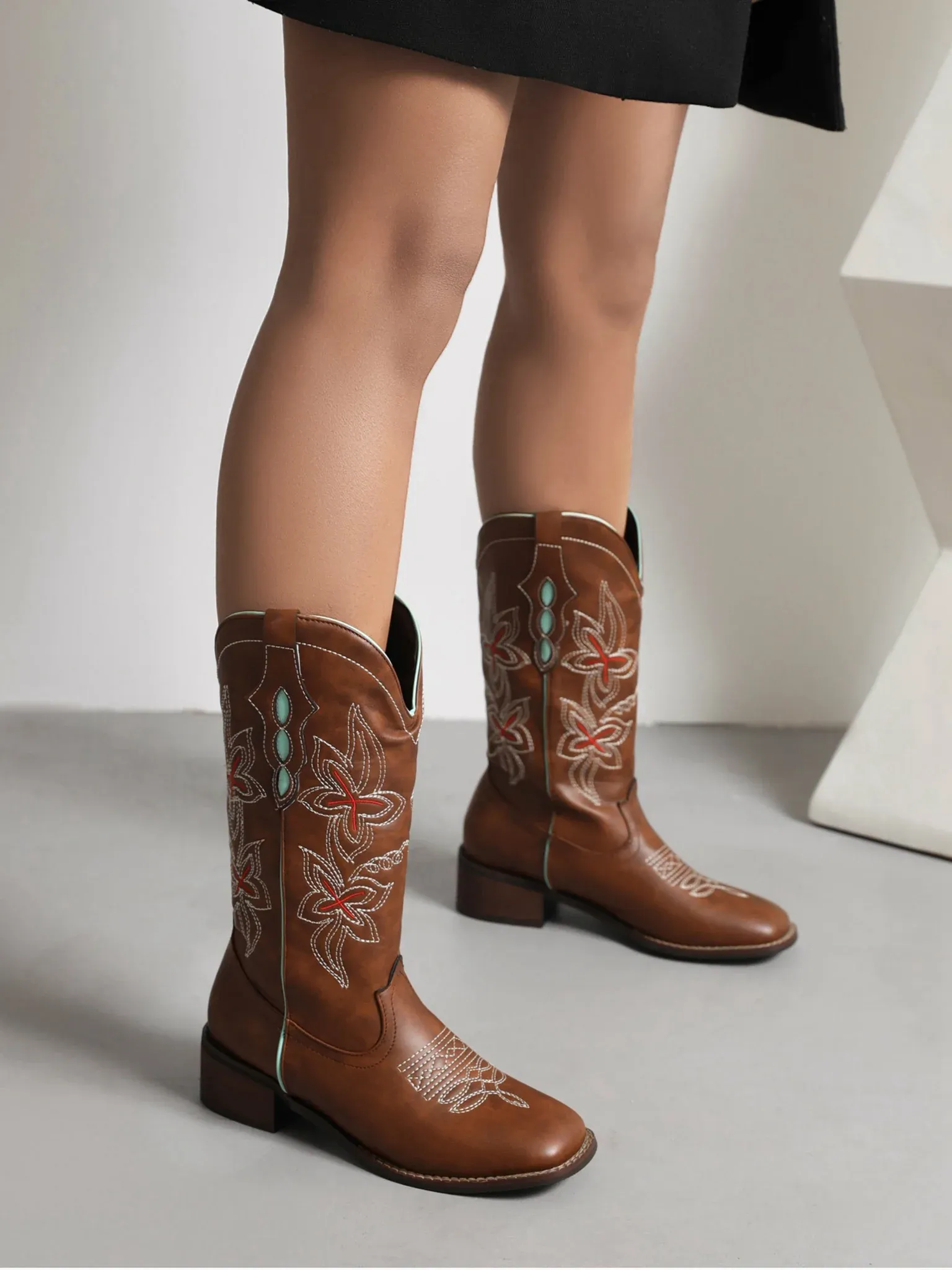 Cowgirl boots
Explore the collection of Wild Jolie Cowgirl Boots and find the perfect pair to enhance your time with horses.
