
Horses, celebrated throughout history and fiction for their beauty and talent, come in a dazzling array of colors. From the legendary “Big Red” Man O’ War to the beloved “Black Stallion,” and the famous golden palomino, Trigger, these equine companions capture our imaginations. While it’s often said that “a good horse is never a bad color,” the science behind these hues is fascinating. All horse colors are essentially derived from two base colors: black and chestnut. Various genes then act upon these base colors, diluting them to create the vast spectrum we see today.
The Foundation: Base Colors
Black
The allure of the black horse, from the elegant Friesian to the fictional Black Stallion, is undeniable. While true black is less common in breeds like the Arabian or Thoroughbred, it defines breeds such as the Friesian and the Mérens. The shade of black can vary from a deep blue-black to a silvery hue, and some black horses may even exhibit a coppery tone. Sunlight can cause some black coats to fade to a chocolatey brown.
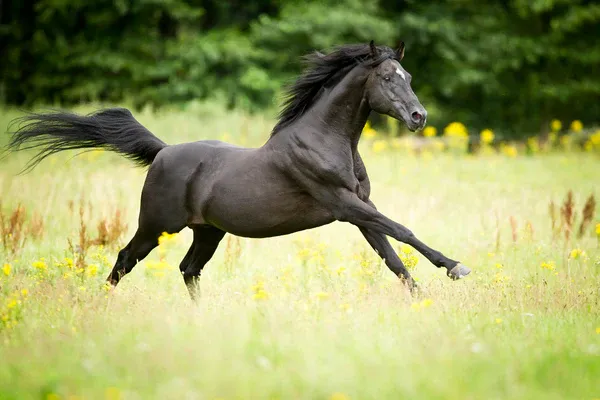 Black horse with a sleek coat
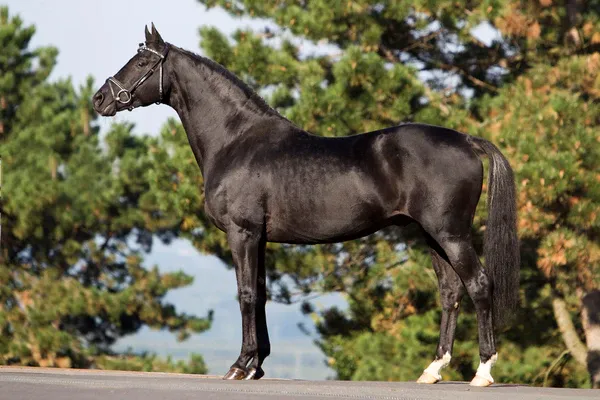 Another example of a black horse
Chestnut
Chestnut is a prevalent color across most horse breeds. The Suffolk Punch and many Belgians are exclusively chestnut, and it’s a rare but possible color in Friesians. Chestnut shades range dramatically from a golden red to a fiery red, copper, or deep liver color. Some chestnuts feature contrasting flaxen (pale blonde) manes and tails. The term “sorrel” is often used interchangeably with chestnut, particularly for those with flaxen manes.
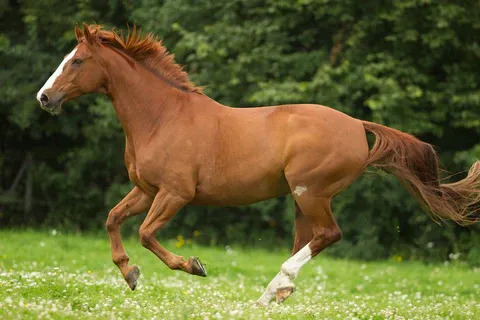 A chestnut horse with a rich coat color
 A liver chestnut horse
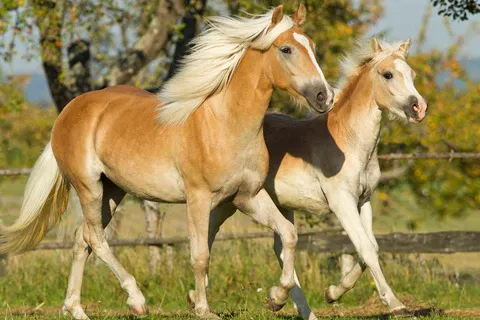 A blonde or flaxen chestnut horse
Modifying the Base: Gene Effects
Agouti
The agouti gene specifically impacts black pigment. When it acts on a black coat, it dilutes the body color to brown while keeping the “points” (mane, tail, and lower legs) black, resulting in the bay color. Bay horses exhibit a wide range of shades, from golden brown to a rich mahogany. Famous bays include Seabiscuit and the legendary sire Khemosabi.
A variation of the agouti gene produces brown or seal brown horses. These horses appear black but have lighter brown hairs on their muzzles and flanks. The celebrated Thoroughbred racehorse Zenyatta was a seal brown.
Cream
The cream gene’s effect on coat color depends on whether a horse inherits one or two copies.
A single cream gene interacting with a chestnut coat results in the palomino color, a beautiful golden hue with a white mane and tail. Shades can range from pale gold to a deeper golden chocolate. Palominos have long been popular performers. Roy Rogers’ horse Trigger was a famous palomino.
When the cream gene acts on a bay coat, it produces buckskin. Buckskins also have golden coats but retain black points. This color is commonly associated with Quarter Horses but appears in many breeds. Spirit, from the animated film Spirit: Stallion of the Cimmaron, was a buckskin.
A single cream gene on a black coat results in smoky black, which is often indistinguishable from seal brown or sun-faded black and typically requires genetic testing for identification.
Horses with two copies of the cream gene (one from each parent) are known as “double dilutes” and present as pale, luminous cream colors with blue eyes. These include cremello, perlino, and smoky cream. While once less accepted, these colors are gaining recognition in breed registries.
Dun
The dun gene also lightens coats but affects both base colors. Chestnut horses become red dun or claybank dun, appearing sandy with reddish points. Bay horses turn a golden tan with black points, known as bay dun or zebra dun. When dun acts on black, it creates grullo, a mousy grey body with black points.
Duns are characterized by “dun factors,” which include a dorsal stripe down the back, leg striping resembling zebra markings, and sometimes a shoulder bar or facial mask, believed to aid in camouflage. The Kiger Mustangs of Oregon are known for their dun coloring.
Silver Dapple
The silver dapple gene (also known as taffy in Australia) affects only black pigment, transforming it into a chocolaty brown. These horses often have flaxen or silvery-grey manes and tails, resembling bays or blacks. Some silver dapples develop a dappled appearance, hence the gene’s name. This color is found in breeds like the Rocky Mountain Horse and Shetland Pony.
Champagne
Horses with the champagne gene often display a metallic sheen and have hazel eyes, with freckled skin, particularly on the muzzle and around the eyes. Gold champagne (chestnut base) resembles palomino. Amber champagne or sable champagne (bay or seal brown base) look like buckskins with faded brown points. Classic champagne (black base) is a dark dove grey, similar to grullo. Champagne colors are popular in gaited breeds.
Roan
Roan horses have any base color with a scattering of white hairs throughout their body coat, while their head and points remain solid. Red roan or strawberry roan refers to chestnut roans. Bay roan occurs on a bay base. Black roans are often called blue roans due to the bluish hue created by the white hairs mixed with black.
Grey
Grey horses are born any color but gradually lighten with age, eventually becoming nearly white. During this process, many develop dapples. Some greys go through a “rose grey” phase with a pinkish hue. Fleabitten grey horses retain small colored specks.
Patterns and Markings
Appaloosa
Appaloosas are renowned for their spotted patterns, which come in several variations:
- Varnish Appaloosas have roan-like coats with smudges of color on the extremities.
- Blanket Appaloosas feature a white area over the rump and barrel, often with spots.
- Snowcap and few-spot Appaloosas are variations of the blanket pattern with fewer spots.
Most Appaloosas also exhibit mottled skin, striped hooves, and white sclera.
Tobiano
Tobiano is a pattern of white markings overlaid on a horse’s base color. Tobianos typically have white crossing their topline and four white legs, with color usually remaining on the head, chest, and flanks. While common in Paint Horses, this pattern is also found in breeds like the Trakehner and American Saddlebred.
Frame Overo
The frame overo pattern features white patches on the sides of the neck, barrel, and rump, rarely crossing the topline, and often includes large white facial markings. This pattern is most common in Paints but can occur in Thoroughbreds and Miniature Horses.
Tovero
Tovero results from a combination of tobiano and other pinto patterns, such as frame overo. Toveros often exhibit an excessive amount of white patterning, appearing like tobianos with added white.
Splash White
The splash white pattern gives the impression of the horse being dipped in paint, with white markings typically covering the head, legs, belly, and tail tip. Many splash white horses have blue eyes. This pattern was famously found in the now-extinct Abaco Barb herd.
Sabino
Sabino patterns create white markings that appear to flow upward from the horse’s underside. Typical sabinos have large blazes extending to the chin, high white stockings, and flank patches. Some sabinos are more subtly marked with just a blaze and socks, while others can be almost entirely white.
Dominant White
Dominant white, identified as a distinct pattern in 2007, is expressed similarly to sabino. The Thoroughbred stallion Sato exhibits dominant white over a palomino coat.
Pintaloosa
A pintaloosa is a combination of a pinto pattern and the Appaloosa pattern, typically featuring a recognizable pinto pattern overlaid with a spotted blanket.
Understanding these genetic factors and patterns allows for a deeper appreciation of the diverse and beautiful equine coat colors that exist.
