
When you dream of a perfect day in the field, you picture your loyal canine companion, steady and confident, working in perfect harmony with you. A crucial, yet often misunderstood, part of achieving this picture is noise conditioning. This is where the Blank Pistol For Dog Training comes into play. It’s not about intimidation; it’s about education. Using a starter pistol is a foundational step in preparing a future gun dog for the sounds of a real hunt, ensuring they associate the noise with positive, exciting experiences rather than fear.
This process is a core component of more advanced training, and understanding its principles is vital. For those just starting out, exploring topics like gun dog training for puppies provides a broader context for where this specific tool fits into the overall journey. Properly introducing your dog to gunfire is one of the most important things you can do to build a reliable and happy hunting partner for years to come.
What is a Blank Pistol and Why Use It?
A blank pistol, often called a starter pistol, is a firearm that cannot fire a projectile. Instead, it is designed to chamber and fire cartridges filled only with gunpowder. When fired, it produces a loud report and a flash, closely simulating the sound of a real firearm without the danger of a bullet. This makes it an indispensable tool for safely acclimating dogs to loud noises, a process known as “gun-shyness” prevention.
The primary goal is to create a positive association with the sound. For a hunting dog, the sound of a gunshot should be a cue for something exciting, like the retrieve of a bird. Dr. Sarah Miller, a specialist in canine behavioral conditioning, explains, “The key is classical conditioning. We want the dog’s brain to connect the ‘bang’ with the thrill of the chase or the joy of a reward. A blank pistol allows us to control the volume and distance of that stimulus, making the process gradual and fear-free.” Without this careful introduction, a dog can easily become “gun-shy,” developing a deep-seated fear of loud noises that is incredibly difficult, and sometimes impossible, to reverse. This fear can end a promising hunting dog’s career before it even begins.
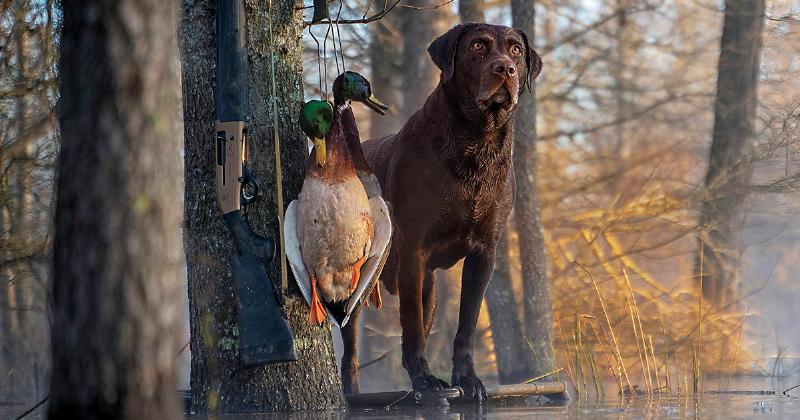 A trainer using a blank pistol for dog training in a wide-open field with a Labrador retriever watching intently from a distance, ready for a retrieve.
The Critical Role of Noise Conditioning
Noise conditioning isn’t just for future field champions; it’s beneficial for any dog. A well-conditioned dog is less likely to panic during thunderstorms or fireworks. However, for a hunting dog, it is non-negotiable. A dog that flinches, bolts, or shuts down at the sound of a gunshot is a liability in the field. They cannot perform their duties and may even put themselves in danger. Using a blank pistol for dog training allows you to build that steadiness methodically. It’s about building a foundation of trust and confidence, ensuring the dog understands that the loud noise is part of the game they love to play. This foundational knowledge is essential when you consider the broader question of how do you train a hunting dog, as it’s a building block for all future work.
How to Introduce a Blank Pistol: A Step-by-Step Guide
The introduction process must be slow, deliberate, and always focused on the dog’s reaction. Rushing this stage is the single biggest mistake a trainer can make. The goal is a neutral or happy dog, never a fearful one.
1. Start with Distance and a Helper
You will need a helper for this process. One person handles the dog, and the other handles the pistol.
- Initial Setup: Go to a large, open area your dog enjoys, like a field. The person with the dog should engage the dog in a fun activity—playing with a favorite toy or a simple retrieve.
- First Shot: The person with the blank pistol should be at least 50 to 100 yards away. While the dog is mid-action and excited (chasing the toy), the helper fires the pistol, pointed safely up and away from everyone.
- Observe: Watch the dog’s reaction closely. Did they notice? Did they hesitate? Ideally, they were so engrossed in the game that they barely registered the sound. This is the perfect outcome.
2. Create Positive Association
The entire exercise is about linking the sound to fun.
- Timing is Everything: The “bang” should happen when the dog is at its peak excitement level. For retriever breeds, this is often the moment a training dummy or bird is thrown for them to fetch. The sound should signal the start of the fun.
- Reward: Immediately after the sound, praise the dog enthusiastically. The retrieve itself is a huge reward. The sequence should be:
throw -> bang -> retrieve -> praise. The dog quickly learns the bang means they get to do what they love.
3. Gradually Decrease the Distance
Over many sessions, you can slowly decrease the distance between the dog and the pistol.
- Patience is Key: This isn’t a race. Spend several sessions at one distance before moving closer. If you close the distance from 70 yards to 50 yards and the dog shows any signs of anxiety (tucked tail, flattened ears, hesitation), you’ve moved too fast. Go back to the distance where they were comfortable.
- Vary the Environment: Once the dog is confident in the initial training field, practice in different locations to generalize the positive association. Using a smaller device like a dog training cap gun can be an intermediate step for some puppies before moving to a louder pistol.
4. Transitioning to Louder Sounds
Blank pistols come in different calibers, with .22 caliber being quieter than those using 209 primers. It’s often wise to start with a quieter option. The principles of using a starter pistol dog training device of any kind remain the same: start far away, associate with fun, and progress slowly. Once the dog is completely unfazed by the starter pistol at a reasonable distance, you can begin introducing the sound of a shotgun, again, from very far away.
Choosing the Right Blank Pistol
Not all starter pistols are created equal. The two most common types used in dog training are .22 caliber and 209 primer pistols.
.22 Caliber Pistols
These are often the go-to for starting puppies and sensitive dogs.
- Pros: Quieter report, less expensive ammunition (“blanks”). They are a great tool for the initial stages of introduction.
- Cons: Can be less reliable and may require more frequent cleaning to prevent misfires. The sound may not be loud enough for advanced training scenarios or windy days.
209 Primer Pistols
These are louder and more closely mimic the report of a shotgun.
- Pros: Extremely reliable, louder and more realistic sound, durable construction. They are the standard for hunt tests and field trials.
- Cons: The louder volume means you must start at a much greater distance. The primers themselves can be more expensive than .22 blanks.
Expert Tip: “I always recommend starting with a .22 pistol for young dogs under a year old,” advises Dr. Miller. “There’s no benefit to rushing to a louder gun. The goal is confidence, not confrontation. You can always move up to a 209 primer pistol when the dog’s foundation is rock solid.”
Safety First: Non-Negotiable Rules
Even though a blank pistol for dog training doesn’t fire a projectile, it is not a toy. It must be treated with the same respect as any firearm.
- Always Treat it as Loaded: This is the golden rule of firearm safety. Never point it at anyone or anything you don’t intend to shoot.
- Hearing Protection: The trainer firing the pistol should always wear hearing protection. The noise is more than enough to cause permanent hearing damage over time.
- Safe Direction: Always point the pistol in a safe direction when firing, typically straight up into the air.
- Check for Obstructions: Ensure the barrel is clear of any mud or debris before firing. A blockage can cause the barrel to fail, which is extremely dangerous.
- Secure Storage: Store the pistol and the blanks securely and separately, out of reach of children.
Conclusion: Building a Confident Canine Partner
Using a blank pistol for dog training is a proven, effective method for preparing a dog for the sounds of the hunt. It’s a process built on patience, positive reinforcement, and a deep understanding of your dog’s mindset. By carefully conditioning your canine companion to associate the loud report with excitement and reward, you eliminate the risk of gun-shyness and build a confident, steady partner for all your adventures. Whether you are attending formal dog hunting training classes or working independently, mastering this skill is fundamental to success and ensures a long, happy working relationship with your dog.
Frequently Asked Questions (FAQ)
1. At what age can I start using a blank pistol with my puppy?
You can start introducing loud noises in a controlled way from a young age (4-6 months), but always with extreme caution. Start with clapping hands or a cap gun from a great distance. A formal blank pistol for dog training is typically introduced when the puppy is a bit older and has a strong foundation of positive reinforcement and a high prey drive, usually around 6-8 months old.
2. What are the signs of gun-shyness I should watch for?
Signs of fear or anxiety include tucking the tail, flattening the ears, trembling, trying to bolt or hide, cowering, or refusing to retrieve. If you see any of these signs, you have progressed too quickly. Stop immediately and return to a much earlier stage where the dog was comfortable.
3. Is a blank pistol better than just using a real shotgun from far away?
A blank pistol is significantly better for the initial stages because it gives you more control over the volume. A .22 starter pistol is much quieter than even a distant shotgun. This allows for a more gradual introduction, which is safer and more effective for preventing fear.
4. How often should I conduct these training sessions?
Keep sessions short and fun, perhaps 5-10 minutes a few times a week. Consistency is more important than duration. Ending each session on a positive, successful note is crucial for building the dog’s confidence.
5. Can I use a blank pistol to cure a dog that is already gun-shy?
Curing a gun-shy dog is a very difficult and lengthy process that requires immense patience and expertise. While a blank pistol would be part of the rehabilitation, the process must start with much quieter sounds (like a metal spoon tapping a pan) from a huge distance. It is highly recommended to seek professional help from a trainer experienced in dealing with gun-shyness.
