
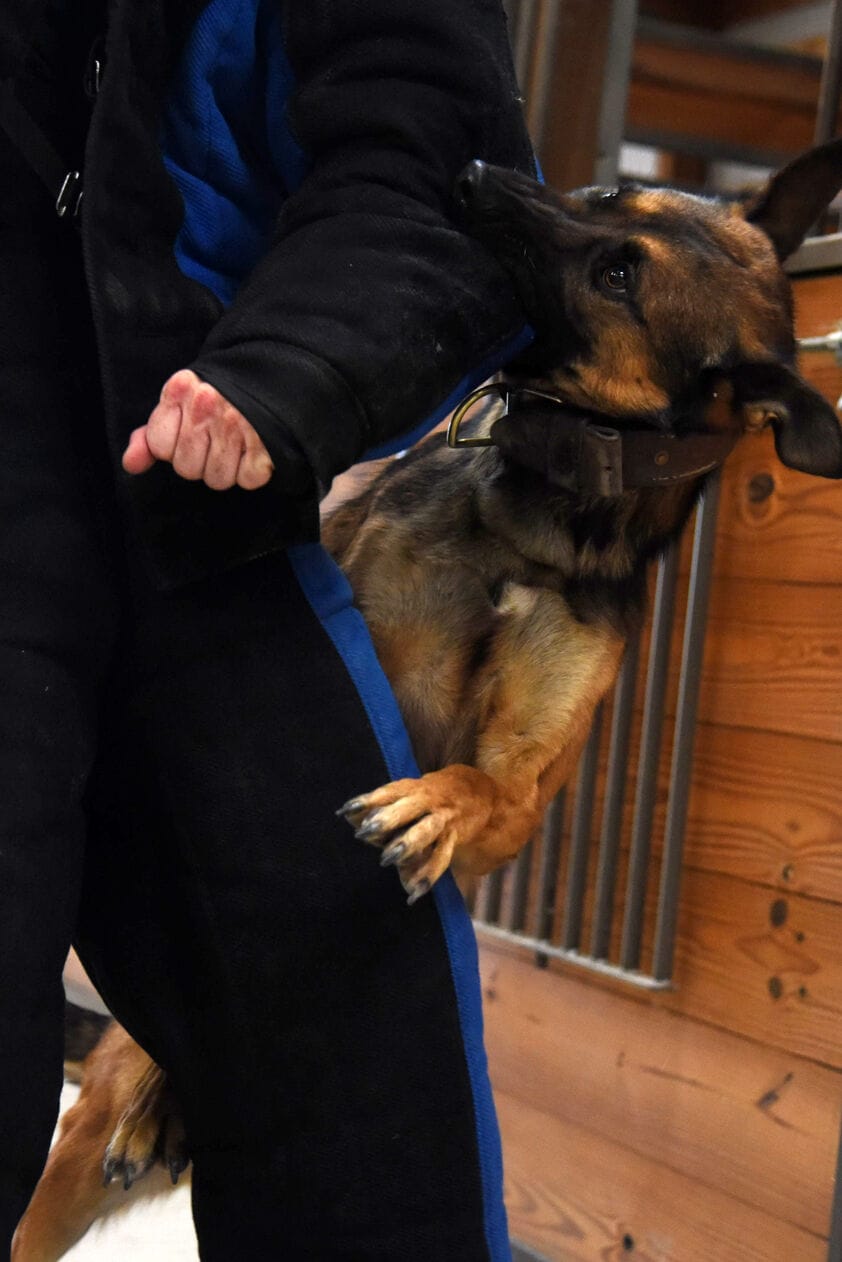
When it comes to protection dog training, the use of bite suits is an essential tool for developing a dog’s natural prey drive and teaching them to bite and hold on command. This specialized gear allows trainers to safely simulate real-world scenarios, ensuring the dog learns proper technique and control without risk of serious injury. The process of Bite Suit Dog Training is a rigorous one, demanding patience, expertise, and a deep understanding of canine behavior.
Understanding the Role of Bite Suits in Protection Training
Bite suits are heavily padded garments worn by a decoy, also known as a “helper,” during protection training sessions. Their primary purpose is to provide a safe target for the dog to bite, allowing them to practice their drive and technique. Modern bite suits are designed to be durable and protective, covering the entire body while still allowing the decoy to move naturally and simulate various attack scenarios. This realism is crucial for effective training.
The decoy’s ability to move, make sounds, and react to the dog’s actions is as important as the suit itself. They must be able to encourage the dog’s drive, provide clear signals, and importantly, know when to release the dog or end the exercise. This interplay between the dog, the decoy, and the suit is what makes bite suit training so effective in building a reliable protection dog. Without this controlled environment, it would be impossible to test and refine a dog’s protective instincts safely.
The Stages of Bite Suit Dog Training
Bite suit training typically progresses through several stages, starting with foundational work and gradually increasing in complexity.
Stage 1: Introduction to the Bite Suit and Prey Drive
The initial phase focuses on introducing the dog to the bite suit and the decoy. This is not about immediate “work” but about positive association. The decoy might initially use a simpler piece of equipment, like a sleeve, to gauge the dog’s interest and drive. The goal is to build the dog’s confidence and encourage them to engage with the decoy and the equipment.
Trainers observe the dog’s natural prey drive – their instinct to chase and “catch.” This drive is then carefully channeled towards the appropriate equipment. Early sessions involve short, controlled engagements, with the dog being rewarded for focusing on and holding the suit. It’s vital that these early interactions are positive, establishing the bite suit as a source of exciting play and engagement. This foundational step prevents fear or hesitation later on.
Stage 2: Developing the “Bite and Hold” Command
Once the dog shows a strong interest and is comfortable with the bite suit, the training progresses to developing the “bite and hold” command. The decoy will present the suit in a way that encourages the dog to bite and maintain their grip. The trainer then uses verbal cues and hand signals to reinforce the desired behavior.
- Initial Grips: The decoy might offer a passive grip, allowing the dog to bite and hold for a few seconds before release.
- Active Grips: As the dog gains confidence, the decoy might introduce slight movements, encouraging the dog to maintain their hold while the decoy moves.
- Verbal Release: Crucially, the dog must learn to release the bite on command. This is trained by rewarding the dog for letting go when instructed.
This stage is about control and responsiveness. The dog needs to understand that biting is permitted only when commanded and that release is also a critical part of the exercise. Trained personal protection dogs demonstrate exceptional control in both biting and releasing.
Stage 3: Advanced Scenarios and Environmental Distractions
With a solid foundation, training moves to more complex scenarios that mimic real-world threats. The decoy will introduce elements of surprise, agitation, and resistance. This stage tests the dog’s ability to remain focused and controlled under pressure.
- Agitation: The decoy might use verbal cues or body language to agitate the dog, encouraging a controlled charge and bite.
- Concealment: Scenarios might involve the dog searching for a hidden decoy.
- Environmental Factors: Training can occur in various locations, including different surfaces, noises, and potentially other people present (under strict control).
- Multiple Engagements: For higher-level dogs, multiple engagements in a single session might be introduced to build stamina and focus.
This phase is critical for ensuring the dog can perform reliably in high-stress situations. The objective is not to create an overly aggressive dog, but a controlled, confident protector.
Key Principles for Effective Bite Suit Training
Several core principles underpin successful bite suit dog training:
1. Safety First
The safety of both the dog and the decoy is paramount. All training must be conducted by experienced professionals using appropriate gear and techniques. Decoys must understand canine behavior to avoid pushing a dog too far or creating fear. Dogs should be healthy and physically suited for this type of work.
2. Positive Reinforcement
While protection training involves scenarios that trigger a dog’s natural drives, positive reinforcement remains key. Rewarding correct actions – a good bite, a clean release, focus on the decoy – strengthens the desired behavior. This builds a willing and confident working partner, rather than one that works out of fear.
3. Consistency and Patience
Protection training requires immense consistency from both the trainer and the decoy. Every command, every reward, and every correction must be applied uniformly. Patience is essential, as each dog learns at its own pace. Rushing the process can lead to mistakes and setbacks.
4. Understanding Canine Drives
Effective trainers have a deep understanding of canine drives, particularly prey drive and defensive drive. Bite suit training specifically targets and refines prey drive, channeling it into a directed and controlled response. Recognizing when a dog is over-aroused or fearful is crucial for modifying the session accordingly.
5. Gradual Progression
As detailed in the stages above, training must be gradual. Each step builds upon the last. Introducing complex scenarios too early can overwhelm the dog and lead to undesirable behaviors. A structured, step-by-step approach ensures the dog builds confidence and competence at each level.
Common Challenges in Bite Suit Training
Despite its effectiveness, bite suit training can present challenges:
- Lack of Drive: Some dogs may naturally have lower prey drive, requiring trainers to use more sophisticated methods to build engagement.
- Fear or Hesitation: If early introductions are not handled correctly, a dog might develop a fear of the suit or the decoy.
- Poor Grip or Release: Dogs might grip too softly, not hold long enough, or have difficulty releasing on command. This often requires specific drills to correct.
- Over-Arousal: Some dogs can become overly excited, leading to uncontrolled behavior. Learning to manage this arousal is a key training goal.
Addressing these challenges requires the expertise of a seasoned professional who can adapt their methods to the individual dog’s temperament and learning style. For those seeking specialized assistance, resources like dog training Toms River NJ can provide expert guidance.
Beyond the Bite Suit: The Importance of Control and Ethics
While the bite suit is central to protection training, it’s crucial to remember that the ultimate goal is not just a dog that bites, but a dog that is safe, reliable, and under control. Ethical protection training emphasizes:
- Drive Building, Not Aggression: The aim is to develop a dog’s natural protective instincts and prey drive, not to create gratuitous aggression.
- Control Above All: A well-trained protection dog must have impeccable obedience and control, able to disengage on command instantly.
- Temperament Assessment: Not all dogs are suited for protection work. Rigorous temperament testing is essential before commencing this type of training.
- Professional Guidance: Protection training is not a DIY endeavor. It requires experienced professionals who understand the nuances of canine behavior and the techniques involved.
Investing time and expertise in proper bite suit dog training, under the guidance of skilled professionals, is the most effective way to develop a capable and trustworthy protection dog. It’s a journey that hones a dog’s natural abilities while instilling the crucial element of control, ensuring a safe and effective partnership. For individuals interested in advanced training, resources like personal protection dog training offer valuable insights.
