
Training a dog is a journey filled with rewarding milestones, and the bird release is a particularly exciting one, especially for those involved in bird hunting or competitive dog sports. This crucial step signifies a dog’s readiness to apply its learned skills in a real-world scenario. It’s the moment your canine companion demonstrates its understanding of commands, its retrieve drive, and its ability to work independently yet cohesively with its handler. Mastering the bird release isn’t just about obedience; it’s about fostering a confident, capable working dog.
Understanding the Bird Release Command
The “bird release” command, often “give” or “fetch,” is the cue you give your dog to release a bird it has retrieved. This command needs to be clear, consistent, and understood implicitly by your dog. It’s the culmination of various training stages, from basic obedience to specialized retrieving drills. The goal is for the dog to bring the bird to you and release it directly into your hand or a designated area upon hearing the command, without hesitation or possessiveness.
Why is the Bird Release Important?
A reliable bird release is paramount for several reasons:
- Safety: Prevents the dog from damaging the bird, which is crucial for hunting or game management.
- Control: Ensures the handler maintains control over the retrieved game.
- Efficiency: Speeds up the retrieving process, especially in a hunting scenario where multiple birds might need to be recovered.
- Dog’s Well-being: Prevents the dog from swallowing or chewing the bird, which can lead to health issues.
Foundational Training for a Successful Bird Release
Before you can even think about introducing a live or simulated bird for a release, a solid foundation of basic obedience and retrieving skills is essential. This includes:
Basic Obedience Commands
Commands like “sit,” “stay,” “come,” and “heel” are the bedrock of all dog training. A dog that reliably responds to these commands is easier to train for more complex tasks. For the bird release, a strong “stay” and “come” are particularly vital.
Developing a Solid Retrieve
- Introducing the Dummy: Start with retrieving dummies or toys. Encourage your dog to chase, pick up, and bring the item back to you. Make it a fun game!
- “Take it” and “Give” Commands: Introduce the “take it” command as your dog picks up the dummy and the “give” command when they return it. Reward them generously with praise and treats when they successfully give the dummy.
- Building Drive: Use positive reinforcement to build your dog’s natural retrieving instinct. Games and rewards are key here.
Introducing the Bird: Gradual Steps
Once your dog has a strong foundation, you can begin introducing birds. This should be done gradually and with careful consideration for the dog’s temperament and training level.
Using Quail or other Game Birds
For many trainers, quail are a popular choice due to their size and scent. Other game birds can also be used, depending on your location and hunting goals. It’s important to use birds that are suitable for training and readily available.
The “Soft Mouth” Technique
A critical aspect of bird training is teaching a “soft mouth.” This means the dog retrieves the bird without damaging it. This is achieved through consistent training, rewarding gentle retrieves, and sometimes using specialized training aids. If your dog tends to be hard-mouthed, you might need to revisit the dummy training, focusing more intensely on gentle retrieves.
Controlled Bird Releases
Start with controlled scenarios. This might involve:
- Live Bird and Handler Proximity: Have a helper release a bird a short distance away while you have your dog on a leash. Cue your dog to “fetch.”
- Leash Control: As the dog retrieves, maintain slight tension on the leash to guide them back to you.
- The “Give” Command: As they reach you, use your “give” command. Be ready to present your hand or a specific release spot.
- Immediate Reward: The instant the dog releases the bird, praise and reward them. This positive association is crucial.
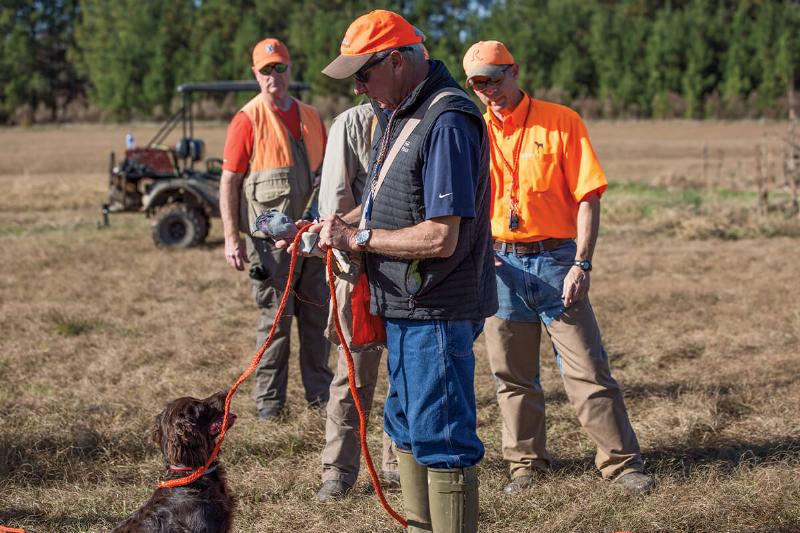 Professional dog training session focusing on bird release command, outdoor field setting
Common Challenges and Solutions
Even with a solid training plan, you might encounter hurdles.
Hard-Mouth Tendencies
- Problem: The dog bites down too hard on the bird, damaging it.
- Solution: Go back to dummy training. Use a softer dummy, reward only gentle pickups. You can also use a bird-scented dummy to bridge the gap. Some trainers use a bitter apple spray on dummies initially to discourage hard biting, then transition to birds.
Reluctance to Release
- Problem: The dog doesn’t want to give up the bird.
- Solution: Ensure your “give” command is strong and consistently rewarded. Trade the bird for a high-value treat or a favorite toy. Never physically pry the bird from the dog’s mouth, as this can create fear and possessiveness. Make releasing the bird more rewarding than keeping it.
Distractions
- Problem: The dog gets overwhelmed by the live bird and forgets commands.
- Solution: Gradually increase distractions. Start in a quiet, controlled environment. As the dog improves, introduce more challenging situations, like other dogs nearby or more complex terrain. Using using pigeons to train bird dogs can be a good intermediate step, as they are less prone to immediate flight than some game birds.
Advanced Bird Release Techniques and Considerations
As your dog becomes more proficient, you can refine the training.
Blind Retrieves
This advanced technique involves sending your dog to retrieve a bird that they haven’t seen fall. This tests their ability to follow your commands and use their scent-tracking skills without visual cues. It requires a very strong understanding of directional commands and the release command.
Multiple Bird Retrieves
In hunting scenarios, a dog may need to retrieve multiple birds. Training for this involves reinforcing the release command even when the dog is excited about finding subsequent birds.
Using Training Aids
Various training aids can assist in the bird release process. These might include:
- Bird bags for dog training: These can be used to introduce the scent and feel of a bird in a controlled manner.
- Bird box for dog training: A secure box can be used to introduce the bird and practice the initial retrieval and release in a confined space.
- Electronic dummies with bird scent: These mimic the scent of a bird and can be a useful tool for practicing retrieves without the use of live birds initially.
The Role of the Handler
Your role as a handler is crucial. Your calmness, consistency, and positive reinforcement will shape your dog’s understanding and confidence. Celebrations for a successful retrieve and release reinforce the desired behavior. Patience is key; every dog learns at its own pace. Remember that how to train a bird dog to retrieve birds is a process that requires dedication.
For those focusing on specific hunting disciplines, understanding how to train a bird hunting dog involves tailoring these techniques to the specific quarry and environment.
The bird release command is more than just a trick; it’s a testament to the bond and communication you’ve built with your dog. By approaching this training phase with clear goals, consistent methods, and abundant positive reinforcement, you’ll guide your canine partner to successfully master this vital skill, ensuring many successful outings together.
