
Transporting birds safely and securely is a crucial aspect of responsible pet ownership, whether for routine vet visits, the initial journey home, or emergency evacuations. Having the right carrier can significantly reduce stress for both the bird and the owner. This guide delves into the essential features of a good Bird Carrier and evaluates several popular options.
A well-designed bird carrier prioritizes the animal’s safety and sense of security. Key considerations include:
- Hard Sides: These provide crucial protection against impacts during transit.
- Solid-Colored Sides: Enclosed, darker spaces help birds feel more secure, reducing anxiety.
- Adequate Ventilation: Proper airflow is essential to prevent overheating and ensure comfort.
- Appropriate Size: Carriers should be sized in relation to the bird, with particular attention to height.
Why Smaller Carriers Are Better
While larger cages are generally preferable for birds at home, carriers are not intended as permanent living spaces. They are temporary enclosures for safe transport. A smaller carrier is often better, especially in terms of height. When startled, birds may attempt to fly, and a tall carrier allows them too much space to potentially injure themselves. The ideal carrier should restrict any “take-off” ability.
Many professionals utilize short, tiered carriers that ensure birds cannot fly and hit the sides. Contrary to what some might assume, birds generally do not feel scared, upset, or cramped in these smaller spaces. Parrots naturally nest in dark, enclosed tree cavities, making them feel quite secure in such environments. To enhance this sense of security, covering the carrier with a towel, leaving only a small viewing section, is highly recommended.
Keeping Carriers Simple and Safe
It can be tempting to furnish a bird carrier with toys and other enrichment items. However, in a moving vehicle, these can become hazards. A simpler approach is recommended: a small amount of seed or millet on the floor of the carrier can provide a slight distraction. For short trips of up to four hours, water can be omitted, but it should be offered during stops on longer journeys. Professionals often use fruit as a convenient, spill-proof source of moisture.
Evaluating Common Bird Carriers
Let’s examine some popular carrier designs and how they measure up against these essential criteria.
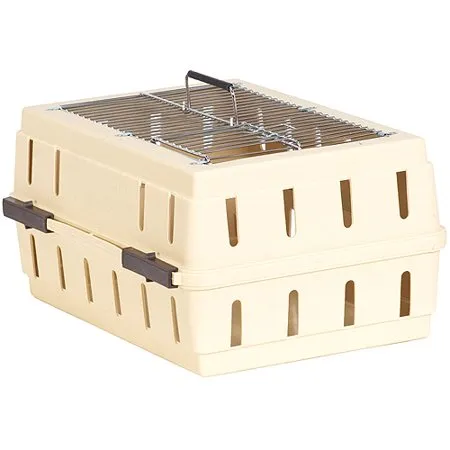
Carrier 1: The Under-Seat Flight Companion
 Carrier 1
This carrier is specifically designed to fit under the seat during commercial flights, offering a relatively flat profile for increased safety. Its hard sides provide stability, and the mostly covered design helps the bird feel more secure. This makes it an excellent choice for travel.
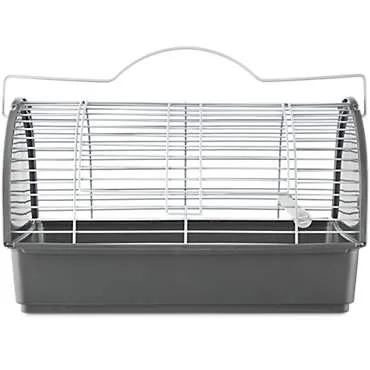
Carrier 2: The Robust All-Rounder
 Carrier 2
While not originally designed for birds, this carrier proves highly effective due to its solid and hard construction. It is far less likely to collapse if external pressure is applied, offering enhanced protection for larger birds. Its secure design contributes to a bird’s sense of safety.
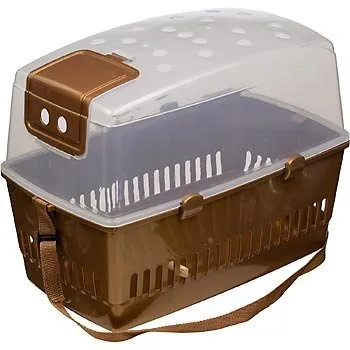
Carrier 3: The Wire-Fronted Option
 Carrier 3
This type of carrier is often preferred over fully clear designs. Birds are accustomed to wire, understanding its boundaries and ability to climb on it without attempting to fly through it. It also provides good ventilation. A potential drawback is that the tray might slide out unless it has a secure locking mechanism.
Carrier 4: Compact but Potentially Cramped
Carrier 4
This top-loading carrier features a wire construction, which is less problematic for birds prone to flight attempts. Its small size prevents the bird from excessively hitting the sides. However, it can be cramped, especially for birds with long tails, and would likely benefit from covering to enhance the bird’s sense of security.
Carrier 5: Tall and Potentially Overly Spacious
Carrier 5
This carrier’s height is a significant concern, providing too much space for smaller birds to fly upwards. For larger birds, the perch may appear too small, and their tails might lack adequate room. Additionally, it could become quite hot in a car.
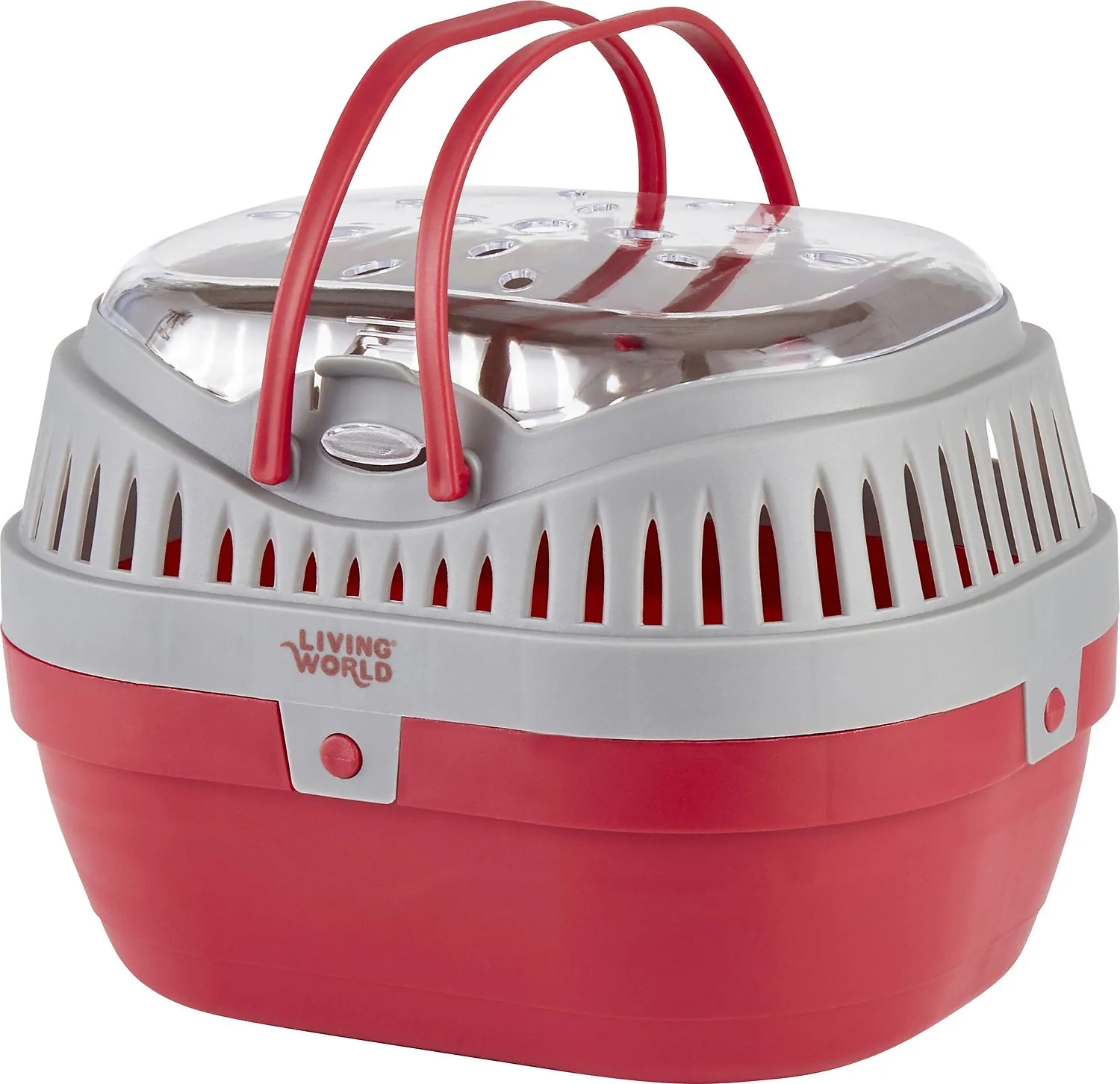
Carrier 6: Lacking Enclosure Appeal
 Carrier 6
This carrier fails to provide the dark, enclosed space that birds typically find reassuring. While adding a towel might improve security, carriers with solid-colored sides are generally better. The ventilation in this model also appears to be suboptimal, suggesting it prioritizes human aesthetics over avian comfort.
Carrier 7: Breathability and Collapse Concerns
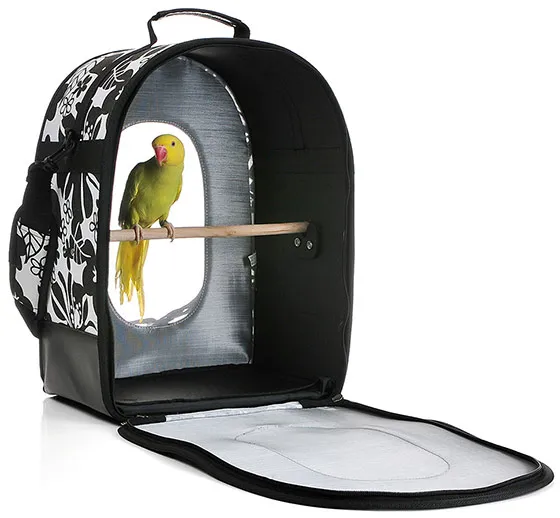 Carrier 7
Although this carrier’s opaque design would make a bird feel safe, concerns exist regarding the fabric’s breathability. Furthermore, its potential to collapse on the bird if impacted by an external force is a significant safety issue, unlike the protective hard plastic of traditional dog and cat carriers.
Carrier 8: The Hazardous Top-Loading Design
Carrier 8
While appearing acceptable at first glance, this carrier presents several hazards, primarily related to its top-loading lid. This design can easily catch toes, feet, or wings as the bird instinctively tries to escape upwards. Side-loading carriers are generally a safer alternative. The clear top also encourages repeated upward flight attempts, which can lead to injury. Covering this carrier with a towel is essential if using it.
Conclusion: Prioritizing Safety and Security
Choosing the right bird carrier is paramount for safe and stress-free transportation. Prioritizing carriers with hard, solid-colored sides, adequate ventilation, and an appropriate size—especially height—will contribute to your bird’s well-being. While exploring different options, remember that a bird’s natural instinct is to feel secure in enclosed spaces. By selecting a carrier that respects these needs, you can ensure a much smoother travel experience for your feathered companion. For more insights into avian care and accessories, consider exploring resources on easiest pet bird to understand different species’ needs.
© 2020 by Karen Trinkaus. May not be reprinted or used in any way without the author’s permission.
