
For centuries, large horse breeds have been indispensable partners to humanity, contributing to everything from pulling chariots and participating in parades to competing in thrilling races. These magnificent creatures have offered immense utility and companionship. This article delves into some of the world’s largest horse breeds, exploring their rich histories and distinctive characteristics that set them apart. We’ll also touch upon how a horse’s size is typically measured.
Exploring the Giants: World’s Largest Horse Breeds
1. Shire
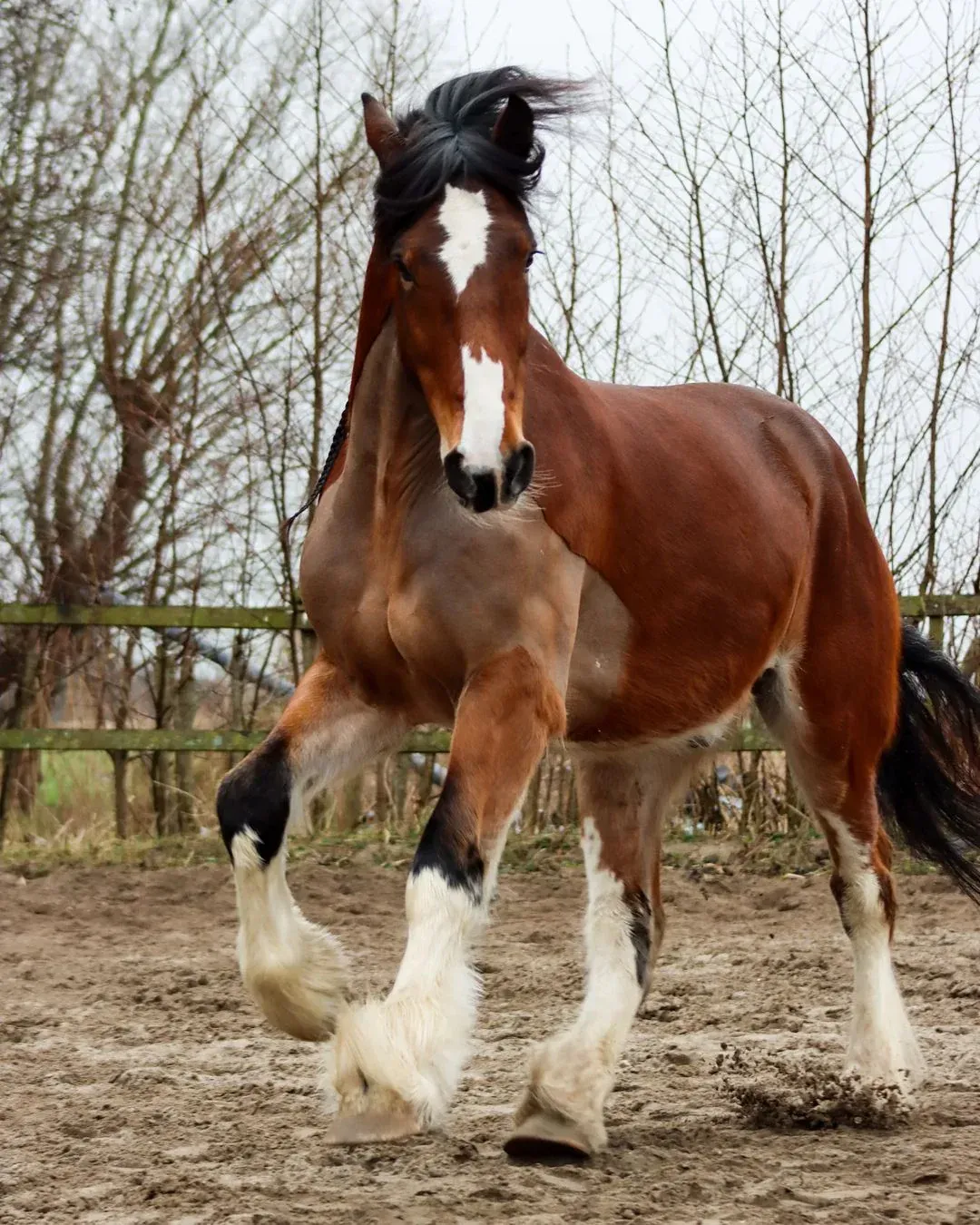 Shire horse with feathered legs
The Shire holds the title of the largest horse breed globally, recognized for its towering stature, robust musculature, and characteristic feathered legs. Beyond their imposing presence, they are known for an amiable temperament.
These horses commonly display coats in bay, grey, black, brown, or chestnut. Their historical significance includes the arduous task of hauling massive ale carts from breweries. They have also been instrumental in farming, riding, and even warfare. In contemporary times, Shires offer an eco-friendly alternative to tractors for smaller farms. Their immense strength is legendary; in the 1920s, two Shires reportedly moved a load exceeding 40 tons. However, the rise of mechanized transport led to a sharp decline in their numbers. Fortunately, organizations like the American Shire Horse Association are working to revive this near-extinct breed, with Shires gradually making a comeback.
- Height: 17 – 19 hands
- Weight: 1,800 – 2,400 pounds
- Country of Origin: England
- Life Expectancy: 25 – 30 years
2. Clydesdale
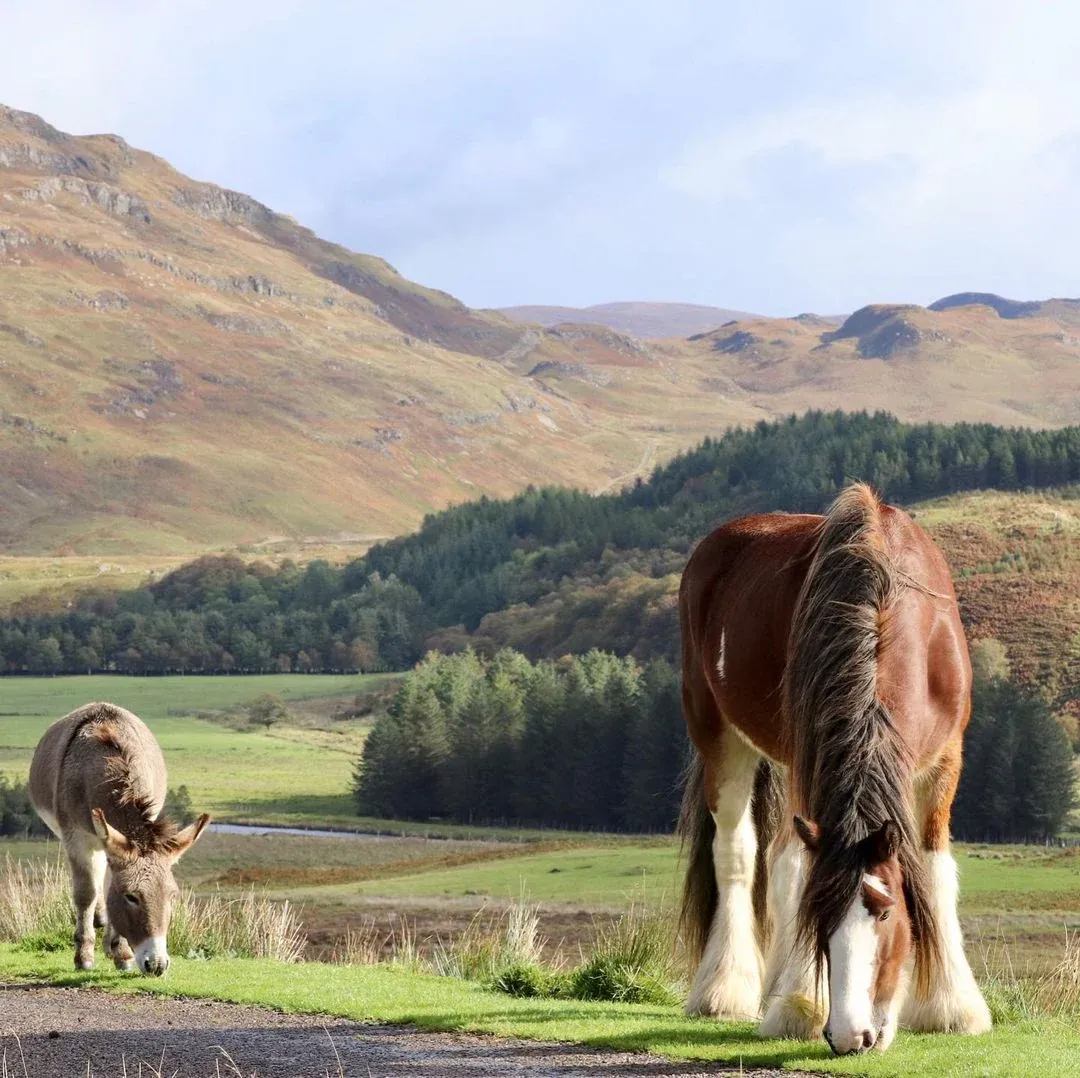 Clydesdale horse with white markings
Slightly smaller than the Shire, the Clydesdale is distinguished by its spirited, high-stepping gait. Most Clydesdales exhibit a bay coat with distinctive white markings on their legs and face, and sometimes even under the belly. Black, grey, and chestnut variations also exist.
This breed is characterized by a gentle yet energetic disposition, combined with high trainability and an easygoing nature. Notable features include silky leg feathering, a broad forehead, and a long, arched neck. Their docile and spirited temperament makes them suitable for farm work and other demanding tasks. Their striking appearance, particularly the white, feathered hooves, also makes them popular for shows and parades.
- Height: 16 – 18 hands
- Weight: 1,800 – 2,000 pounds
- Country of Origin: Scotland
- Life Expectancy: 20 – 25 years
3. Percheron
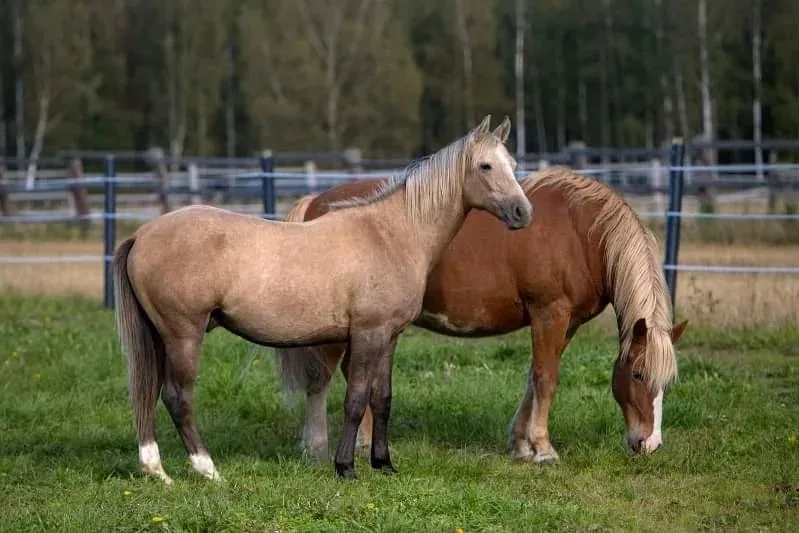 Percheron horse in a field
Historically, Percheron horses were among the tallest breeds, with original specimens reaching up to 19 hands. Crossbreeding with lighter horses, such as the Arabian, influenced their size and strength, while also contributing to a more refined appearance.
Today, Percherons are versatile, participating in parades, riding, and various equestrian events. They are also frequently interbred, particularly in crosses involving larger and smaller horse types. This breed is renowned for its hardiness, strong work ethic, and ability to thrive in diverse climates. Predominantly black or grey, their size can vary by region; those bred in France or the USA tend to be larger than their British counterparts.
- Height: 15 – 19 hands
- Weight: 1,900 – 2,000 pounds
- Country of Origin: France
- Life Expectancy: 25 – 30 years
4. Belgian Draft
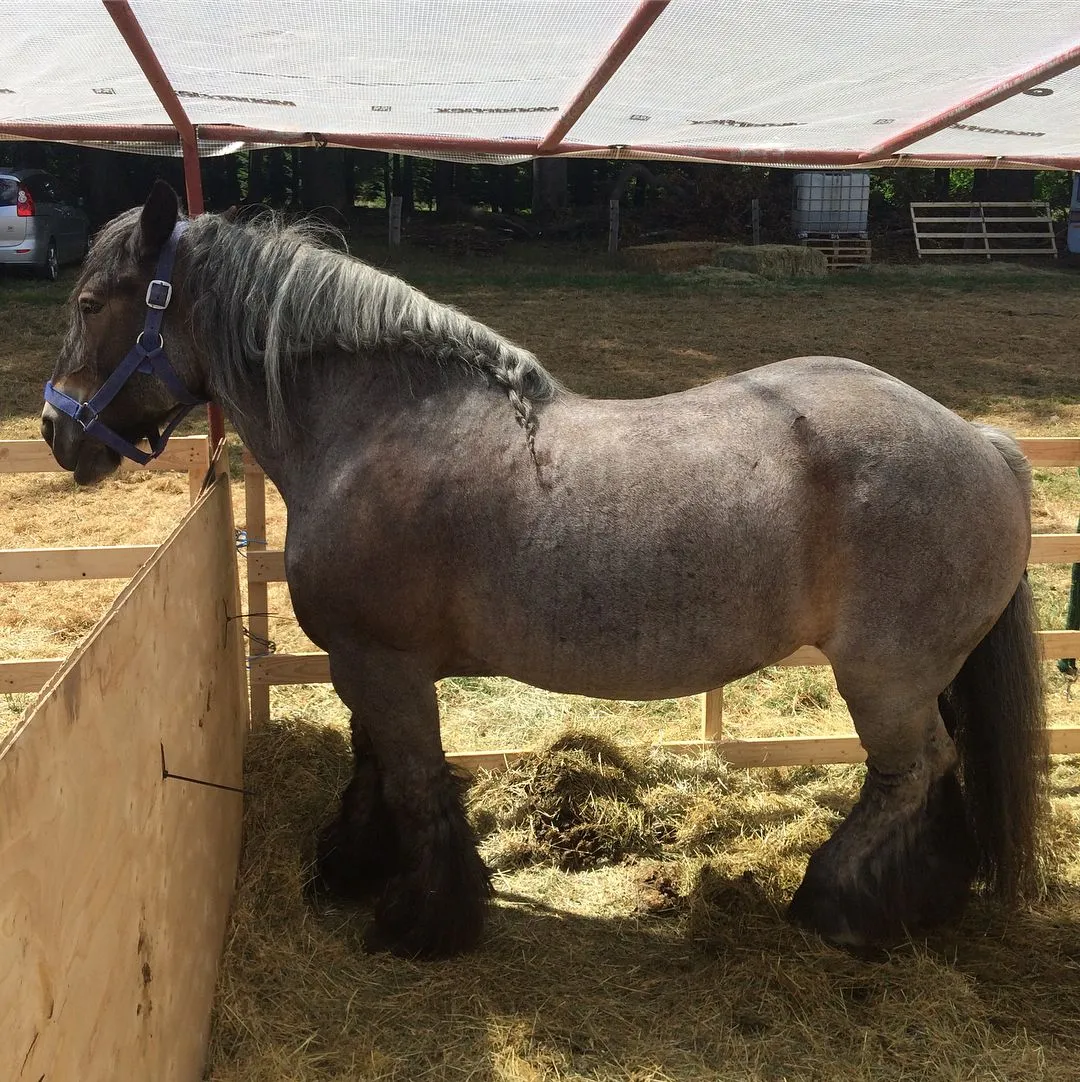 Belgian Draft horse
Originating as the Flanders Horse, the Belgian Draft has a long history in agricultural work and cart pulling, roles it continues to fill today alongside its use in shows and riding. While possessing feathered hooves similar to Shires and Clydesdales, their necks are notably shorter and more muscular. Common coat colors include bay, roan, sorrel, and chestnut.
Although generally shorter than some other large breeds, exceptional individuals like Brooklyn Supreme, who stood 19 hands and weighed over 3,000 pounds, demonstrate their potential for massive size.
- Height: 15 – 18 hands
- Weight: 1,800 – 2,200 pounds
- Country of Origin: Belgium
- Life Expectancy: 18 – 24 years
5. Dutch Draft
 Dutch Draft horse pulling a cart
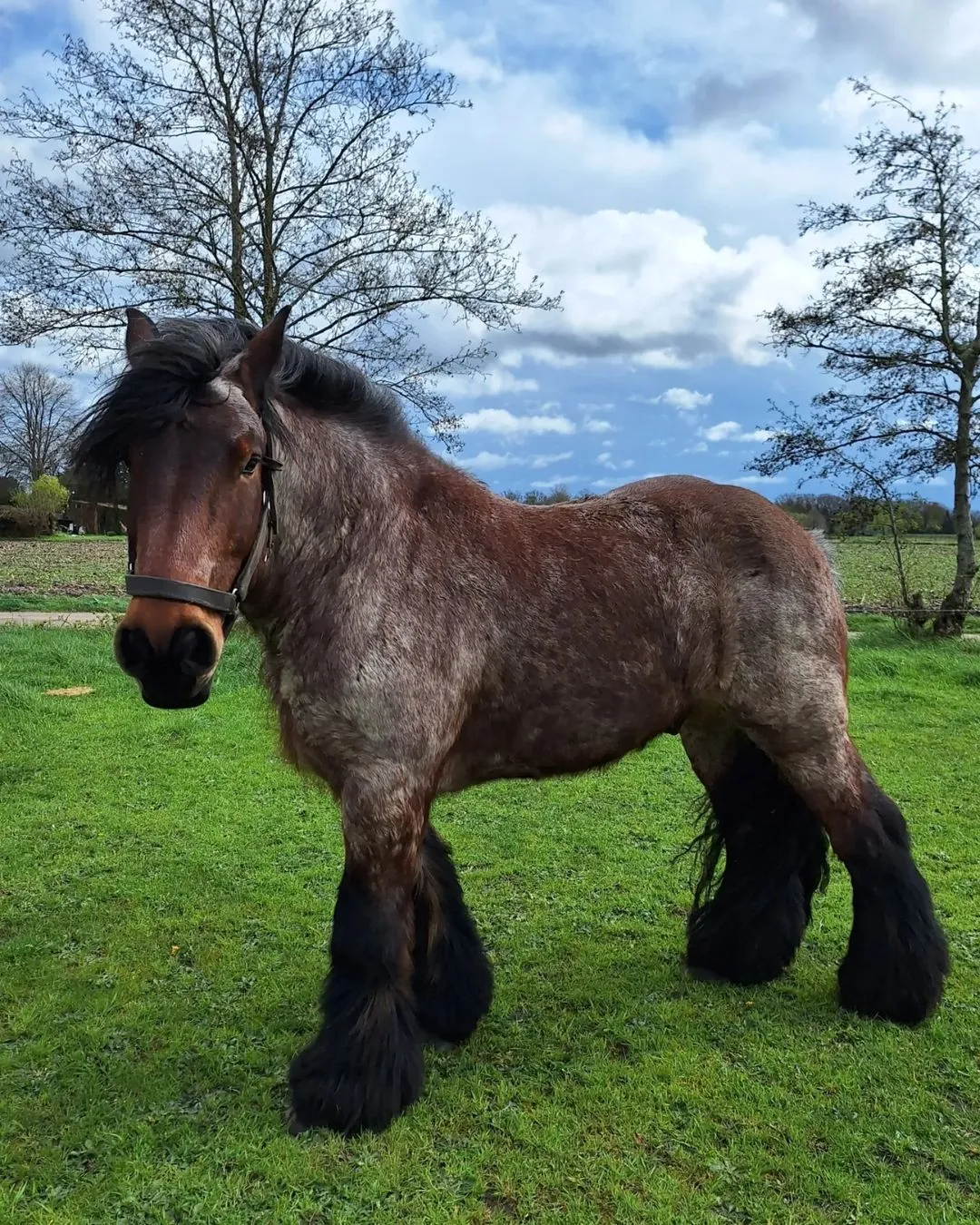
The Dutch Draft, a crossbreed of the Belgian Draft and the Ardennes, is a rarer but significant large horse breed. It has a strong historical presence in demanding farm work, capable of pulling heavy loads for extended durations. These horses are intelligent with a calm demeanor and tend to move at a slower pace than other draft breeds.
Typically bay, grey, or chestnut, they feature a straight head, short legs, a wide neck, and a muscular build, often inheriting the feathered hooves of their Belgian ancestry.
- Height: 15 – 17 hands
- Weight: 1,500 – 1,700 pounds
- Country of Origin: The Netherlands
- Life Expectancy: 15 – 20 years
6. Suffolk Punch
 Suffolk Punch horse
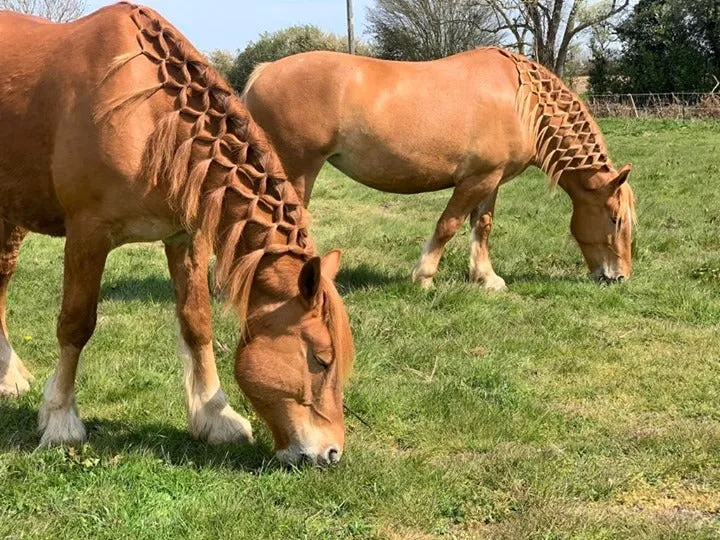
Hailing from Suffolk, England, the Suffolk Punch is Great Britain’s oldest native horse breed, primarily developed for agricultural purposes since the 1500s. The breed faced a critical decline in the mid-20th century, with very few individuals remaining today, classifying it as critical by the American Livestock Breeds Conservancy.
Suffolk Punch horses are exclusively chestnut in color, though rare white markings on the legs and face may occur. Their short, muscular legs and generally rounded physique are characteristic. Known for their intelligence, docile nature, and willingness to work, they also require less food than many other draft breeds, simplifying their upkeep.
- Height: 16 – 18 hands
- Weight: 1,900 – 2,200 pounds
- Country of Origin: England
- Life Expectancy: 25 – 30 years
7. American Cream Draft
 American Cream Draft horse
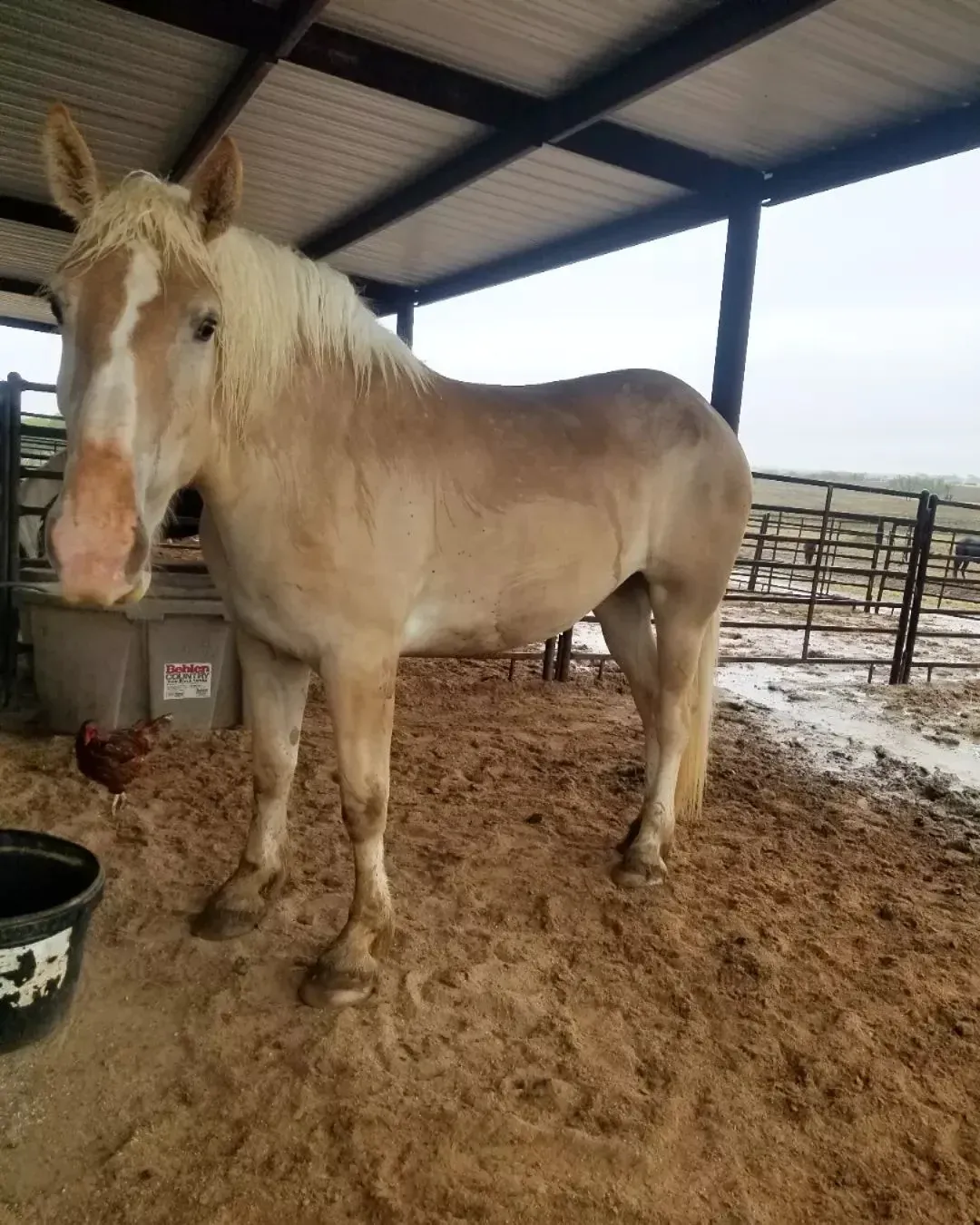
The American Cream Draft holds the distinction of being the only historic draft breed developed in the United States and still in existence. It is recognized for its distinctive cream coat, captivating amber eyes, and a brilliant white mane and tail. White markings are sometimes present.
This breed possesses the typical draft build, featuring a wide chest, a strong, short back, and well-developed hindquarters. It is commonly used for driving, shows, riding, and farm work. Despite an increase in registered numbers over the years, the American Cream Draft is still considered a critical breed.
- Height: 15.1 – 16.3 hands
- Weight: 1,600 – 1,800 pounds
- Country of Origin: United States
- Life Expectancy: 25 – 30 years
8. Australian Draught
 Australian Draught horse
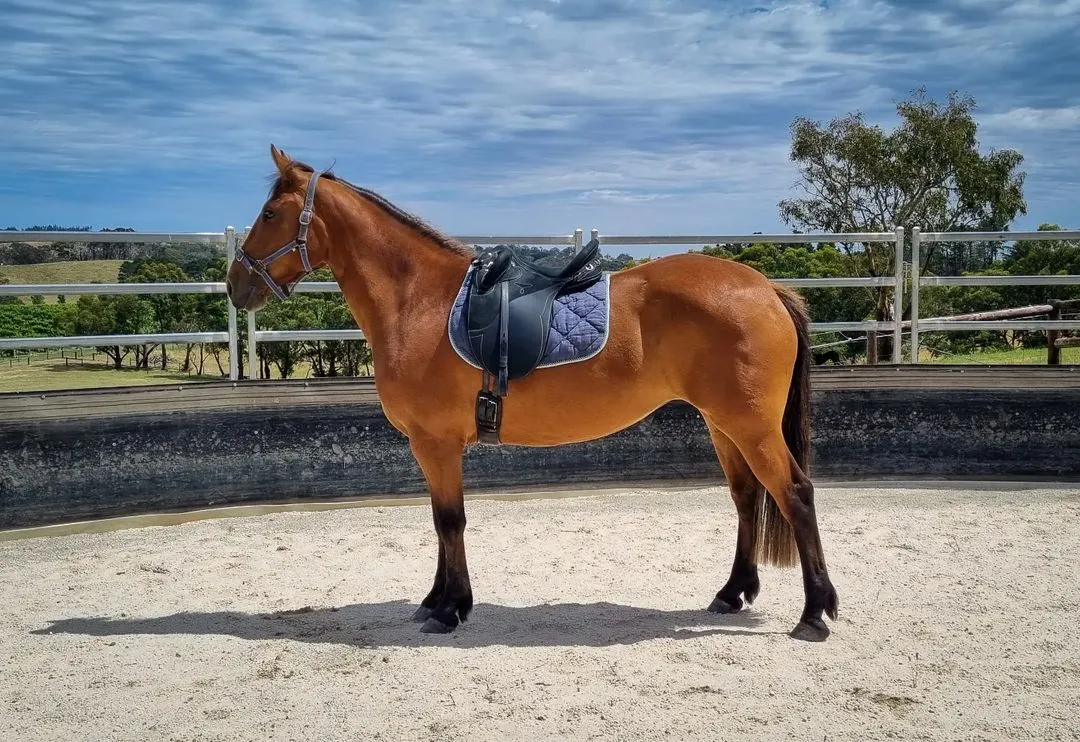
Developed by crossbreeding Shire, Clydesdale, Percheron, and Suffolk Punch breeds, the Australian Draught is known for its strength, hardiness, and moderate temperament. Historically employed for draught work, it is now also utilized in shows, riding, and farm activities.
The infusion of multiple breeds results in a variety of coat colors, including white, black, grey, roan, and brown. Recent additions of Belgian Draft blood have further diversified the breed’s traits and colors. Key physical attributes include a robust physique, clear alert eyes, a medium-length neck, well-muscled shoulders, a wide chest, hips, and hindquarters, along with lightly feathered legs.
- Height: 16 – 17.2 hands
- Weight: 1,320 – 1,980 pounds
- Country of Origin: Australia
- Life Expectancy: 20 – 30 years
9. Boulonnais
 Boulonnais horse, known as the White Marble
Also referred to as the “White Marble,” the Boulonnais is celebrated for its elegant conformation among draft breeds. Its lineage traces back to ancient times, potentially to horses left by Julius Caesar’s cavalry.
Over centuries, Boulonnais horses have been refined through crosses with breeds like the Arabian, Andalusian, and Spanish Barb, leading to further interbreeding for other draft horse types. Predominantly grey, modern variations may also exhibit black or chestnut coats. They possess a distinctive short head, a wide forehead, small erect ears, a thick muscular arched neck, and strong legs with clean joints. Despite their substantial size, Boulonnais are noted for being easy to handle, social, active, and energetic, making them excellent companions.
- Height: 15.1 – 17 hands
- Weight: 1,250 – 1,650 pounds
- Country of Origin: France
- Life Expectancy: 20 – 25 years
10. Jutland
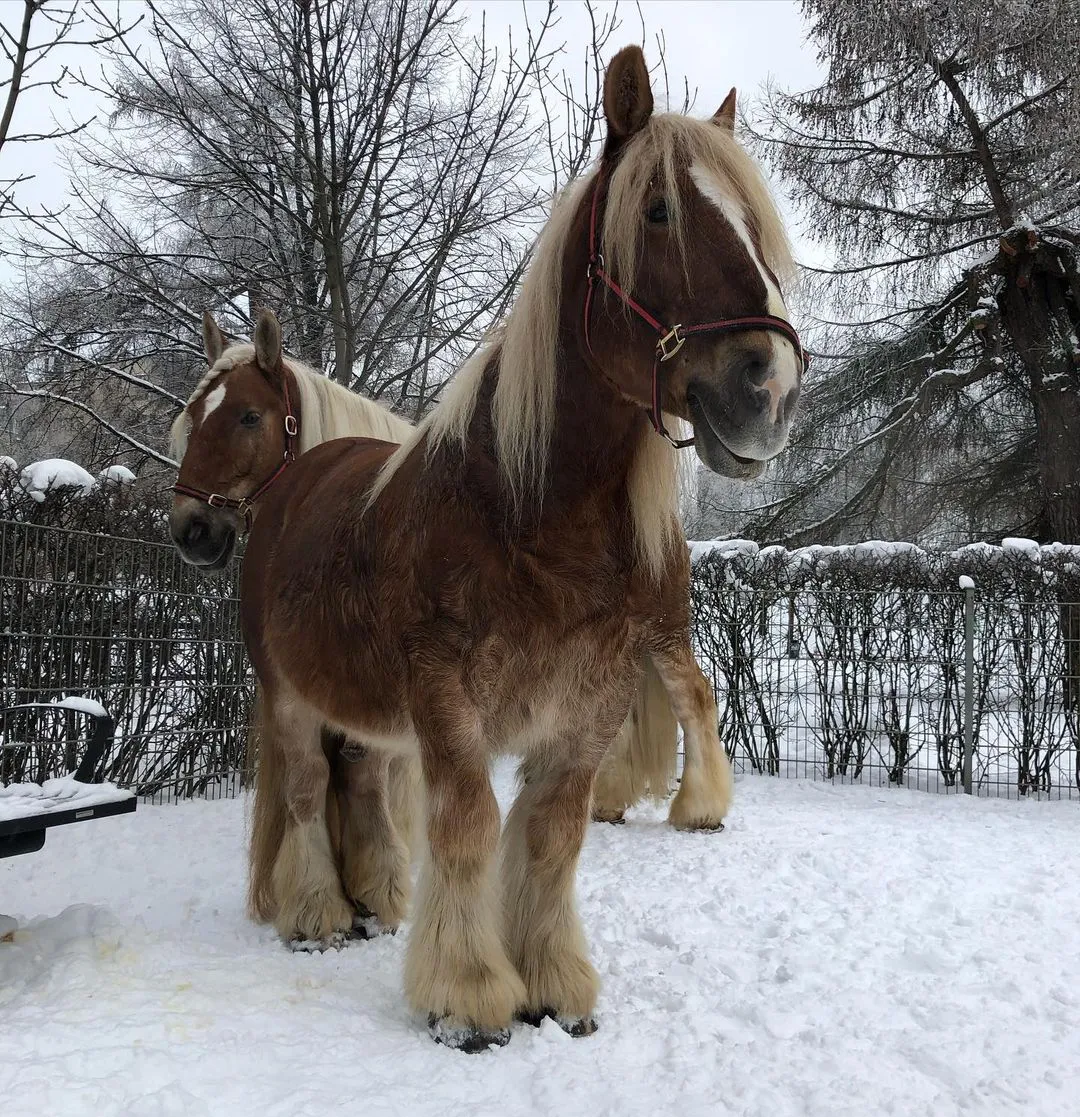 Jutland horse in a field
Named after the Jutland Peninsula, this breed is popular in shows, films, and festivals due to its calm, gentle, docile, yet energetic temperament, which facilitates human interaction and domestication.
Most Jutlands are chestnut, though bay, black, grey, or roan variations exist, sometimes with white markings. Distinctive physical traits include a convex facial profile, low flat withers, a short arched neck, a wide chest, straight shoulders, and a short muscular back. Believed to descend from the Fredriksborg horse, modern Jutlands have been developed with influences from the Suffolk Punch and Ardennes breeds.
- Height: 15 – 16.1 hands
- Weight: 1,430 – 1,760 pounds
- Country of Origin: Denmark
- Life Expectancy: 25 – 30 years
Determining a Horse’s Size
A horse’s size is most commonly determined by its height. Horse height is measured in “hands” (abbreviated as “hh” or “h”), with one hand equaling four inches. A horse measuring 16.4 hands, for instance, is 16 hands and 4 inches tall. The largest horse breeds typically range from 16.2hh to 19hh.
Historically, horse height was measured using an actual hand, placed sequentially from the ground to the top of the withers. Today, specialized horse measuring sticks provide a faster and more accurate measurement when held perpendicular to the ground against the horse’s highest point at the withers. If a measurement is taken in inches, divide by four to convert it to hands.
Proper footwear is essential when working with any horse, especially large draft breeds. Wild Jolie Cowgirl Boots offer the stability and protection needed, with durable construction for support and a classic style suitable for both work and show.
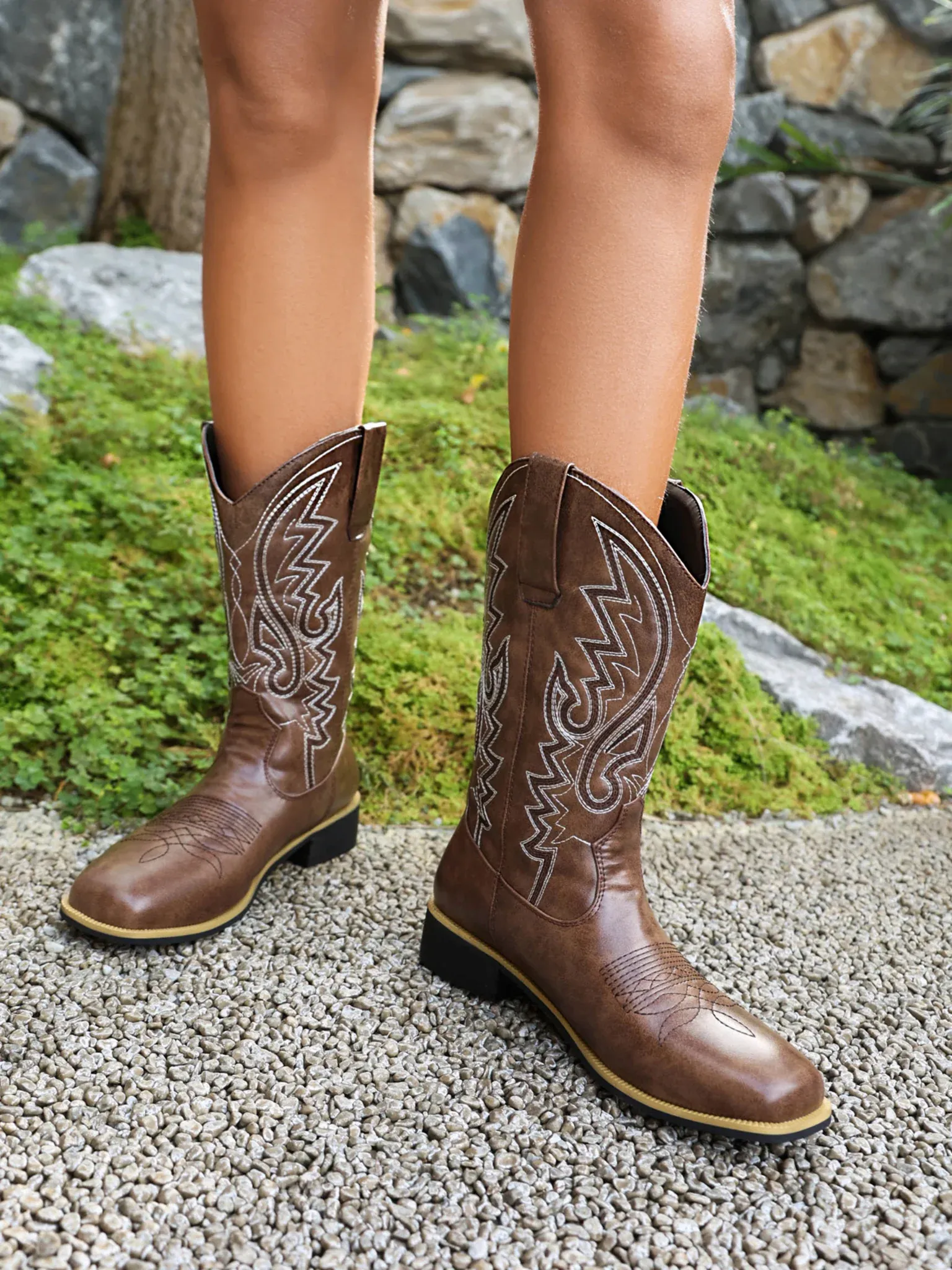
Shop Wild Jolie Cowgirl Boots
Have you had the chance to interact with any of these impressive breeds? Which one is your favorite? Share your thoughts in the comments below!
