
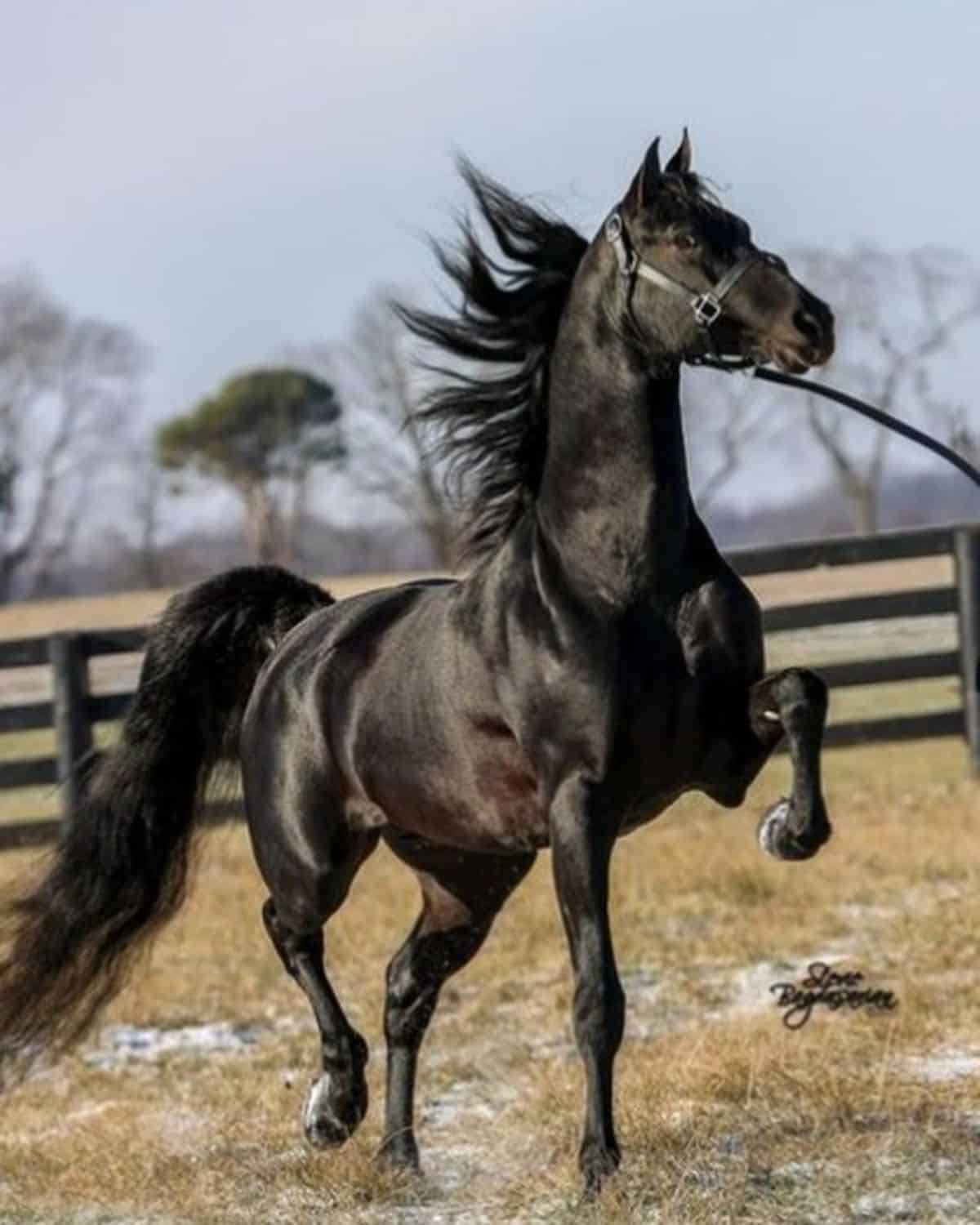
Horses, in all their diverse colors, breeds, and sizes, hold a special place in our hearts. However, those with long, flowing manes and tails possess a unique charm that captivates us. This article explores 17 of the most distinctive and beautiful long-haired horse breeds from around the globe, offering a glimpse into their characteristics and histories.
1. Gypsy Vanner
The Gypsy Vanner is instantly recognizable for its luxuriant mane and tail, along with feathered legs. While most commonly piebald, they also appear in skewbald and solid colors. Breed standards vary internationally, with American registries being more specific. Historically, these horses pulled the caravans of Gypsies and Irish Travellers. Today, they are celebrated at horse fairs, in parades, and even compete in dressage events in the USA. For equestrians drawn to these magnificent horses, Wild Jolie Cowgirl Boots offer a blend of style and practicality, providing support for riding and complementing the horses’ natural elegance.
2. Shire Horse
As one of the largest and most majestic breeds, the Shire horse boasts fine, long, silky hair and distinctive leg feathering. Primarily black, bay, roan, or gray, these powerful animals were historically used in agriculture for tasks like pulling ploughs. Shires have held world records for both height and weight, with an average height of 17.2 hands. Despite their size, they are known as gentle giants with calm dispositions, now often utilized in forestry and for leisure riding.
3. Clydesdale
Originating from Clydesdale, Scotland, the Clydesdale is another impressive draft breed that first appeared in written records in the early 19th century. Modern Clydesdales stand between 16 and 18 hands tall, with bay coats being most common, though Sabino patterns, chestnut, gray, and black are also found. Their long hair is most notable in the luxurious feathering on their lower legs. Still employed in forestry and farming, their striking feathered feet also make them a popular sight in parades and pulling carriages.
4. Haflinger
Strikingly beautiful, the Haflinger is characterized by its flowing, white or flaxen mane and tail, set against a chestnut coat that ranges from light gold to deep liver. Developed in the 19th century in the South Tyrol region, these hardy horses are well-suited to mountainous terrain and are even used as packhorses in the Austrian army. Known for their kind and quiet nature, Haflingers are versatile, serving in light draft work, therapeutic riding, equestrian vaulting, and dressage.
5. Black Forest Horse
The Black Forest horse presents a dramatic aesthetic with chestnut coats ranging from pale gold to nearly black, complemented by always flaxen, flowing manes. Unlike some other draft breeds, they lack feathering but are well-muscled with a lighter build and strong hooves, reflecting their original purpose as working animals in forestry and agriculture. Today, they are more commonly seen being ridden or pulling carriages.
6. Paso Fino
The Paso Fino is a beautiful breed found in various colors and sizes, united by their long, abundant manes and tails, and lively temperaments. A unique feature of the Puerto Rican strain is the “tiger’s eye,” a genetic trait that can result in eye colors from amber to bright orange. Both strains exhibit a natural, comfortable ambling gait. Paso Finos are showcased in breed-specific shows and are also ridden in gymkhana, trail riding, and endurance events.
7. Dales Pony
Hailing from the Yorkshire Dales in England, the Dales pony is a native British breed adapted to harsh winters. It possesses a long, thick, silky mane and tail, and feathering on its legs. Predominantly black, other coat colors include gray, brown, roan, and bay. These powerful and energetic animals are known for being alert, brave, and kind. Historically used to transport lead from mines, they now excel in endurance riding and trekking.
8. Icelandic Horse
Originating from Iceland, the Icelandic Horse is a robust breed adapted to cold climates. Its mane and tail are long, thick, and coarse, complemented by a dense double coat for warmth. Though called a horse, they are pony-sized, typically standing 13 to 14 hands and weighing around 800 pounds. These friendly, energetic, healthy, and long-lived animals are primarily used for leisure riding and competition, though some are bred for meat.
9. Friesian
The Friesian is a distinctive breed, large yet nimble and graceful, with a history as war horses dating back to medieval times. Most often black, with rare white markings, they feature long feathering and long, thick, often wavy manes and tails, along with elegant arched necks. Their dramatic appearance has led to frequent use in films and television, including Game of Thrones and The Chronicles of Narnia.
10. Andalusian
Originating from Spain, the compact and elegant Andalusian horse is most often gray, though all equine colors are represented. Their manes and tails are long, thick, and lustrous. Standing around 15.5 hands, they possess broad chests, long necks, and strongly muscled hindquarters. Known for being sensitive, intelligent, and docile, their striking looks make them popular in television and movies, as well as in dressage, show jumping, driving, and as stock horses.
11. Lusitano
A close relative of the Andalusian, the Portuguese Lusitano originates from the Iberian Peninsula and dates back to Roman times. Lusitanos always have solid-colored coats, most commonly gray, chestnut, or bay, with finely muscled bodies and well-proportioned heads. Like Andalusians, they boast thick, luxurious manes and tails, though the Lusitano’s tail is set lower and its head has a more convex profile. Agile, willing, and intelligent, they are excellent for dressage and driving competitions, having represented Portugal and Spain in the Olympics.
12. Fell Pony
Hailing from the north-west of England, the hardy Fell pony is strong, agile, and sure-footed on difficult terrain, standing about 13.2 hands tall. The cold climate necessitates a thick coat and a long mane and tail. Their coats are bay, gray, brown, or chestnut, with some having a small white star on their forehead. Reliable jumpers with an alert and lively temperament, they are popular for hunting and cross-country riding.
13. North Swedish Horse
Built to withstand the harsh temperatures of its homeland, the North Swedish horse is a small but heavy animal with a thick mane and a tail that reaches the ground. Traditionally used in farming and forestry, it is also a popular breed for leisure riding and is notably successful in harness racing. The breed is carefully managed, with rigorous testing before breeding to ensure hardiness and longevity.
14. Ardennes
One of the world’s oldest draft horse breeds, the Ardennes has a history stretching back to Roman times. These horses have a heavy, muscled build, with long feathers and a thick mane. Historically used as cavalry horses and to pull artillery, they are now primarily used for meat. However, their nimble movement, stamina, and good temper are leading to increased use in driving competitions, agriculture, and logging.
15. Australian Draft
Bred from Shire, Clydesdale, Percheron, and Suffolk Punch lineage, the Australian Draft horse is a tough, strong working animal, combining power with a good temperament. They feature significant feathering on their legs, covering large, well-shaped hooves. Their coats are solid-colored, and they typically stand between 16 and 17.3 hands tall. Their strength and calm nature make them ideal for agriculture and forestry, and they are also seen in shows and pleasure riding.
16. Shetland Pony
Perhaps one of the cutest and most personable ponies, Shetland ponies have a thick double coat and dense manes and tails to brave the freezing Scottish winters. Their coats can be any color except spotted, and they have short heads and ears, sturdy legs, and a deep girth. Still used in agriculture on the Shetland Islands, they are also common in petting zoos, as mounts for young riders, and even trained as guide animals for the blind.
17. Dartmoor Pony
Living in the English county of Devon for centuries, the Dartmoor Pony was historically used in quarries and tin mines, with a population now living wild on the moors. These ponies have full, flowing manes and tails and are exceptionally hardy, with temperaments described as gentle, calm, and kind. Small enough for children but strong enough for adults, they are used for everyday riding, dressage, jumping, and showing.
Three Cheers for Long-Haired Horses!
This exploration of long-haired horse breeds reveals a stunning diversity, from the colossal Shire horses to the charming Shetland ponies. Regardless of their size, these magnificent animals, with their distinctive flowing manes and tails, hold a truly special place in the equestrian world.
