
Welcoming a new dog into your home is an exciting time, whether it’s a playful puppy or an adopted adult. A key aspect of this transition is successfully training your dog to relieve themselves outdoors. While the goal is simple, the process can seem daunting. This guide offers five essential tips to help you achieve outdoor potty training success for dogs of any age.
Tip #1: Dedicate Quality Time to Your Dog
The initial period with a new dog is filled with a mix of emotions for both of you – excitement, curiosity, and perhaps some anxiety as they adjust to a new environment. The most effective way for your dog to acclimate is by spending ample time with them, allowing them to bond with you and their new surroundings. This dedicated time is the bedrock of successful training. Effective dog training relies on establishing a consistent routine, repetition, and unwavering consistency, all of which require your time and attention from the outset.
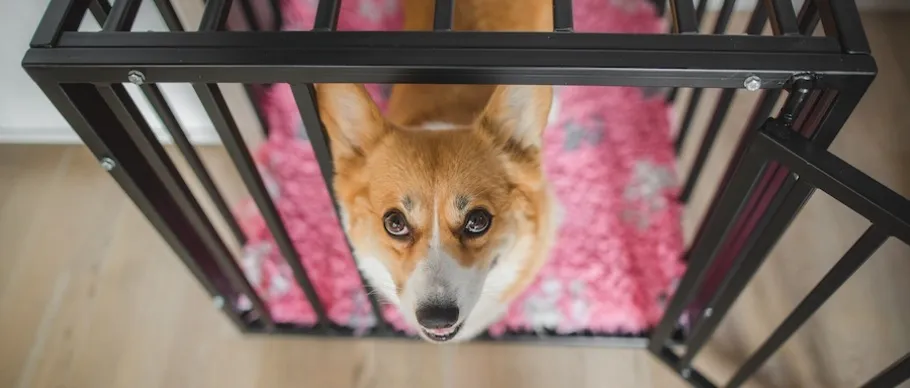 Dog looking up from inside crate
Tip #2: The Importance of Crate Training
Allowing an untrained dog unrestricted access to your home can lead to unwelcome “surprises.” Confinement, particularly through crate training, is a vital component of potty training. A crate provides a safe and effective way to manage your dog’s space and prevent accidents in undesired areas. Contrary to common misconceptions, dogs are natural den animals, and a crate should be viewed as their personal sanctuary, not a place of punishment. Associating the crate with negativity by sending your dog there when they misbehave will hinder the training process. A positive association with their crate is crucial for its effectiveness as a tool in teaching your dog to eliminate outside. For detailed advice on selecting and utilizing a crate, refer to our comprehensive guide on crate training.
Tip #3: Establish a Consistent Schedule
Initially, you may not recognize the subtle cues your dog gives when they need to go outside. Therefore, establishing a predictable schedule for potty breaks is essential. Assume your dog will need to relieve themselves immediately upon waking, after meals, playtime, and even after bursts of energy. Young puppies, in particular, require more frequent feeding and thus more frequent potty breaks, reinforcing the importance of Step 1. If you cannot be home during the day, enlist the help of a friend, neighbor, or family member for mid-day feeding and potty breaks.
Here are examples of what a potty schedule might look like for both puppies and older dogs:
Potty Schedule for a 5-Month-Old Puppy (Pet Parent Works Outside the Home)
- 7:30 a.m. Potty break
- 7:40 a.m. Feed puppy breakfast
- 7:50 a.m. Potty break. Crate puppy.
- 8:30 a.m. Pet parent leaves for work
- 12:30 p.m. Helper provides potty break
- 12:40 p.m. Helper feeds puppy midday meal
- 12:45 p.m. Helper provides potty break. Crate puppy.
- 5:30 p.m. Pet parent arrives home. Potty break.
- 6:30 p.m. Potty break
- 7:30 p.m. Dinner time
- 7:40 p.m. Potty break
- 9:00 p.m. Potty break. Remove water bowl to help puppy hold bladder overnight.
- 10:00 p.m. Final potty break. Crate puppy for the night.
Potty Schedule for a 2-Year-Old Dog (Pet Parent Works Outside the Home)
- 7:30 a.m. Potty break
- 7:40 a.m. Feed dog breakfast
- 7:50 a.m. Crate dog
- 8:30 a.m. Pet parent leaves for work
- 5:30 p.m. Pet parent arrives home. Potty break.
- 7:00 p.m. Potty break
- 7:30 p.m. Dinner time
- 7:40 p.m. Potty break
- 10:00 p.m. Final potty break. Crate dog for the night.
Tip #4: Utilize the Leash for Outdoor Training
Taking your dog outside on a leash, even in your own yard, provides control over their movement and minimizes distractions such as leaves, flowers, or wildlife. It’s important to remember that outdoor excursions are for potty breaks, not play. Leave toys indoors and maintain a calm atmosphere.
Consistently taking your dog to the same designated potty spot can help them associate that area with relieving themselves. Use a verbal cue, such as “go potty!” when they are eliminating, to help them connect the command with the action. Allow sufficient time for them to do their business, but avoid excessively long outings. If your dog doesn’t eliminate within a reasonable timeframe, bring them back inside and place them in their crate. This prevents them from soiling their crate, as most dogs naturally avoid eliminating in their den. Observe your dog for signs that they need to go outside:
- Whining
- Barking
- Scratching the door
- Pacing
- Circling
- Squatting
Be prepared to promptly escort your dog outside to complete their business.
Tip #5: Manage Accidents Effectively
How you handle potty accidents significantly impacts your training progress. Avoid the urge to scold or punish your dog after an accident, as this can lead to fear and anxiety, and potentially issues like coprophagia (eating stool). Instead, focus your energy on cleaning the mess thoroughly. Lingering odors can encourage your dog to repeat the accident in the same spot.
If you catch your dog in the act of having an accident, a sharp clap of your hands or a firm “hey!” can startle them. Immediately escort them outside to finish in the appropriate area. Offer abundant praise and a treat when they successfully eliminate outdoors.
 Puppy lying on floor
Transitioning from Potty Pads to Outdoors
If your dog is accustomed to using potty pads, transitioning them to outdoor elimination requires a gradual approach. Begin by placing the pad in a corner near a door. With each subsequent pad, move it progressively closer to the door, a few feet at a time. Eventually, place the pad outside in your chosen potty area and begin taking your dog there at regular intervals. Products like Wee-Wee® Ultimate Attractant Pads with Grass Scent can assist in this process by introducing a familiar grass scent that helps your dog associate outdoor areas with potty time. These scented pads are also beneficial for indoor use during travel or inclement weather. For more on yard cleanup, explore What’s the Best Way to Clean Up Dog Poop in the Yard?.
Key Principles: Consistency, Positivity, and Patience
Successful outdoor potty training hinges on your consistency, positive reinforcement, and patience. Remember that a dog’s breed, size, temperament, and previous experiences all play a role in the training process. With dedication, proper technique, and understanding, teaching your dog to eliminate outdoors will soon become second nature.
