
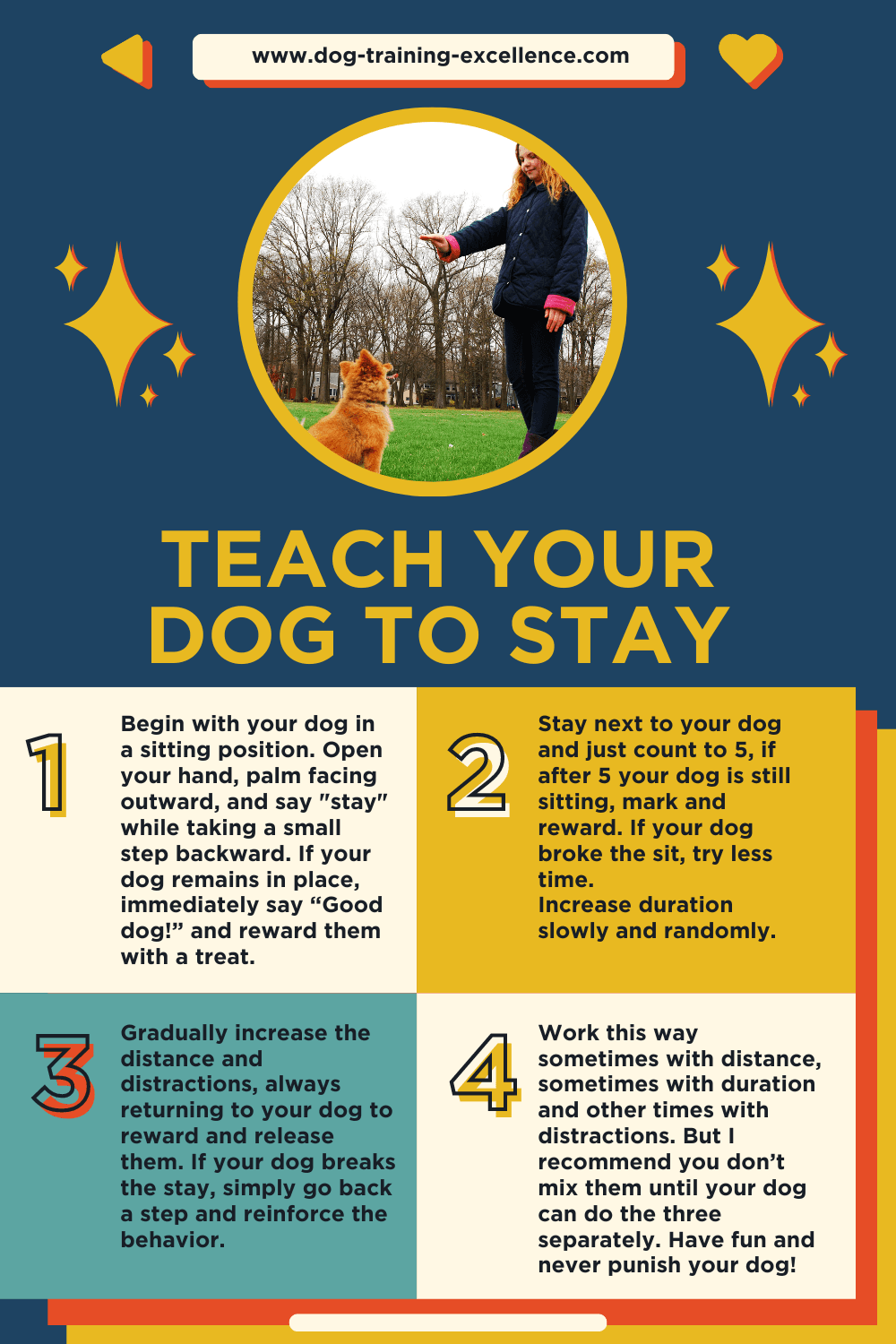
A reliable “stay” is a cornerstone of good dog behavior, crucial not only for success in dog sports like AKC Rally and Obedience but also for everyday household harmony. Whether it’s for grooming, answering the door, or simply managing a busy household, a dog that can hold a position until released makes life significantly easier for their owner. However, many owners find teaching this command challenging. By following a structured approach, you can train your dog to achieve a rock-solid stay, performing like a seasoned competitor.
The core difference between a “stay” and a “wait” lies in the expectation of duration and the explicit release cue. A “wait” is a temporary pause, whereas a “stay” signifies maintaining a specific position until a designated release word is given. This release word signals the end of the behavior, allowing the dog to move freely. You can incorporate a release cue into various behaviors, effectively building an automatic stay into commands like “sit” or “down.” Consistency in using your chosen release word—such as “okay,” “free,” or “release”—is paramount to avoid confusion. Be mindful that common words like “okay” are used frequently in daily conversation, so select a word that is less likely to be inadvertently used. Learn more about essential dog training commands.
Teaching the Release Cue
The foundation of a successful “stay” is ensuring your dog understands the release cue. Start with these simple steps:
- Position your dog: Ask your dog to either sit or lie down.
- Reward and release: After about one second, calmly offer your dog a treat and simultaneously say your chosen release word.
- Encourage movement: Prompt your dog to move by walking away, patting your legs, or clapping your hands.
- Praise: Offer praise as soon as your dog begins to move.
- Repeat: Continue these steps until your dog reliably understands that the release word signals they are free to move.
Gradually Increasing Duration
Once your dog understands the release cue, you can begin incorporating the “stay” command and gradually increasing the duration. Focus on duration first, leaving distance and distractions for later. Minimize distractions in your training environment and ensure you remain with your dog during these initial sessions.
- Cue the behavior: Ask your dog to sit or lie down.
- Introduce “stay”: As soon as they are in position, present a flat hand signal in front of you like a stop sign and say the word “stay.”
- Short hold and treat: Wait for one to two seconds, then calmly deliver a treat.
- Release and praise: Use your release word and praise your dog when they move.
- Increase hold time: Gradually increase the duration you ask your dog to hold the “stay” before treating and releasing. Aim to add only a few seconds at a time.
- Sustained duration: Once your dog can reliably hold a stay for 10 seconds or more, you can begin to offer intermittent treats during the stay. Casually offer treats periodically, repeating your “stay” cue and hand signal to reinforce that the behavior is ongoing.
It’s crucial to set your dog up for success by taking small steps. Avoid pushing the limits, as “stay” can be a less engaging behavior for dogs. Ensure that rewards are given for the duration of the stay, not for the release, to maintain the perceived value of staying put. If you use a clicker, click during the stay just before delivering a reward, but refrain from clicking when the dog is released. This helps prevent the click from being interpreted as the release cue itself. Discover advanced dog training techniques.
©Canadeez – stock.adobe.com
Troubleshooting Common “Stay” Issues
Be mindful of your body language during training, as subtle movements can inadvertently lure your dog out of position. When your dog breaks their stay before being released, avoid punishment. This often indicates that you may have inadvertently cued them to move, or the duration requested was too long. Simply reset the exercise, potentially stepping back in your training progression to ensure a successful repetition.
Incorporating Distance and Distractions
Only introduce distractions and distance once your dog can reliably maintain a stay for at least 30 seconds. Distance can inherently act as a distraction, so it’s often best addressed last. When introducing a new element (duration, distance, or distraction), be prepared to reduce expectations for the others. For instance, when adding distractions, revert to shorter durations, even if your dog can currently stay for longer periods without them. Begin with minor distractions, such as clapping your hands, and gradually progress to more significant ones, like throwing a ball. Once your dog demonstrates proficiency with various distractions, you can resume building duration.
After your dog can consistently perform 30-second stays amidst distractions, you can begin to incorporate distance. Again, lower your duration expectations and minimize distractions during this phase.
- Initial step back: Ask your dog to stay, then take a single step backward.
- Return and reward: Immediately return to your dog and offer a treat.
- Release: Use your release word.
- Increase distance gradually: Repeat the process, increasing the distance by one or two steps at a time before returning to treat and release your dog.
- Mastering distance: Continue this progression until you can move to the edge of the room while your dog maintains their stay.
Always return to your dog to deliver the reward and release them. Releasing them from a distance prevents you from reinforcing the “stay” behavior effectively and may cause them to associate that distance with being released. Once your dog can successfully navigate all three elements—duration, distance, and distraction—independently, you can begin combining them. Gradually increase the challenge by leaving the room or practicing in an outdoor environment. Patience and a slow, progressive approach will lead to a steadfast “stay” command for your canine companion. Explore options for a well-d dog training collar.
Stay informed with personalized advice for your puppy’s development. Subscribe to Pupdate, our weekly email newsletter tailored to your puppy’s breed and age, covering training, nutrition, and veterinary care.
References:
- American Kennel Club (AKC). (n.d.). Rally. Retrieved from https://www.akc.org/sports/rally/
- American Kennel Club (AKC). (n.d.). Obedience. Retrieved from https://www.akc.org/sports/obedience/
- American Kennel Club (AKC). (n.d.). Get Started in Dog Sports and Events. Retrieved from https://www.akc.org/expert-advice/sports/get-started-in-dog-sports-and-events/
- American Kennel Club (AKC). (n.d.). Teach Your Puppy These 5 Basic Commands. Retrieved from https://www.akc.org/expert-advice/training/teach-your-puppy-these-5-basic-commands/
- American Kennel Club (AKC). (n.d.). How to Teach Your Dog to Lie Down. Retrieved from https://www.akc.org/expert-advice/training/how-to-teach-your-dog-to-lie-down/
- American Kennel Club (AKC). (n.d.). Grooming. Retrieved from https://www.akc.org/expert-advice/health/grooming/
- American Kennel Club (AKC). (n.d.). Best Dog Treats: How to Choose the Right Treats for Your Dog. Retrieved from https://www.akc.org/expert-advice/nutrition/best-dog-treats-choose-right-treats-dog/
- American Kennel Club (AKC). (n.d.). Dog Training: Duration, Distance, Distraction. Retrieved from https://www.akc.org/expert-advice/training/dog-training-duration-distance-distraction/
- American Kennel Club (AKC). (n.d.). Training Rewards. Retrieved from https://www.akc.org/expert-advice/training/training-rewards/
- American Kennel Club (AKC). (n.d.). Clicker Training Your Dog: Mark and Reward. Retrieved from https://www.akc.org/expert-advice/training/clicker-training-your-dog-mark-and-reward/
