
Walking your dog should be a joy, a relaxing time to bond and explore the world together. But for many owners, it’s a frustrating tug-of-war. A dog that constantly pulls, lunges, or zig-zags can turn a pleasant stroll into a stressful ordeal. If this sounds familiar, you’re not alone. The good news is that with patience and the right techniques, you can master the art of loose-leash walking. Finding the Best Way To Leash Train A Dog isn’t about dominance or force; it’s about clear communication, positive reinforcement, and building a stronger relationship with your furry best friend. Similar to how you might wonder how do u potty train a dog, leash training is a foundational skill that unlocks a world of safe and enjoyable adventures.
This comprehensive guide will walk you through everything you need to know, from selecting the right gear to mastering the step-by-step training process and troubleshooting common problems. Get ready to transform your walks and rediscover the pleasure of exploring with a calm, confident, and well-behaved canine companion.
Gearing Up for Success: Choosing the Right Equipment
Before you even clip on the leash, setting yourself up with the right tools is half the battle. The equipment you use can significantly impact the training process, making it either easier or much more challenging. Forget harsh tools like choke chains or prong collars; modern, humane training focuses on comfort and clear communication.
Harness vs. Collar: What’s Best for Training?
While a standard collar is fine for holding ID tags, it’s not ideal for training a dog that pulls. When a dog pulls on a collar, it puts direct pressure on their trachea, which can lead to choking, gagging, and even long-term injury. It can also trigger an “opposition reflex,” where the dog’s natural instinct is to pull against the pressure, making the problem worse.
For training purposes, a front-clip harness is a game-changer. These harnesses have a leash attachment point on the chest strap. When the dog pulls, the harness gently redirects their momentum back towards you, turning them to the side. This effectively disrupts the pulling motion without causing pain or discomfort. It encourages the dog to check in with you and makes it physically difficult for them to drag you forward. A back-clip harness, while comfortable, can still allow for powerful pulling, much like a sled dog.
Selecting the Perfect Leash
You don’t need a fancy, complicated leash. A standard 6-foot nylon or leather leash is the perfect tool for the job. This length provides enough room for your dog to explore slightly without letting them get too far away from you. It gives you control while still allowing you to practice keeping the leash loose. Avoid retractable leashes for training. They teach dogs that pulling extends the leash, rewarding the very behavior you’re trying to eliminate. They also offer very little control if you need to quickly rein your dog in from a dangerous situation.
High-Value Treats are Your Best Friend
Positive reinforcement is the cornerstone of modern dog training. This means you’ll be rewarding the behavior you want to see more of. For leash training, you need high-value treats—something your dog absolutely loves and doesn’t get all the time. Think small pieces of cooked chicken, cheese, hot dogs, or special soft training treats. Kibble might work for some dogs in a quiet environment, but it probably won’t be tempting enough to compete with the exciting smells and sights of the outdoors. The goal is to be more interesting than any distraction.
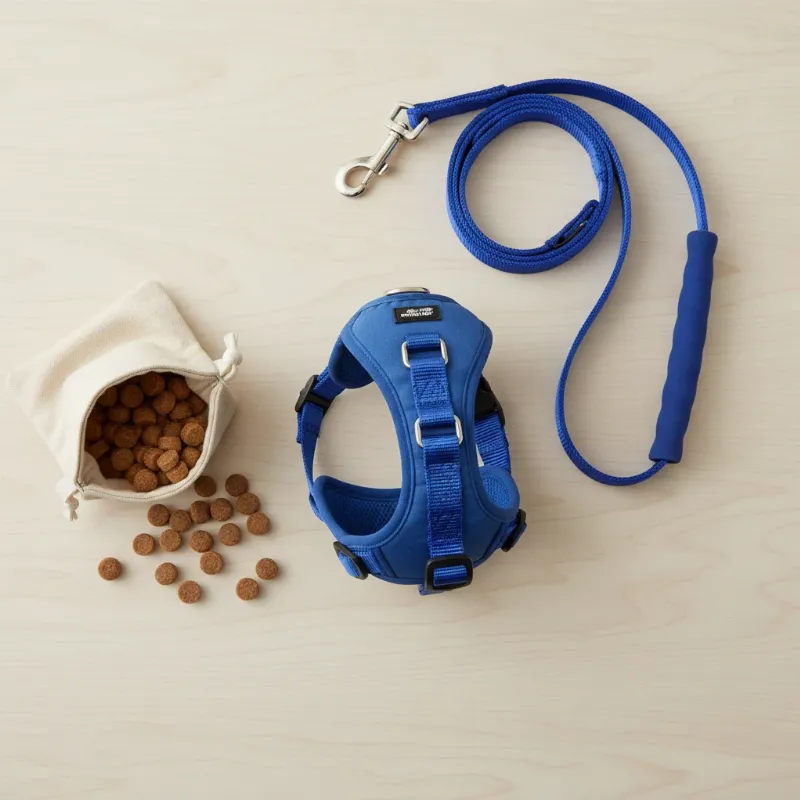 A collection of the best way to leash train a dog essentials, including a front-clip harness, a standard leash, and a pouch of treats.
The Foundation: Getting Your Dog Comfortable
Imagine someone suddenly strapping a strange piece of equipment to you and expecting you to act normally. It would be unsettling! The same goes for your dog. The first step in training is to create a positive association with the harness and leash before you even start walking.
Start by simply letting your dog investigate the harness. Place it on the floor and reward them with a treat for sniffing or touching it. Do this for a few short sessions. Next, practice putting the harness on and taking it off immediately, giving a treat each time. Once your dog is comfortable with this, let them wear the harness around the house for short periods without the leash attached. Let them eat, play, and nap in it. This process, known as desensitization, helps them accept the harness as a normal part of their routine, not a scary prelude to a stressful walk.
How to Leash Train a Dog: A Step-by-Step Guide
With your gear chosen and your dog comfortable, it’s time to begin the active training process. The key is to start simple and gradually increase the difficulty. Remember, patience is paramount.
Step 1: Start Indoors
The outside world is full of overwhelming distractions. Your living room is not. Begin your training in a quiet, familiar indoor space like a hallway or a large room. This controlled environment allows your dog to focus solely on you and the task at hand.
Step 2: Introduce the “Loose Leash” Concept
Clip the leash to your dog’s harness and hold the other end. The goal is for your dog to understand that a loose leash earns rewards. Stand still and let your dog explore within the leash’s radius. The moment there is any slack in the leash—even for a split second—mark the behavior with a verbal “Yes!” or a clicker, and immediately give them a treat. At this stage, you are simply rewarding the state of a loose leash.
Step 3: Practice Short, Fun Sessions
Now, start walking. The goal is to keep the leash in a “J” shape, with a visible sag. Lure your dog to your side with a treat and take one step. If they stay with you and the leash remains loose, reward them. Gradually increase the number of steps they can take by your side with a loose leash. If they start to pull, simply stop moving. Don’t yank the leash; become a “tree.” The moment they release the tension and look back at you, reward them and start walking again. This teaches a simple but powerful lesson: pulling gets you nowhere, while a loose leash lets the fun continue. Keep these initial sessions very short—just 5-10 minutes once or twice a day is plenty. End on a positive note.
Step 4: Moving the Training Outdoors
Once your dog is reliably walking on a loose leash indoors, it’s time to brave the great outdoors. Start in a low-distraction area, like your backyard or a quiet street during a non-busy time. The rules of the game are the same, but you will need to use higher-value treats and be more patient. Your dog will be tempted by a whole new world of smells and sounds. It’s your job to remain the most interesting thing out there.
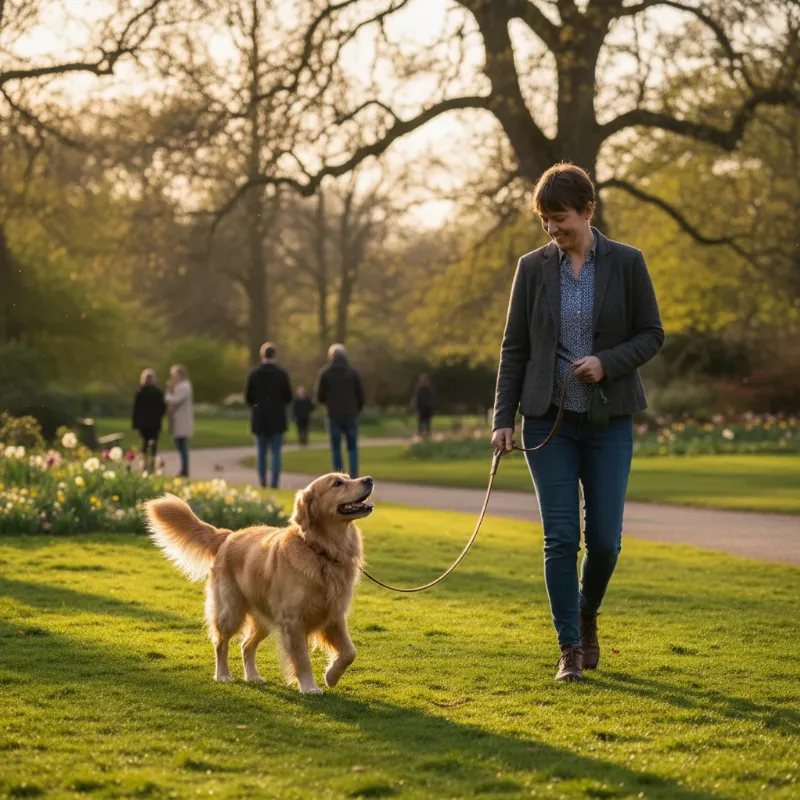 A person demonstrating the best way to leash train a dog by walking a happy Golden Retriever on a loose leash in a sunny park.
Step 5: Handling Distractions
As your dog improves, you can gradually introduce more distractions. Walk past a parked car, a mailbox, or eventually, another person from a distance. Every time your dog chooses to ignore the distraction and focus on you, reward them heavily. This teaches them that checking in with you is more rewarding than lunging toward something interesting. If a distraction is too much and your dog starts pulling or reacting, simply create more distance and work from a threshold where they can still be successful.
Solving Common Leash Training Problems
Even with the best plan, you’ll likely hit a few bumps in the road. Here’s how to troubleshoot the most common issues. Don’t get discouraged; persistence is key, and if you’re struggling, seeking professional guidance can be a great help. You can find excellent resources for dog training carrollton tx and other areas that offer specialized programs.
What to Do When Your Dog Pulls on the Leash
Pulling is the number one complaint. The “be a tree” method mentioned earlier is your best defense. The second the leash tightens, you stop all forward movement. Wait patiently. The instant your dog eases the pressure—even if they just shift their weight back—praise and reward them. You can also try the “reverse direction” game. When your dog pulls, cheerfully say “This way!” and turn 180 degrees, walking in the opposite direction. Reward them when they catch up and walk beside you. This keeps the walk unpredictable and encourages them to pay close attention to where you are going.
What if My Dog Refuses to Walk?
Sometimes a dog, especially a puppy or a timid rescue, will put on the brakes and refuse to move. First, rule out any physical discomfort. Is the harness fitted correctly? Are their paws okay? If everything is fine physically, this is often a sign of fear or being overwhelmed. Never drag your dog. Instead, use encouragement. Use an upbeat, happy tone of voice and lure them forward with a high-value treat or a favorite toy. Keep the pressure on the leash very light and reward every single step in the right direction. Keep these walks extra short to build their confidence slowly.
Lunging and Barking at Other Dogs or People
This behavior, known as reactivity, is often rooted in fear or frustration. The goal is to change your dog’s emotional response to their triggers. You’ll need to work at a “sub-threshold” distance—far enough away from the trigger (e.g., another dog) that your dog notices it but doesn’t react. The moment your dog sees the trigger, start feeding them a rapid stream of super high-value treats. The second the trigger is gone, the treats stop. Over time, your dog will start to associate the sight of another dog with getting delicious chicken, changing their feeling from “Oh no, a dog!” to “Oh boy, a dog! Where’s my chicken?”.
Pro Tips from the Experts
Consistency is the single most important factor in successful dog training. Every family member should use the same methods and cues. If one person lets the dog pull, it will undermine everyone else’s efforts.
Dr. Sarah Miller, a certified veterinary behaviorist, offers this advice:
“People often overestimate how long a dog can focus. Keep your training sessions short, upbeat, and positive. Five minutes of focused, successful training is far more valuable than a frustrating 30-minute battle of wills. End each session on a high note to keep your dog excited for the next one.”
Remember that a tired dog is a good dog. Ensure your dog gets enough physical exercise and mental stimulation through play, puzzle toys, and off-leash running in a secure area. A dog with pent-up energy will have a much harder time walking calmly on a leash. If you feel overwhelmed, never hesitate to consult with a professional. A good new jersey dog trainer can provide personalized guidance and a fresh perspective.
Frequently Asked Questions about Leash Training
How long does it take to leash train a dog?
There is no set timeline. It depends on your dog’s age, temperament, and past experiences, as well as your consistency. Some dogs may pick it up in a few weeks, while others might take several months. The key is to celebrate small victories and not get discouraged.
At what age should I start leash training my puppy?
You can start as soon as you bring your puppy home, typically around 8 weeks old. Begin with getting them comfortable wearing a lightweight harness and leash indoors for very short periods. Keep it positive and fun.
What commands are useful for leash training?
Commands like “Watch Me” or “Look” are great for getting your dog’s attention. A “Let’s Go” cue can signal when you’re about to start walking, and a “Wait” command can be useful at curbs before crossing the street.
Can you leash train an older dog?
Absolutely! The old saying “you can’t teach an old dog new tricks” is completely false. An older dog might have more ingrained habits of pulling, so it may require more patience and consistency, but the same positive reinforcement principles apply. The process is the same for a dog of any age. Whether you are looking for help with a new puppy or an older dog, many resources like dog training akron ohio can help tailor a plan to your specific needs.
A New Chapter in Your Dog Care Story
Mastering the art of walking calmly on a leash is one of the most rewarding skills you can teach your canine companion. The best way to leash train a dog is not a quick fix but a journey built on patience, positive reinforcement, and a deep sense of partnership. By investing the time and using these humane, effective techniques, you’re not just stopping your dog from pulling; you’re strengthening your bond, building their confidence, and opening the door to countless new adventures together. So grab your harness, pocket some tasty treats, and take the first step towards transforming your walks from a daily struggle into a daily delight.
