
As our beloved feline companions enter their golden years, it’s natural for pet parents to wonder about their changing nutritional needs. You might be considering a switch to a senior cat diet or adding supplements, but is it always necessary? This article delves into whether your older cat truly requires a special diet, the role of supplements, and how to determine the right amount of food and water for your aging cat. Understanding these aspects is crucial for ensuring your senior cat enjoys a high quality of life.
As cats age, their nutritional requirements and appetite can shift due to underlying health conditions or simply developing pickier eating habits. It’s essential to monitor an elderly cat’s weight and diet just as diligently as you would for younger cats. Veterinarians are invaluable resources, capable of guiding cat owners toward the best food choices for their cat’s unique circumstances and providing evidence-based advice on supplements.
When is a Cat Considered a Senior?
Cats progress through distinct life stages: kitten, young adult, mature adult, senior, and end-of-life. Generally, a cat is considered a senior after reaching 10 years of age. However, this age can fluctuate based on individual factors like breed and overall physical health. Recognizing and understanding your aging cat’s specific needs is the most effective way to ensure they have a comfortable and fulfilling senior years.
Do Senior Cats Necessarily Need a Special Diet?
The market offers a wide array of dry and wet food options specifically formulated for senior cats. However, a cat’s specific nutritional requirements are more closely tied to their inherent biology, potential health risks, and lifestyle than to age alone. Basing a diet solely on age may not be appropriate for your individual cat. The most prudent approach is to consult with a veterinarian to determine the optimal diet for your elderly feline. Numerous cat food formulations might be beneficial, irrespective of whether they are explicitly marketed for seniors. Always verify that the food you select is appropriate for your cat’s life stage by checking the AAFCO statement on the packaging.
Diets Tailored for Seniors
Many senior cat diets are formulated with increased fiber and calorie content compared to adult formulas. The significant benefits of these specific formulations for aging cats as a group are not yet fully understood. Your veterinarian can assess whether a particular senior pet food formula aligns with your aging cat’s needs.
Weight Management Diets
Senior cats may require either more or fewer calories than they did as younger adults. Older cats are susceptible to weight fluctuations, which can lead to obesity or unexplained weight loss. Underlying health issues frequently cause unintended weight loss, while cats experiencing joint pain and mobility challenges are more prone to obesity if their calorie intake is not managed. Any unintentional weight changes in your senior cat warrant a veterinary consultation to rule out underlying medical conditions. Specialized foods are available to assist overweight cats in achieving their target body weight, as well as options to help underweight cats gain healthy muscle mass.
Disease-Specific Diets
As cats age, chronic illnesses commonly develop, many of which can be managed effectively with nutritional support. Older cats might also develop picky eating habits, experience difficulty chewing food, or suffer from digestive issues. In such cases, a dietary modification can offer significant relief. Dr. Jo Myers, a veterinarian at Vetster, notes, “Keep in mind changes in your senior cat’s weight or appetite may not be a sign of aging, but illness. Don’t assume your cat is just being picky.” It is always advisable to consult with a vet before altering your cat’s diet.
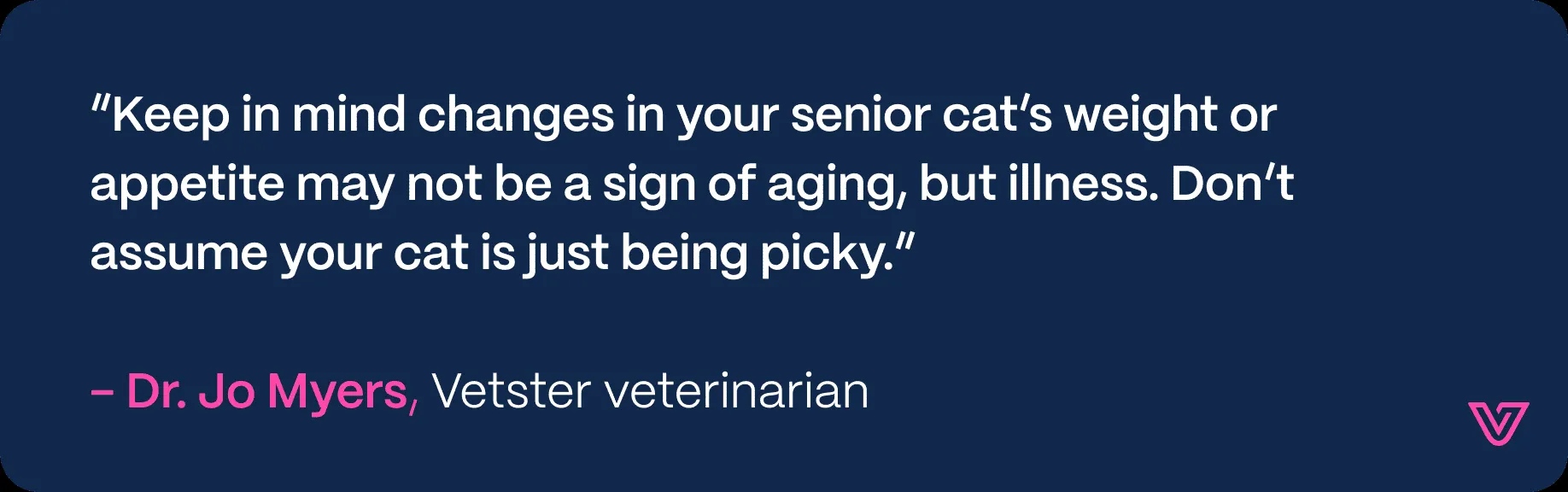 A graphic illustrating a vet's quote about senior cat appetite changes.
While old age itself is not a disease, senior cats are at a higher risk of developing conditions that necessitate specific nutrient profiles. Common health issues in senior cats include:
- Kidney Disease: Often requires a diet lower in phosphorus and sodium, and higher in omega-3 fatty acids.
- Arthritis: May benefit from joint supplements like glucosamine and chondroitin, and anti-inflammatory nutrients.
- Hyperthyroidism: Typically managed with medication, but dietary adjustments may support overall health.
- Diabetes Mellitus: Requires a carefully controlled diet, often lower in carbohydrates and higher in protein, with consistent feeding times.
- Dental Issues: Can make eating difficult, necessitating softer foods or a transition to wet food.
Each senior cat is an individual with unique requirements. A nutrition consult is an excellent way to identify your cat’s specific nutritional needs and how to meet them through specialized diets.
Does My Senior Cat Need Dietary Supplements?
A cat does not automatically require a dietary supplement simply because they have reached their senior years. If your senior cat develops a medical condition, your veterinarian might recommend a supplement as part of the treatment plan. The scientific evidence supporting the benefits of most supplements is often limited, making it crucial to consult a vet before introducing any supplement to your pet’s diet. It’s important to note that Pet supplements are not regulated with the same rigor as medications, meaning they may not undergo the same stringent quality control and contamination testing. Consequently, supplements can reach the market without definitive proof of their efficacy or safety. Furthermore, the lack of regulation can lead to variations in product quality between batches. Your vet can guide you in selecting appropriate supplements for your cat and recommend trusted brands, should they be necessary.
Commonly recommended supplements may include:
- Supplements aimed at joint health and support.
- Omega-3 fatty acids for maintaining healthy skin and coat.
- Probiotics to aid digestion and support gut health.
- Specific nutrient supplements to address deficiencies caused by particular diseases.
Even if a supplement is considered safe and effective, it might not be essential for your cat. Always discuss with a vet before adding supplements to your cat’s diet to ensure their safety, effectiveness, and necessity. Nutritional supplements are typically not needed, especially for cats that are already consuming a balanced diet, have a good appetite, and no underlying health conditions.
How Much Food and Water Does My Senior Cat Need?
Calculating the precise daily caloric intake required for your pet to maintain a healthy weight can be perplexing. A nutrition consult with a veterinarian is a highly beneficial resource. The quantity of food your cat needs daily is determined by their individual caloric requirements and the caloric density of their chosen food.
A cat’s daily calorie requirements are influenced by several factors:
- Age: Younger cats and kittens have higher metabolic rates.
- Size: Larger cats require more energy.
- Reproductive Status: Pregnant or nursing cats have significantly increased needs.
- Overall Health: Illnesses can alter metabolic demands.
- Activity Level: More active cats burn more calories.
Many senior cats can benefit from increased water intake. However, encouraging an older, sometimes stubborn cat to drink more can be a challenge. Fortunately, several modifications can be made at home to promote hydration:
- Place multiple water bowls in different locations throughout the house.
- Offer access to pet water fountains in addition to traditional bowls.
- Consider transitioning to wet food, which has a higher moisture content.
- Ensure water is consistently kept clean and fresh.
These strategies are often effective because most cats prefer fresh, cool water, and many are drawn to moving water over still water. If you are struggling to ensure your senior cat drinks enough, there might be an underlying issue. Consulting an online vet can help identify if your finicky feline requires additional veterinary attention.
How Do I Choose the Right Food for My Cat?
Engaging in a discussion with your veterinarian about your cat’s nutritional needs is the foundational step in selecting the appropriate pet food. Nutritional requirements can change rapidly in senior cats as their bodies undergo changes and new medical conditions emerge, which are somewhat expected with advancing age. Always discuss potential supplements and food changes with a veterinarian to confirm they are safe choices for your senior cat. Nutritional supplements and added vitamins are not always necessary, particularly if your cat is already on a balanced diet, eats well, and has no underlying health concerns.
Navigating the world of pet nutrition can be confusing, especially with the vast array of pet foods and supplements available. A virtual vet appointment offers a convenient way to address your cat’s nutritional needs from the comfort of your home, at any time.
FAQ – What Food or Supplements Does My Senior Cat Need?
Should I feed my senior cat wet food?
Many senior cats remain perfectly content with their dry food and kibble. However, some cats develop pickier eating habits as they age and may show a preference for wet food. Cats that need to increase their water intake, or those recovering from dental procedures that make chewing difficult, may also find canned food more palatable than hard kibble.
Is dry food okay for senior cats?
For healthy senior cats consuming nutritionally complete dry food formulated for all life stages or specifically for seniors, there is no inherent need to change their diet solely due to their age. Cats with particular dietary requirements might benefit from wet food to increase hydration, but dry kibble remains a perfectly suitable option for senior cat food.
What are good dietary supplements for senior cats?
Similar to regular foods, your cat’s need for supplements is less about their age and more about their overall health status. Certain cats might benefit from supplements designed to support healthy joints, skin, and digestive function, such as fatty acids and probiotics. It is essential to consult with a vet to select a safe and effective supplement for your senior cat.
Should I give my older cat supplements?
There is no automatic requirement to supplement a cat simply because it has reached an older age. A healthy cat maintained on a nutritionally complete diet does not necessitate additional supplementation. Always consult with a veterinarian before introducing any supplement into your senior cat’s diet.
Why pet parents love Vetster
Book virtual vet appointments 24/7
Access expert pet care from anywhere
Choose from thousands of top-rated vets
Meet our vets
Get better vet care & meet with a vet in just minutes.
Talk to a vet
Related posts
[ New Puppy Guide: A companion resource for your dog’s first year of life – A small white puppy galivanting through a field
New Puppy Guide: A companion resource for your dog’s first year of life
Becoming a pet parent is a big responsibility, and if you’ve never owned a dog before — or even if you have and it’s been a while! — you likely have many questions when it comes to ensuring your puppy feels happy, safe, and comfortable in their new space.
](https://vetster.com/en/wellness/vetster-lifestages-guide-puppy)
[ Boredom, anxiety, and destructive behavior in dogs – A dog lies on the ground at home, alone
Boredom, anxiety, and destructive behavior in dogs
Boredom stems from unmet stimulation needs, and it shares many signs with anxiety. While both can lead to destructive behaviors, they need different treatment methods.
](https://vetster.com/en/wellness/boredom-anxiety-and-destructive-behavior-in-dogs)
[ Do fireworks and other loud noises upset cats? – A scared cat looks out from a hiding spot
Do fireworks and other loud noises upset cats?
Loud sounds can be frightening for cats, and a brief fear response is normal. Learn whether your cat’s response to loud noises like thunder or fireworks is normal.
](https://vetster.com/en/wellness/do-fireworks-and-other-loud-noises-upset-cats)
