
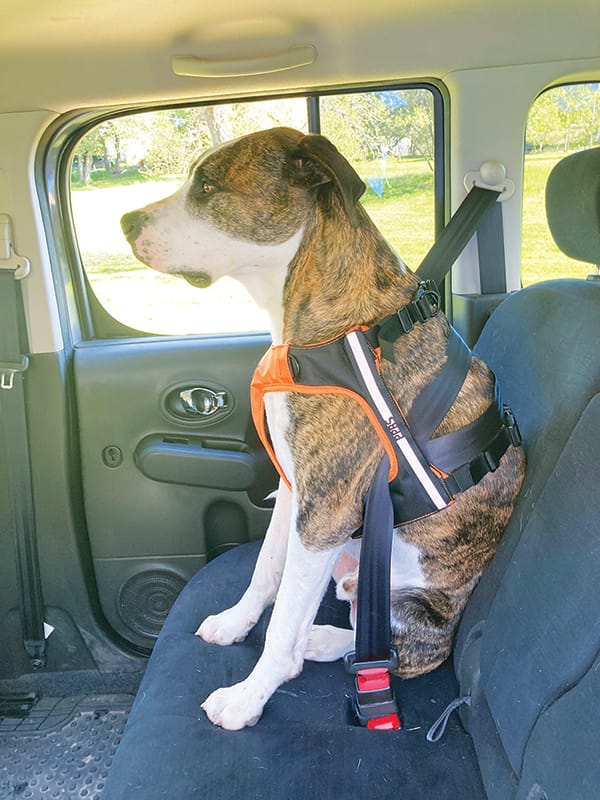
We love our pets, and we’re sure you love yours too. However, it’s crucial to remember that just like a child, your pet should always be secured when your vehicle is in motion. Simple, open dog car seats, much like home dog beds, are not sufficient for true safety. Similarly, dog car booster seats are not recommended by the Center for Pet Safety (CPS), and therefore, are not included in this guide.
This article focuses on ensuring your pet’s safety while traveling in a car, detailing what you need to know about car dog seats, carriers, and harnesses. For those looking to enhance their pet’s comfort during car rides, options like dog car seat cushion bed can be considered, but always prioritize safety-certified restraints first.
Safety and Independent Testing: Why Certification Matters
Unlike consumables such as pet food, treats, and pharmaceuticals, dog car seats and restraints are not subject to premarket safety standards. This lack of regulation means that any product can claim to be safe for your pet. To genuinely ensure your pet’s well-being, the Gear Team recommends opting for restraints certified by the Center for Pet Safety (CPS), the leading independent pet product testing organization. Every safety-certified dog car seat discussed in this article meets CPS’s rigorous criteria. The guidance provided here is directly informed by CPS, and we are grateful for their mission and their assistance in creating this informative piece.
Types of Pet Restraints
Dog car carriers, often generically referred to as “dog car seats,” generally fall into three main categories: crates, carriers, and harnesses.
- Crates: Typically used for larger dogs, crates are usually placed in the SUV’s cargo area or truck bed and secured using tie-down straps connected to anchor points. Ensure you select a sturdy, crash-tested crate for maximum protection.
- Carriers: Designed for smaller dogs and cats (generally under 18 pounds), these are portable and secured to the rear seat using seatbelts and headrests. When choosing a carrier, pay close attention to the weight rating and your pet’s body measurements. For smaller dogs, a secure non slip dog seat covers might add an extra layer of stability within the carrier.
- Harnesses: These restraints are worn on the pet’s upper body and are secured by the vehicle’s seat belt, functioning as a “dog’s seat belt.”
It’s important to reiterate that this guide focuses on safety-certified restraints, not inexpensive, simple dog seats or booster seats. If your priority is ensuring your furry companion’s safety during car journeys, these certified options are paramount. For specific breeds, accessories like french bulldog home accessories uk can add comfort, but safety should always come first.
Proper Fit: Crucial for Safety
Achieving the correct fit for your pet’s restraint is critical for its effectiveness.
- Harness: The industry standard for harness fit is the “two-finger fit.” This means you should be able to comfortably slide two fingers between the harness and your pet’s body. CPS incorporates this standard into its testing protocols.
- Carrier: When selecting a carrier, carefully review the weight rating and measure your dog’s body dimensions. A pet might fall within the weight limit but could be too long in the body to fit comfortably. Weighing and measuring your pet beforehand is highly recommended. Carriers are often suitable for both cats and dogs.
- Crate: A snug fit is non-negotiable for crates. Resources like the video from Gunner Kennels clearly demonstrate why a snug fit is essential. Excessive space within the crate can make your dog more vulnerable to g-forces during a collision. Always ensure you have accurate measurements and choose the correct size crate for your animal. For transport, consider options like a dog cover for back seat of car for added protection of your vehicle’s interior, especially if using a crate.
Travel Considerations Beyond Car Rides
While these restraints are rigorously tested for vehicle safety, they are also ideal for other types of travel. If you frequently fly with your small pet, consider a duffle-style carrier that can be attached to luggage and fits conveniently under airplane seats. For adventurous pet owners, reliable options like the best dog bike trailer uk can also be explored, provided they meet safety standards.
Understanding the Price Investment
The prices of safety-certified restraints might seem high initially, but it’s important to view your pet’s safety as an investment. Companies dedicated to producing certified products have invested significant time and resources to prove their products’ effectiveness in protecting you and your pet. Furthermore, remember that if your pet sustains injuries in an accident, veterinary bills could far exceed the cost of a quality car restraint. Prioritizing a certified harness, carrier, or crate is a proactive step towards preventing such costly and distressing situations.
