
Finding effective and safe flea treatment for your dog is a crucial aspect of pet ownership. This guide will delve into the key considerations and types of flea and tick preventatives available, helping you make the most informed decision for your canine companion.
Factors to Consider When Selecting Flea Treatment
Every dog is unique, and a flea treatment that works perfectly for one may not be suitable for another. Several factors play a significant role in determining the safest and most effective option:
- Age: Flea treatments have age restrictions; many are not recommended for puppies under 8 to 12 weeks old. Always check the product label for age appropriateness.
- Breed: Coat type can influence the application of certain treatments. While topical treatments can be used on all coat types, they must be applied directly to the skin. Thick coats can make this challenging, and if applied only to the fur, the medication may not be effective.
- Health History: Consider your dog’s current medications, supplements, existing health conditions, and any past adverse reactions to flea and tick preventatives. For instance, dogs with a history of seizures may require more cautious selection of certain treatments.
- Lifestyle: Your dog’s daily activities, exposure to the outdoors, and the presence of other pets (especially cats) or young children in the household are important considerations.
- Geographic Location: The prevalence of specific parasites in your region and any concerns about preventative resistance should be discussed with your veterinarian.
Your veterinarian is your best resource for navigating these factors and recommending the most appropriate flea and tick preventative. Often, the safest and most effective solutions require a prescription.
Types of Flea Treatments for Dogs
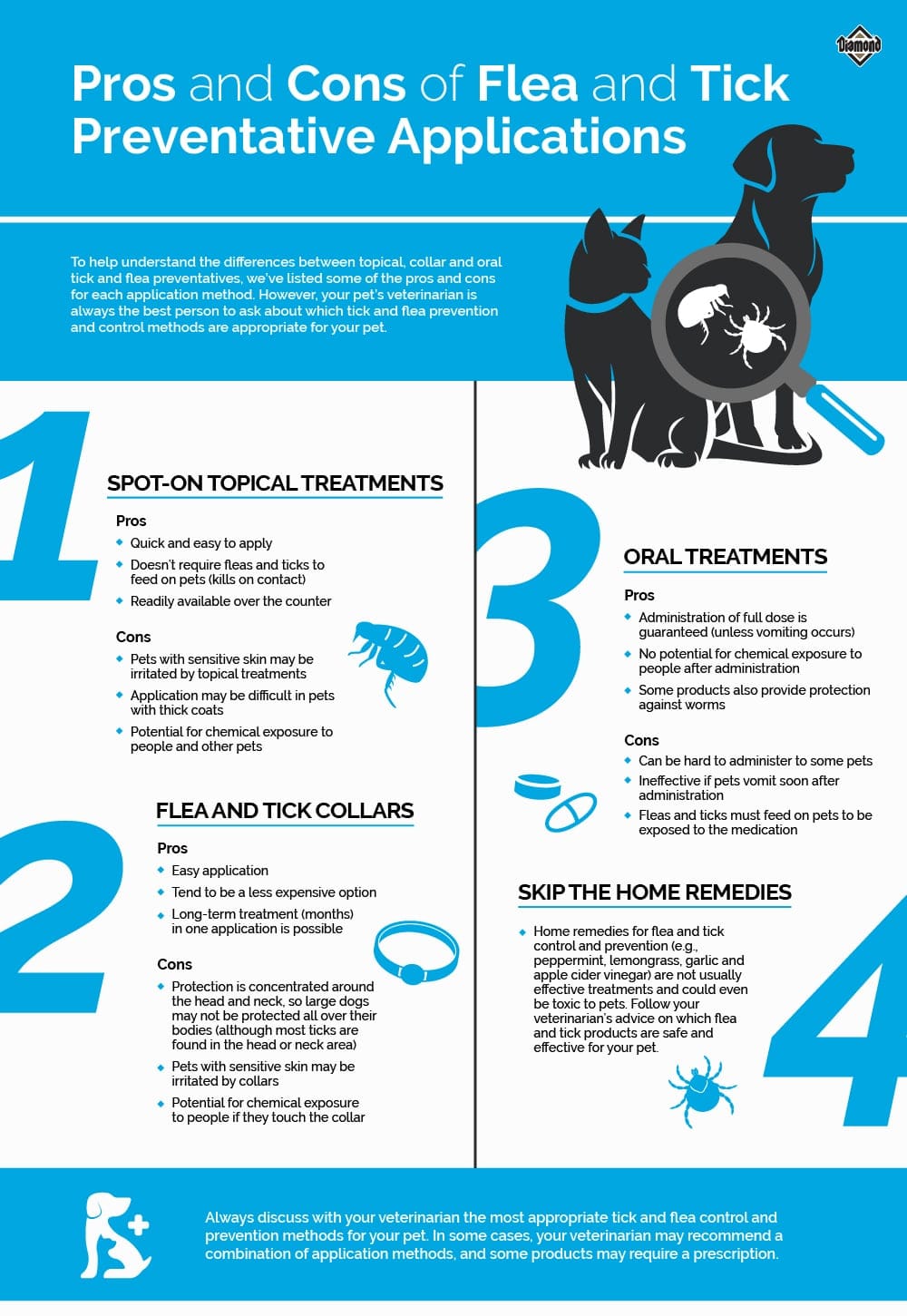
Veterinarians commonly recommend three main categories of flea and tick control: oral medications, flea collars, and topical treatments. Some products also offer broader protection against other parasites.
Oral Flea and Tick Medications
Available in pill and chewable forms, oral prescription flea and tick medications are a safe and effective option for many dogs.
- Credelio Quattro: This monthly chewable is a prescription-only medication offering broad-spectrum protection against fleas, ticks, heartworms, and three types of intestinal worms (tapeworms, roundworms, and hookworms). It contains four active ingredients: lotilaner, moxidectin, praziquantel, and pyrantel. However, it is not recommended for dogs with a history of seizures.
- Trifexis: This chewable tablet, available by prescription, protects dogs from fleas, heartworms, and intestinal worms (hookworms, roundworms, and whipworms). It does not provide protection against ticks. Caution should be exercised when prescribing Trifexis to dogs with epilepsy.
- Bravecto: Bravecto offers long-lasting protection against fleas and ticks for up to 12 weeks per dose. It also treats and controls certain tick species for the full 12-week period. This preventive uses the active ingredient fluralaner. Like Credelio Quattro, Bravecto should not be prescribed to dogs with a history of seizures and requires a veterinary prescription.
Oral medications are an excellent choice for households with young children or other pets that might come into contact with residue from topical treatments or collars. Vomiting is the most commonly reported side effect.
Dog Flea and Tick Collars
Modern flea and tick collars are generally safe and effective alternatives to monthly treatments.
- Seresto Collar: This popular and effective collar utilizes flumethrin and imidacloprid to repel and kill fleas and ticks, preventing them from biting your pet. This action helps to prevent flea egg-laying and control flea larvae. It also controls and kills lice. The Seresto collar can remain effective for up to eight months, especially if exposure to water is minimized, making it a convenient option.
If you have young children, ensure they do not play with flea collars, as they can leave chemical traces. Some dogs may experience local skin reactions to collars; if this occurs, the collar should be removed. Always consult your veterinarian before using any flea and tick product, including Seresto.
Topical Flea and Tick Treatments
Topical, or spot-on, treatments are another safe option for flea and tick control, often providing protection against a range of parasites.
- Advantage Multi: This prescription treatment contains imidacloprid and moxidectin to kill heartworms, hookworms, whipworms, roundworms, Sarcoptic mange mites, and fleas. It does not kill ticks. To prevent potentially serious side effects, dogs should not be allowed to lick the application site for at least 30 minutes after application.
- Frontline Plus: An over-the-counter product, Frontline Plus uses fipronil and (S)-methoprene to combat fleas and ticks. It also eliminates lice and helps manage sarcoptic mange. While ingestion should be avoided, minor licking is unlikely to cause significant harm.
When using topical treatments, ensure your pet cannot lick the application site, and be mindful of interactions with other pets or children until the treatment has dried. If you have cats, consult your veterinarian before applying any topical flea treatment to your dog, as some ingredients, like permethrin, are highly toxic to felines. Using a soap-free shampoo when bathing your dog after application can help maintain the effectiveness of topical treatments. Topical treatments generally require monthly application.
Leaving parasites untreated poses a greater risk to your dog’s health, as they can develop serious flea-related or tick-borne diseases. Your veterinarian remains the best resource for selecting the safest and most effective flea and tick treatment tailored to your dog’s specific needs.
