
Probiotics, often referred to as “friendly” bacteria, play a crucial role in maintaining a healthy balance of microorganisms within your dog’s gut. While the exact ratio of bacteria to human cells is still debated, it’s undeniable that a significant population of bacteria resides in our bodies and those of our pets. The majority of these are harmless, contributing to overall well-being, while only a small fraction can cause illness. Probiotics offer a multitude of benefits, including improved digestion, enhanced immune function, and a reduced risk of various diseases. This comprehensive guide, developed by veterinary professionals, aims to simplify the process of selecting the best probiotic for your canine companion.
What Exactly Are Probiotics for Dogs?
Probiotics for dogs are supplements containing beneficial bacteria that help restore and maintain a healthy gut microbiome. These microorganisms are vital for optimal digestive and immune system function. It’s important to distinguish them from prebiotics, which are non-digestible fibers that nourish these beneficial bacteria, and postbiotics, which are health-promoting compounds produced during the breakdown of prebiotics by probiotics. Postbiotics can also be inactive probiotics that offer health benefits through similar mechanisms as live probiotics. The synergistic action of prebiotics, probiotics, and postbiotics can significantly contribute to a dog’s overall health.
These beneficial bacteria primarily reside in the digestive tract. However, illness or stress can disrupt the delicate balance between good and bad bacteria, leading to gastrointestinal issues such as diarrhea, gas, and bad breath. Certain bacteria populations are also linked to obesity and can influence renal health. The impact of gut microbiota extends far beyond digestive health, influencing the animal’s general well-being.
Probiotics can be administered in various forms, including chews, liquids, powders, and capsules. They are also present in probiotic-rich foods like yogurt and kefir. It is crucial to remember that heat and humidity can significantly diminish the viability of probiotics. Higher temperatures and moisture levels increase the risk of bacterial decline, reducing their effectiveness over time. For this reason, powder forms are often preferred due to their dry nature, which helps maintain probiotic stability.
When Should You Administer Probiotics to Your Dog?
While probiotics can be beneficial for generally healthy dogs, they are particularly advantageous in specific situations. When dogs experience illness or stress, their microbial balance can be disrupted, making probiotics a valuable support. They can also be beneficial during dietary changes, as dogs age, when undergoing medication, and in cases of parasitic infections.
Probiotics can be advantageous for dogs in a variety of scenarios, whether they are perfectly healthy or dealing with specific health concerns. Here’s a breakdown of their applications:
Diarrhea and Gut Health Disorders: Probiotics are widely recognized for their efficacy in managing diarrhea and other gastrointestinal issues. They are among the most extensively studied supplements for these conditions. For instance, probiotics have demonstrated effectiveness in managing antibiotic-associated diarrhea (AAD), often caused by Clostridium difficile. This probiotic can also be used for treating inflammatory bowel disease.
Dental Health: Certain probiotic strains have shown promise in reducing dental plaque and improving overall oral hygiene.
Probiotics for Antibiotic-Associated Diarrhea (AAD)
Clostridium difficile is a gram-positive, anaerobic bacillus that can cause various gastrointestinal infections in animals. It often leads to an imbalance in the gastrointestinal tract, particularly in cases of antibiotic-associated diarrhea (AAD). This condition arises when the natural gut microbiota is disrupted due to antibiotic use, manifesting in symptoms like watery diarrhea, lethargy, vomiting, and stomach upset.
While antibiotics are essential for treating this condition, probiotic consumption can significantly aid in re-establishing a healthy gut flora and improving overall health. Research supports the role of probiotics in this process.
Probiotics During Pregnancy
A study investigated whether supplementing pregnant Great Dane dogs with prebiotics (MOS and FOS) and probiotics (Enterococcus faecium and Lactobacillus acidophilus) could enhance the quality of their colostrum. Colostrum, the first milk produced after birth, is rich in antibodies such as IgG, IgM, and IgA, which are crucial for protecting puppies from infections.
The study involved 20 Great Dane dogs divided into four groups. One group received a standard diet, while the other three received the supplements during the last one, two, or four weeks of pregnancy. Blood samples were collected at various intervals to measure antibody levels, and colostrum was collected at birth to assess its antibody content.
The results indicated that the group supplemented for four weeks exhibited the highest levels of IgG, IgM, and IgA in their colostrum, suggesting enhanced immune support for the puppies. The study concluded that a four-week supplementation period was most effective in boosting the immune properties of colostrum.
Disclaimer: While probiotics offer numerous benefits, it is always recommended to consult with a veterinarian for personalized advice before introducing any new supplement to your dog’s diet.
How to Choose the Best Probiotics for a Dog?
Selecting the optimal probiotic for your pet can be a daunting task. To assist you in making an informed decision, we’ve compiled key considerations:
Evaluate Health Target: If you are uncertain about your dog’s specific health issues, consult with a veterinarian. It is crucial to choose a probiotic formulated to address those particular conditions or to support a specific health goal. Remember, probiotics can also be used for generally healthy pets, so an existing health problem is not always a prerequisite for supplementation.
Scientific Backing: The effectiveness of probiotics for dogs is strongly supported by scientific research. Prioritize products that feature strains with multiple supporting studies to ensure their efficacy.
Select Appropriate Strains: Opt for probiotics containing beneficial strains with proven efficacy for specific health concerns. For general digestive health, strains such as Enterococcus faecium NCIMB 30183 or NCIMB 10415, Saccharomyces cerevisiae boulardii, and Bifidobacterium species are commonly recommended. Additionally, Lactobacillus and Bacillus subtilis DSM 15544 can offer further benefits, with Bacillus often providing superior stability. Your veterinarian can help identify the most suitable strains for your dog’s individual needs.
Choose a Reputable Brand: While brands developed or endorsed by veterinarians may come at a higher cost, quality alternatives often exist. Carefully review product labels to ensure they meet high standards and are appropriate for your dog.
Consider the Form: Probiotics are available in various forms, including capsules, chews, liquids, and powders. For enhanced stability and more accurate dosing, powder forms are often recommended. Powders generally have lower moisture content, which helps preserve probiotic viability and ensures accurate dosage delivery.
Opt for High Potency: Colony-Forming Units (CFU) measure the number of viable microorganisms in a probiotic product. Lower CFUs may be suitable for general health support, while higher CFUs are often recommended for more serious health conditions. It is important to note that each probiotic strain may have its own optimal dosage. Therefore, selecting a product with veterinary endorsement and supporting studies for specific strains is crucial for ensuring correct dosage and effectiveness.
Read Reviews: Customer reviews can offer valuable insights into others’ experiences, which can be helpful when making a decision. While individual results may vary, reviews can guide your choice.
Note: It is essential to consult with your veterinarian to gain a deeper understanding of bacterial strains, colony-forming units (CFU count), product quality, and your dog’s specific health requirements before making a purchase.
Synbiotic GB-01® – Gut Balance
$29.90 or less for 30 days
🚀 Promotes a healthy gut, better stools, and supports immunity
🐾 Vet-founded & vet-formulated
🔬 Contains E. faecium NCIMB 10415, proven in 3 dog and 3 cat clinical trials.
🦠 Synbiotic power: probiotic + prebiotic for long-lasting microbiome support
💊 Convenient format – One capsule per day for dogs and cats
Get $10 Off!
Benefits of Probiotics for Dogs
 Benefits of Probiotics
Probiotics are beneficial microorganisms that positively impact a dog’s health. Here are some key benefits of probiotics for dogs:
Improved Digestion and Nutrient Absorption: Better Overall Gut Health
Probiotics help maintain a balanced gut microbial population, contributing to proper digestion. By preventing harmful bacteria from overpowering beneficial ones, probiotics support the production of digestive enzymes and aid in breaking down complex nutrients into absorbable molecules.
Human studies suggest that Saccharomyces boulardii, a yeast with probiotic properties, is effective in treating both acute and chronic enteropathies. While Saccharomyces boulardii is a yeast and not a bacterium like many other probiotics, it is still considered a probiotic due to its beneficial effects.
Other effective probiotics include:
- Enterococcus faecium, particularly the strain Enterococcus faecium DSM 10663 NCIMB 10415
- Bacillus subtilis, especially the strain Bacillus subtilis C-3102 Calsporin
- L. acidophilus, with the strain L. acidophilus D2/CSL
These strains have demonstrated significant benefits and can be chosen based on your dog’s specific health needs.
One study evaluated the effects of probiotics in both healthy dogs and those with chronic enteropathies (CE), noting any adverse effects.
The findings indicated that Saccharomyces cerevisaee boulardii could provide better management of clinical signs in dogs with CE compared to standard therapy alone.
Although scientific evidence for probiotics in dogs is less extensive than in humans, research suggests that supplementation with Bifidobacterium animalis AHC7 may reduce the duration of diarrhea from seven to four days. Furthermore, probiotics could potentially decrease the need for antibiotic treatment by approximately 10 percent, according to the same study.
It is crucial to remember that not all probiotic strains offer the same benefits, underscoring the importance of researching specific strains.
Reduction in Allergies and Skin Conditions
Surprisingly, probiotics can also be beneficial for allergies in dogs. They are thought to aid in the production of regulatory T-cells, which help suppress exaggerated immune responses and prevent allergic reactions. Additionally, probiotics can help prevent allergens and toxins from entering the bloodstream.
Canine atopic dermatitis (CAD), a common chronic inflammatory skin condition in dogs, is characterized by abnormal levels of IgE antibodies in response to allergens. One study found that administering the probiotic strain Lactobacillus sakei probio-65 for two months significantly reduced the severity index of CAD in affected dogs.
Another trial involved 11 dogs with atopic dermatitis and assessed the impact of probiotics. The dogs were randomly assigned to two groups: one received Bifidobacterium longum probiotics daily for 12 weeks, while the control group received a placebo. The severity of skin lesions was evaluated using the Canine Atopic Dermatitis Extent and Severity Index (CADESI)-4. Although the results are promising, it’s important to note the study’s relatively small sample size.
The study revealed a significant decrease in the CADESI-4 score at 4, 8, and 12 weeks in the probiotic group compared to baseline, indicating an improvement in skin lesions. This suggests that probiotics may be a beneficial option for dogs suffering from atopic dermatitis and severe skin symptoms.
Weight Support
Human studies have indicated differences in gut bacteria composition between individuals with obesity and those who are lean. This phenomenon may also apply to animals, as gut bacteria can influence body weight regulation.
Recent research on probiotics for obese canines demonstrated that Enterococcus faecium IDCC 2102 and Bifidobacterium lactis IDCC 4301 effectively reduced body weight, lipid accumulation, and systemic inflammation in canines fed a high-fat diet. These probiotics improved microbiota balance and metabolic processes, enhancing energy utilization and restoring stable eating behavior and glucose tolerance in the canine model.
Renal Support
Human studies have shown that probiotic supplementation can mitigate the severity of renal ischemia-reperfusion injuries and secondary liver injuries. This suggests potential benefits for addressing renal issues in dogs as well.
Renadyl was evaluated in end-stage renal disease (ESRD) patients to assess its safety and efficacy. The primary goals were to determine if Renadyl improved quality of life or reduced uremic toxin levels, with secondary objectives focusing on biomarkers of inflammation and oxidative stress. This human study concluded that Renadyl was safe for use, and trends suggested potential benefits, including reductions in inflammatory markers.
Enhanced Immune System
Probiotics contribute to a healthy gut microbiome, which positively influences the immune system. A robust gut can reduce the susceptibility to infections and chronic inflammation, thereby strengthening the immune system.
In a study involving 90 dogs across three age groups—elderly (30 dogs), young (24 dogs), and training (36 dogs)—each group was further divided into two subgroups: one received a daily probiotic feed additive, and the other did not. The probiotic feed additive contained three bacterial strains: Lactobacillus casei Zhang, Lactobacillus plantarum P-8, and Bifidobacterium animalis subsp. lactis V9.
The study yielded the following key findings regarding probiotics:
- Increased Feed Intake and Weight Gain: Probiotics led to higher average daily feed intake and weight gain across all age groups.
- Changes in Gut Microbial Structure in Elderly Dogs:
- Increased Beneficial Bacteria: A notable increase in beneficial bacteria such as certain Lactobacillus species and Faecalibacterium prausnitzii.
- Decreased Potentially Harmful Bacteria: A reduction in potentially harmful bacteria like Escherichia coli and Sutterella stercoricanisin.
- Significant Response in Elderly Dogs: Elderly dogs exhibited the most pronounced response to probiotics.
- Correlation with Immune Factors: Changes in the relative abundance of certain bacterial species correlated with specific immune factors and physiological parameters.
- Overall Health Improvement: Probiotic treatment was associated with enhanced overall health and immune function, likely through the modulation of gut microbiota, which stimulates antibody and cytokine secretion.
- By day 60 of probiotic treatment, the gut microbiota of elderly dogs showed similarities to that of younger dogs. These findings suggest that probiotics can positively impact canine health and the immune system, particularly in older dogs, offering insights for developing probiotic-based strategies to improve both animal and human health.
Anxiety Alleviation
Anecdotal evidence suggests a link between gastrointestinal issues and anxiety in some dogs. Separation anxiety, for instance, can sometimes lead to nervous intestines and related digestive problems. Probiotics can help rebalance the gut microbiota, promoting optimal digestive function and potentially alleviating anxiety-related gastrointestinal symptoms.
Note: It is advisable to consult with a veterinarian before administering probiotics to address anxiety and gastrointestinal issues in your dog.
Key Facts About UC-II®
UC-II® = Undenatured Type II Collagen
- UC-II® helps reduce pain and inflammation in dogs.
- Scientific studies indicate that UC-II® is more effective than a combination of chondroitin and glucosamine in relieving dog pain and improving mobility.
- UC-II® and Omega 3s are the only supplements that have demonstrated benefits in plate-force studies. Chondroitin and glucosamine failed to show such benefits.
- UC-II® is an undenatured type II collagen derived from chicken sternum cartilage, produced through a patented extraction process.
Learn more
Precautions and Considerations
 Precautions and Considerations
Probiotics are generally well-tolerated and considered safe for most dogs. However, it is important for pet owners to exercise caution when introducing new supplements.
Possible Side Effects: How to Monitor Them?
When introducing any new supplement or food to your dog, close monitoring of their response is crucial. Promptly addressing any side effects can help protect your dog and ensure their well-being.
While probiotics support a dog’s digestive health, they can occasionally cause mild digestive upset, including gas, bloating, diarrhea, or constipation. If you observe these symptoms, contact a veterinarian promptly. To minimize the risk of side effects, it is recommended to start with a lower dose and gradually increase it, allowing your dog’s system to adjust.
Although rare, allergic reactions can occur and may manifest as itching, redness, hives, or swelling. If you notice any of these signs, discontinue use immediately and consult your veterinarian.
Tips to Prevent Side Effects:
- Introduce the supplement gradually.
- Monitor your dog’s behavior, appetite, stool consistency, and overall health.
- Adjust the dosage as needed or consult with a veterinarian.
Importance of Choosing High-Quality Probiotics
High-quality products undoubtedly offer the best results. However, discerning between a good and a subpar product can be challenging.
At Jope, we consider a product high-quality if it meets the following criteria:
- Formulated by a veterinarian or a qualified nutritionist.
- Supported by scientific studies that validate its claims. Without this evidence, the product’s efficacy cannot be assured.
- Utilizes the correct dosage as determined by research studies.
- Demonstrates stability, as probiotics are living microorganisms whose potency can decrease over time. Each strain has unique stability characteristics, and specific methods can extend their viability.
- Manufactured in a GMP-compliant and NASC-approved facility, preferably in the USA.
- Contains a limited number of inactive ingredients.
- Undergoes third-party testing to verify the accurate quantities of active ingredients.
- Trusted by veterinarians, who are meticulous in their product selection.
- The company provides responsive customer support and answers questions.
Quality products maximize benefits while minimizing adverse effects, although individual reactions may vary. Always read the product label carefully to ensure purity and potency. Choose a product with proven longevity and stability for an extended shelf life.
Consulting With a Veterinarian
Before initiating any new supplement regimen, it is highly advisable to consult with your veterinarian. This approach ensures that recommendations are tailored to your dog’s specific health needs.
While probiotics for dogs may not always lead to a complete cure, they can significantly improve your dog’s overall health, particularly benefiting the digestive tract.
Top 7 Best Probiotics For Dogs
While studies specifically on canine probiotics and their efficacy are still evolving, there is existing research to guide our recommendations. Veterinary professionals are actively exploring the benefits of probiotics and incorporating them into various research initiatives.
We have identified some of the best probiotics based on product quality, intended purpose, and customer experiences and reviews. Let’s explore them:
Best Probiotics for Diarrhea in Dogs
These probiotics are particularly recommended for dogs experiencing diarrhea.
You can find more information on the best Probiotics for Dogs With Diarrhea.
#1: GB-01® Synbiotic Gut Balance
[Why trust it?
- Synbiotic GB-01® is supported by one of the largest prospective canine trials conducted on supplements. The study involved 773 shelter dogs (who often face challenging conditions) and demonstrated a significant reduction in diarrhea episodes, alongside improved gut health and stool consistency.
- It contains Enterococcus faecium (DSM 10663/ NCIMB 10415) 4b1707, which helps limit stomach upset and improve fecal scores. This probiotic strain is backed by 3 clinical studies in dogs and 3 clinical studies in cats, proving its efficacy. It is also approved for clinical efficacy and safety by the European Food Safety Authority (EFSA), known for its stringent standards.
- GB-01® is a synbiotic, combining FOS and acacia prebiotics with E. faecium. This formulation nourishes beneficial bacteria and stimulates the production of short-chain fatty acids (SCFA), which are natural compounds that nourish gut cells and enhance the probiotic’s benefits, leading to more effective microbiome balance than a probiotic alone.
- It contains only one inactive ingredient (magnesium stearate), making it suitable for dogs and cats with sensitivities and reducing allergy risks.
- Each batch is produced under strict quality controls in the UK and is third-party tested, ensuring purity and consistency.
Get $10 off with our discount code: BESTPROBIOTIC10
#2: Purina Fortiflora Synbiotic
[Why trust it?
- The number one veterinarian-recommended dog probiotic brand for digestive health (Kantar Veterinary Tracker, 2021).
- Available as a probiotic powder supplement suitable for both puppies and adult dogs.
- Offers a synbiotic action of prebiotics and probiotics to manage diarrhea and support healthy microflora.
- This probiotic supplement contains Psyllium, which stimulates the growth of Lactobacillus and Bifidobacterium species. While psyllium is beneficial, the inclusion of FOS (fructooligosaccharides), a highly effective prebiotic that synergizes well with these beneficial bacteria, would have been preferable.
#3: Proviable Forte
[Why trust it?
- Contains 10 billion CFU’s per capsule and 7 strains of bacteria to improve intestinal balance. While it offers a diverse range of good bacteria, not all strains have demonstrated consistent results in studies, raising questions about the necessity and effectiveness of including so many different strains.
- Includes prebiotics to encourage the growth of good bacteria in the gut, though their effectiveness may vary. FOS (fructooligosaccharides), a highly effective prebiotic known for its proven benefits in supporting healthy gut bacteria growth, would have been a preferred inclusion.
- The contents of each capsule can be easily sprinkled over food.
Best Probiotic With Clay for Dogs
Clay is beneficial for dogs with gastrointestinal issues due to its ability to absorb toxins and harmful substances, stabilize digestive function, and soothe gut inflammation. Its natural properties help manage diarrhea, improve stool consistency, and provide essential minerals like calcium and magnesium.
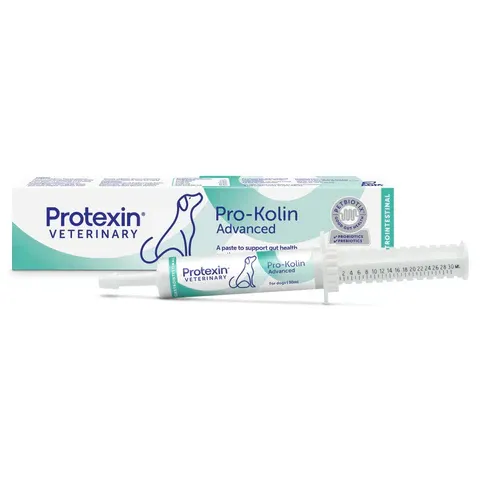
#1: Pro-Kolin Advanced for Dogs by Protexin
Why trust it?
- This probiotic supplement contains beneficial microorganisms, prebiotics, soothing fibers, and a dual-source binding agent.
- It includes pectin, which soothes the gut lining, and Psyllium, which absorbs excess water from the gastrointestinal tract.
- The combination of ingredients can be highly effective, but a simpler formulation would have been preferred to reduce the risk of allergies and adverse reactions.
- Preplex includes two highly valued ingredients: FOS (fructooligosaccharides) and acacia gum.
#2: Full bucket Health Bioclay+ Paste
[Why trust it?
- This paste features a bioactive clay-based formula that supports digestive health during occasional distress.
- It contains 1.56 Billion CFU’s of Saccharomyces cerevisiae boulardii, a yeast probiotic strain that is safe for use during antibiotic therapy. While not as extensively studied as strains like Levucell®, Saccharomyces cerevisiae boulardii remains a valuable component for maintaining digestive balance and supporting gut health during antibiotic treatment.
- It also includes L-Glutamine and bio-adsorbent clay to aid in toxin removal.
Best Maintenance Probiotics for Dogs
The following product is a unique blend that can be given daily, even to healthy dogs, to maintain a healthy gut. The probiotics mentioned for diarrhea are also suitable for maintenance.
Animal Biome GI Relief
[Why trust it?
- Contains a triple and unique blend of phages (PreForPro), prebiotics (FOS), and probiotics (S. boulardii).
- Developed by a reputable company recognized and trusted by many veterinarians for its expertise in fecal microbiota transplant products.
- According to the manufacturer, it helps reduce diarrhea caused by antibiotics, C. difficile, or E.coli.
- Includes S. boulardii. While this strain may not be as extensively studied as some others, it is still considered beneficial for gut health.
Read More: Discover more about prebiotic supplements like FOS and Inulin.
Best Probiotic for Dog Kidneys
The following probiotic is particularly effective and recommended for dogs with renal issues.
Azodyl
[Why trust it?
- Assists in managing uremic toxins and has shown improvement in BUN and creatinine levels within 4 weeks.
- Contains bacterial strains that support the uremic environment, including Streptococcus thermophilus KB19, Lactobacillus acidophilus KB27, and Bifidobacterium longum KB31.
- This probiotic features an acid-resistant capsule designed to protect the bacteria until they reach the colon.
Conclusion
Probiotics are safe and well-tolerated by pets. They can offer significant benefits for both healthy animals and those experiencing digestive or other health issues. The primary advantages of these “friendly” microorganisms include improved gastrointestinal health and digestion. Additionally, probiotics can help alleviate allergic reactions, support weight management, and enhance immune system function.
What benefits have you observed in your dog since starting probiotics? We would love to hear about your experiences – share them in the comments below!
FAQ
What are the benefits of probiotics for dogs?
Probiotics are beneficial bacteria that support your dog’s gut health. However, not all probiotics are created equal. It’s important to look at the specific strain, such as Enterococcus faecium NCIMB 10415. When selected appropriately, they help maintain a balanced digestive system, reduce diarrhea, improve stool quality, enhance nutrient absorption, and strengthen immune function.
Can I give human probiotics to my dog?
It is generally not recommended. Human probiotics are formulated for the human digestive system and may not provide the same benefits for dogs. It is essential to choose species-specific probiotic strains, like Enterococcus faecium NCIMB 10415, that have demonstrated benefits for canine digestion. Always opt for a veterinary-formulated probiotic supplement.
Are probiotics safe for dogs with sensitive stomachs?
Yes, when the correct probiotics are chosen, they are often beneficial for sensitive stomachs. They can help reduce bloating, gas, and irregular stools. Look for supplements that combine probiotics with prebiotics (such as FOS) to gently encourage the growth of beneficial gut bacteria.
How do I know if a probiotic is working for my dog?
To determine if a probiotic is effective for your dog, it is crucial to first review the studies conducted on the specific probiotic strain. Subsequently, consistent administration and careful observation of results are key. Here are the important steps and signs to look for:
Track Changes in Stool Quality: The initial indication of a probiotic’s effectiveness is an improvement in your dog’s stool consistency. This includes:
- Firmness: Softer or watery stools should gradually firm up.
- Odor: A reduction in foul-smelling stools may signify better digestive health.
- Frequency: Regular and well-formed bowel movements suggest improved digestion.
Monitor Digestion and Appetite: Probiotics aid in balancing gut bacteria, which can lead to:
- Less gas and bloating: If your dog’s stomach appears less distended or they pass gas less frequently, it’s a positive sign.
- Better appetite: An effective probiotic will likely increase your dog’s interest in meals or establish a healthier feeding routine.
Observe Behavior and Energy Levels: Gut health is intrinsically linked to overall well-being:
- Increased energy: A healthy gut can contribute to a more energetic and active dog.
- Less lethargy: Dogs with improved digestion often exhibit less fatigue or sluggishness.
Allow Sufficient Time: Be consistent with administration and allow probiotics time to work, as noticeable improvements may take several days to a few weeks. Your dog’s microbiome requires time to adjust to the new bacterial balance. Ensure you are administering the correct daily dosage and tracking any subtle changes.
Author: Dr. Sandra
Doctor of Veterinary Medicine (DVM)
Meet Dr. Sandra, Doctor of Veterinary Medicine (DVM). Sandra merges her two passions—writing and veterinary medicine. Dedicated to animal welfare, she is conducting research aimed at solving the problem of stray dogs. In addition to her research, Sandra has experience in the pharmaceutical industry and works as a veterinary advisor. Her primary goal is to inform pet parents about dog health and to “translate” complex veterinary language into simple, easy-to-understand terms.
Join Dr. Sandra to learn more about pets and discover how simple advice can improve your dog’s life.
*The content presented here is for informational purposes and reflects Sandra’s personal opinions, expertise, and experience
