
Horses have been indispensable partners in ranch work for millennia, their strength and speed crucial for tasks such as herding cattle, roping, and managing heavy equipment. A truly effective ranch horse requires a combination of stamina, robust strength, and impressive speed. Equally important is their ability to respond to direction and a trainability that allows them to become reliable working partners. The following eleven breeds stand out as the best choices for ranch work, each offering a unique set of qualities that make them ideal for the demanding life on a ranch.
1. American Quarter Horse
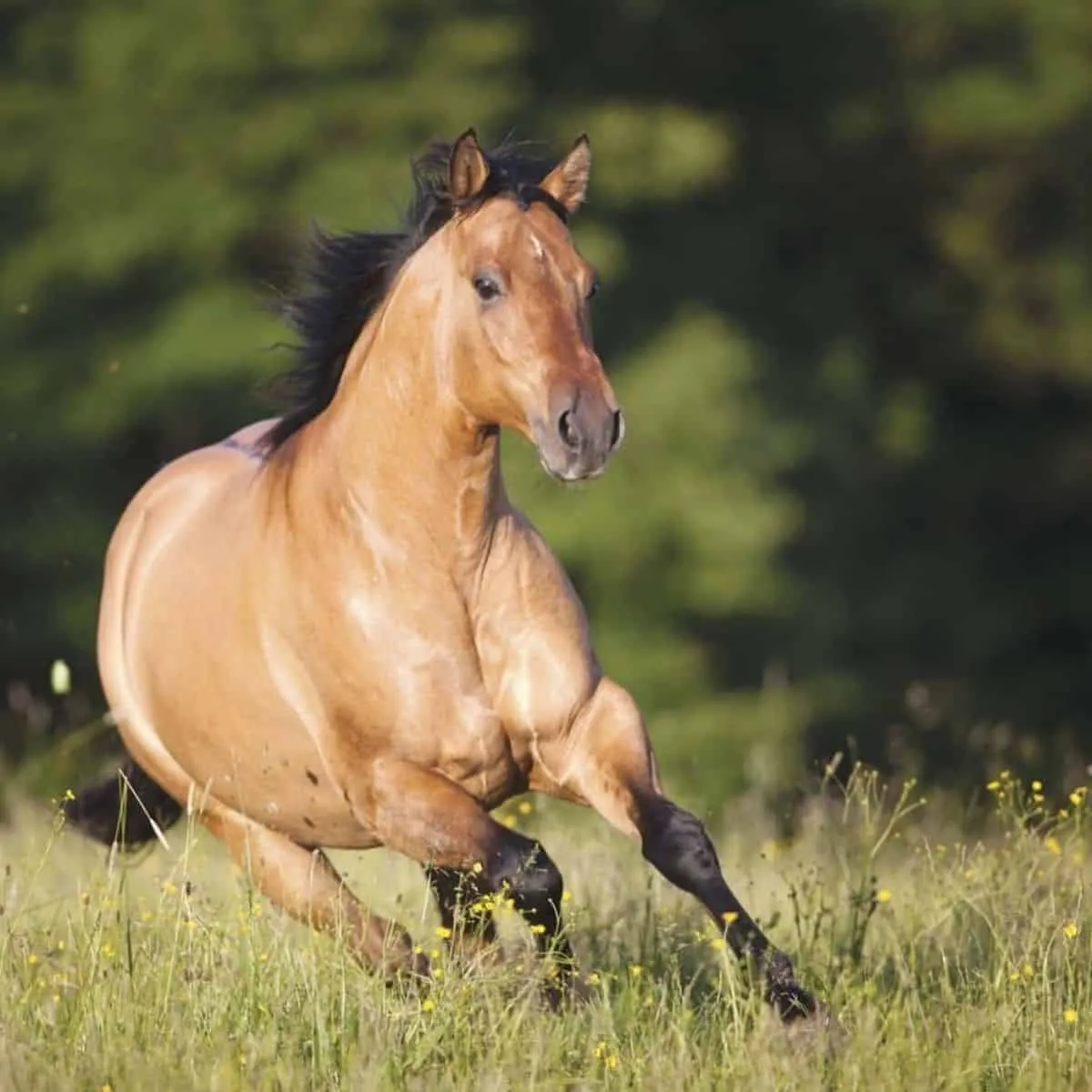 A brown American Quarter Horse runs on a field.
The American Quarter Horse is a quintessential icon of the American ranching landscape, embodying the spirit of the Old West. Its place among the top breeds for ranch work is well-earned, stemming from a carefully cultivated blend of desirable traits. Ranchers meticulously developed this breed by selecting for speed, strength, agility, endurance, and a notably calm temperament. These characteristics make the American Quarter Horse exceptionally well-suited for a wide array of daily tasks, from working with cattle and holding a rope during livestock pursuits to simply ensuring a rancher can quickly get from one point to another. Furthermore, their docile nature makes them excellent mounts for novice riders, including young cowboys and cowgirls learning the ropes of ranching. This breed is a cornerstone of effective and safe ranch operations.
2. Morgan Horse
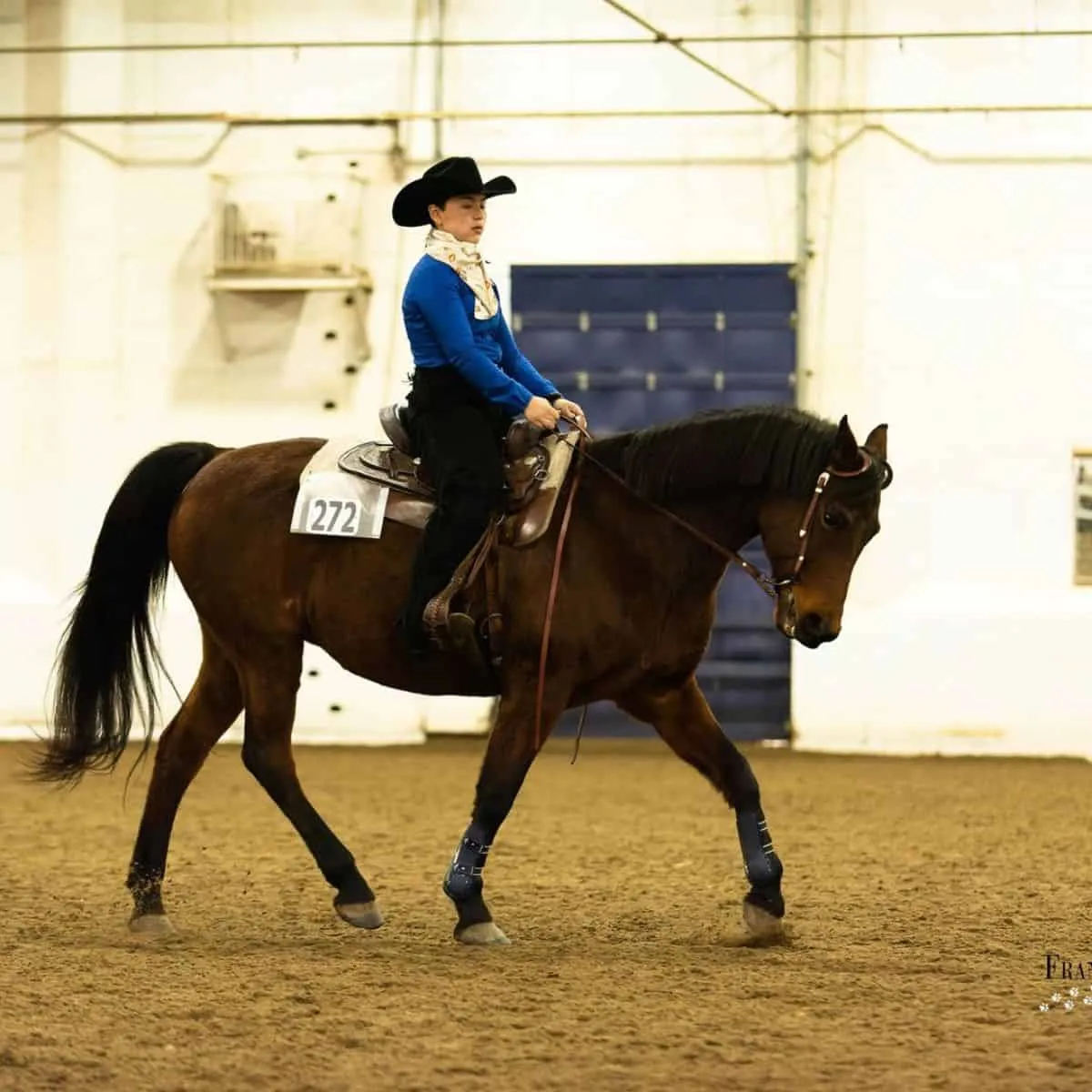 A woman rides a brown Morgan Horse.
The Morgan horse distinguishes itself as a top contender for ranch work due to its remarkable versatility. For smaller operations that require a single horse capable of multiple duties, such as working cattle, performing general ranch chores, and even pulling equipment, the Morgan horse is an outstanding choice. Originating as one of the earliest breeds developed in the United States, these compact yet muscular horses are known for their strength and ability to handle demanding ranch tasks effectively. While typically found in black, chestnut, or bay, Morgan horses do appear in a variety of colors. Historically bred for pulling equipment, they have evolved into highly adaptable ranch partners, capable of tackling any job with ease. Recognized as the state horse of Vermont and having a history tied to Civil War military service, the Morgan horse demonstrates a rich heritage of utility and reliability.
3. Appaloosa
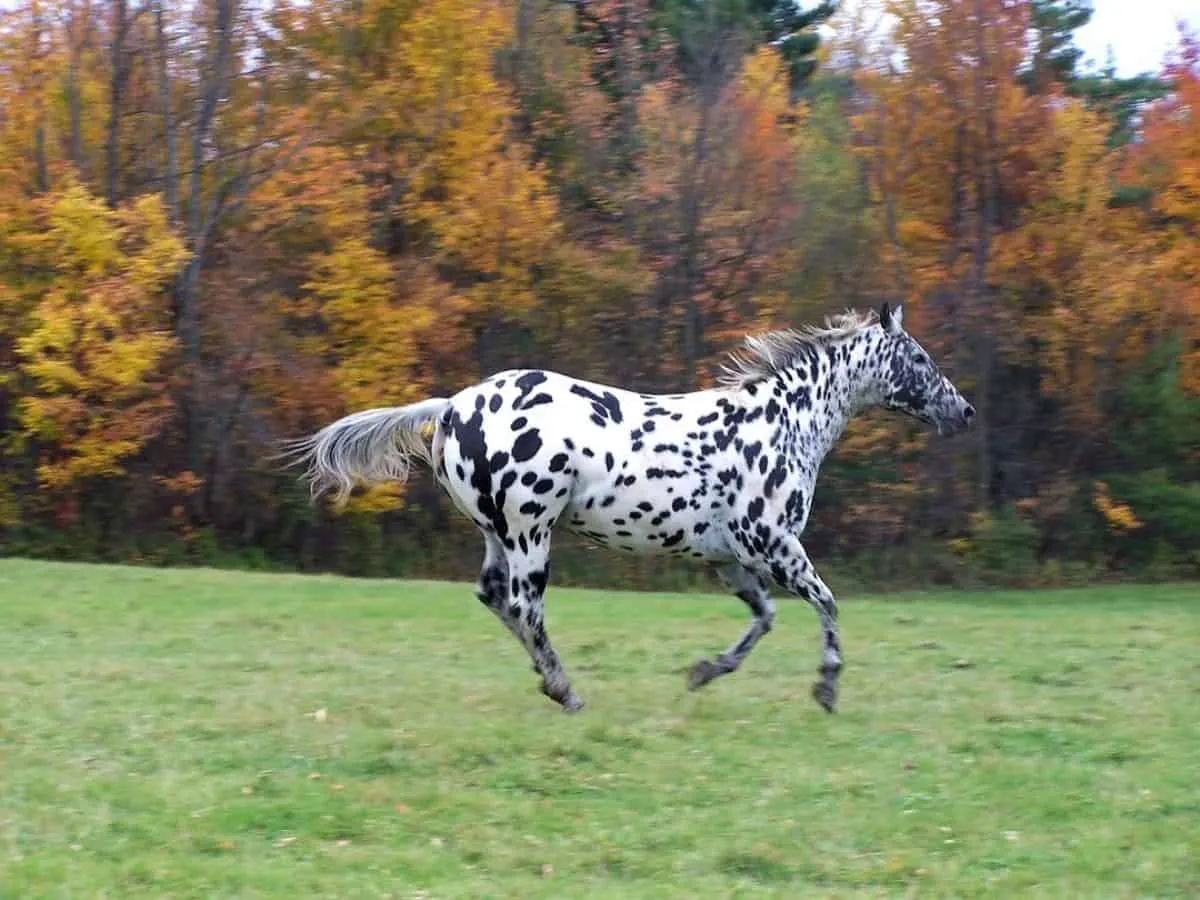 A speckled Appaloosa horse runs on a field.
Historically prized by Native Americans, the Appaloosa’s varied body types and inherent versatility make it a superb choice for the diverse challenges of ranch work. Appaloosas often share a genetic lineage with the American Quarter Horse, as the latter is an approved outcross for the breed, leading to some registered Appaloosas possessing a high percentage of Quarter Horse blood. Typically standing between 14 to 16 hands and weighing 950 to 1,250 pounds, Appaloosas have evolved from their original taller, narrower build to a stockier conformation ideal for ranching. They are known for their hardiness and good health, ensuring they are consistently ready for demanding work. However, it’s important to be aware that the Appaloosa’s distinctive leopard-complex gene can be linked to certain genetic conditions, including two specific eye diseases. Regular veterinary check-ups are crucial for Appaloosas to monitor and manage any potential eye health issues.
4. Shire Horse
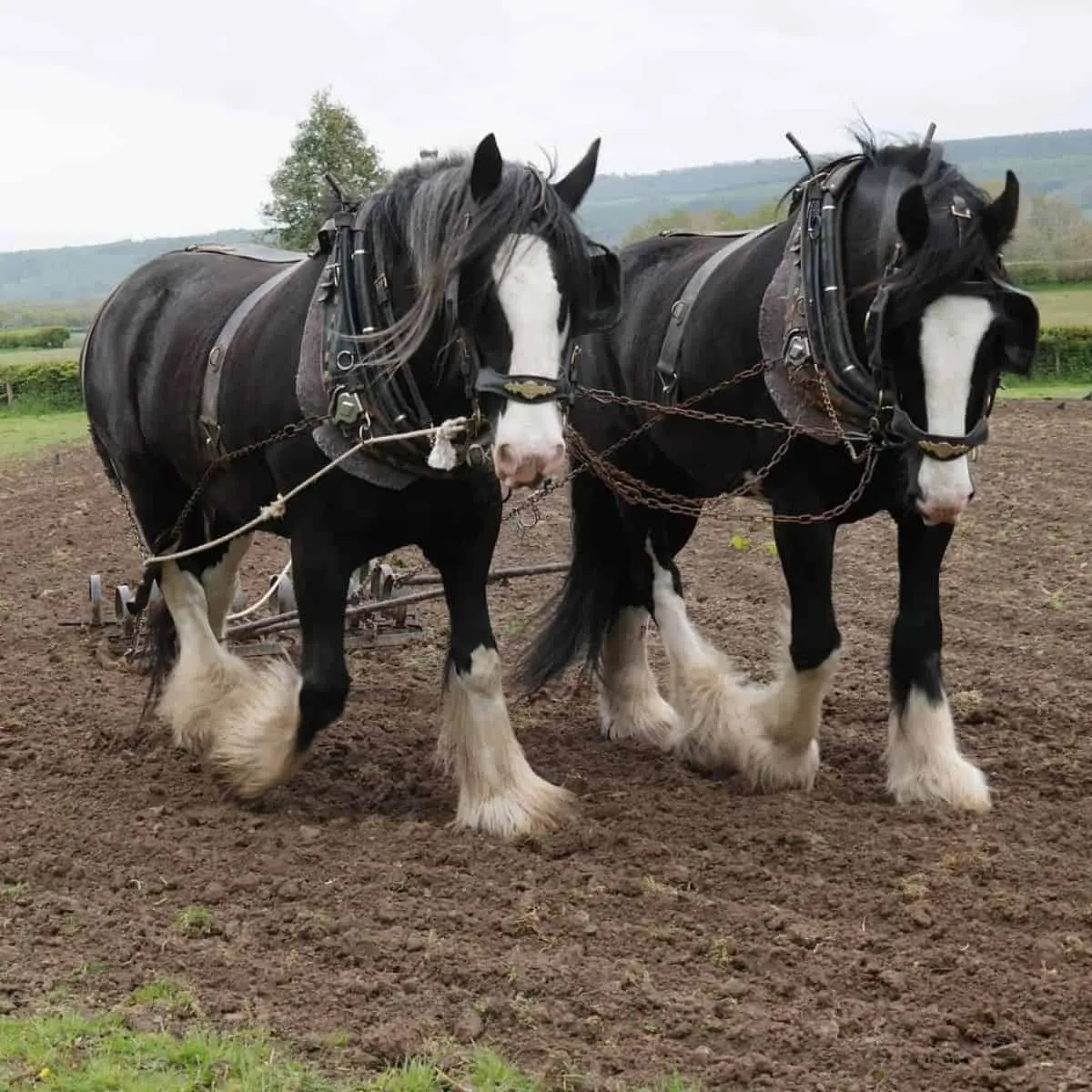 Two huge Shire Horses plowing a field.
Renowned for their imposing height and immense strength, Shire horses are truly magnificent animals, packing significant power within their muscular frames. The Shire breed holds the record for the tallest horse globally, rivaling the Clydesdale in terms of sheer size, massive hooves, and the characteristic feathering on their legs. For generations, their extraordinary size and strength made them indispensable for farm and ranch work, as well as for pulling exceptionally heavy equipment, serving as the primary “workhorses” of the agricultural industry before the advent of modern machinery. Their sheer power makes Shire horses exceptional ranch hands. Combined with a docile temperament and a strong willingness to learn, they are remarkably easy to train for a wide range of tasks and chores. Even novice horse enthusiasts can appreciate the peaceful demeanor and eagerness to please that Shires offer.
5. Percheron
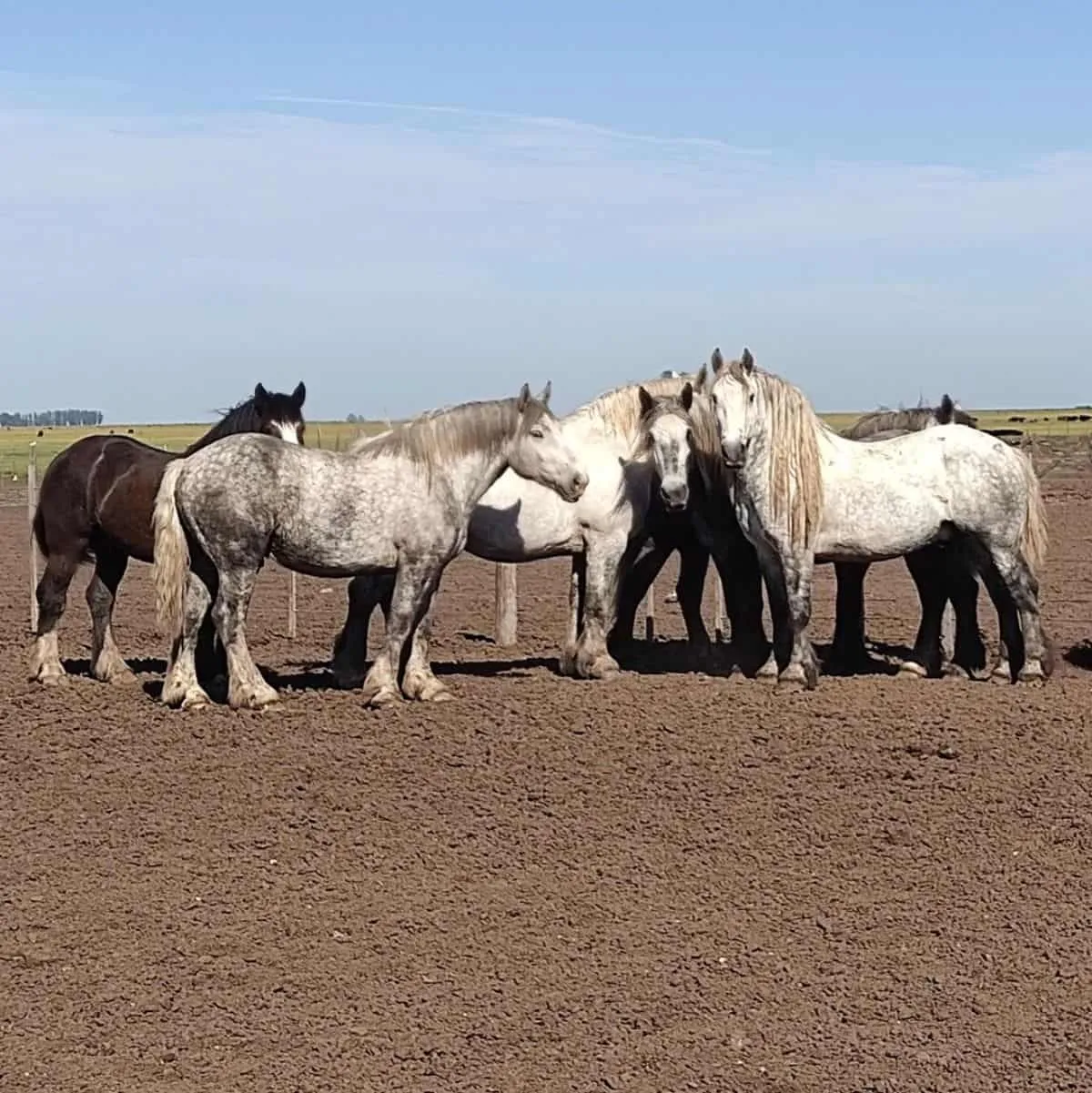 A pack of Percheron horses on a field.
With origins tracing back to the Perche province in France, the Percheron is a large draft horse originally bred for cavalry. Later, Arabian bloodlines were introduced, lending refinement and enhanced athleticism to these powerful animals. The Percheron’s substantial size makes them exceptionally well-suited for the rigorous demands of ranch work. These gentle giants are known for their willingness to submit to their handlers’ authority and their capacity for sustained hard work. Once a dominant breed in the industrial sector, their numbers saw a decline with the rise of machinery. Today, Percherons excel both under saddle and when pulling equipment. Their muscular legs provide the endurance necessary for the demands of ranch life, making these cheerful and healthy horses ideal partners for any ranch operation.
6. Holsteiner
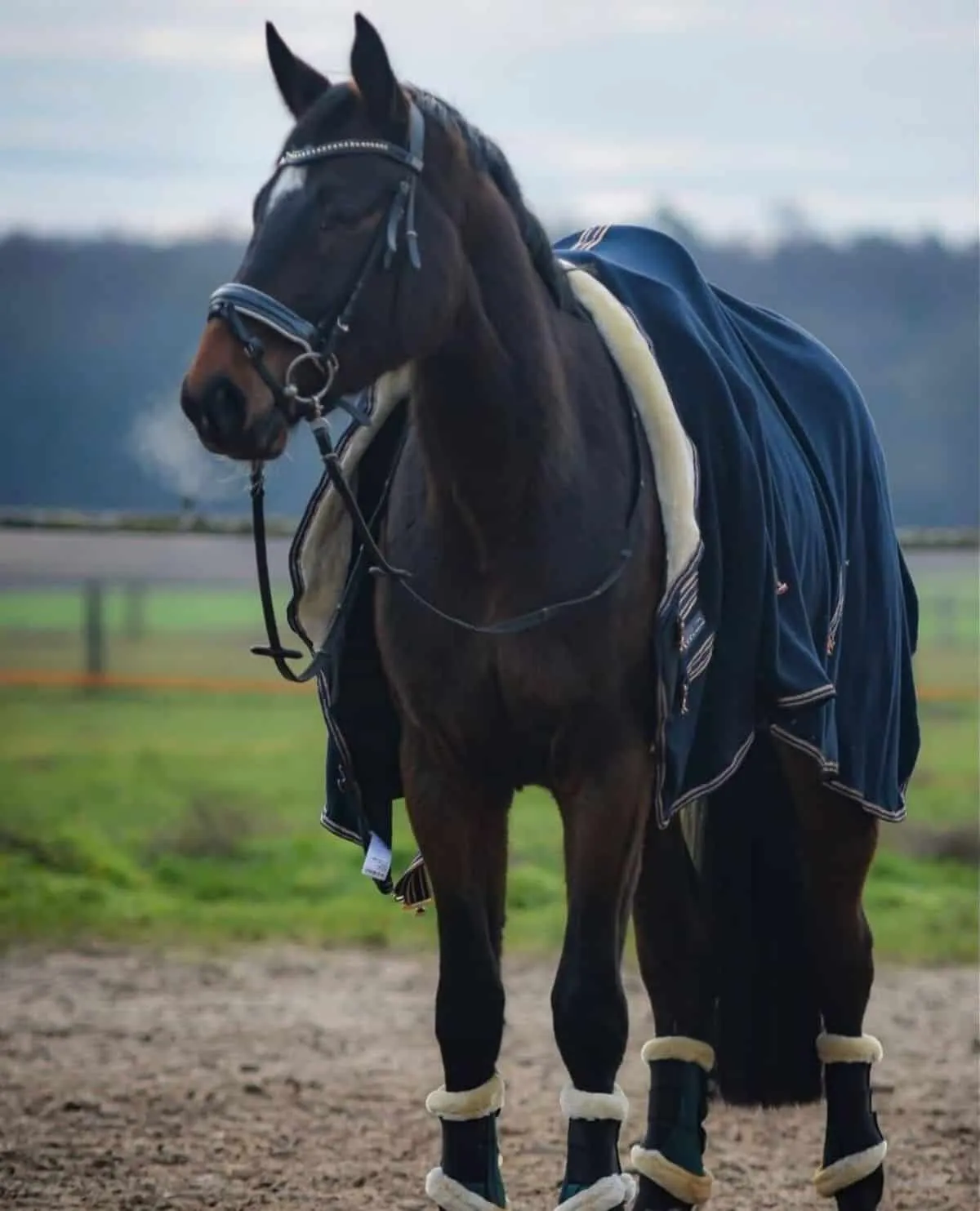 A brown Holsteiner horse stands on a ranch.
The Holsteiner breed boasts a rich history originating in the Schleswig-Holstein region of Northern Germany over 750 years ago. This breed is renowned for its inherent reliability, agility, courage, and strength. Holsteiners have achieved significant success and popularity in disciplines such as driving, dressage, show jumping, and eventing, consistently demonstrating athletic prowess and a competitive spirit. Their all-around athleticism translates directly into the agility required for complex and demanding ranch work. Furthermore, Holsteiners possess a calm temperament and a strong desire to please their riders, making them highly trainable for any task the ranch may present. Their combination of speed, strength, and agility allows them to effectively keep pace with the swiftest cattle.
7. Clydesdale
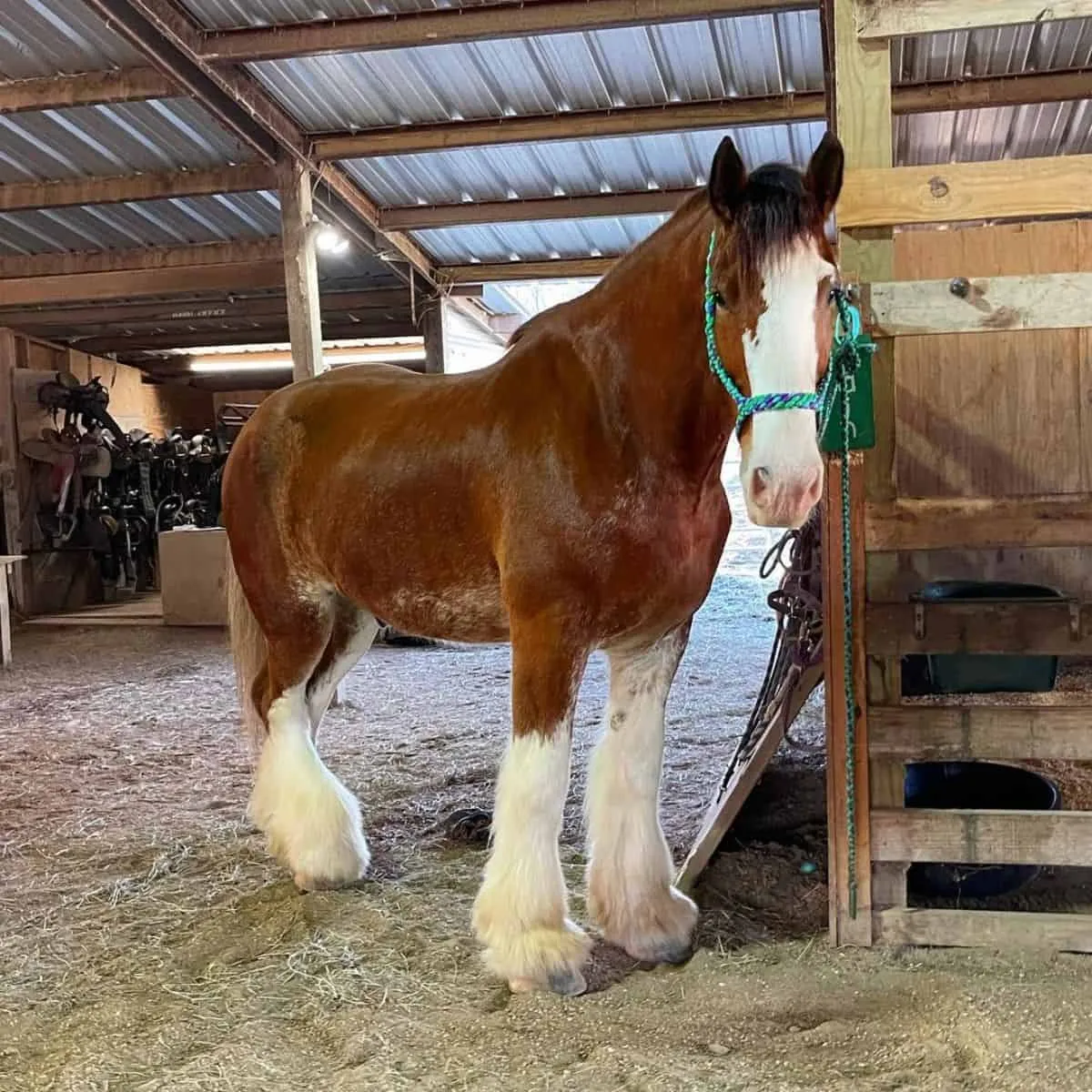 A huge brown Clydesdale horse stands in a stable.
Clydesdales are unmistakable for their massive build and formidable strength, establishing them as one of the most recognizable draft horse breeds. For many years, they served as the primary workhorses in both agricultural and industrial settings, though their role diminished with the mechanization of these sectors. Today, the Clydesdale is a highly desirable horse for ranch work. Originating from Scotland, this breed ranks among the tallest horses globally, second only to the Shire. Like Shires, Clydesdales are gentle giants, always ready to undertake a hard day’s labor. Their legs are specifically adapted for heavy pulling tasks; these specializations allow Clydesdales to be both fast and powerful runners. The structure of their forelegs, with a reduced ulna, means the weight is primarily supported by the radius, while in the hind legs, the fused fibula and tibia ensure efficient weight distribution onto the larger tibia.
8. Friesian
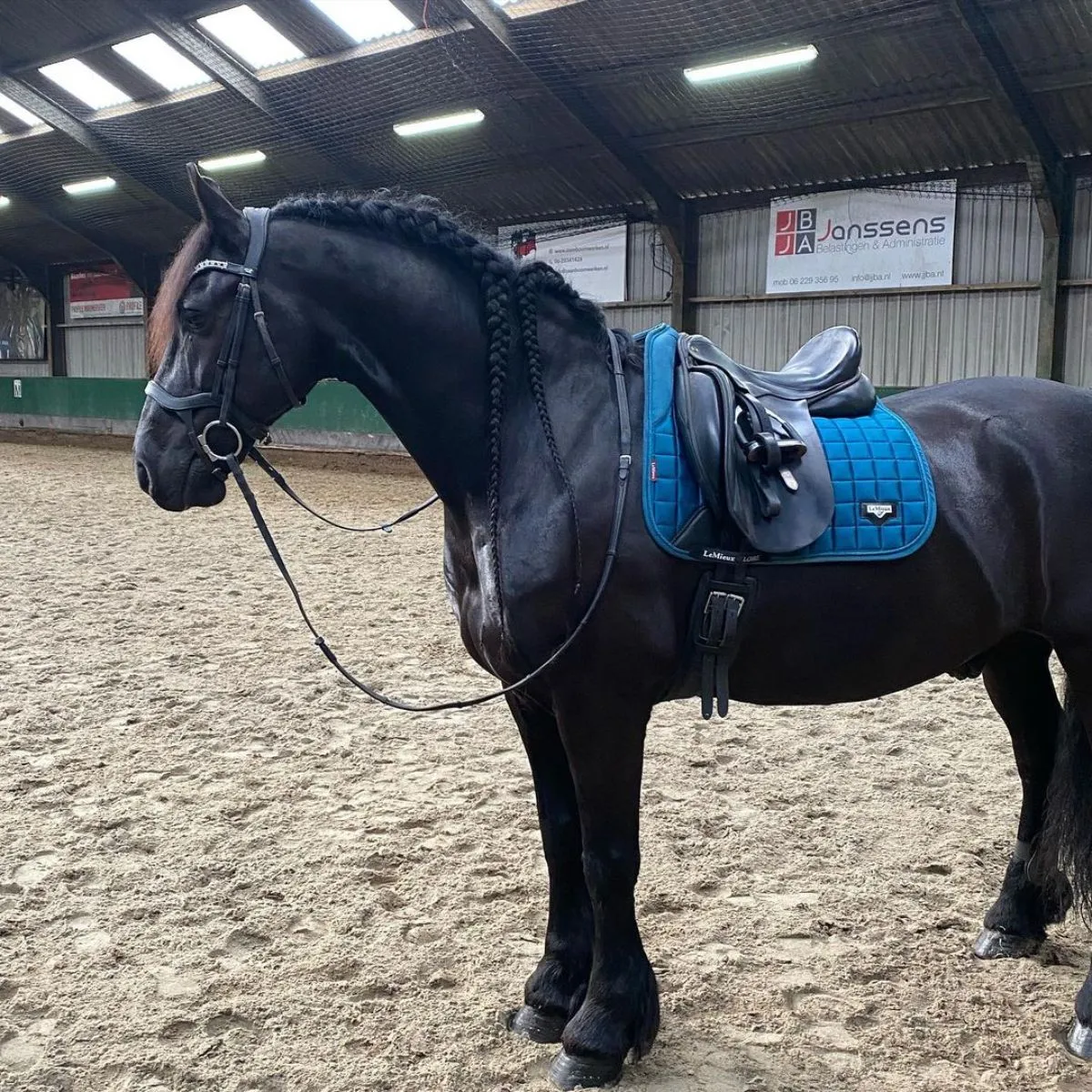 A black Friesian horse stands under a roof.
The Friesian breed represents one of the oldest domesticated European breeds, with roots stretching back centuries in the northern Netherlands, specifically in Friesland. These striking horses are characterized by their flowing manes and tails and a distinctive jet-black coat. Friesians are well-suited for lighter agricultural work. While they may not possess the sheer size and brute strength of a heavy draft horse for the most strenuous lifting tasks, they offer an excellent combination of agility, resilience, and adequate strength for many ranch duties. Following the mechanization of agriculture, the Friesian population experienced a significant decline, facing the threat of extinction. To revitalize the breed, Oldenburg bloodlines were introduced, which successfully rejuvenated the Friesian and re-established its presence in agricultural and working contexts.
9. Standardbred
 A brown Standardbred horse on auction.
Often considered one of the most versatile and well-rounded horses available, the Standardbred is a medium-built equine known for its ruggedness, dependability, and capability. Excelling not only on the race track but also on the ranch, Standardbreds are adept at handling a wide variety of tasks. They possess excellent stamina and endurance, thriving under demanding work conditions and even performing reliably in film settings or alongside law enforcement. Their calm disposition makes them unfazed by surrounding distractions, contributing to their suitability for busy ranch environments. Children often feel particularly safe around Standardbreds due to their confident and gentle temperament. They are quick learners and consistently dependable in completing assigned jobs. The breed’s elegant appearance, with a long neck and large eyes, adds to its overall appeal.
10. Mustang
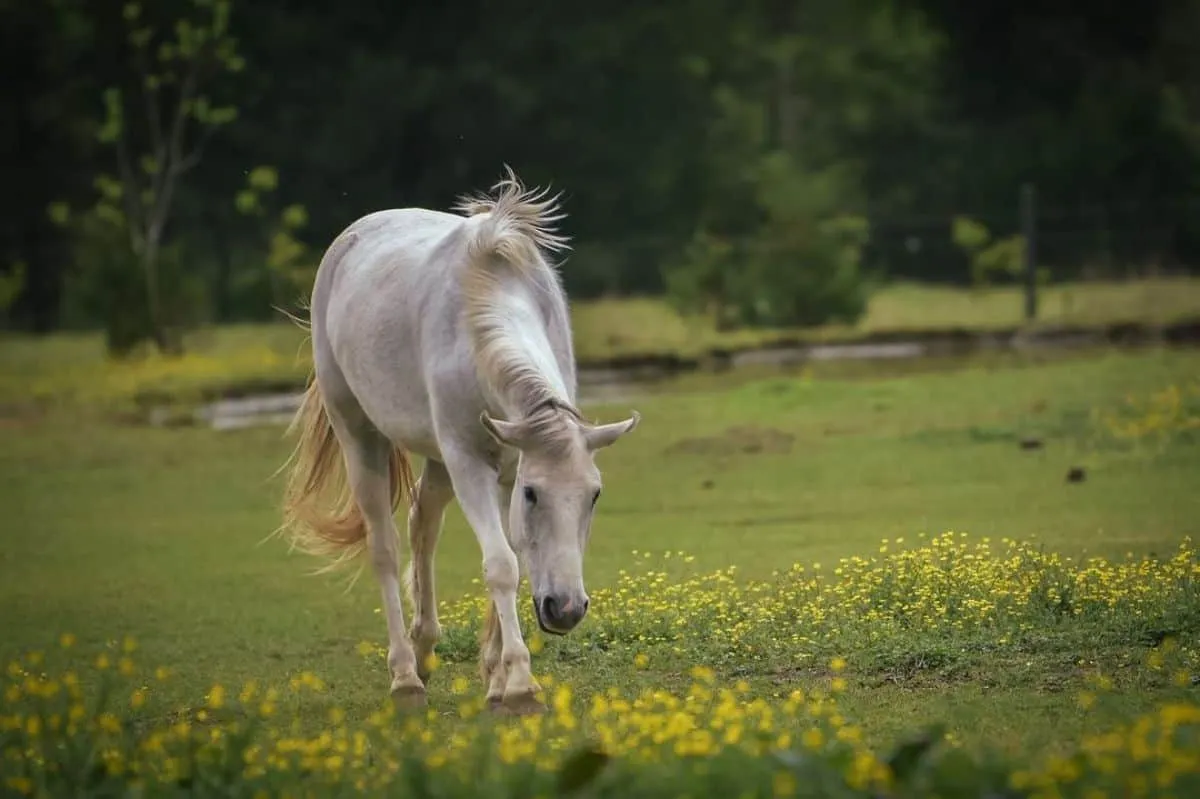 A white Mustang horse walks on a meadow.
Mustangs are highly valued as ranch hands primarily due to their remarkable versatility. The genetic diversity within wild mustang herds allows ranchers to select individuals with the specific traits needed for various ranch jobs. Having adapted to thrive in the wild, mustangs are generally low-maintenance horses with excellent stamina. They come in a wide range of sizes and conformations; a larger, muscular mustang can be ideal for heavy labor, while a medium-sized, athletically built individual might be better suited for tasks requiring more agility. As wild horses, mustangs can initially possess a wild temperament. However, once properly trained and their spirit is broken, they become devoted and eager-to-learn partners for their owners.
11. Arabian
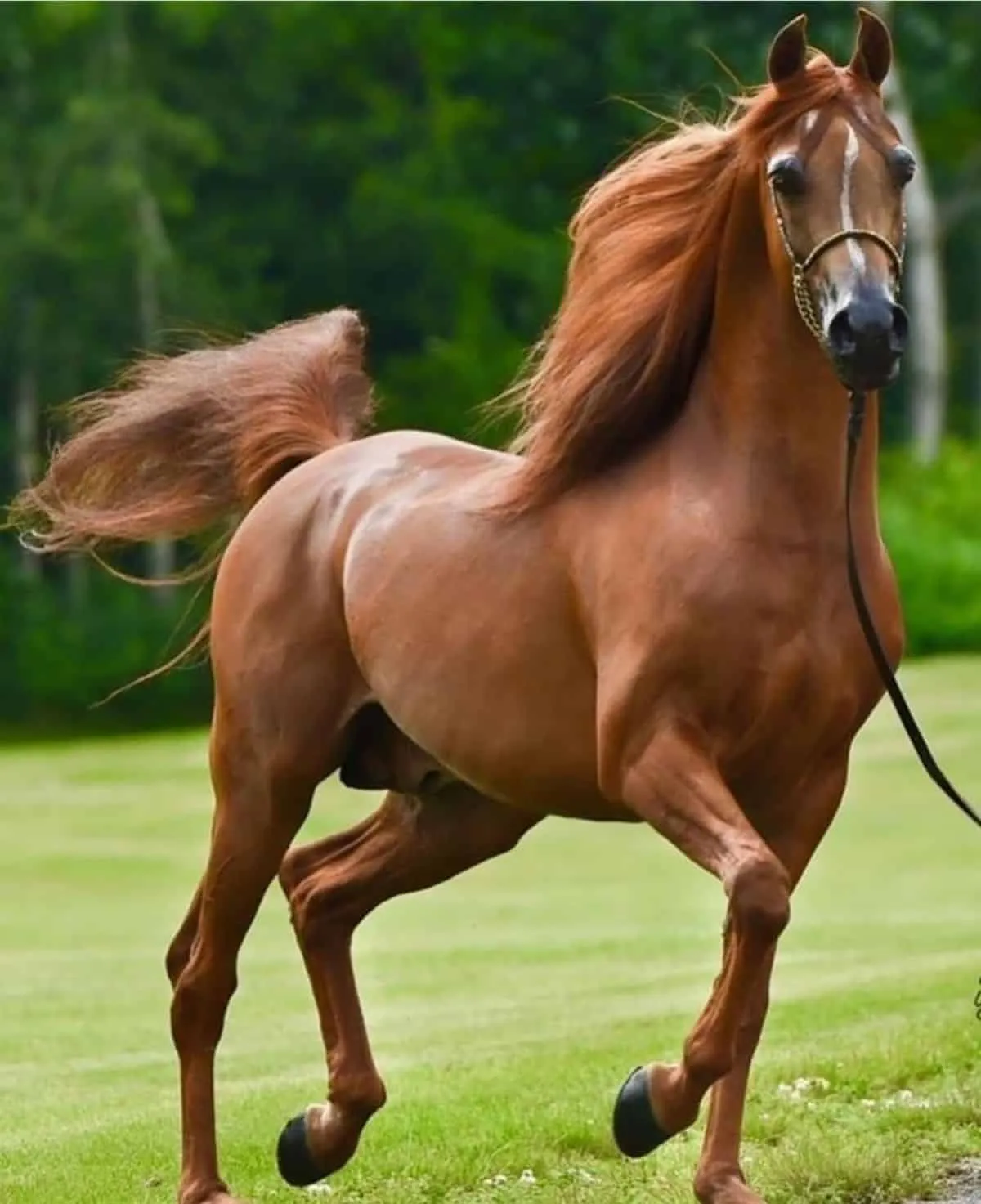 A bown Arabian horse walks on a green lawn.
The Arabian horse boasts a rich and ancient lineage, with many modern breeds tracing their origins back to this foundational breed. These are beautiful horses, known for their docile temperament, which has historically made them ideal for influencing and improving other breeds. Arabians are typically smaller horses, averaging around 15 hands and weighing approximately 900 pounds. Through selective breeding, modern Arabians are more robust than their ancestors while retaining their inherent grace. Due to their size, Arabians are not suited for pulling heavy equipment. However, their grace and speed make them excellent for quickly traversing the ranch, enabling ranchers to cover ground efficiently. They are quick learners and have a long history of being used for working cattle.
