
Ensuring your canine companion stays healthy and happy is a top priority for any dog owner. One of the most effective ways to safeguard their well-being and prevent potential health issues is by using a reliable monthly flea and tick preventative. These crucial treatments act as a shield against common and dangerous external parasites, offering peace of mind and a healthier life for your furry friend.
Understanding the importance of these preventatives and how to choose the right one is key. This guide will delve into why flea and tick prevention is non-negotiable for dogs, when to start and maintain it, and what factors to consider when selecting the best flea and tick preventative for dogs.
Why is Flea and Tick Prevention Crucial for Dogs?
Fleas and ticks are external parasites, meaning they live on the surface of their host and need to feed on blood to survive. These seemingly small pests can inflict significant harm on your dog’s health. The saliva from a flea bite can trigger severe allergic reactions, leading to dermatitis, intense itching, anemia, and secondary infections. Similarly, tick bites can transmit serious diseases, cause localized infections, abscesses, and in severe cases, paralysis or even death.
Beyond the direct impact on your dog, these parasites are notorious carriers of a variety of dangerous diseases, including Lyme disease, Rocky Mountain spotted fever, Ehrlichiosis, Anaplasmosis, and Babesiosis. Alarmingly, some of these tick-borne illnesses can also pose a threat to human health. Therefore, maintaining a flea and tick-free environment for your dog is not just about their comfort, but also about protecting your entire household from these zoonotic diseases.
When Should Dogs Start Flea and Tick Prevention?
Fleas and ticks are resilient parasites, capable of surviving and thriving in diverse geographical locations and weather conditions. Because of the severe health risks they pose, including the transmission of diseases that can affect both pets and humans, it’s vital to begin flea and tick prevention for your dog at an early age.
Veterinarians generally recommend starting preventative treatments when a puppy is around 8 weeks old. This early intervention establishes a protective barrier from the outset. Importantly, this preventative regimen should be continued year-round, throughout your dog’s entire life. Even during colder months, some fleas and ticks can survive indoors or in sheltered outdoor environments, posing a constant threat.
Selecting the Best Flea and Tick Preventative for Your Dog
A wide array of products are available to help keep your dog free from these bothersome parasites. These options generally fall into categories such as pesticides, repellents, or insect growth inhibitors, each designed to combat pests at different stages of their life cycle and prevent infestations.
Some products target only one type of parasite, typically fleas. However, for comprehensive protection, combination flea and tick preventatives for dogs are often recommended. These formulations contain multiple active ingredients to combat a broader spectrum of pests. Many advanced preventatives also offer additional protection against common health concerns like heartworms, skin and ear mites, and various intestinal parasites.
For instance, products like Credelio Quattro offer extensive parasite protection, addressing fleas, ticks, heartworms, roundworms, hookworms, and tapeworms. When choosing a preventative, always consult your veterinarian. They can assess your dog’s individual needs, health status, and lifestyle to recommend the most suitable and safe option.
Key Factors to Consider When Choosing a Preventative:
Before settling on a particular flea and tick medication, always discuss it with your veterinarian. This ensures it’s the ideal fit for your dog. Carefully review the product label and consult with your vet to confirm:
- Correct Species: Is the product specifically formulated for dogs, not cats?
- Weight Appropriateness: Does it fall within the correct weight range for your pet?
- Parasite Coverage: Does it protect against the parasites common in your region?
- Administration: Should it be given with food? How frequently is it administered?
- Efficacy Timeline: How long does it take for the product to become fully effective?
- Bathing Schedule: How soon can your pet be bathed after application?
- Safety Concerns: Are there any known safety-related issues to be aware of?
- Adverse Reaction Protocol: What steps should be taken in case of an adverse reaction?
Here are additional considerations:
1. Application Method
Flea and tick preventatives are typically available in two primary forms:
- Oral (Chewable Tablets): These are administered by ingestion and can be a convenient option for dog owners, often given as a treat. It’s crucial to monitor your dog to ensure they consume the entire tablet, as vomiting before absorption can reduce efficacy.
- Topical (Spot-On Treatments): These involve applying a liquid solution to a specific area of your dog’s skin, usually between the shoulder blades or along the spine. Topical treatments are excellent for pets with sensitive stomachs or those that are picky eaters. However, caution is needed in households with young children or other pets, as direct contact or licking the application site before it dries can be harmful. Topical treatments may also be less effective for dogs that swim frequently or require regular baths, as water exposure can impact their performance.
2. Geographical Location
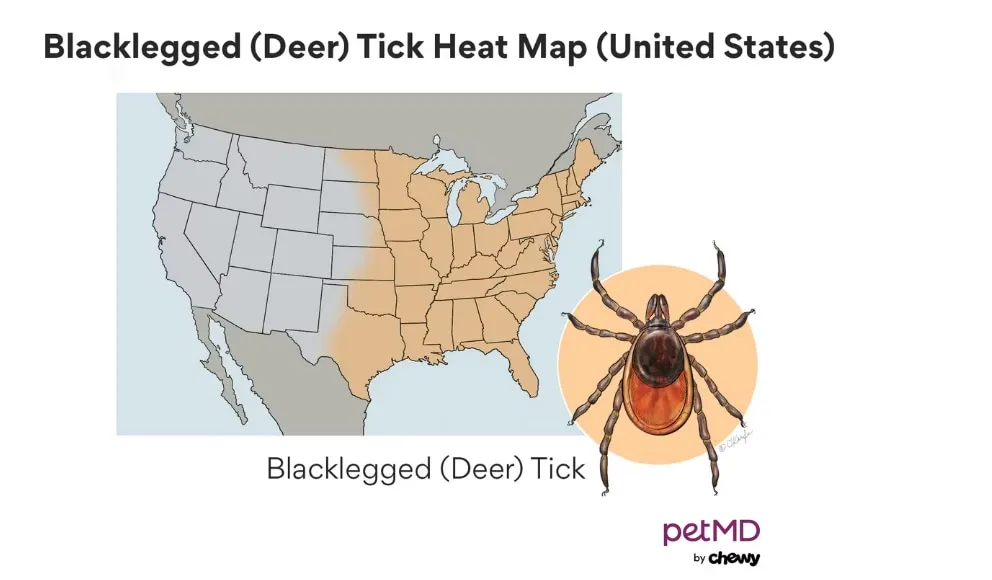
The types and prevalence of fleas and ticks vary significantly by geographic location. The Companion Animal Parasite Council (CAPC) is an invaluable resource for identifying parasites prevalent in your specific area. This information helps you choose a preventative that offers robust protection against local pest populations.
 Various types of ticks on a dog's fur
3. Outdoor Access and Lifestyle
Consider the areas where your dog spends their time. Dog parks, hiking trails, wooded areas, and even your own backyard can be habitats for fleas and ticks. Dogs that frequently explore these environments or have close contact with other animals are at a higher risk of exposure. Even indoor-only dogs are not entirely immune; fleas can hitch a ride indoors on shoes, clothing, or other pets. Veterinarians universally recommend year-round prevention regardless of your dog’s outdoor activity level.
If your dog is a breed known for its adventurous spirit, like a hunting dog, or has a lifestyle that involves significant time outdoors, you’ll want to prioritize a product with broad-spectrum protection.
4. MDR-1 Gene Mutation
Certain dog breeds, including Collies, Australian Shepherds, and Shetland Sheepdogs, possess a genetic mutation known as the MDR-1 gene. This mutation impairs their ability to metabolize certain medications. Veterinarians often recommend testing dogs for this gene mutation, especially if they belong to a susceptible breed. While many preventative manufacturers have tested their products and found them safe for dogs with the MDR-1 mutation, it’s a crucial factor to discuss with your vet.
5. Life Stage
For puppies and small dog breeds, finding an appropriate product is essential. Most flea and tick preventatives have a minimum age requirement, typically 8 weeks. However, always verify the specific packaging for confirmation. Some specialized products, like Revolution Topical Solution for Kittens and Puppies, are formulated for very young animals and can be used as early as 6 weeks of age. Your veterinarian will help you select a product that is safe and effective for your puppy’s current age and weight.
6. Medical Conditions and Sensitivities
Certain classes of preventatives, particularly isoxazolines, warrant careful consideration in dogs with a history of seizures or neurological disorders. These medications can potentially lower the seizure threshold, increasing the risk of breakthrough seizures.
It is imperative to consult your veterinarian before using any preventative if:
- Your dog has previously experienced an allergic reaction to a medication.
- Your dog is currently unwell, underweight, or in poor health.
- Your dog is pregnant, nursing, or intended for breeding in the future.
Over-the-Counter vs. Prescription Flea and Tick Medications
Flea and tick preventatives are available in both over-the-counter (OTC) and prescription forms.
Over-the-Counter (OTC) Flea and Tick Products
OTC preventatives can be purchased without a veterinarian’s prescription and are widely available online and in pet retail stores. While convenient, it is still highly recommended to consult your veterinarian to ensure the chosen OTC product is safe and appropriate for your pet.
Prescription Flea and Tick Products
Prescription preventatives require a veterinarian’s prescription and may incur a slightly higher cost. However, most veterinarians recommend prescription products due to their typically higher efficacy, stricter quality control, and greater safety profiles for your dog.
Popular Flea and Tick Prevention Products for Dogs
Here’s an overview of some common and effective flea and tick prevention products available for dogs:
Advantage
- Advantage II: This monthly topical treatment contains imidacloprid and pyriproxyfen. It effectively kills fleas in all life stages (eggs, larvae, adults) and chewing lice within hours. It does not provide tick protection. Suitable for dogs and puppies over 7 weeks old and weighing more than 3 pounds.
- Advantage Multi: A monthly topical treatment with imidacloprid and moxidectin. It treats fleas, sarcoptic mange, intestinal parasites (hookworms, roundworms, whipworms), and prevents heartworm disease. While it kills fleas quickly, other parasites may take up to 24 hours to be eliminated. It does not protect against ticks. For dogs and puppies over 7 weeks old and weighing more than 3 pounds.
Bravecto
- Bravecto: Available as a chewable tablet or topical solution containing fluralaner. It is a fast-acting isoxazoline medication that begins killing fleas within two hours and ticks within 12 hours. Bravecto is also effective against demodectic and sarcoptic mange, and ear mites. Due to its isoxazoline class, it should be used cautiously in dogs with a history of seizures or neurological disorders.
Comfortis
- Comfortis: This monthly chewable tablet contains spinosad and is solely for flea treatment. It acts rapidly, killing fleas within 30 minutes of administration. Recommended for dogs and puppies 14 weeks or older, weighing over 5 pounds.
Credelio
- Credelio: A monthly chewable tablet containing lotilaner, an isoxazoline. It targets fleas and ticks, with efficacy starting within four hours for fleas. For dogs and puppies over 8 weeks old and weighing more than 4.4 pounds. Use with caution in dogs prone to seizures.
- Credelio Quattro: This advanced chewable tablet combines lotilaner for fleas and ticks with moxidectin (heartworms, hookworms, roundworms), praziquantel (tapeworms), and pyrantel (hookworms, roundworms). It offers broad-spectrum protection and is administered monthly to dogs and puppies 8 weeks of age and older, weighing at least 3.3 pounds.
Frontline
- Frontline Gold: A monthly topical product with fipronil, (s)-methoprene, and pyriproxyfen. It kills fleas, ticks, and chewing lice quickly. For dogs and puppies over 8 weeks old and weighing more than 5 pounds.
- Frontline Plus: Contains fipronil and (s)-methoprene. This monthly topical treatment kills fleas, ticks, and chewing lice. It is fast-acting and suitable for dogs and puppies over 8 weeks old, weighing more than 5 pounds.
- Frontline Shield: A monthly topical treatment with fipronil, permethrin, and pyriproxyfen. It kills and repels fleas, ticks, chewing lice, and stable flies, and repels mosquitoes. It is fast-acting, killing fleas in five minutes and ticks in one hour. For dogs and puppies over 9 weeks old and weighing more than 5 pounds. This product is highly toxic to cats and requires extreme caution in multi-pet households.
K9 Advantix
- K9 Advantix II: This monthly topical product contains imidacloprid, permethrin, and pyriproxyfen. It repels and kills fleas, ticks, mosquitoes, and chewing lice, while also repelling biting flies. It is fast-acting and suitable for dogs and puppies over 7 weeks old, weighing more than 4 pounds. This product is highly toxic to cats and requires extreme caution in multi-pet households.
NexGard
- NexGard: A monthly chewable tablet with afoxolaner, an isoxazoline. It is effective against fleas, various types of ticks (deer ticks, American dog ticks, brown ticks, Lone Star ticks), and can be used for treating sarcoptic and demodectic mange. It starts killing fleas within four hours and ticks within 48 hours. For dogs and puppies over 8 weeks old, weighing more than 4 pounds. Use cautiously in dogs with a seizure history.
Onguard Plus
- Onguard Plus: A monthly topical treatment containing fipronil and (s)-methoprene. It combats fleas, ticks, sarcoptic mange, and chewing lice. For dogs and puppies over 8 weeks old, weighing more than 5 pounds.
Seresto
- Seresto: This is an 8-month flea and tick collar containing imidacloprid and flumethrin. It kills and repels fleas within 24 hours and ticks within 48 hours. Its efficacy can be reduced by frequent bathing or swimming, potentially requiring replacement every five months. For dogs and puppies over 7 weeks of age.
Simparica Trio
- Simparica Trio: A monthly chewable tablet containing sarolaner (isoxazoline class), moxidectin, and pyrantel. It treats fleas, ticks, roundworms, and hookworms, and prevents heartworm disease. It can also be used to treat demodectic and sarcoptic mange, and ear mites. It begins killing fleas and ticks within 12 hours. For dogs and puppies over 8 weeks old, weighing more than 2.8 pounds. Use with caution in dogs prone to seizures.
Trifexis
- Trifexis: A monthly chewable tablet containing spinosad and milbemycin oxime. It is effective against fleas, hookworms, roundworms, and whipworms, and prevents heartworm disease. It begins killing fleas within 30 minutes but does not provide tick protection. For dogs and puppies 8 weeks or older, weighing over 5 pounds.
Vectra 3D
- Vectra 3D: A monthly topical product with dinitefuran, permethrin, and pyriproxyfen. It repels and kills fleas, ticks, mosquitoes, chewing lice, sand and biting flies, and some mites. It begins killing parasites within hours. For dogs and puppies over 8 weeks old, weighing more than 5 pounds. This product is highly toxic to cats and requires extreme caution in multi-pet households.
Conclusion
Consistent and appropriate flea and tick prevention is a cornerstone of good canine health care. By understanding the risks associated with these parasites and carefully selecting the right preventative in consultation with your veterinarian, you can effectively protect your dog from disease, discomfort, and potential long-term health issues. Remember that year-round protection is crucial, and staying informed about the Best Flea And Tick Preventative For Dogs in your region will ensure your beloved companion enjoys a safe and healthy life.
References
- Companion Animal Parasite Council (CAPC). (n.d.). CAPC Recommendations. Retrieved from https://capcvet.org/
- PetMD. (n.d.). Flea and Tick Prevention and Treatment for Dogs. Retrieved from https://www.petmd.com/dog/general-health/flea-and-tick-prevention-and-treatment-dogs
- PetMD. (n.d.). Tick Diseases Dogs Can Get. Retrieved from https://www.petmd.com/dog/conditions/infectious-parasitic/6-tick-diseases-dogs
