
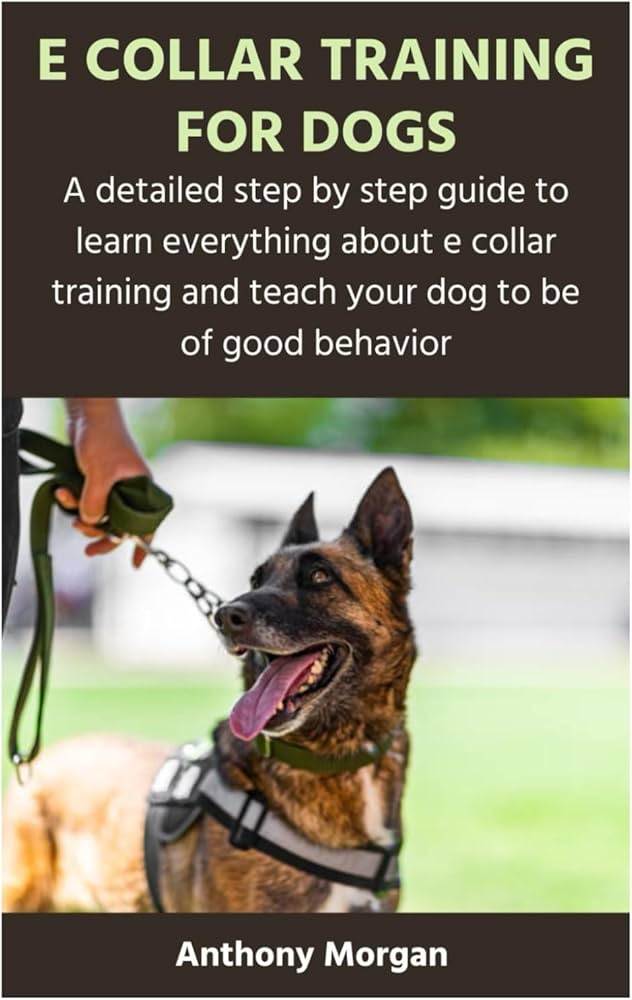
When it comes to dog training, many owners seek effective tools to communicate with and guide their canine companions. Electronic collars, often referred to as e-collars, have become a popular choice for their ability to provide clear, consistent feedback. However, choosing the “best” e-collar can be a daunting task, with a wide array of options available, each touting unique features and benefits. This guide aims to demystify the world of e-collars, helping you find the perfect fit for your dog’s training needs and ensuring a positive, effective training experience. We’ll delve into what makes an e-collar suitable, explore top-rated models, and provide insights into their safe and ethical use.
Understanding E-Collars: How They Work and When to Use Them
At their core, e-collars are designed to deliver a sensation – typically a vibration, tone, or mild electrical stimulation – to a dog through a collar worn around its neck. This sensation serves as a communication tool, a way to mark a behavior or redirect unwanted actions. The key to their effectiveness lies in associating the sensation with a command or a consequence. For instance, a gentle stimulation might be used to reinforce a “stay” command, while a stronger, though still safe, level could be employed to interrupt a behavior like excessive barking or digging.
It’s crucial to understand that e-collars are not a magic bullet for training. They are most effective when used as part of a comprehensive training program that incorporates positive reinforcement, clear communication, and a deep understanding of your dog’s behavior. They are often best suited for advanced training, addressing specific behavioral issues, or for training in environments with high distractions. For basic obedience, many trainers still advocate for traditional methods. However, for certain situations, an e-collar can be an invaluable asset.
When E-Collars Can Be Beneficial:
- Recall Training: Helping dogs learn to come when called, especially in open or distracting environments.
- Boundary Training: Teaching dogs to stay within designated areas, like a yard.
- Distraction Proofing: Reinforcing commands when the dog is faced with tempting distractions.
- Addressing Unwanted Behaviors: Such as excessive barking, jumping on furniture, or chasing wildlife, when other methods have proven insufficient.
It’s important to note that the ethical use of e-collars is a topic of ongoing discussion. Responsible training emphasizes using the lowest effective stimulation level and always pairing it with positive reinforcement. Consulting with a certified professional dog trainer or a veterinarian is highly recommended before incorporating an e-collar into your training regimen. They can help you assess if an e-collar is appropriate for your dog and guide you on its proper application. For those seeking alternatives or complementary tools, exploring options like best no shock dog training collar can provide further insights.
Key Features to Look For in the Best E-Collars
When selecting an e-collar, several features can significantly impact its performance and your dog’s comfort and safety. Understanding these components will help you make an informed decision.
1. Range and Signal Strength
The effective range of an e-collar is critical, especially if you plan to use it for off-leash training or in large, open areas. Look for collars that offer a substantial range, typically several hundred yards or more. Signal strength is also important; a collar with a robust signal will maintain its connection even in areas with interference, such as dense woods or urban environments.
2. Stimulation Levels and Types
The variety and adjustability of stimulation levels are paramount. The best e-collars offer a wide spectrum of intensity, from a gentle tap to a more pronounced sensation. This allows you to find the precise level that gets your dog’s attention without causing distress. Ideally, the collar should offer multiple modes of correction, including:
- Tone: A sound-based alert.
- Vibration: A physical sensation without electrical stimulation.
- Static Stimulation: The electrical impulse, which should be adjustable and humane.
Many modern e-collars allow you to customize these settings for individual dogs, which is particularly useful if you have multiple dogs or if your dog is sensitive to certain stimuli. For instance, if you’re concerned about static stimulation, you might explore options like best e-collar for dog training that emphasize other correction types or very fine-tuned static levels.
3. Durability and Waterproofing
Your dog’s training adventures can take them through various environments, from muddy fields to rainy days. Therefore, a durable, waterproof collar is essential. Look for collars with rugged construction and a high IP (Ingress Protection) rating, indicating their resistance to water and dust. This ensures the device can withstand the rigors of active use.
4. Fit and Comfort
A well-fitting collar is crucial for both effectiveness and comfort. The collar should fit snugly but not too tightly, allowing you to slip a couple of fingers between the collar and your dog’s neck. Many e-collars come with adjustable straps and different-sized contact points to accommodate various neck sizes and coat thicknesses. A comfortable collar ensures your dog can wear it for extended periods without irritation.
5. Battery Life and Charging
Long battery life is a significant convenience, especially for extended training sessions or trips. Look for collars that offer several hours or days of use on a single charge. Fast charging capabilities can also be a lifesaver. Some models feature rechargeable batteries, while others use replaceable ones, so consider which option best suits your needs.
Top E-Collars on the Market
Based on user reviews, expert recommendations, and feature sets, here are some of the best e-collars for dog training currently available. Remember that the “best” collar is subjective and depends on your specific needs and your dog’s temperament.
1. SportDOG Brand 425X
The SportDOG 425X is a highly regarded e-collar known for its reliability and versatility. It offers up to 500 yards of range, making it suitable for a wide variety of training scenarios. The unit features 21 levels of static stimulation, with 7 distinct intensity levels, each with three different modes (low, medium, and high). This provides a granular control that many trainers appreciate. It’s also waterproof and submersible, built to withstand tough conditions.
Pros:
- Excellent range and signal reliability.
- Wide range of adjustable stimulation levels.
- Durable and waterproof construction.
- Suitable for dogs as small as 10 lbs.
Cons:
- Can be a bit bulkier than some other models.
- The remote buttons could be more tactile for easier use without looking.
2. Educator E-Collar Remote Dog Training Collar (E-Collar Technologies)
Educator collars are renowned for their focus on humane training, featuring a “boosted” static stimulation that provides a higher sensation at the lowest levels, often making it more effective than other brands at lower settings. This can help dogs understand the correction more quickly, potentially reducing the need for higher levels. The E-Collar ET-300 model offers up to 1/2 mile range and includes tone and vibration options alongside the static stimulation. It’s also known for its ergonomic remote and lock-and-set function to prevent accidental over-stimulation. This is a great option if you are looking for a best e-collar for dog training that prioritizes a gentler, yet effective, approach.
Pros:
- Effective low-level stimulation.
- Ergonomic remote with user-friendly controls.
- Waterproof and durable design.
- Good range for most everyday training needs.
Cons:
- The range might be insufficient for some advanced, long-distance training.
- Can be more expensive than some competitors.
3. PetSafe Remote Smart Dog Training Collar
PetSafe offers a range of training collars, and their Smart Dog Training Collar stands out for its smartphone integration. This collar allows you to use your smartphone as the remote transmitter via Bluetooth. It features audible tone, vibration, and 15 levels of static stimulation. The app provides a clear interface for adjusting settings and tracking your dog’s activity. This makes it a modern and convenient choice for tech-savvy owners.
Pros:
- Smartphone control via Bluetooth.
- Multiple stimulation modes and levels.
- Easy-to-use app interface.
- Often more budget-friendly than other advanced collars.
Cons:
- Bluetooth range is limited (typically around 100 feet), making it unsuitable for long-distance training.
- Relies on your smartphone being charged and accessible.
4. Dogtra 280NCP Platinum
The Dogtra 280NCP Platinum is a popular choice among professional trainers for its robust performance and reliability. It boasts a 1/2 mile range and offers 127 levels of static stimulation, providing incredibly precise control. The collar is waterproof and designed for rigorous use. It also features a non-stimulating high-performance pager (vibration) and a low-to-high output. The ergonomic transmitter is designed for one-handed operation.
Pros:
- Extremely precise stimulation levels.
- Reliable performance and durability.
- Good range for most applications.
- Designed for professional use, indicating high quality.
Cons:
- Higher price point.
- The learning curve for the extensive stimulation levels might be steeper for beginners.
Using E-Collars Safely and Effectively
The efficacy and safety of an e-collar hinge entirely on how it’s used. Responsible ownership and proper technique are non-negotiable.
Gradual Introduction and Acclimation
Never place an e-collar on your dog for the first time during a training session. Instead, allow your dog to wear it for short periods around the house without any stimulation. This helps them get accustomed to the presence of the collar.
Finding the Right Stimulation Level
This is perhaps the most critical aspect of e-collar training. The goal is to find the lowest effective level (LEL) that gets your dog’s attention – a slight ear flick, a head turn, or a momentary pause in their activity – without causing fear, anxiety, or pain. Start at the absolute lowest setting and gradually increase it during a training exercise until you observe this minimal response. This level should then be used consistently for training. Avoid the temptation to use higher levels than necessary. If you’re struggling to find the LEL, consult a professional. A best e-collar for dog training is only effective if used at the correct level.
Pairing with Commands and Positive Reinforcement
An e-collar should never be used in isolation. Always pair the stimulation with a clear command (verbal or hand signal). As soon as your dog responds to the command (e.g., sits when you apply a gentle stimulation while saying “sit”), immediately praise them and offer a high-value treat or a favorite toy. This positive reinforcement is what teaches your dog what you want them to do, while the e-collar simply marks the moment of correction or redirection.
Consistency is Key
Use the e-collar consistently for the specific behaviors you are addressing. Inconsistent application can confuse your dog and hinder progress. Ensure everyone in the household who interacts with the dog understands how and when to use the collar.
Avoid Punishment
E-collars are tools for communication and redirection, not for punishment. Never use them out of anger or frustration. If you find yourself becoming agitated, put the collar away and take a break. Aggressive or excessive use can lead to behavioral problems like fear, aggression, or learned helplessness.
Understand Your Dog’s Body Language
Pay close attention to your dog’s reactions. Signs of stress include lip licking, yawning, whale eye (showing the whites of their eyes), tucked tail, or attempting to flee. If you observe these, the stimulation level is too high, or the e-collar is not the right tool for your dog or situation.
Consult a Professional
If you are new to e-collar training or are struggling with specific behavioral issues, seek guidance from a qualified and experienced dog trainer who uses positive and humane methods. They can provide personalized advice, demonstrate proper techniques, and help you navigate the complexities of e-collar use. They might also recommend specific products, such as the best training collar for large dogs if your dog is of a particular size and strength.
Frequently Asked Questions About E-Collars
Q1: Are e-collars cruel to dogs?
E-collars themselves are not inherently cruel; their use determines their ethical standing. When used correctly, at the lowest effective levels, and paired with positive reinforcement, they can be a humane and effective training tool. Misuse, excessive force, or using them for punishment, however, can be detrimental.
Q2: What is the minimum age for an e-collar?
Most experts recommend waiting until a dog is at least 6 months old, and preferably when they have completed basic obedience training. This ensures they have the cognitive maturity to understand the training cues.
Q3: How often should I use the e-collar on my dog?
Usage frequency depends on the training goal. It’s typically used during dedicated training sessions rather than being left on all day. Short, consistent sessions are more effective than prolonged, constant use.
Q4: Can I use an e-collar on any breed of dog?
E-collars can be used on most breeds, but the stimulation level and type will need to be adjusted based on the dog’s size, coat thickness, and sensitivity. For very small or sensitive breeds, alternative training collars like those found at best small dog training collars might be more appropriate.
Q5: What’s the difference between an e-collar and a shock collar?
The terms are often used interchangeably, but “e-collar” is a broader term that encompasses collars with tone, vibration, and static stimulation. “Shock collar” specifically refers to collars that only use static electrical stimulation. Modern e-collars offer a range of options beyond just static shock.
Conclusion: Finding the Right Tool for Your Canine Companion
Choosing the best e-collar for dog training requires careful consideration of your dog’s individual needs, your training goals, and the features offered by different models. While e-collars can be powerful tools for communication and correction, their effectiveness and ethical application depend entirely on responsible use. Always prioritize finding the lowest effective stimulation level, consistently pair it with positive reinforcement, and never hesitate to seek guidance from a professional trainer. By understanding the options and using these devices wisely, you can enhance your training efforts and strengthen the bond with your beloved canine companion.
