
Bringing a dog into your home is a joyous experience, filling your life with unconditional love and playful moments. However, for many, the dream of pet ownership is often clouded by concerns about shedding and potential allergies. The good news is that numerous delightful dog breeds are known for their minimal shedding, making them ideal companions for individuals and families seeking a cleaner home or struggling with mild allergies. Finding the best dog breed that doesn’t shed involves understanding what truly defines a low-shedding canine and exploring the diverse options available. This guide will walk you through a comprehensive list of breeds renowned for their non-shedding coats and offer essential tips for living harmoniously with your chosen companion.
Understanding “Non-Shedding” and Hypoallergenic Claims
The terms “non-shedding” and “hypoallergenic” are frequently used interchangeably, but it’s important to clarify what they truly mean for aspiring dog owners. While no dog is entirely “allergen-free,” some breeds significantly reduce the amount of dander and hair released into the environment, which are the primary culprits behind allergic reactions. All dogs produce dander – microscopic flakes of skin – along with allergens found in their saliva and urine. However, breeds categorized as low-shedding often have hair-like coats that grow continuously, similar to human hair, rather than fur that goes through a seasonal shedding cycle. This type of coat traps dander and shed hair, preventing it from spreading as widely throughout your home. Regular grooming is then crucial to remove these trapped allergens and maintain a healthy coat. Choosing a dog that sheds minimally can dramatically improve the quality of life for those with sensitivities, allowing them to enjoy the companionship of a furry friend without constant sniffles or itching.
Top Dog Breeds That Don’t Shed Much
When searching for a canine companion that won’t leave a trail of hair everywhere, you’ll find a wide array of options, each with its unique charm and characteristics. From intelligent Poodles to playful Bichons, these breeds offer various sizes, temperaments, and grooming needs. Many of these breeds are fantastic types of dogs who don’t shed and are celebrated for their adaptability to different living situations.
Poodle and Poodle Mixes: The Smart, Low-Shedding Stars
Poodles are perhaps the quintessential low-shedding breed, and their genetics are often used to create popular “designer” mixes. All Poodle varieties are known for their intelligent, active, and friendly nature, making them wonderful pets for active families. Their curly coats require consistent grooming to prevent matting but shed very little.
- Poodle (Standard, Miniature, Toy): These highly intelligent dogs come in three sizes, offering an option for almost any household. Originally bred for hunting, the Standard Poodle is the largest, while Miniature and Toy Poodles are smaller versions. Regardless of size, regular brushing is essential to keep their dense, curly coats free of tangles and mats.
- Labradoodle: A popular cross between a Labrador Retriever and a Poodle, Labradoodles were initially bred as service dogs for people with allergies. They are intelligent, friendly, and known for being excellent family pets. Their gentle and trainable nature, especially with early socialization, makes them a joy to live with.
- Goldendoodle: Another beloved “doodle” breed, Goldendoodles combine the friendly nature of the Golden Retriever with the low-shedding coat of the Poodle. They are highly intelligent, affectionate, and require frequent grooming to prevent matting, often with a slicker brush. Their coats come in various colors and textures beyond the traditional golden hue.
- Schnoodle: This playful crossbreed combines two low-shedding breeds: the Schnauzer and the Poodle. Schnoodles inherit intelligence and a low-shedding coat that can be curly or wavy. They are known for their joyful demeanor and adaptability.
- Aussiedoodle: A mix of an Australian Shepherd and a Poodle, the Aussiedoodle is a highly intelligent and energetic dog breed that doesn’t shed much. They thrive on plenty of exercise and mental stimulation, as boredom can lead to destructive behaviors. Enrichment toys and consistent activity are key to keeping them happy.
- Whoodle: The Whoodle is a friendly crossbreed resulting from a Soft-Coated Wheaten Terrier and a Poodle. They inherit intelligence and an affectionate nature from both parents, and their coats shed very little.
- Bernedoodle: These large, affectionate dogs are a cross between Bernese Mountain Dogs and Poodles. Known for their gentle demeanor, Bernedoodles are a popular choice for families with children and other pets, provided they receive ample exercise to meet their active needs.
- Shih-Poo: A charming mix of a Shih Tzu and a Poodle (often a Toy Poodle), the Shih-Poo is a small, adaptable pup. They can thrive in almost any living situation with about 30 minutes of daily exercise and regular brushing.
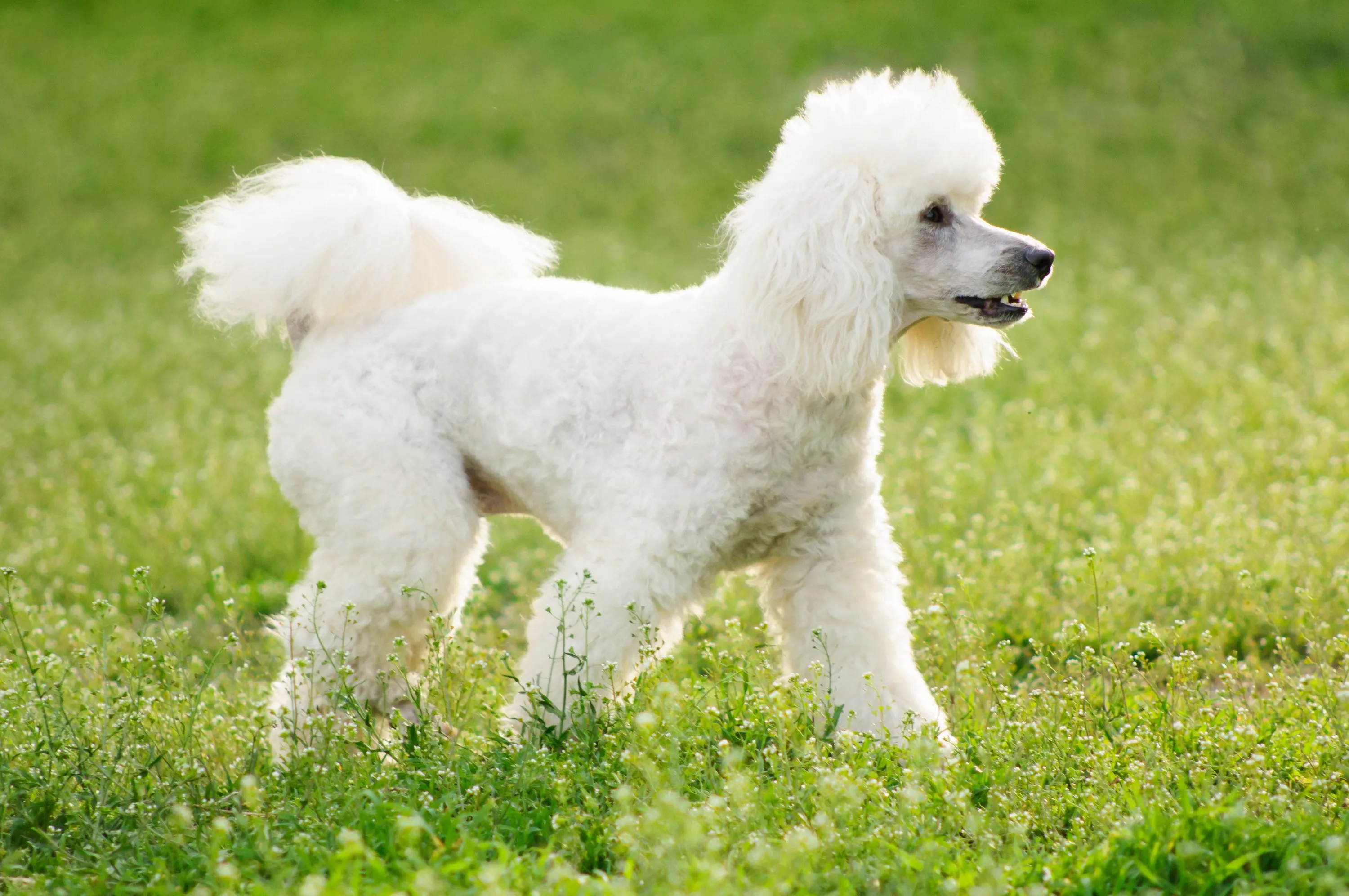 White Poodle walking through green grass
Terrier Group: Spirited Companions with Minimal Shedding
Many terrier breeds possess wiry or silky coats that shed minimally, making them excellent choices for allergy sufferers. They are often characterized by their spirited personalities and need for engagement.
- Yorkshire Terrier: These tiny dogs are packed with spunky and affectionate personalities. Yorkies are highly adaptable to various living situations, from spacious homes to smaller apartments, as long as they receive ample attention from their human companions.
- Miniature Schnauzer: The smallest of the three Schnauzer breeds, Miniature Schnauzers stand no more than 14 inches tall and weigh 10–20 pounds. These smart dogs fit well into many different environments and require at least an hour of exercise daily to stay happy and healthy.
- Standard Schnauzer: A larger version of the Miniature, the Standard Schnauzer shares many appealing qualities. Weighing up to 45 pounds, these dogs love long walks, games of fetch, and solving puzzle toys, making them an engaging companion for active individuals.
- Giant Schnauzer: Among the largest low-shedding dogs, Giant Schnauzers can reach over 27 inches tall and weigh up to 85 pounds. They require extensive exercise, including long walks, runs, and hikes, to maintain their well-being and prevent boredom.
- Affenpinscher: Known for their distinctive monkey-like appearance, Affenpinschers are small dogs with dense, wiry coats that produce fewer allergens. Their unique coat requires dedicated care, including regular brushing and occasional hand-stripping.
- Soft Coated Wheaten Terrier: This medium-sized Irish breed lives up to its name with a silky, incredibly soft coat that sheds minimally. Wheatens are high-energy dogs throughout their lives, needing plenty of exercise and mental stimulation to keep them well-behaved.
- Bedlington Terrier: Often likened to “a lamb in dog’s clothing” due to their unique curly coat and topknot, Bedlington Terriers are small and loving companions. They bond closely with their families and can develop separation anxiety if left alone for extended periods, making a dog camera a helpful tool for monitoring.
- Irish Water Spaniel: A friendly, intelligent, and highly trainable water dog, the Irish Water Spaniel was originally bred for retrieving game. Their thick, curly, liver-colored coat requires regular grooming to stay in good condition. With a high energy level, daily exercise is crucial for this breed’s happiness and health.
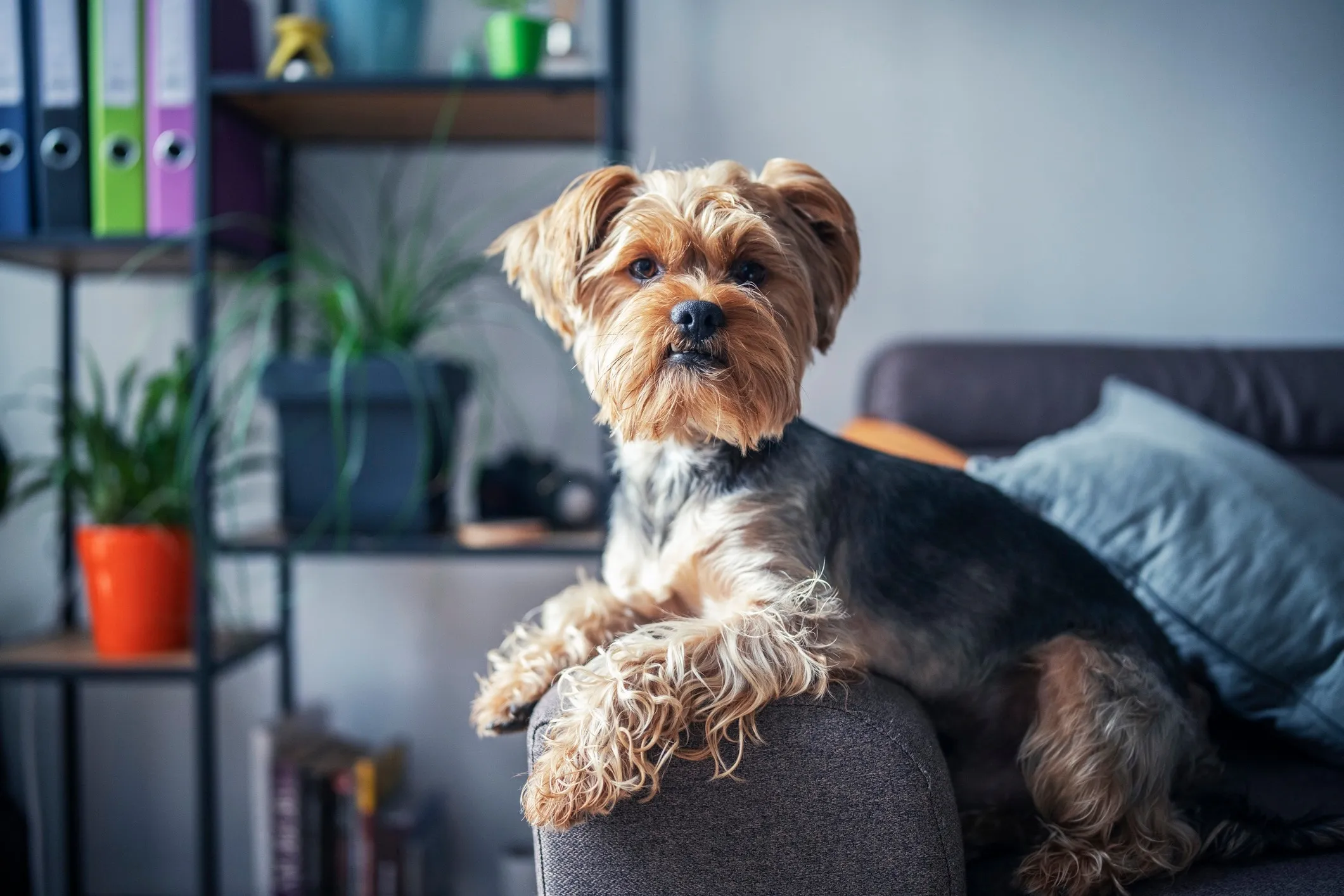 Blue and tan Yorkshire Terrier lounging on an armchair
Small Companion Breeds: Adorable and Allergy-Friendly
Many smaller breeds boast low-shedding coats and endearing personalities, making them ideal for apartment living and close companionship. These good family dog breeds that don’t shed are often a favorite among those looking for a cuddly, easy-to-manage pet.
- Shih Tzu: An ancient companion breed, the Shih Tzu is a small dog known for its thick coat and friendly temperament. Their charming flat faces, however, can make them prone to health issues like overheating, breathing difficulties, and tear stains, which can be managed with eye cleaning wipes.
- Bichon Frise: Small, playful, and affectionate, the Bichon Frise is a delightful pup with a curly, low-shedding coat. Their high intelligence and trainability allow them to quickly master basic commands and learn entertaining tricks with positive reinforcement.
- Chinese Crested: This small breed is notable for its unique appearance, offering two varieties: hairless and powderpuff. The hairless version has smooth skin with tufts of hair, while the powderpuff has long, silky hair. Both are considered low-shedding, and the breed is known for being playful, affectionate, and a great companion.
- Bolognese: Originating from Italy, Bolognese dogs are cute and easygoing, with a long, fluffy white coat that needs regular grooming despite its often messy appearance. They are known for getting along well with children and other pets and can adapt to various living situations.
- Maltese: Renowned for their luxurious white coat, the Maltese is a small, affectionate, and playful companion. They require dedication to grooming, especially if their hair is kept long. A short “puppy cut” with dog hair grooming clippers can simplify their maintenance.
- Coton de Tulear: This small, easygoing breed from Madagascar is known for its good nature, making them suitable companions for other pets and children, especially with proper introductions. Their cotton-like coat sheds minimally.
- Shorkie: A spirited cross between a Shih Tzu and a Yorkshire Terrier, the Shorkie combines the best traits of both low-shedding breeds: small size, playfulness, and friendliness. Like most dogs on this list, they require a consistent grooming routine to keep their coats healthy.
- Malshi: A cheerful mix of the Maltese and Shih Tzu, the Malshi is a small, happy low-shedding dog. They thrive on close companionship and need their favorite humans nearby to truly flourish.
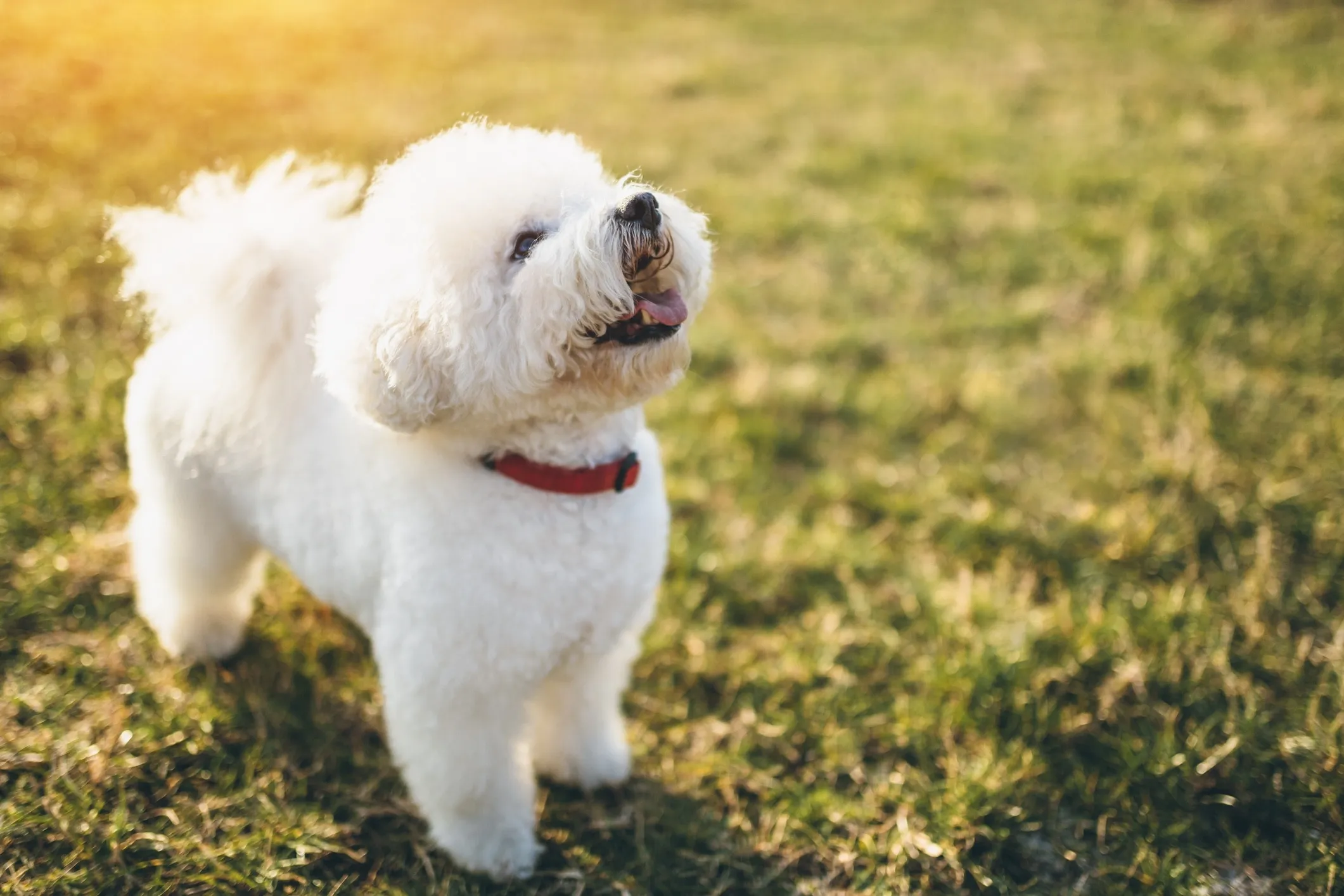 White Bichon Frise dog looking up in the grass
Unique & Water-Loving Breeds: Diverse Choices for Low Shedding
Beyond the more common selections, several other breeds offer low-shedding coats along with distinctive traits and historical backgrounds. These often active and intelligent dogs can provide unique companionship.
- Portuguese Water Dog: Originally bred to assist fishermen, this dogs that don’t shed much medium size breed has a thick, curly coat that sheds minimally. Portuguese Water Dogs are intelligent, highly trainable, and friendly, with high energy levels. Regular exercise, including swimming, keeps these water-loving pups happy and healthy, with floating toys being a great way to tire them out.
- Lagotto Romagnolo: An ancient Italian breed, Lagotto Romagnolo dogs were initially bred as water retrievers. Their curly, woolly coat offered protection in chilly waters and also sheds minimally. Though less common, they are good with children and other pets, making them excellent family dogs.
- Xoloitzcuintli (Mexican Hairless Dog): One of the oldest and rarest breeds, Xoloitzcuintli come in three sizes (toy, miniature, and standard) and can be hairless or have a short coat. Both varieties are considered low-shedding. They are known for their unique appearance and ancient lineage.
- Peruvian Inca Orchid: Similar to the Xoloitzcuintli, the Peruvian Inca Orchid is a rare, ancient breed from Peru, known for its nearly hairless body, making it an excellent choice for allergy sufferers. They come in small, medium, and large sizes.
- Afghan Hound: Famous for their long, flowing coats and slender builds, Afghan Hounds are incredibly fast dogs. While their majestic coat requires significant grooming, they are considered low-shedding. They are loving towards their families but can be aloof with strangers, so early and consistent socialization is crucial.
- Barbet: Pronounced “bar-bay” (from the French word for “beard”), the Barbet is a cheerful pup with a shaggy, woolly coat. This large, low-shedding dog loves to swim, thanks to its protective curly coat. Regular brushing, two to three times a week, is necessary to keep their coat in good condition, especially after water activities.
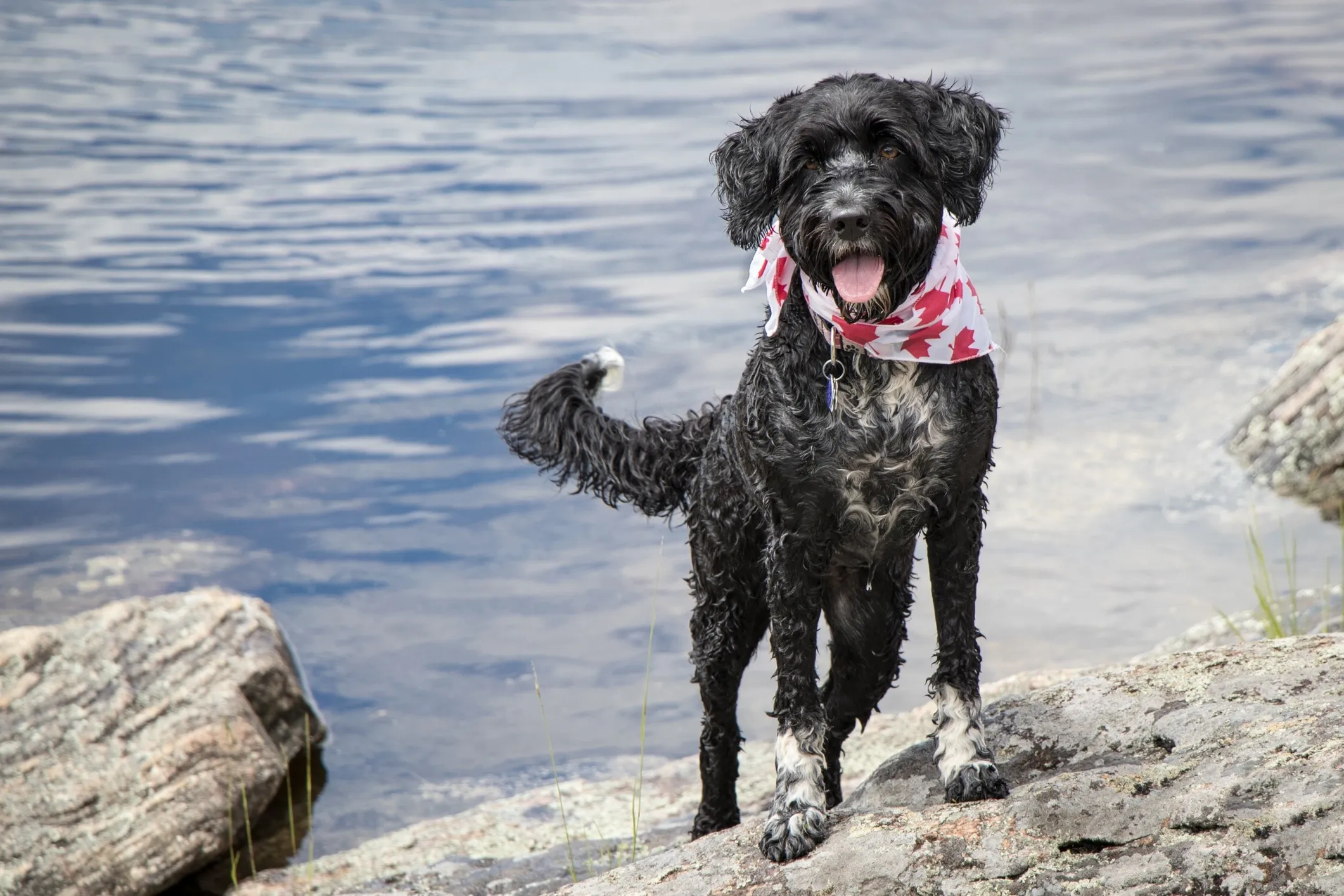 Black and white Portuguese Water Dog wearing a red maple leaf bandana in front of water
Tips for Living with a Low-Shedding Dog
Even with a dog that sheds minimally, managing allergens and maintaining a healthy living environment requires some proactive steps. These tips are crucial for pet parents, particularly those with allergies, to ensure a comfortable and enjoyable life with their non-shedding companion.
Regular Grooming is Key
One of the most important aspects of owning a low-shedding dog is committing to a consistent grooming routine. While these dogs don’t shed much hair onto your furniture, their continuously growing coats trap dander and loose hairs, which need to be removed regularly. Ideally, this involves weekly brushing to prevent mats and tangles and to lift out trapped allergens. Many breeds also benefit from professional grooming every four to six weeks, including bathing and trimming. Using specialized shampoos designed to reduce pet dander can further minimize allergens. If professional grooming is beyond your budget, learning to groom your pup at home, including trimming or hand-stripping where appropriate for the breed, is a valuable skill.
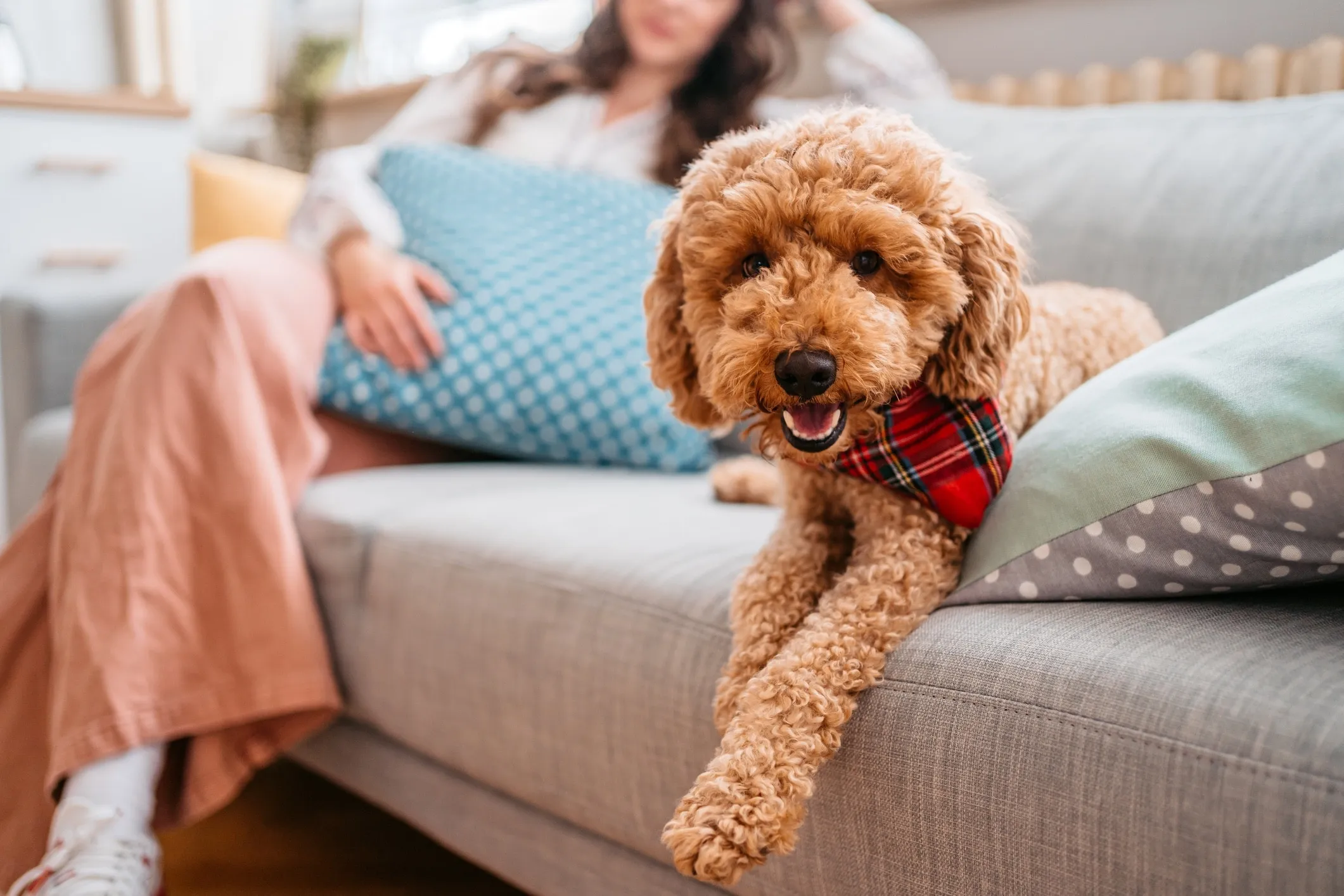 Goldendoodle lying on a couch with a person sitting in the background
Maintain a Clean Home Environment
Beyond grooming your dog, maintaining a clean living space is paramount to minimizing allergens. Regular vacuuming, dusting surfaces, and washing bedding (both yours and your dog’s) will significantly reduce the accumulation of pet dander in your home. Incorporating air purifiers with HEPA filters can also help remove airborne allergens, and ensuring good ventilation throughout the house can improve air quality. Consider creating “allergy-free” zones, such as the bedroom, where your dog is not allowed to further reduce exposure.
Consult Your Doctor for Allergy Management
For individuals with diagnosed dog allergies, even a low-shedding dog might occasionally trigger a reaction. It’s crucial to consult with your healthcare provider to discuss strategies for managing your allergies. Treatments can include over-the-counter or prescription medications, nasal sprays, or allergy injections. Additionally, practicing good hygiene, such as washing hands after petting your dog and avoiding close contact with their saliva or urine, can help prevent allergic responses. A veterinarian can also offer advice on coat care and diet that might further benefit both you and your pet.
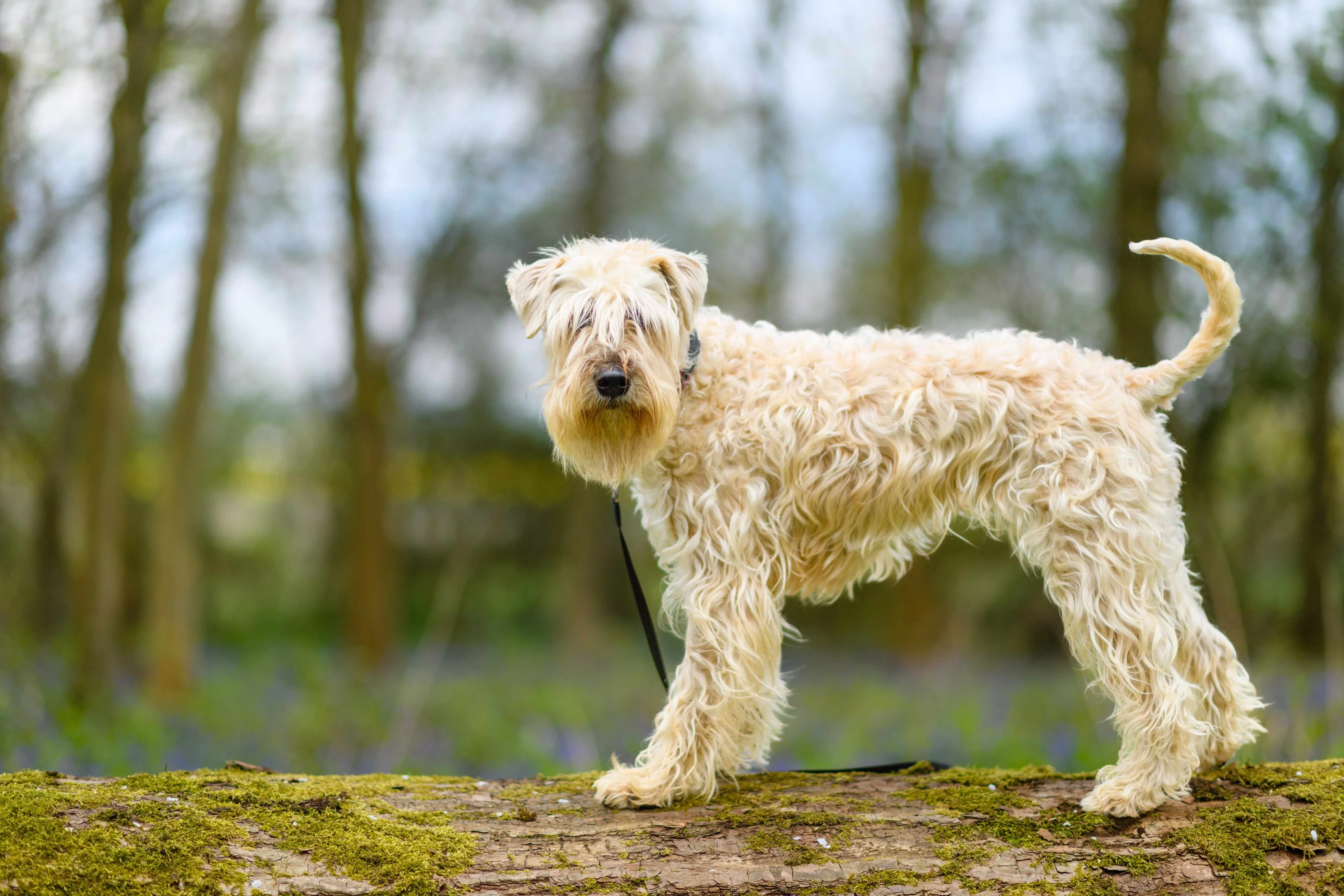 Soft Coated Wheaten Terrier dog sitting on a log
Beyond Shedding: Consider Temperament and Exercise
While reduced shedding is a significant advantage, remember that a dog’s suitability for your family extends far beyond its coat type. Temperament, energy level, and exercise requirements are equally vital factors. A calm, adaptable breed might be perfect for apartment dwellers, while an energetic dog like a Portuguese Water Dog would thrive with an active family. Ensure the breed you choose aligns with your lifestyle, available time for training, exercise, and companionship. The joy of pet ownership comes from a well-matched partnership, not just a clean home.
Bringing home a dog that doesn’t shed much can be a fantastic way for individuals with allergies or those who prefer a tidier home to enjoy the profound joy and companionship that canines offer. By understanding what “non-shedding” truly implies, exploring the diverse range of suitable breeds, and committing to diligent grooming and home maintenance, you can create a loving and comfortable environment for everyone. Explore Dog Care Story for more guides on pet care and discover your perfect canine companion!
