
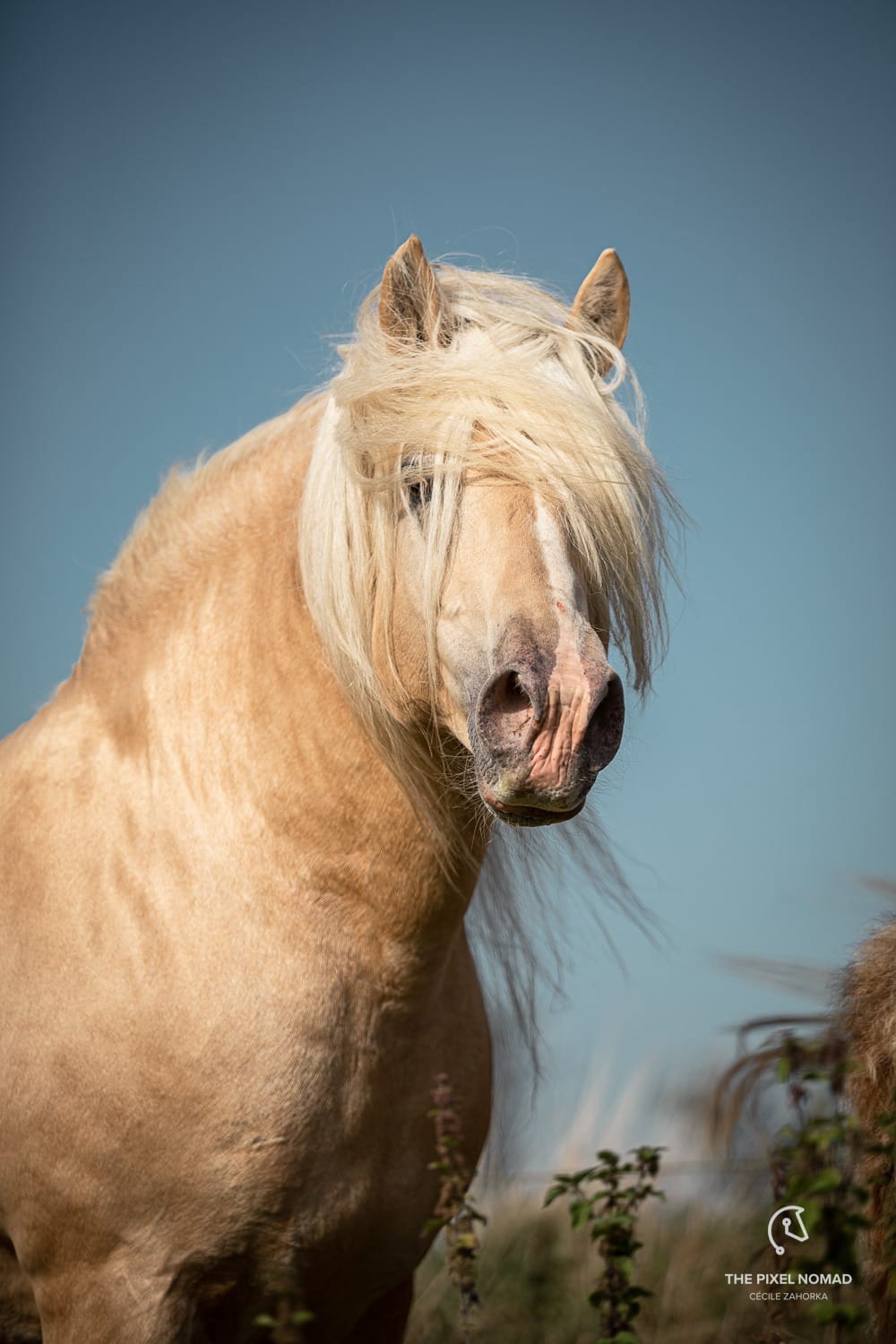
The American Cream draft horse, a breed distinguished by its unique cream color, boasts a fascinating origin story that began in Iowa in the early 1900s. Despite its distinctive appearance, the breed has always been rare, its survival a testament to the dedication of a few passionate breeders. The lineage of the American Cream can be traced back to a mare known as Old Granny, a cream-colored draft horse of unknown ancestry born between 1890 and 1905. Auctioned in Story County, Iowa, in 1911, Old Granny proved to be a significant foundation mare, consistently producing cream-colored offspring. This unique bloodline captured the attention of several Iowa breeders, particularly after the birth of Silver Lace, Old Granny’s great-great-grandson, in 1932. Silver Lace was a remarkable stallion, standing 16 hands tall and weighing an impressive 2,200 pounds, further solidifying interest in the cream draft horses.
During the 1930s, these cream draft horses gained popularity in the counties surrounding Melbourne, Iowa. Clarence T. Rierson, an enthusiast of the breed, played a pivotal role in its early development. He acquired all the mares sired by Silver Lace that he could locate and meticulously researched and recorded their pedigrees. Rierson was instrumental in the founding of the American Cream Draft Horse Association, which was officially chartered in 1944. The association began with 20 members and 75 foundation horses registered in its registry. That same year, a dedicated class for American Creams was established at the Webster City, IA Fair, marking the first time the breed was exhibited independently. It was Rierson who bestowed the name “American Cream” upon the breed. By the time of his passing in 1957, the association had grown to 41 members, with nearly 200 horses registered across Iowa, Illinois, Minnesota, Missouri, New York, South Dakota, and Wisconsin.
The burgeoning establishment of the American Cream breed coincided with a dramatic downturn in the market for draft horses. The widespread mechanization of agriculture led to a significant decline in the use of workhorses, with many destined for slaughter. Consequently, the breeding of draft animals nearly ceased. The American Cream Horse Association became inactive for fourteen years, with only a single horse transfer recorded during that period. Fortunately, a small but dedicated group of individuals maintained their Cream horses, preserving a crucial genetic foundation that would prove vital for the breed’s future survival.
In 1982, the American Cream Draft Horse Association was reorganized, marking a significant turning point for the breed. Breeders collaborated with Dr. Gus Cothran at the University of Kentucky Equine Blood Typing Lab to analyze the breed’s genetic characteristics. The research conducted provided valuable insights, suggesting that American Creams represent a distinct population within the broader category of draft horse breeds. These findings were not only encouraging but also played a critical role in the breed’s subsequent revival.
Modern American Creams are substantial horses, typically measuring between 15 and 16.3 hands at the withers. Mares generally weigh between 1600 and 1800 pounds, while stallions can range from 1800 to 2000 pounds. Their characteristic color is a rich cream, complemented by pink skin, amber eyes, and white manes and tails. While some white markings are considered desirable, the pink skin trait is particularly important for achieving the preferred cream coloration. American Creams with darker skin tones often do not exhibit the desired lighter hue and can produce offspring that are too pale or almost white when bred with other Creams. Colts are born with nearly white eyes that gradually darken, maturing into the breed’s distinctive amber shade.
The significant size of the American Cream makes them well-suited for harnessing, hitching, and driving, and they have traditionally been employed as working teams. Their good dispositions and inherent willingness to work contribute to their manageability, especially on smaller farms. Furthermore, their calm and gentle nature makes them an excellent choice for novice owners. The breed is also known for its hardiness, with a natural resilience to cold weather, provided they have adequate shelter to escape the elements as needed.
Despite ongoing efforts, the American Cream remains a critically rare breed. However, its numbers are steadily increasing, driven by its unique appearance, compelling history, and its natural compatibility with sustainable farming practices.
Did you know: The Dominique chicken is America’s oldest chicken breed and was widely raised on farms in the 1800s. Did your grandparents raise “Dominikkers”? Learn more about this beautiful but threatened breed at the Livestock Conservancy.
