
The world of horse racing is one of fleeting moments—thundering hooves, a flash of silks, a champion crowned in just over two minutes. Yet, some stories transcend the racetrack, embedding themselves into the public consciousness forever. The Barbaro Horse Story is one such tale. It’s a narrative of breathtaking talent, heartbreaking tragedy, and a courageous fight that captivated millions, ultimately changing the face of equine medicine and welfare. This isn’t just a story about a horse; it’s a story about heart, hope, and an unbreakable spirit that refused to be defined by a single, devastating moment.
The Rise of a Champion: Barbaro’s Perfect Season
Before the tragedy, there was the triumph. Barbaro was, by every measure, a phenomenal racehorse. Bred and owned by Roy and Gretchen Jackson’s Lael Stables, the dark bay colt possessed a rare combination of speed, stamina, and a commanding presence. He was undefeated, a perfect six for six, heading into the 2006 Kentucky Derby. His victories weren’t just narrow wins; they were displays of dominance on both turf and dirt, showcasing a versatility that left experts and fans in awe.
On the first Saturday in May, under the iconic twin spires of Churchill Downs, Barbaro delivered a performance for the ages. He stalked the leaders before unleashing a powerful surge in the final turn, pulling away from the field with astonishing ease. He won the Kentucky Derby by six and a half lengths, the largest margin of victory in nearly 60 years. As he crossed the finish line, it felt like the dawn of a new era. The talk of a Triple Crown wasn’t just hopeful speculation; it felt like an inevitability. Barbaro wasn’t just a winner; he was a potential legend in the making.
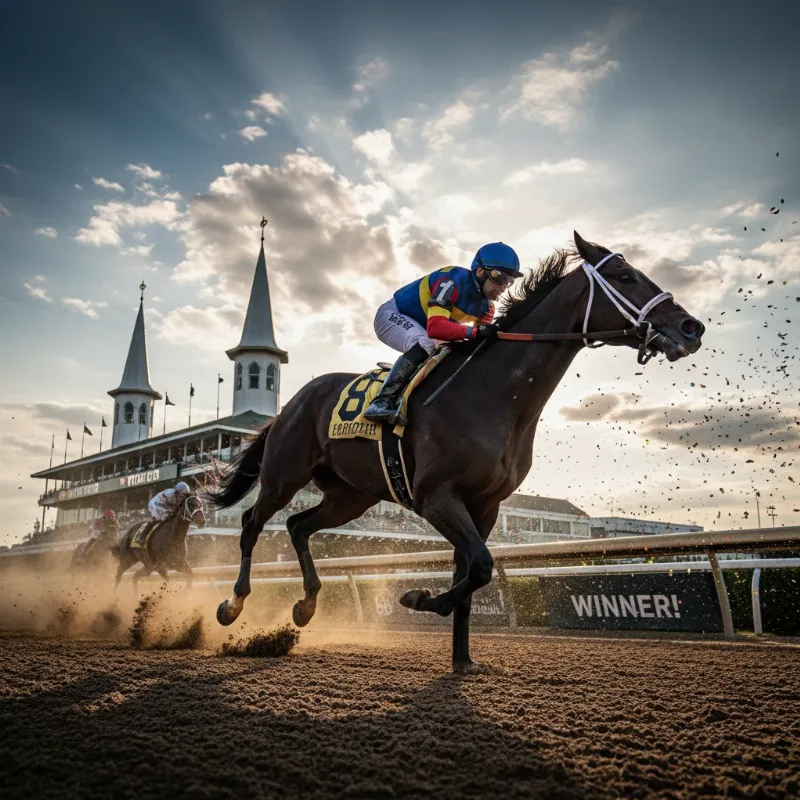 The champion racehorse Barbaro and his jockey pulling away from the field in the Barbaro horse story.
The Day the Racing World Held Its Breath
Two weeks later, on May 20, 2006, all eyes were on Pimlico Race Course for the Preakness Stakes, the second leg of the Triple Crown. The anticipation was electric. But just as the race began, the unthinkable happened. Seconds after breaking from the starting gate, Barbaro suddenly faltered. Jockey Edgar Prado, sensing something was terribly wrong, skillfully pulled the powerful colt to a stop, an act of horsemanship that likely saved Barbaro’s life.
The world watched in horror as the champion stood on three legs, his right hind leg swinging unnaturally. The festive atmosphere at the track evaporated, replaced by a stunned, prayerful silence. Vets rushed to his side, and the diagnosis was catastrophic: a trifecta of broken bones above and below his ankle, so severe that it was considered life-threatening. For most horses, this would have been an immediate death sentence. But for Barbaro, it was the beginning of an entirely new race—a race for his life.
An Unprecedented Fight for Survival
Barbaro was transported to the University of Pennsylvania’s New Bolton Center, an elite equine hospital, where he came under the care of the renowned chief of surgery, Dr. Dean Richardson. The complexity of the injury was staggering. Dr. Richardson and his team undertook a grueling surgery, implanting a locking compression plate and over 20 screws to piece the shattered bones back together. It was a groundbreaking procedure, a testament to the lengths they would go to save the champion.
What happened next was even more remarkable. The Barbaro horse story transformed from a sports story into a human-interest saga. The public’s response was overwhelming. The New Bolton Center was inundated with thousands of cards, flowers, and get-well wishes from children and adults around the globe. Donations poured in to support his care and advance equine research. Barbaro’s fight became everyone’s fight. He was no longer just a racehorse; he was a symbol of courage against impossible odds, and his daily progress reports became front-page news.
Complications and a Courageous Battle: What Happened to Barbaro?
For months, Barbaro defied the odds. He was a model patient, showing incredible intelligence and stoicism through painful and difficult procedures. His recovery was a rollercoaster of progress and setbacks. The primary concern, however, was not the initial injury itself, but a devastating secondary complication: laminitis. This intensely painful hoof disease is often fatal in horses, as it was in the case of Triple Crown winner Secretariat. It develops when a horse puts too much weight on a healthy hoof to compensate for an injured one.
Barbaro developed a severe case of laminitis in his left hind hoof. Dr. Richardson described it as “a body blow.” The veterinary team performed more surgeries, even removing a portion of the hoof wall to relieve pressure. Barbaro continued to fight, enduring procedures that would have broken a lesser animal. But by January 2007, the battle had taken its toll. After a final, painful setback, his owners and veterinary team made the compassionate, yet heart-wrenching, decision to end his suffering. On January 29, 2007, eight months after his injury, Barbaro was humanely euthanized.
The Enduring Legacy of the Barbaro Horse Story
Though his life was cut short, Barbaro’s legacy is profound and far-reaching. He didn’t win the Triple Crown, but he won the hearts of millions and left an indelible mark on the world.
Advancements in Equine Medicine
The incredible efforts to save him pushed the boundaries of veterinary science. The challenges faced during his treatment led to significant advancements in fracture repair and, most importantly, in the understanding and treatment of laminitis. The Barbaro Fund for Equine Health Research was established, raising millions to combat this devastating disease and improve the lives of countless other horses. Dr. Sarah Miller, an equine behavior specialist, notes:
“Barbaro’s case put a global spotlight on laminitis. The research funded in his name has directly translated into better diagnostic tools and treatment protocols, giving veterinarians new ways to fight a condition that was once considered a near-certain death sentence.”
A Shift in Public Perception
The Barbaro horse story fundamentally changed how the public viewed racehorses. People saw beyond the athlete and connected with the animal. They witnessed his vulnerability, his courage, and the deep bond he shared with his caregivers. His story sparked important conversations about racehorse welfare, aftercare, and the ethical responsibilities of the industry.
A Permanent Memorial
In recognition of his incredible spirit, Barbaro’s ashes were interred at the place of his greatest victory, Churchill Downs. A majestic bronze statue was erected above his resting place, capturing him in mid-flight, a permanent tribute to the champion who ran his last race not on a track, but in the hearts of a global audience.
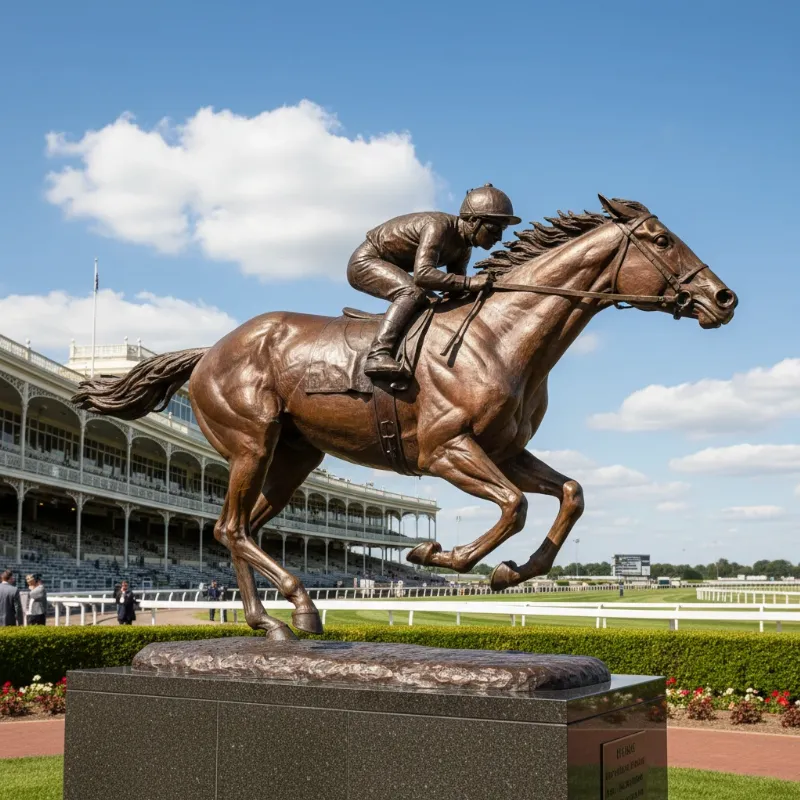 A bronze statue honoring the Barbaro horse story at Churchill Downs, a symbol of his enduring legacy.
Frequently Asked Questions about Barbaro
What exactly was Barbaro’s injury?
Barbaro suffered a catastrophic injury at the 2006 Preakness Stakes. He sustained a condylar fracture of the cannon bone, a fracture of the sesamoid bone, and a fracture of the long pastern bone, all in his right hind leg. The ankle was essentially dislocated and shattered.
Did Barbaro win the Triple Crown?
No, Barbaro did not win the Triple Crown. He won the first leg, the Kentucky Derby, in dominant fashion, but his career-ending injury occurred just seconds into the second leg, the Preakness Stakes, preventing him from competing further.
How long did Barbaro live after his injury?
Barbaro fought a courageous battle for over eight months following his injury. He was injured on May 20, 2006, and was humanely euthanized on January 29, 2007, after developing severe laminitis and other complications.
Where is Barbaro buried?
Barbaro’s remains are buried at Churchill Downs in Louisville, Kentucky, the site of his greatest victory in the Kentucky Derby. A bronze statue of him stands over his grave near the entrance to the racetrack.
What is Barbaro’s lasting legacy?
Barbaro’s legacy is multifaceted. Medically, his case spurred massive funding and research into laminitis, leading to improved treatments for horses everywhere. Culturally, his story heightened public awareness of racehorse welfare and fostered a deeper emotional connection between the public and these incredible athletes.
A Story of More Than a Race
The Barbaro horse story is ultimately a story of duality—of triumph and tragedy, of fragility and strength. He was a champion defined not by the races he won, but by the race he fought so bravely to live. He reminded us that the true measure of a heart is not just how fast it can run, but how hard it can fight. Barbaro may have been on this earth for only a short time, but his spirit, his courage, and his enduring legacy will gallop on forever.
