
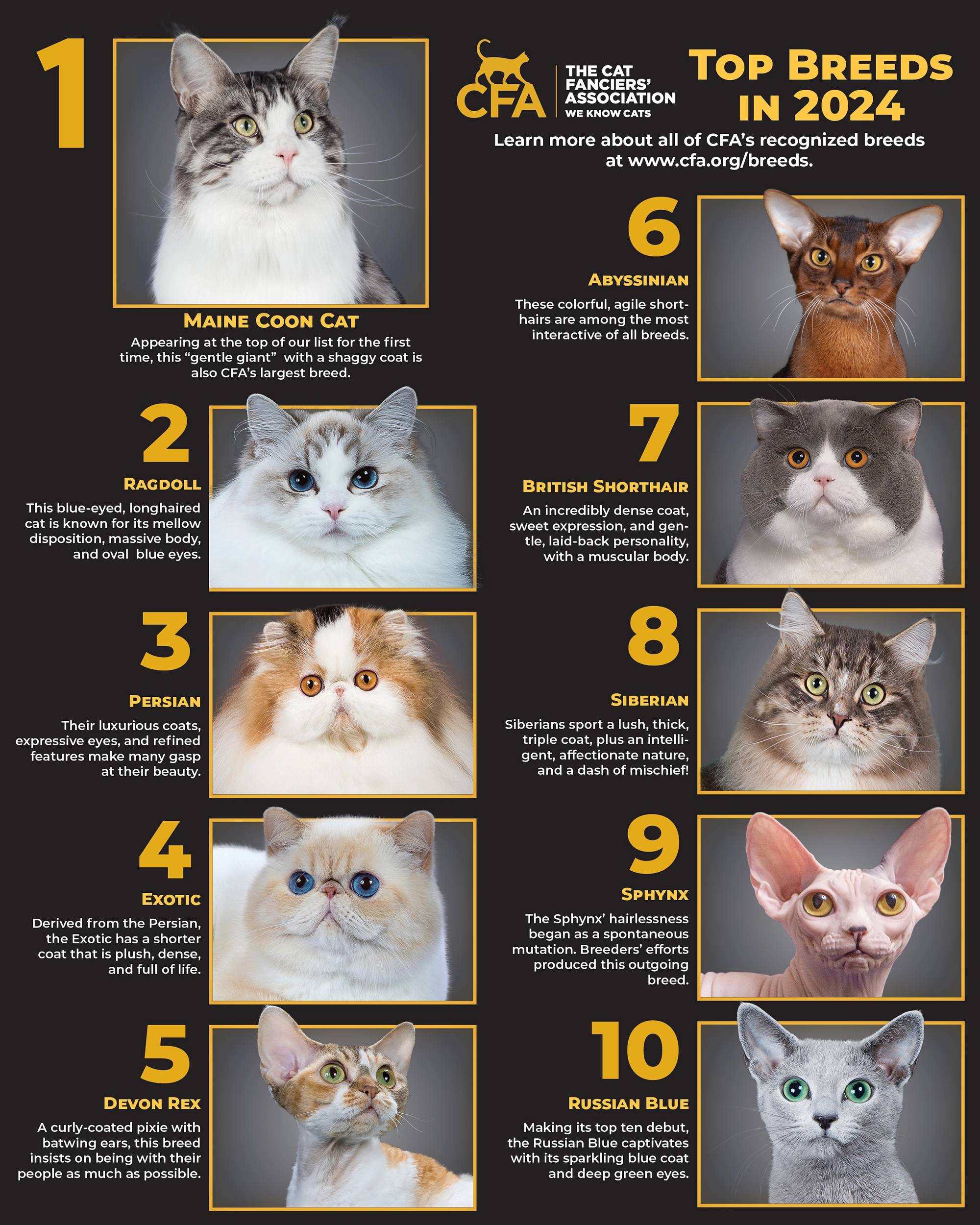
Welcome to the world of feline companions! Whether you’re a seasoned cat owner or considering bringing a new furry friend into your home, understanding the diverse range of cat breeds is essential. This guide explores the many breeds you might encounter, from the ubiquitous domestic cat to rare and specialized varieties, offering insights into their unique characteristics and appearances.
Understanding the Domestic Cat: The Moggie, Tabby, and Companion Cat
Let’s begin by celebrating the most common and beloved type of cat: the domestic cat, often referred to as a “moggie” or “tabby.” These cats are not a specific breed but rather a unique variety in their own right, and their widespread presence is a testament to their adaptability and charm. Moggies come in an astonishing array of coat colors and patterns, with the striking tabby markings being particularly noteworthy. Their prevalence means they are a familiar sight in households everywhere, embodying the essence of a true feline companion.
Exploring Specific Cat Breeds
Beyond the domestic cat, a fascinating world of purebred cats exists, each with its own distinct history, appearance, and temperament.
Abyssinian
Known for their distinctive ticked coat and prominent ear tufts, Abyssinians possess a regal appearance reminiscent of wild African cat species. These cats are characterized by their strong, fit physique and an adventurous, lively personality.
Australian Mist
Developed in Australia, the Australian Mist breed is a relatively recent addition to the feline world. They are known for their beautiful, spotted or marbled coats and generally amiable dispositions.
Balinese
Despite their name, Balinese cats, along with Javanese cats, originated in the USA. They share a similar body shape and personality with Siamese cats but are distinguished by their longer, more luxurious coats, especially on their tails.
Bengal
The Bengal breed was developed by selectively crossing domestic cats with wild species to achieve a spectacular, wild-looking coat while retaining a domesticated temperament. While affectionate, they can be more aloof than other breeds and are typically recommended for indoor living only.
Birman
Birmans are affectionate and easy-going cats with a stunning, fine coat. They often exhibit beautiful blue eyes and distinctive white paws, sometimes resembling long-haired Siamese or Himalayan cats.
Bombay
Characterized by their glossy, jet-black coats and striking yellow eyes set against a rounded face, Bombay cats are known for their loving and Burmese-like personalities.
British Shorthair
Often recognized by the “British Blue” variety, this breed boasts a dense, short coat that comes in numerous colors. Their rounded faces and deeply affectionate nature suggest ancestral ties to the Persian breed.
Burmese
With an attractive range of colors and a personality often described as “dog-like,” Burmese cats are gentle, affectionate, and notably less fearful of new environments compared to many other breeds.
Burmilla
A rarer breed, the Burmilla is the result of a cross between the Burmese and Chinchilla breeds, inheriting characteristics from both. They typically have a semi-longhaired coat and a sweet, affectionate nature.
Chinchilla
While not always recognized as a distinct breed, in Australia, the Chinchilla is often considered separate from the Persian. They are distinguished by a longer nose, greenish eyes, and a silver-tinged coat with dark tips.
Cornish Rex
Cornish Rex cats are unique for lacking the coarser outer layer of hair, possessing instead a denser, wavy coat. Their slender build and distinctive appearance make them stand out, though they are not necessarily hypoallergenic.
Devon Rex
These cats are known for their soft, short, and wavy coats that can become quite thin during warmer months. Playful and highly social, they possess a unique wide face and prominent cheekbones.
Egyptian Mau
The Egyptian Mau is a naturally spotted domestic cat breed, admired for its striking appearance and active, yet affectionate, nature.
Exotic
Exotic cats are essentially the short-haired version of Persians. They share the same lovable, cuddly personality and distinctive flat face but without the demanding coat care required by Persians.
Maine Coon
Famous for their impressive size, Maine Coons are amiable cats with shaggy coats. It’s important to be aware of potential veterinary concerns associated with Maine Coon breeding, as their large stature can predispose them to certain health issues. They are not to be confused with simply large tabby cats.
Manx
The Manx breed is most recognized for its lack of a tail, though they are otherwise similar to a robust domestic cat. It is crucial to select Manx cats from breeders who are aware of and screen for potential spinal defects, as this trait can be linked to serious health problems. You can explore more about feline genetic mutations in our article on cat breeds formed by genetic mutation.
Norwegian Forest Cat
Identifying a Norwegian Forest Cat can be challenging, but key features include a thicker, tufted coat and a unique facial structure. These large, robust cats are well-adapted to colder climates.
Ocicat
Ocicats are admired for their attractive spotted coats, which are not derived from recent wild ancestry, unlike some other spotted breeds. This may contribute to their particularly affectionate and playful personalities.
Oriental
Similar in body shape to Siamese cats, Oriental cats differ in having green eyes, lacking “points” (darker coloration on extremities), and coming in a vast array of coat colors, including tabby patterns. They possess a lean, muscular build.
Persian
Known for their docile nature, Persians are easily recognized by their round heads, large eyes (often yellow), and thick, long coats. For those seeking a similar temperament with less grooming, the Exotic and Chinchilla breeds are related options.
Ragdoll
Ragdolls are celebrated for their easy-going temperament, though this doesn’t imply inactivity. They often exhibit large personalities and can appear as more robust versions of the Birman breed.
Russian
Often referred to as Russian Blues, this breed also has a recognized white variety. They are distinguished by their striking bluish coat with a silvery sheen and an elegant, refined frame. They should not be confused with blue tabby cats.
Scottish Fold
A significant health concern exists for Scottish Folds due to a genetic mutation affecting cartilage formation. While the ear fold may appear aesthetically pleasing, it often leads to chronic pain and a lifetime of health issues. We strongly advise against purchasing this breed and offer support for owners of Scottish Folds to manage their pets’ conditions. Learn more about Scottish Fold health problems here.
Scottish Shorthair
As an ethical alternative for those drawn to the Scottish Fold’s traits, the Scottish Shorthair offers a way to appreciate the breed’s beautiful personality and coat without the associated genetic deformities, provided the fold mutation is not present.
Siamese
The classic Siamese displays “seal-point” coloration, with dark ears, muzzle, tail, and legs. However, points can vary in color, while the coat remains pale and the eyes are distinctively blue. Siamese cats are active, proud, and affectionate.
Somali
Essentially a long-haired Abyssinian, the Somali cat shares a similar outgoing and confident personality. These breeds often originate from the same breeders.
Sphynx
The Sphynx is famously hairless, possessing a charming personality that requires owners to be aware of its specific care needs, particularly regarding skin protection and temperature regulation.
Tonkinese
A hybrid of the Burmese and Siamese breeds, the Tonkinese combines traits from both, often appearing as a finely built Burmese with a unique color pattern.
Turkish Van
While rare in Adelaide, the Turkish Van breed has been included here as many ginger cats are misidentified as this breed by shelters. They are known for their love of water and distinctive coloration.
Conclusion: A World of Feline Diversity
From the ever-present moggie to the specialized breeds like the Sphynx or Maine Coon, the cat world offers an incredible diversity of companions. Each breed brings its unique blend of personality, appearance, and needs, ensuring there’s a feline friend to suit almost any household. Understanding these differences can help potential owners make informed decisions and provide the best possible care for their beloved pets.
