
Understanding and managing pain in dogs is crucial for their well-being. While it’s tempting to reach for human medications, it’s vital to recognize that drugs suitable for humans can be dangerous for canine companions. This guide delves into Nonsteroidal Anti-Inflammatory Drugs (NSAIDs) specifically formulated for dogs, highlighting their uses, benefits, and potential risks, while emphasizing the importance of veterinary guidance.
What Are NSAIDs for Dogs?
NSAIDs are commonly prescribed to alleviate pain, reduce inflammation, and manage fever in dogs. These medications work by inhibiting the production of prostaglandins, which are chemical messengers involved in various bodily functions, including pain and inflammation. While some prostaglandins trigger these responses, others play essential roles in protecting the stomach lining, regulating acid, aiding blood clotting, and maintaining kidney blood flow.
Dogs are more susceptible to the adverse effects of NSAIDs than humans. Therefore, human NSAIDs that block all prostaglandins can lead to severe side effects and toxicity in dogs. It is crucial to never administer over-the-counter human pain medication to your dog unless explicitly directed by your veterinarian.
In contrast, most NSAIDs developed for dogs are COX-2 selective. This means they primarily target the prostaglandins associated with pain and inflammation, while sparing those that perform beneficial functions. This targeted action makes them significantly safer and more effective for canine use. These veterinary-specific NSAIDs are available by prescription, allowing your veterinarian to:
- Assess if your dog is a suitable candidate for NSAID treatment.
- Closely monitor the medication’s effects on your dog.
Safe NSAIDs for Canine Use
Several NSAIDs are available and safe for dogs when prescribed and monitored by a veterinarian. Always consult your vet to determine the most appropriate anti-inflammatory medication for your dog’s specific needs.
Galliprant (Grapiprant)
Galliprant is a once-daily oral medication effective in managing the early signs of osteoarthritis in dogs. It functions by blocking a specific prostaglandin receptor linked to pain and inflammation. Due to its generally mild side effects, Galliprant can be a good option for dogs that have previously reacted poorly to NSAIDs or have underlying health conditions. Learn more about Galliprant for dogs.
Rimadyl (Carprofen)
A widely prescribed NSAID, Rimadyl is used to treat arthritis and other inflammatory conditions in dogs. It is typically well-tolerated. Carprofen, its active ingredient, is also found in other medications such as Carprieve and Novox.
Deramaxx (Deracoxib)
Deramaxx is commonly prescribed for post-operative pain, inflammation associated with arthritis, and fever. It is sometimes used off-label in certain cancer treatments.
Previcox (Firocoxib)
Similar to other veterinary NSAIDs, Previcox is used to manage inflammation from various conditions, including arthritis, and to address post-operative pain.
Metacam (Meloxicam)
Metacam helps reduce pain, inflammation, and fever in dogs, particularly those suffering from arthritis.
These COX-2 selective NSAIDs, including Galliprant, Rimadyl, Deramaxx, Previcox, and Metacam, are available only by prescription. They can be used for short-term pain relief or long-term management of chronic conditions.
Overdoses are the most common cause of serious side effects with these medications. If you suspect your dog has ingested more medication than prescribed, contact your veterinarian or the Pet Poison Helpline (855-764-7661) immediately.
Potential Side Effects of NSAIDs in Dogs
While NSAIDs designed for dogs are generally safe, they can potentially affect the liver, kidneys, gastrointestinal tract, and blood clotting. This risk is heightened in high-risk dogs or with incorrect dosages.
Seek immediate veterinary care if your dog exhibits:
- Increased urination.
- Severe vomiting or diarrhea.
Discontinue administering the NSAID and contact your veterinarian if your dog develops:
- Occasional vomiting.
- Mild diarrhea.
- Lethargy.
With prompt veterinary attention, most dogs recover quickly from these side effects.
Dogs at Higher Risk for NSAID Side Effects
Most healthy dogs tolerate COX-2 selective NSAIDs well, especially for short-term use. However, certain conditions increase a dog’s risk of adverse reactions:
- Kidney disease.
- Gastrointestinal issues.
- Blood clotting or bleeding disorders.
- Low blood pressure.
Due to these risks, veterinarians often recommend baseline blood work before initiating long-term NSAID therapy. For dogs on continuous NSAID treatment, regular veterinary check-ups every six to 12 months, including lab work, are essential for monitoring potential side effects.
Drug Interactions with NSAIDs
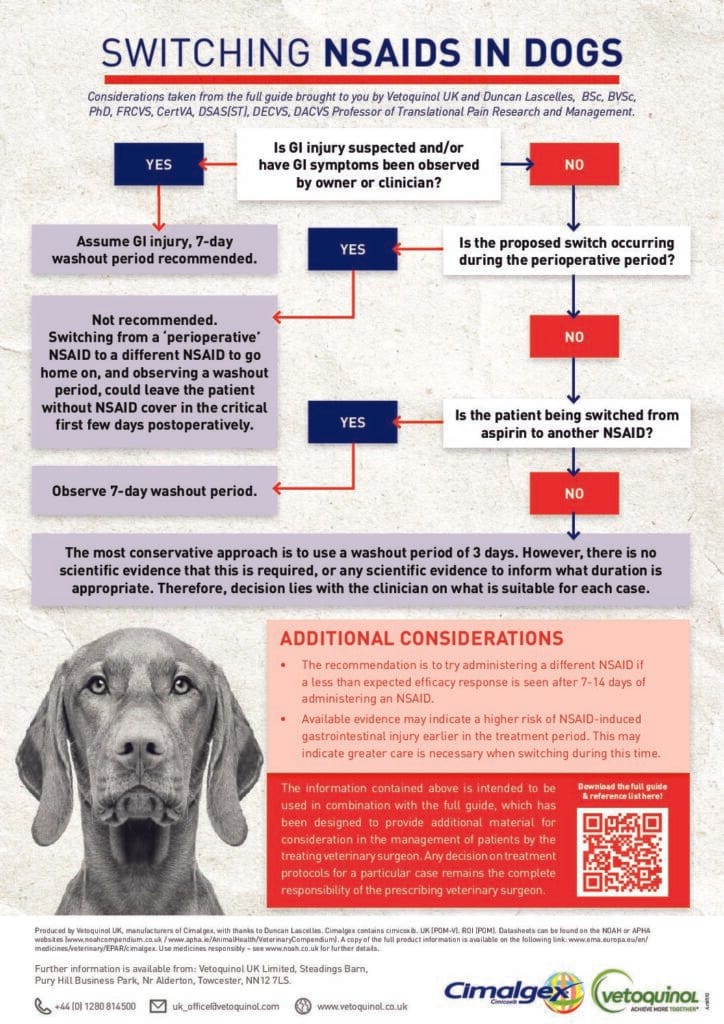
Combining NSAIDs with certain other medications can increase the risk of side effects. It is crucial to avoid administering multiple NSAIDs concurrently or an NSAID with a corticosteroid like prednisone. Many veterinarians recommend a waiting period between these types of medications. For instance, if Rimadyl is not fully effective, your vet might suggest a five- to seven-day break before starting Deramaxx. Non-NSAID pain relievers can be used during this interval if needed.
Potential drug interactions with NSAIDs include:
- Concurrent use of different NSAIDs.
- Corticosteroids (e.g., prednisone).
- Certain antibiotics (e.g., aminoglycosides, sulfonamides).
- Anticoagulants.
- Cyclosporine.
This list is not exhaustive. Your veterinarian is the best resource to determine the safety of combining NSAIDs with other medications.
Supplements and NSAIDs for Dogs
Veterinarians often recommend nutritional supplements alongside NSAIDs for dogs. These can include:
- Omega-3 fatty acids.
- Glucosamine.
- Chondroitin sulfate.
- Methylsulfonylmethane (MSM).
- Avocado soybean unsaponifiables (ASU).
- Manganese.
- Methionine.
Once a dog’s pain is effectively managed, it may be possible to reduce the NSAID dosage or frequency, especially when combined with other appropriate therapies. Your veterinarian can create a tailored treatment and monitoring plan to meet your dog’s specific needs.
Frequently Asked Questions About NSAIDs for Dogs
What anti-inflammatory can I give my dog?
The only safe anti-inflammatories for dogs are prescription NSAIDs specifically formulated for canine use, such as Galliprant. These COX-2 selective NSAIDs require veterinary oversight. Never give your dog human anti-inflammatory drugs due to the risk of severe side effects and toxicity.
Are there any over-the-counter NSAIDs for dogs?
Currently, there are no FDA-approved over-the-counter NSAIDs for dogs. Always consult your veterinarian before administering any pain medication to your dog. If your pet ingests human pain medication, contact your veterinarian or the Pet Poison Helpline (855-764-7661) immediately.
