
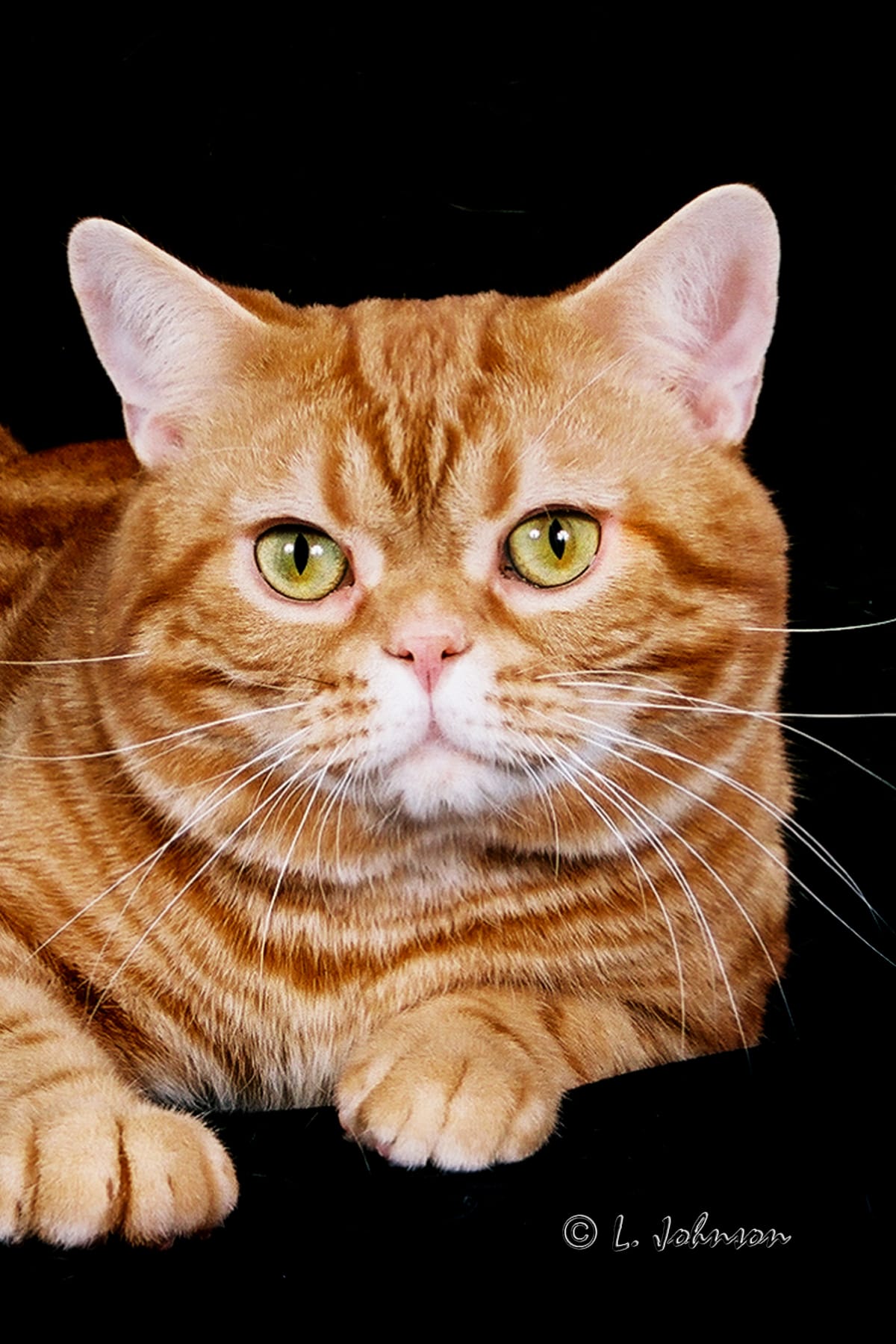
The American Shorthair is renowned as a robust and adaptable breed, embodying the essence of a true working cat. This breed standard outlines the ideal physical characteristics, ensuring a cat that is not only beautiful but also possesses the strength, endurance, and agility characteristic of its heritage. This guide delves into the detailed breed standards, covering everything from physical proportions to the extensive array of accepted colors and patterns.
General Breed Characteristics
The American Shorthair is a medium to large-sized cat, built for power and endurance. Its conformation is symmetrical, with no exaggerated features that could compromise its health or athleticism. The body is slightly longer than it is tall, with a well-muscled and powerful frame. Females, while potentially less massive than males, should maintain the breed’s overall balance and quality. The tail is of medium length, heavy at the base, and tapers to a blunt end.
Head and Facial Features
The head is large and substantial, with full cheeks contributing to a gently oblong facial impression. The eyes are large, wide, and expressive, with an upper lid shaped like a half-almond and a lower lid that is fully rounded. The outer corners of the eyes are set slightly higher than the inner corners, giving the cat an alert and bright appearance. Ears are medium-sized, slightly rounded at the tips, and set well apart. The nose is medium in length and uniform in width, with a gentle, concave curve from the bridge to the forehead. Jaws are strong, and mature males exhibit definite jowls. Both level and scissors bites are considered correct.
Body and Limbs
The body is solidly built, showcasing well-developed shoulders, chest, and hindquarters. The back is broad, straight, and level. Legs are medium in length with heavy musculature, appearing straight and parallel when viewed from the rear, with paws facing forward. Paws are firm, full, and rounded, featuring heavy pads.
Coat
The coat of the American Shorthair is short, thick, dense, and hard in texture, providing protection against moisture, cold, and superficial injuries. Regional and seasonal variations in coat thickness are permissible.
American Shorthair Colors and Patterns
The American Shorthair boasts an extensive palette of accepted colors and patterns, each with specific requirements for clarity, soundness, and contrast. These are categorized into Solid and Part-i-Color, Smoke, Shaded, and Tabby patterns, with variations like Bi-Color, Calico, and Van types.
Solid and Part-i-Color
This category includes colors like pure White, dense Black, various shades of Blue, rich Red, and buff Cream. Part-i-colors such as Tortoiseshell (black with patches of red) and Blue-Cream (blue with patches of cream) are also recognized. Bi-Color cats feature white combined with one of the solid colors, while Calico cats display white with distinct patches of black and red, or blue and cream (Dilute Calico).
Smoke Colors
Smoke varieties feature a white undercoat that is deeply tipped with the main color. When the cat is at rest, it appears solid, but the white undercoat becomes apparent in motion. Examples include Black Smoke, Blue Smoke, and Cameo Smoke (Red Smoke).
Shaded and Chinchilla
Shaded and Chinchilla varieties are characterized by an undercoat of pure white with the coat on the back, flanks, and tail tipped with color. The intensity of the tipping dictates whether the cat is classified as Chinchilla (sparkling silver appearance) or Shaded (darker overall effect). This includes Silver, Blue Chinchilla, Shaded Silver, and their Tortoiseshell and Cameo counterparts.
Tabby Patterns
American Shorthairs can exhibit three distinct tabby patterns: Classic, Mackerel, and Ticked.
- Classic Tabby features dense, broad, and clearly defined markings, including swirls on the cheeks and a butterfly pattern on the shoulders.
- Mackerel Tabby showcases narrow, pencilled markings resembling fish bones.
- Ticked Tabby has a body with minimal visible markings, with tabby striping primarily on the head, neck, legs, and tail. Ticking refers to bands of color on individual hair shafts.
Tabby Colors and Variations
The tabby patterns come in various colors, including Silver Tabby (pale silver with black markings), Blue Silver Tabby (bluish silver with blue markings), Brown Tabby (coppery brown with black markings), Blue Tabby (bluish ivory with deep blue markings), Red Tabby (red with deep red markings), Cream Tabby (pale cream with buff markings), and Cameo Tabby (off-white with red markings).
Additionally, Patched Tabby variations (also known as torbies) combine tabby patterns with patches of red and/or cream. Tabby & White and Bi-Color cats are also recognized, with specific requirements for the distribution of white and colored areas. The “Van” pattern denotes cats with color confined primarily to the head, tail, and legs.
Penalties and Disqualifications
Certain features are penalized, such as excessive cobbiness or ranginess, and very short tails. Cats showing evidence of hybridization, indicated by colors like chocolate, sable, lavender, or lilac, or Siamese-type markings, are disqualified. Other disqualifying features include any appearance of hybridization with other breeds (long fur, nose break, bulging eyes), kinked or abnormal tails, locket or button spots (unless specified), incorrect toe count, undershot or overshot bites, persistently protruding tongue, obesity or emaciation, and any exaggerated feature that compromises the cat’s well-being.
