
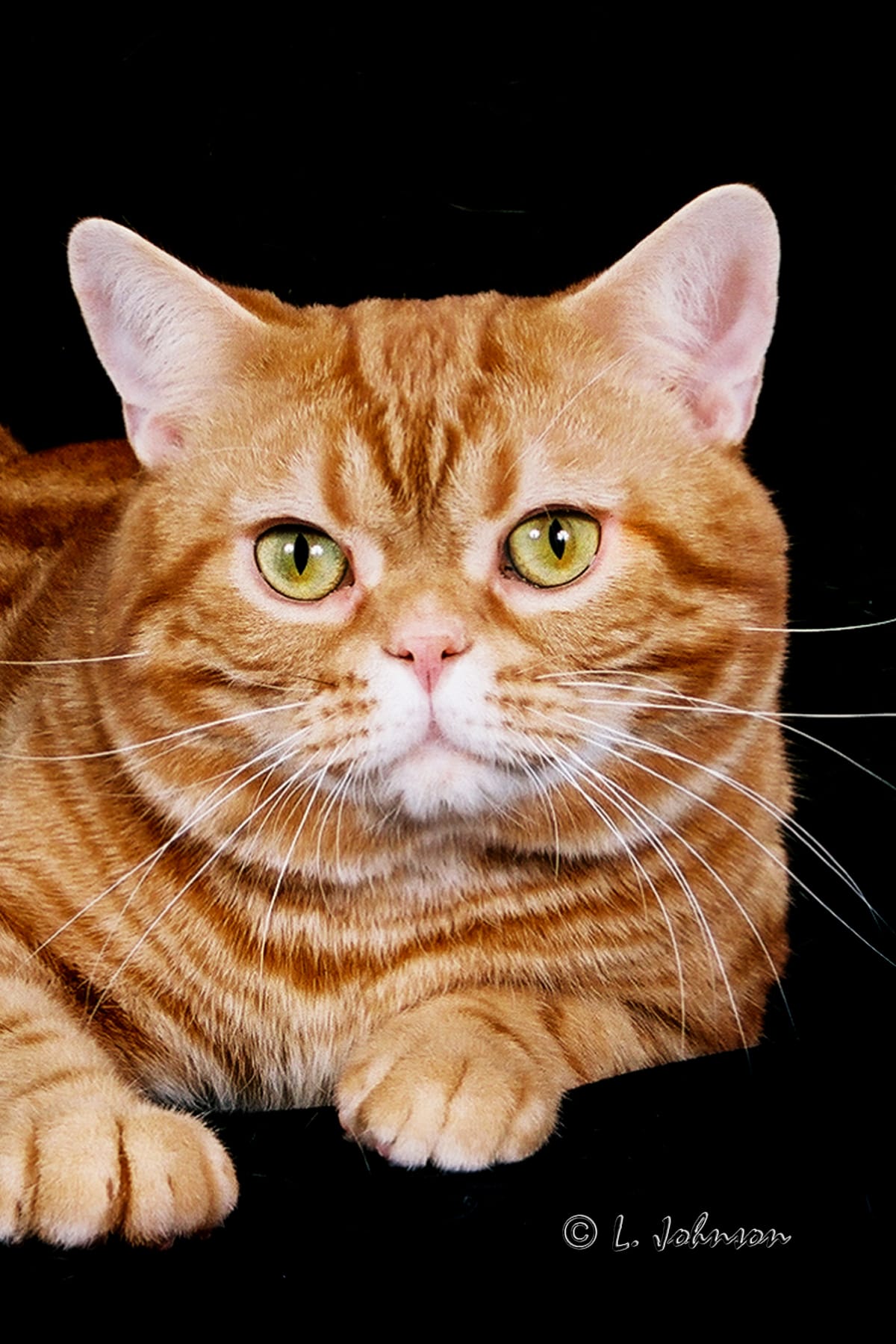
The American Shorthair is a distinguished breed, renowned for its robust build, adaptable nature, and striking appearance. Developed as a true working cat, this breed embodies strength, endurance, and agility. This guide delves into the official breed standards, detailing physical characteristics, and explores the extensive palette of colors and patterns that define the American Shorthair.
Breed Standards: Conformation and Characteristics
The American Shorthair is a medium to large-sized cat, with males being more massive than females. However, quality and balance are prioritized over sheer size. The ideal conformation presents a body slightly longer than it is tall, divisible into three equal parts from sternum to breastbone, elbow to hind leg, and hind leg to rump. The tail’s length should mirror the distance from the shoulder blades to its base.
Head and Facial Features
The head is large, featuring full cheeks that contribute to a subtly oblong facial impression, appearing slightly longer than wide. A sweet, open expression is characteristic. The face can be divided into two equal halves from the base of the ears to the middle of the eyes, and from the middle of the eyes to the chin.
Ears are medium-sized, with slightly rounded tips and an appropriate opening at the base. The distance between the lower inner corners of the ears should be twice the distance between the eyes. The forehead, viewed in profile, forms a smooth, convex curve flowing into the neck, with no doming between the ears when viewed from the front.
Eyes are large and wide-set, with the upper lid shaped like a half-almond and the lower lid forming a full curve. A gap of at least one eye’s width should exist between the eyes, with the outer corners set slightly higher than the inner corners. The eyes should appear bright, clear, and alert.
The nose is medium in length and consistent in width. In profile, it presents a gentle, concave curve from the bridge to the forehead. The muzzle is squared, with definite jowls present in mature males. Jaws are strong and capable of grasping prey, with both level and scissors bites considered equally correct. A firm, well-developed chin should form a perpendicular line with the upper lip.
Body and Structure
A medium-length, muscular neck supports the head. The body is solidly built, muscular, and powerful, with well-developed shoulders, chest, and hindquarters. The back is broad, straight, and level, with a slight slope from the hip bone to the base of the tail when viewed in profile. From above, the outer lines of the body appear parallel.
Legs are medium in length and bone, with significant musculature. When viewed from the rear, all four legs should appear straight and parallel, with paws facing forward. Paws are firm, full, and rounded, featuring heavy pads. There are five toes in the front and four in the rear.
The tail is medium in length, heavy at the base, and tapers to a blunt end, though the final vertebrae should taper normally.
Coat
The coat is short, thick, even, and hard in texture. Regional and seasonal variations in coat thickness are permissible. It should be dense enough to provide protection against moisture, cold, and minor skin injuries.
Penalties are given for excessive cobbiness or ranginess, and very short tails.
Disqualifications include evidence of hybridization leading to specific colors (chocolate, sable, lavender, lilac, point-restricted markings), or any signs of hybridization with other breeds, such as long or fluffy fur, a nose break, bulging eye set, or brow ridge. Kinked or abnormal tails, lockets or buttons (white spots on non-specified colors), incorrect number of toes, undershot or overshot bites, persistently protruding tongues, obesity or emaciation, and any exaggerated feature that compromises the cat’s well-being are also grounds for disqualification.
American Shorthair Colors and Patterns
The American Shorthair comes in a vast array of colors and patterns, each with specific requirements for nose leather, paw pads, and eye color.
Solid and Part-Color
- White: Pure white with pink nose leather and paw pads. Eye color can be deep blue, gold, or odd-eyed (one blue, one gold).
- Black: Dense coal black, sound from root to tip, free from rust or smoke undercoat. Nose leather and paw pads are black. Eye color is gold.
- Blue: A lighter shade of blue is preferred, with a level tone. Nose leather and paw pads are blue. Eye color is gold.
- Red: Deep, rich, clear, brilliant red, without shading or markings. Nose leather and paw pads are brick red. Eye color is gold.
- Cream: A level shade of buff cream. Nose leather and paw pads are pink. Eye color is gold.
- Tortoiseshell: Black with patches of red or intermingled red areas. Nose leather and paw pads are black and/or brick red. Eye color is gold.
- Blue-Cream: Blue with patches of cream or intermingled cream areas. Nose leather and paw pads are blue and/or pink. Eye color is gold.
Bi-Color & Calico
- Bi-Color: White with unbrindled portions of black, blue, red, or cream. Eye color is gold.
- Van Bi-Color: White with color confined to the head, tail, and legs. Small colored patches on the body are allowable.
- Calico: White with distinct patches of black and red, or blue and cream (Dilute Calico). White is predominant on the underparts. Tabby markings are allowed in the red or cream patches. Eye color is gold.
Smoke Colors
Smoke colors feature a white undercoat, deeply tipped with the specified color.
- Black Smoke: White undercoat tipped with black. Appears black when at rest, white when in motion. Nose leather and paw pads are black. Eye color is green, hazel, or gold (green preferred).
- Blue Smoke: White undercoat tipped with blue. Appears blue when at rest. Nose leather and paw pads are blue. Eye color is gold.
- Cameo Smoke (Red Smoke): White undercoat tipped with red. Appears red when at rest. Nose leather, eye rims, and paw pads are rose. Eye color is gold.
- Tortoiseshell Smoke: White undercoat tipped with black, with patches of red and cream. Appears tortoiseshell when at rest. Nose leather, eye rims, and paw pads are rose. Eye color is gold.
- Blue Cream Smoke: White undercoat tipped with blue, with patches of cream. Appears blue cream when at rest. Nose leather, eye rims, and paw pads are rose. Eye color is gold.
Smoke & White and Smoke Calico
- Smoke & White: White with smoke-colored portions. Conforms to established smoke colors.
- Smoke Calico: White with patches of black smoke and cameo smoke, or blue smoke and cream smoke. Eye color is green or gold.
Shaded Colors
Shaded colors have an undercoat with tipping that shades from dark to white.
- Chinchilla Silver: Pure white undercoat, tipped with black for a sparkling silver appearance. Nose leather is brick red. Paw pads are black. Eye color is green.
- Shaded Silver: White undercoat with black tipping shading from dark on the back to white on the underside. Nose leather is brick red. Paw pads are black. Eye color is green.
- Blue Chinchilla Silver: Pure white undercoat tipped with blue. Nose leather is old rose. Paw pads are blue or old rose. Eye color is green.
- Blue Shaded Silver: White undercoat with blue tipping shading from dark to white. Nose leather is old rose. Paw pads are old rose or blue. Eye color is green.
- Shell Cameo (Red Chinchilla): White undercoat tipped with red. Nose leather, eye rims, and paw pads are rose. Eye color is gold.
- Shaded Cameo (Red Shaded): White undercoat with red tipping shading from dark to white. Nose leather, eye rims, and paw pads are rose. Eye color is gold.
- Cream Shell Cameo (Cream Chinchilla): White undercoat tipped with cream. Nose leather, eye rims, and paw pads are pink. Eye color is gold.
- Cream Shaded Cameo (Cream Shaded): White undercoat with cream tipping shading from dark to white. Nose leather, eye rims, and paw pads are pink. Eye color is gold.
- Chinchilla Shaded Tortoiseshell: White undercoat tipped with black and patches of red/cream. Eye color is green or gold.
- Shaded Tortoiseshell: White undercoat with black tipping and patches of red/cream. Eye color is green or gold.
- Dilute Chinchilla Tortoiseshell: White undercoat tipped with blue and patches of cream. Eye color is green or gold.
- Dilute Shaded Tortoiseshell: White undercoat with blue tipping and patches of cream. Eye color is green or gold.
Shaded & White and Shaded Calico
- Shaded & White: White with shaded portions, conforming to established shaded colors.
- Shaded Calico: White with patches of shaded silver and shaded cameo, or blue shaded silver and shaded cream cameo. Eye color is green or gold.
Tabby Patterns
Tabby patterns can be classic, mackerel, or ticked.
- Classic Tabby: Broad, dense markings with intricate patterns. Features an “M” on the forehead, swirls on cheeks, butterfly markings on shoulders, and vertical stripes down the back.
- Mackerel Tabby: Narrow, parallel pencillings on the body, with distinct necklaces and barring.
- Ticked Tabby: Lacks obvious body markings, with ticked hair shafts. Distinct tabby striping on head, neck, legs, and tail.
Tabby Colors
- Silver Tabby: Pale, clear silver ground color with dense black markings. Nose leather is brick red. Paw pads are black. Eye color is green to hazel (green preferred).
- Blue Silver Tabby (Pewter Tabby): Pale, clear bluish silver ground color with sound blue markings. Nose leather is blue or old rose trimmed with blue. Paw pads are blue. Eye color is green or hazel (green preferred).
- Brown Tabby: Brilliant coppery brown ground color with dense black markings. Nose leather is brick red. Paw pads are black or brown. Eye color is gold or hazel (gold preferred).
- Blue Tabby: Pale bluish ivory ground color with very deep blue markings. Nose leather is old rose. Paw pads are rose. Eye color is gold.
- Red Tabby: Red ground color with deep rich red markings. Nose leather and paw pads are brick red. Eye color is gold.
- Cream Tabby: Very pale cream ground color with buff or cream markings. Nose leather and paw pads are pink. Eye color is gold.
- Cameo Tabby: Off-white ground color with red markings. Nose leather and paw pads are rose. Eye color is gold.
- Cream Cameo Tabby (Dilute Cameo): Off-white ground color with cream markings. Nose leather and paw pads are pink. Eye color is gold.
- Silver Patched Tabby: Silver ground with black tabby markings and patches of red/cream. Eye color is gold, green, or hazel.
- Blue Silver Patched Tabby (Pewter Patched Tabby): Bluish silver ground with blue tabby markings and patches of cream. Eye color is gold, green, or hazel.
- Brown Patched Tabby: Coppery brown ground with black tabby markings and patches of red/cream. Eye color is gold or hazel (gold preferred).
- Blue Patched Tabby: Bluish ivory ground with blue tabby markings and patches of cream. Eye color is gold.
Tabby & White
- Tabby & White: White with tabby portions conforming to established tabby colors and patterns.
The “Van” designation indicates white with color confined to the head, tail, and legs, with optional small colored patches on the body. All “& White” and “Calico” colors can include the Van pattern.
The Color Class Numbers provide a reference for recognized breed codes, crucial for registration and show purposes. The American Shorthair has no allowable outcross breeds, emphasizing its established and distinct lineage.
