
The pages of history are filled with tales of legendary warriors, but few are as captivating as the Alexander Horse Story. It’s more than just a chronicle of a conqueror and his steed; it is a profound narrative of trust, understanding, and a bond that transcended the chaos of battle. At the heart of this saga is a wild, magnificent stallion named Bucephalus, a horse that no man could tame, and the young prince who saw not a beast to be broken, but a spirit to be understood. Their journey together would carry them across the known world, forging an empire and a legend that has echoed for millennia. This tale speaks to the powerful connection humans can share with animals, a theme explored in many great tales, including the famous alexander the great horse story.
The Boy Who Tamed the Untamable
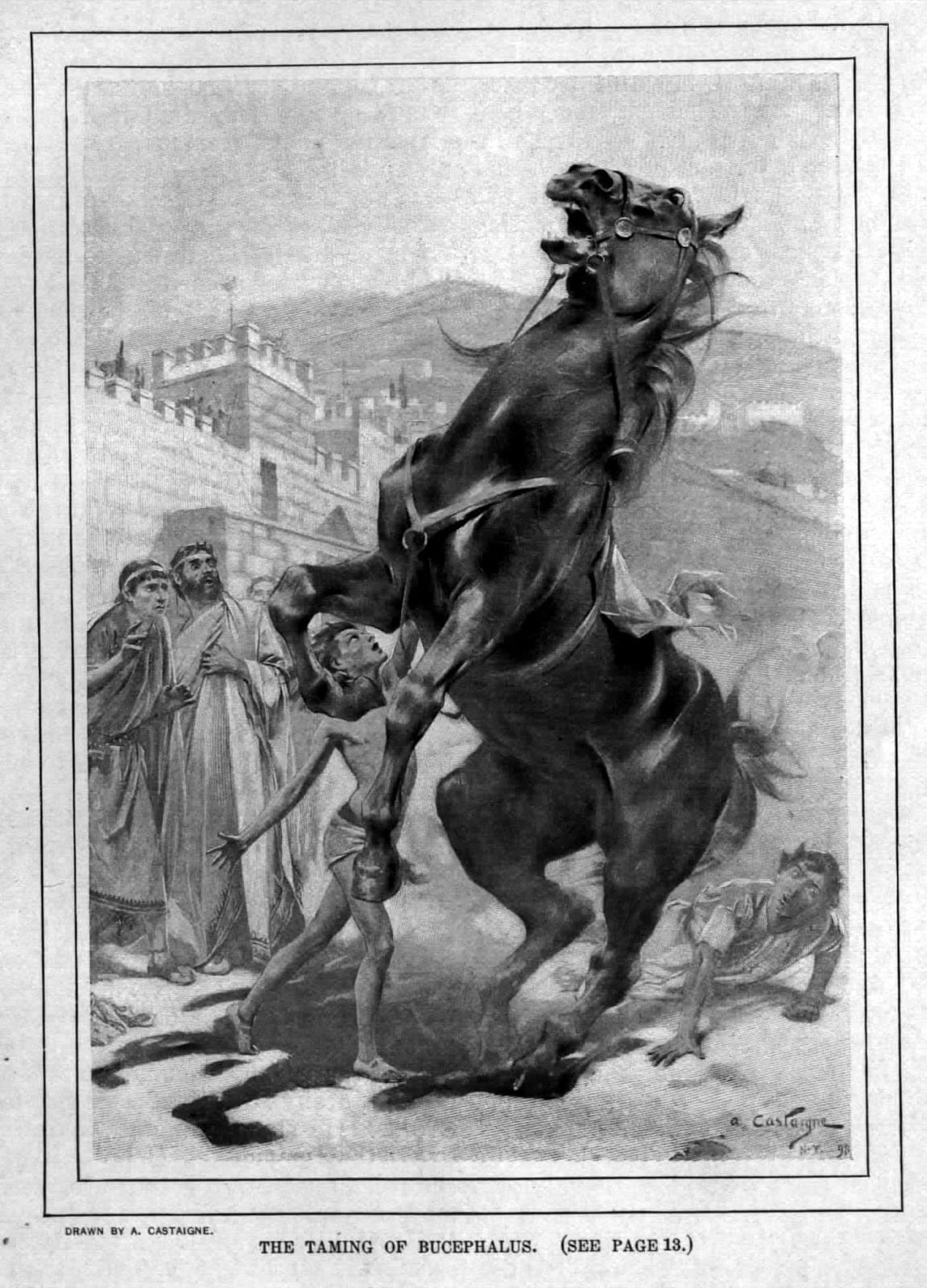
The story begins in the court of King Philip II of Macedon. A horse trader presented the king with a towering, beautiful black stallion. But the horse was ferocious and wild, violently rejecting every attempt to ride him. Frustrated and seeing the animal as a lost cause, Philip ordered him to be taken away. It was then that a young Alexander, merely a boy, spoke up. He claimed he could ride the horse, much to the amusement of the court. Alexander had observed something no one else had: the horse was terrified of its own shadow.
With a calm confidence that would later define his leadership, Alexander approached the stallion, whom he would name Bucephalus. He spoke to him gently and turned the horse towards the sun, so his shadow fell behind him. The source of his fear now gone, the magnificent creature calmed instantly. Alexander leaped onto his back and rode him, earning the admiration of his father and the lifelong loyalty of his companion. This moment of insight and empathy was the true beginning of the alexander horse story.
A Bond Forged in Conquest
From that day forward, Alexander and Bucephalus were inseparable. Bucephalus was not merely a mount; he was Alexander’s trusted partner in his ambitious campaign to conquer the Persian Empire and beyond. This was a horse that would allow only Alexander to ride him. Ancient accounts describe how Bucephalus would kneel to help his master mount, a sign of their unique and intelligent communication. Together, they charged into the heart of the most ferocious battles, from the fields of Chaeronea to the decisive clash at Gaugamela.
The presence of Alexander atop his formidable black charger became an iconic and fearsome sight for his enemies. Bucephalus was a symbol of Alexander’s own spirit—bold, powerful, and seemingly invincible. Their relationship was a testament to mutual respect and reliance. In the heat of battle, man and horse moved as one, a seamless force of nature that turned the tide of countless conflicts. This deep connection is a recurring theme in many narratives, much like the archetypal man and horse story that explores loyalty and partnership.
What Made Bucephalus So Special?
Historians have long speculated about the unique qualities of this legendary horse. His name, Bucephalus, translates to “ox-head,” which could refer to a branding mark or a unique broadness of his head. He was believed to be of the finest Thessalian stock, a breed known for its courage and stamina. Yet, his most remarkable quality was his unwavering loyalty to Alexander. In a world of shifting alliances and political intrigue, Bucephalus was Alexander’s one constant, a living symbol of unwavering devotion. Their story stands apart even from other legendary animal tales, such as the trojan horse bible story, because it is rooted in a real, documented emotional connection rather than pure strategy.
The Final Ride: A Hero’s Farewell
The incredible journey of Alexander and Bucephalus reached its poignant end in 326 BC, during the Battle of the Hydaspes in modern-day Pakistan. By this time, Bucephalus was an old horse, around thirty years of age, yet he carried his master into one last, grueling battle. Though sources differ on the exact cause of his death—some claim it was from battle wounds, others from old age and exhaustion—the outcome was the same. The mighty stallion had fallen.
Alexander’s grief was profound and absolute. He had lost more than a warhorse; he had lost a friend who had been with him since boyhood. In a display of love and respect that stunned his contemporaries, the great conqueror did something unprecedented. He founded a city on the spot where his companion fell and named it Alexandria Bucephalous in his honor. This act immortalized the alexander horse story, ensuring that the name of his beloved horse would be remembered alongside his own great cities.
The Enduring Legacy of the Story
Why does the alexander horse story continue to fascinate us over two thousand years later? It’s because it embodies a universal truth: the extraordinary capacity for connection between humans and animals. It reminds us that behind the grand tapestries of history and conquest lie personal stories of love and loyalty. Bucephalus was not a tool of war; he was a character in the epic of Alexander’s life, a silent confidant, and a steadfast ally.
Their tale elevates beyond a simple historical account into a mythic representation of the perfect partnership. It teaches that true strength is not about domination, but about understanding, empathy, and respect—the very qualities a young boy showed when he faced a frightened horse and chose to calm its fears rather than break its spirit.
Frequently Asked Questions
How did Alexander the Great get his horse?
Alexander acquired Bucephalus when he was just a young boy. The horse was presented to his father, King Philip II, but was deemed too wild and unmanageable. Alexander made a wager that he could tame the horse, succeeding by cleverly realizing the horse was afraid of its own shadow and turning him toward the sun to calm him.
What does the name Bucephalus mean?
The name “Bucephalus” means “ox-head” in Ancient Greek. This likely referred to a brand on the horse’s haunch in the shape of an ox’s head or was a description of his broad, distinctive facial features.
How did Bucephalus die?
Bucephalus died in 326 BC after the Battle of the Hydaspes. While some historical accounts suggest he sustained fatal wounds in the battle, most historians, including Plutarch, believe he died from a combination of old age and exhaustion, as he was around 30 years old at the time.
Did Alexander really name a city after his horse?
Yes, he did. Overcome with grief at the loss of his lifelong companion, Alexander the Great founded the city of Alexandria Bucephalous (or Bucephala) on the west bank of the Hydaspes River (now the Jhelum River in Pakistan) to honor his beloved horse.
What breed of horse was Bucephalus?
While his exact pedigree is not known, Bucephalus is widely believed to have been of the best Thessalian breed. Thessaly was a region in ancient Greece renowned for producing some of the finest and most courageous cavalry horses in the ancient world.
A Bond That Defined an Era
The relationship between Alexander and Bucephalus is more than a historical footnote; it is a cornerstone of the conqueror’s legend. It reveals a side of him that is often overshadowed by his military genius—his capacity for deep affection and loyalty. The alexander horse story is a timeless reminder that the greatest empires are built not only on power, but on the strength of the bonds we forge, whether with people or with the incredible animals that walk beside us on our journey. It is a narrative of friendship that remains as powerful and moving today as it was centuries ago.
