
The timeless Alexander And The Horse Story is more than just a historical account; it’s a powerful narrative about insight, courage, and the profound connection that can form between a human and an animal. This legendary tale of a young Alexander the Great and his fierce stallion, Bucephalus, has echoed through millennia, capturing the imagination of all who hear it. It’s a story that lays the foundation for understanding the man who would conquer the known world, revealing the sharp intellect and empathy that set him apart from the very beginning.
This narrative holds a special place among epic horse legends stories, illustrating that true strength often lies not in brute force, but in quiet observation and understanding. It serves as a testament to the idea that even the wildest spirits can be won over with patience and perspective.
The Untamable Stallion: A Challenge for a King
The story begins in the court of King Philip II of Macedon, Alexander’s father. A horse trader named Philonicus presented the king with a magnificent, but wild, black stallion. The horse, named Bucephalus (meaning “ox-head,” likely due to a brand or his broad forehead), was a creature of immense power and spirit. However, he was completely unmanageable. He reared, kicked, and fought against every man who dared to approach him.
One by one, Philip’s most experienced horsemen tried and failed to mount the creature. The king, frustrated and deeming the horse useless, ordered him to be taken away. It was at this moment that a young Alexander, merely a boy of about twelve or thirteen, spoke up. He openly lamented that such a superb horse was being dismissed because of the handlers’ lack of skill and courage.
According to Plutarch, the ancient historian, Alexander exclaimed, “What an excellent horse they are losing for want of skill and spirit to manage him!”
This bold statement from a young prince initially amused his father and the court. Philip challenged his son, asking if he thought he could do better than his elders. Alexander accepted the challenge without hesitation, striking a wager with his father: if he could tame the horse, he would buy it himself.
A Prince’s Insight: Seeing What Others Missed
While everyone else saw an aggressive and defiant beast, Alexander saw something different: fear. He had been watching intently and noticed that Bucephalus was not just wild, but terrified. The horse was agitated by the commotion of the handlers and, most importantly, was deeply frightened of his own dancing shadow on the ground.
This simple observation was the key that unlocked the entire puzzle. While seasoned warriors saw a problem to be solved with force, a young boy saw a creature in distress. This moment of empathy and keen perception is the core of the alexander and the horse story. It was a glimpse into the strategic mind that would later devise brilliant military campaigns. Similar to the dynamic found in the horse and the prince story, it highlights a unique relationship built on mutual respect rather than domination.
The Turning Point: Facing the Sun
Acting on his insight, Alexander approached Bucephalus calmly, speaking to him in a soothing voice and gently stroking him. He took the reins and, instead of trying to force the horse forward, he turned him directly towards the sun. In an instant, the horse’s terrifying shadow disappeared behind him.
With his primary source of fear gone, Bucephalus immediately became more composed. Alexander continued to soothe him, running alongside him for a short distance before gracefully leaping onto his back. The court watched in stunned silence as the boy who would be king rode the untamable horse with ease, a perfect union of rider and steed.
A Bond Forged for a Lifetime of Conquest
King Philip, overwhelmed with pride and emotion, is said to have wept with joy. He declared that Macedonia was not large enough for his son and that Alexander must seek out a kingdom worthy of his talents. He kept his word, and Bucephalus became Alexander’s personal mount, the beginning of a partnership that would last for nearly two decades.
Bucephalus was no ordinary horse; he became a symbol of Alexander’s own spirit—proud, strong, and seemingly invincible. He carried his master across continents, from Greece to India, through countless battles and skirmishes.
Bucephalus in Battle
The stallion was a true warhorse, trained to be fierce and fearless in combat. Accounts describe him as a loyal protector of Alexander, biting and kicking at enemies who came too close. Their bond was so strong that Alexander would often ride another horse into the fray to spare Bucephalus from the initial chaos, only mounting his trusted friend for the decisive charge.
This relationship shares thematic elements with many historical accounts of bravery, echoing the loyalty seen in tales like the war story horse pedigree, where an animal’s lineage is tied to its courage. Bucephalus was more than a vehicle of war; he was a comrade-in-arms.
As noted by Dr. Julian Croft, a historian specializing in ancient Macedonia, “The relationship between Alexander and Bucephalus was symbiotic. The horse was an extension of Alexander’s own ambition and indomitable will. On the battlefield, they moved as one entity, a terrifying and inspiring sight that demoralized enemies and rallied allies.”
The Final Ride and a City’s Name
The legendary partnership came to an end during Alexander’s campaign in India. In 326 BC, at the Battle of the Hydaspes against King Porus, Bucephalus, now an old horse in his late twenties, was mortally wounded. Accounts differ on whether he died during the battle or from his wounds and old age shortly after, but all agree that his loss was a devastating blow to Alexander.
In a display of love and honor for his lifelong companion, Alexander founded a city on the banks of the Hydaspes River and named it Alexandria Bucephala (or Bucephala). It was a lasting tribute to the horse that had carried him to the ends of the known world. This act of founding a city for a horse was unprecedented and speaks volumes about the depth of their bond. It’s a poignant ending to the alexander and the horse story, cementing its place in history forever. This narrative reminds us of other powerful animal stories, even a simple old horse story can carry deep emotional weight.
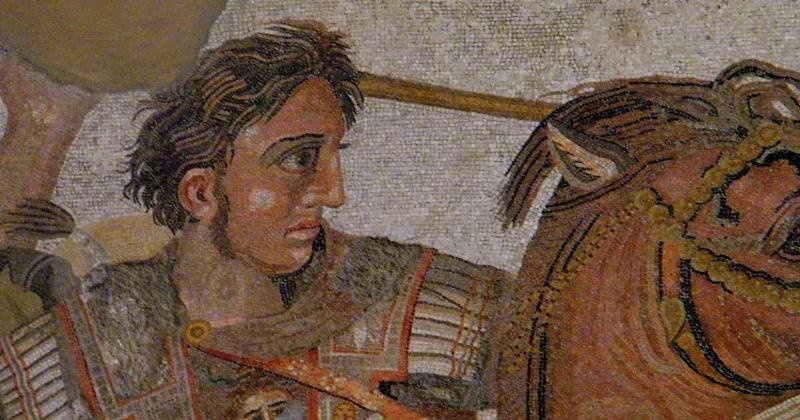 The alexander and the horse story culminates in battle, with a determined Alexander the Great riding his powerful black stallion Bucephalus into combat.
The Enduring Legacy of the Story
The story of Alexander and Bucephalus endures not just as a historical anecdote but as a powerful metaphor. It teaches timeless lessons about leadership, empathy, and the nature of power.
- Intelligence Over Force: Alexander’s success came from his ability to understand the root of a problem rather than just reacting to its symptoms. He saw fear where others saw aggression and used intellect to solve a problem that brute force could not.
- The Power of Empathy: His ability to connect with the horse on an emotional level, to understand its fear and soothe it, was a mark of a truly great leader.
- A Lifelong Bond: The story celebrates the deep, loyal connection that can exist between humans and animals. Bucephalus was not a tool but a partner, a friend whose loyalty was earned through respect and understanding.
Ultimately, the alexander and the horse story is a foundational piece of Alexander’s personal mythology. It establishes his character long before his great conquests, showing us the boy who possessed the wisdom and compassion that would define the man.
Frequently Asked Questions (FAQ)
What is the summary of the Alexander and the horse story?
The story recounts how a young Alexander the Great successfully tamed a wild and seemingly untamable stallion named Bucephalus. He achieved this by noticing the horse was afraid of its own shadow and cleverly turning him towards the sun to make the shadow disappear, demonstrating his unique insight and empathy.
What was the name of Alexander the Great’s horse?
Alexander the Great’s famous horse was named Bucephalus. The name translates to “ox-head,” possibly referring to a brand on his flank or his broad, ox-like face. He was known for his massive size, black coat, and a large white star on his forehead.
How did Bucephalus die?
Bucephalus died in 326 BC after the Battle of the Hydaspes in India. Historical accounts vary, with some stating he died from battle wounds and others suggesting he succumbed to his injuries combined with old age, as he was nearly 30 years old.
What does the story of Alexander and Bucephalus teach us?
The story teaches several valuable lessons. It highlights the power of intelligence and observation over brute force, the importance of empathy in leadership, and the profound, lifelong bond that can be forged between humans and animals based on mutual respect and understanding.
What did Alexander do to honor Bucephalus?
To honor his beloved horse and lifelong companion, Alexander the Great founded a city on the site of their last battle. He named the city Alexandria Bucephala, a lasting monument to the steed who had carried him through his many conquests.
