
As a dog owner, you’re always looking for ways to bond with your furry friend, keep them physically and mentally stimulated, and perhaps even discover a hidden talent. Agility training offers all of this and more, transforming everyday play into an exciting sport. At the heart of this exhilarating activity lies specialized agility training equipment for dogs. This guide is your ultimate resource for understanding, selecting, and utilizing the right gear to embark on your agility journey.
Agility is more than just a pastime; it’s a dynamic dog sport that tests a canine’s speed, coordination, and intelligence as they navigate an obstacle course under the handler’s direction. From professional competitions to backyard fun, the right equipment is crucial for safety, effectiveness, and enjoyment. Whether you’re training for the ring or simply aiming to enhance your dog’s obedience and confidence, understanding the various types of agility training equipment for dogs is the first step.
The Foundation of Fun: Understanding Agility Training Equipment
Before diving into specific obstacles, it’s essential to grasp why specialized equipment is used. Agility training equipment for dogs is designed with the canine athlete in mind, focusing on:
- Safety: Rounded edges, stable construction, and appropriate materials prevent injuries.
- Durability: Equipment must withstand vigorous use, weather, and a dog’s enthusiasm.
- Progression: Obstacles can often be adjusted in height, length, or difficulty to suit a dog’s learning curve.
- Engagement: The visual and physical challenges presented by the equipment keep dogs motivated and focused.
Think of it like this: you wouldn’t expect a human athlete to train for the Olympics without the proper track, hurdles, or mats. Similarly, dogs benefit immensely from purpose-built agility training equipment for dogs that simulates real competition environments while ensuring their well-being.
Essential Agility Training Equipment for Dogs
The world of agility equipment can seem vast, but most training programs start with a core set of obstacles. Here’s a breakdown of the must-haves:
1. Jumps
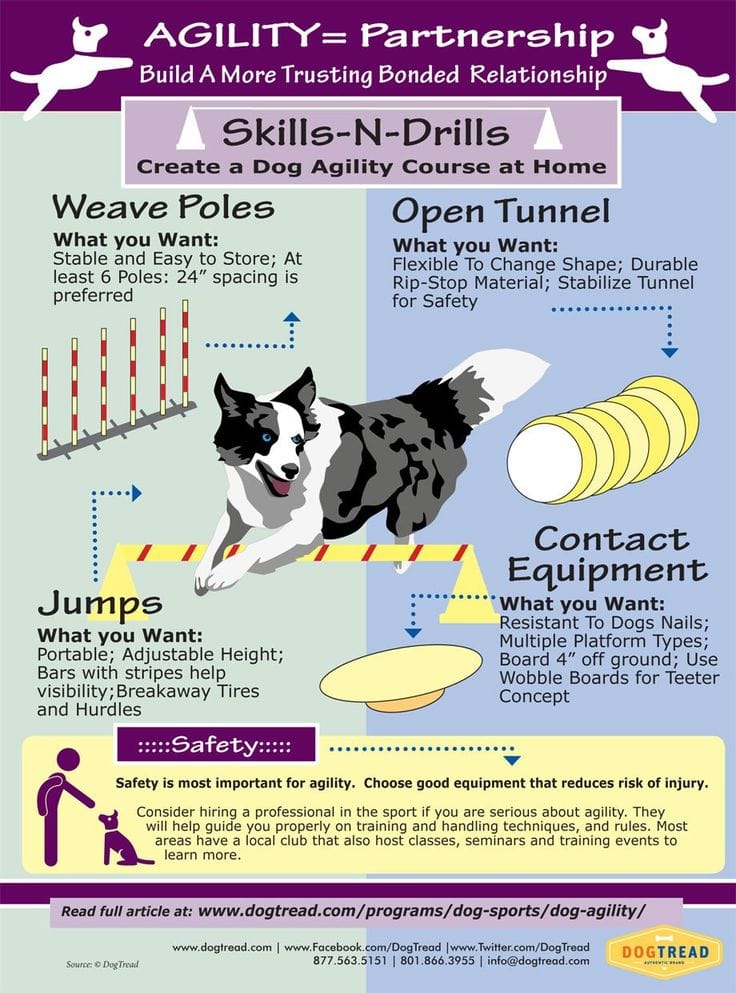
Jumps are arguably the most iconic piece of agility equipment. They come in various forms, but the basic concept remains the same: your dog leaps over a bar.
- Standard Bar Jumps: These are the most common, featuring two upright poles and an adjustable bar. They can be simple single bars or X-frames.
- Tire Jumps: A hoop (often a tire or plastic ring) suspended in a frame, requiring the dog to jump through it.
- Mini Jumps: Lower, more portable jumps suitable for very young puppies or small breeds to begin training.
When choosing jumps, look for sturdy bases that won’t tip over, adjustable bar heights, and safety features like breakaway bars or collars to minimize injury if a dog misjudges a jump. The ability to adjust the height is key, allowing you to gradually increase the challenge as your dog gains confidence and skill. This is crucial for dogs new to the sport, ensuring they build confidence rather than fear. For instance, starting with a low bar or even just the uprights can help a dog understand the concept of going over something.
2. Tunnels
Tunnels add an element of exploration and speed. Dogs love the feeling of running through enclosed spaces.
- Straight Tunnels: Simple, open-ended tubes.
- Chute Tunnels (Collapsible Tunnels): One end is open, while the other is a collapsed fabric chute that the dog bursts through. This adds an element of surprise and requires a different kind of bravery.
Tunnels should be made of durable, weather-resistant fabric and have a supportive frame or rings to keep them open. Ensure the diameter is large enough for your dog to pass through comfortably without feeling cramped. Starting with a shorter, straight tunnel is often recommended before introducing curves or the more challenging chute tunnels. The sound and feel of running through a tunnel can be initially startling for some dogs, so positive reinforcement is key during this stage of training.
3. Weave Poles
Weaving through a series of poles is a signature agility maneuver that demands focus, coordination, and precise footwork. This is often considered one of the more challenging obstacles to teach.
- Traditional 2×2 Weaves: Poles are spaced at a fixed distance, and the dog must weave in and out.
- Adjustable Weaves: Poles can be set at varying distances, allowing for gradual training from a wide spacing to the standard competition width.
- 20/20 Weaves: A training method where poles are initially set very wide and gradually brought closer together.
The poles themselves should be sturdy and smooth to avoid snagging fur. Many trainers recommend starting with channel weaves (poles set in a U-shape or channel) or 20/20 methods before moving to standard upright poles, as these methods help the dog understand the correct path more intuitively. Patience and consistency are paramount when teaching weaves.
4. Contact Obstacles
These obstacles require dogs to perform a specific “contact zone” behavior, typically touching their paws to a designated colored area at the base of the obstacle. This is crucial for safety and competitive success.
- A-Frame: Two ramps joined at the top, forming an “A” shape, with the dog ascending one side and descending the other. The contact zones are clearly marked at the bottom of each ramp.
- Dog Walk: A raised platform with ramps on either side. Dogs walk across the top plank and must touch the contact zones on the ramps.
- See-Saw (Teeter-Totter): A long plank balanced on a central pivot. The dog must walk across, causing the plank to tilt, and land safely on the other side, hitting the contact zone. This obstacle requires significant trust and confidence from the dog.
When selecting contact obstacles, ensure they are stable, have non-slip surfaces, and clearly marked contact zones. The height and length should be appropriate for your dog’s size. Training on contact obstacles requires a strong foundation of trust and positive reinforcement, especially for the see-saw, which can be intimidating due to its movement.
Choosing the Right Agility Training Equipment for Your Dog
Selecting the best agility training equipment for dogs involves considering several factors:
1. Your Dog’s Breed, Size, and Age
- Puppies: Start with low, basic obstacles like mini-jumps or very short tunnels. Focus on positive association and building confidence. Avoid high-impact activities or equipment that requires significant strength until they are physically mature. how much does dog obedience training cost can offer insights into foundational training costs.
- Small Breeds: Equipment scaled to their size is essential. Low-profile jumps and appropriately sized tunnels prevent strain.
- Large Breeds: Ensure equipment is robust and tall enough. Proper technique is vital to prevent joint issues. Consider that for some breeds, intensive agility might need careful consideration regarding long-term joint health.
- Senior Dogs: Adapt training to their physical condition. Lower jumps, shorter sessions, and gentler contact obstacles are recommended.
2. Your Training Goals
- Casual Fun: A few basic jumps and tunnels might suffice for backyard play.
- Competitive Agility: You’ll need a full set of regulation-sized equipment. Investing in durable, competition-grade gear is a wise choice. This is where understanding resources like berks dog training club can be helpful for local training insights.
- Confidence Building: Focus on obstacles your dog finds easier first, gradually introducing more challenging ones. Positive experiences are paramount.
3. Space and Budget
Agility equipment can range from affordable DIY projects to expensive professional sets.
- Backyard Training: Consider collapsible or modular equipment that can be easily stored.
- Indoor Training: Look for lighter-weight or softer options if space is limited.
- Budget Options: Many excellent resources exist for building your own equipment or finding used gear.
Safety First: Using Agility Equipment Responsibly
Proper use of agility training equipment for dogs is non-negotiable.
- Warm-up: Always begin training sessions with a gentle warm-up for your dog, including light cardio and stretching.
- Cool-down: End with a cool-down period and some gentle stretches.
- Supervision: Never leave your dog unattended with agility equipment.
- Proper Technique: Learn the correct way to handle each obstacle and guide your dog. Incorrect technique can lead to injury. If you’re considering intensive training, a dog training day camp might provide structured learning.
- Environment: Ensure the training area is free of hazards, and the ground is not slippery, especially for contact obstacles.
- Listen to Your Dog: Watch for signs of fatigue, stress, or pain. If your dog is reluctant or showing discomfort, reassess the training approach or take a break.
Beyond the Basics: Advanced and Specialty Equipment
Once you and your dog have mastered the fundamentals, you might explore more advanced options:
- Jumps with Spreads: Require dogs to jump both vertically and horizontally.
- Paw Pods: Small, individual platforms of varying heights that dogs step on.
- Rings: Similar to tire jumps but often use a solid ring.
- Wall Jumps: Mimic a solid wall that the dog must jump over.
For those seeking specialized training locations, resources like dog training jeffersonville indiana or dog training flower mound can point you towards facilities equipped for various canine activities.
The Story Continues: Your Agility Journey
Investing in agility training equipment for dogs is an investment in your dog’s physical health, mental acuity, and your shared bond. It’s a journey filled with leaps, bounds, and a whole lot of tail wags. Remember to prioritize safety, celebrate every small victory, and most importantly, have fun. The story of your dog’s agility adventure is one you’ll both cherish for years to come.
