
Embarking on the journey of agility training with your canine companion can be an incredibly rewarding experience, forging a deeper bond and showcasing your dog’s natural athleticism. Whether you’re aiming for competitive success or simply seeking a fun, engaging activity to boost your dog’s confidence and obedience, the right equipment is paramount. This guide delves into the essential Agility Dog Training Equipment that will help you and your furry athlete navigate the course with confidence and joy. From the foundational elements to more advanced tools, we’ll explore what you need to set up a safe and stimulating training environment.
The Foundation of Agility: Understanding the Basics
Agility training is a canine sport that requires dogs to navigate an obstacle course in a set order and time. It’s not just about speed; it’s about precision, communication between dog and handler, and building a strong partnership. Before investing in specialized equipment, it’s crucial to understand the core principles: positive reinforcement, clear communication, and prioritizing your dog’s safety and well-being. The goal is to make training a fun and enriching experience for both ends of the leash.
Building a Safe Training Space
Safety is the non-negotiable cornerstone of any dog training endeavor, especially agility. This means ensuring the equipment is stable, appropriately sized for your dog, and free from hazards. For dogs just starting out, a gentle introduction to each obstacle is key. Avoid forcing them and instead use positive reinforcement, such as treats and praise, to build their confidence.
Essential Agility Dog Training Equipment
Setting up an agility course, whether in your backyard or at a dedicated training facility, requires a thoughtful selection of obstacles. Each piece of equipment is designed to challenge your dog in different ways, testing their coordination, speed, and ability to follow your commands.
Jumps: Clearing Heights with Confidence
Jumps are a staple in agility courses. They come in various forms, from simple bar jumps to more complex wing jumps. When selecting jumps, consider the following:
- Adjustable Height: This is crucial for accommodating dogs of different breeds and sizes, as well as for gradually increasing the challenge as your dog progresses. Look for equipment that allows for easy height adjustments.
- Safety Bars: Jumps designed with safety in mind often feature breakaway bars or tops that dislodge easily if a dog hits them. This significantly reduces the risk of injury.
- Stability: The jump standards should be sturdy and well-weighted to prevent tipping, especially when a dog is running at speed.
When introducing jumps, start with the bar set very low to the ground, or even removed entirely, allowing your dog to get comfortable with the concept of running through or over the jump’s frame. Gradually raise the bar as your dog gains confidence and proficiency.
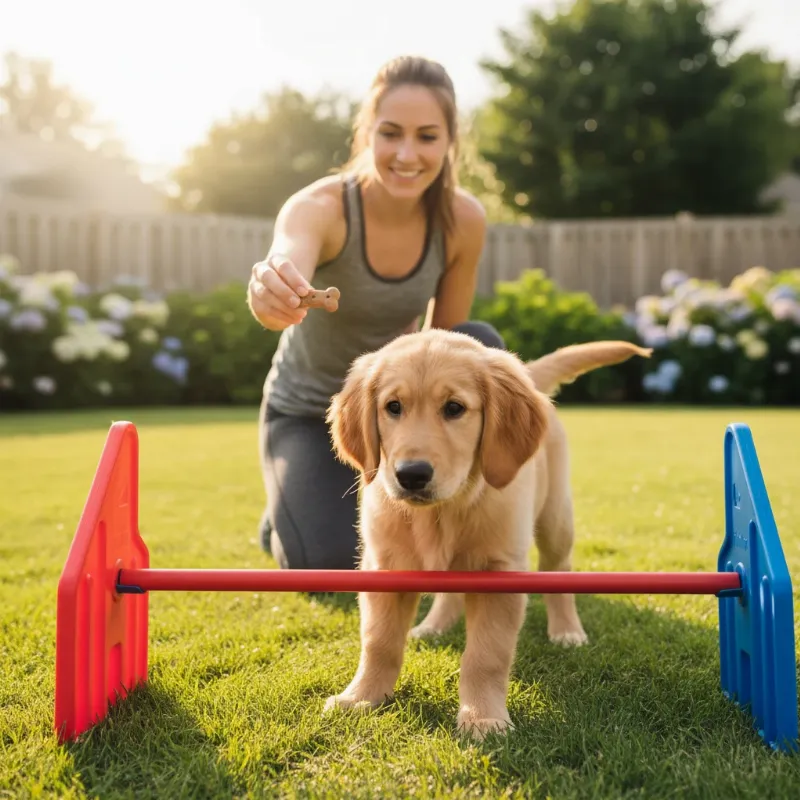 Adjustable dog agility jump with a blurred background, showcasing its safety features and suitability for training.
Tunnels: Navigating the Cozy Passage
Tunnels add an element of exploration and fun, encouraging dogs to use their senses and follow their handler’s direction into an enclosed space.
- Collapsible Tunnels: These are highly practical for storage and transport, making them ideal for home practice or training on the go.
- Sturdy Construction: Ensure the tunnel material is durable and the openings are wide enough for your dog to pass through comfortably without scraping.
- Securing the Tunnel: Tunnels can sometimes shift or collapse unexpectedly. Using sandbags or stakes to secure the tunnel entrance and exit is essential for safety.
Start with a short, straight tunnel. Once your dog is comfortable, you can introduce longer tunnels or gentle curves. Entice your dog through with treats and praise, keeping the experience positive and exciting.
Weave Poles: The Ultimate Test of Agility
Weave poles are perhaps the most challenging obstacle for many dogs to master. They require a combination of speed, coordination, and precise directional changes.
- Number of Poles: Standard competitions often feature 12 poles, but beginners can start with 4 or 6 poles.
- Spacing: The distance between poles is critical and should be adjusted based on your dog’s size and stride. A common guideline is that the distance between the centers of two poles should be approximately 2 to 2.5 times the dog’s standing shoulder height.
- Pole Type: Poles can be rigid or flexible. Flexible poles are generally safer for beginners as they bend if hit.
There are several methods for teaching weave poles, such as the “2×2 method,” which involves training the dog on sets of two poles before gradually increasing the number. Patience and consistency are key here. Consider resources for agility training equipment dogs for a wide variety of weave pole options.
Dog Walks and A-Frames: Mastering Heights and Inclines
These ramps test a dog’s confidence on elevated surfaces and their ability to climb and descend safely.
- Adjustable Heights: Like jumps, these should have adjustable heights to suit different dogs and training levels.
- Non-Slip Surfaces: A high-traction surface is non-negotiable to prevent slips and falls.
- Contact Zones: In competition, dogs must touch specific “contact zones” on the ramp as they ascend and descend. Training involves teaching your dog to recognize and utilize these zones.
Begin with the ramps at their lowest setting and encourage your dog to walk across with the aid of treats. Gradually increase the height and introduce the concept of contact zones.
Tire Jumps: A Circular Challenge
Tire jumps offer a different kind of jumping challenge, requiring dogs to leap through a suspended tire.
- Adjustable Height and Diameter: The height of the tire and the opening size should be adjustable.
- Safety: Ensure the tire is securely mounted and doesn’t have sharp edges. The opening should be large enough for your dog to pass through easily.
Similar to bar jumps, start with the tire very low to the ground and gradually increase the height as your dog becomes more comfortable.
Enhancing Training with Additional Gear
Beyond the core obstacles, several other pieces of gear can significantly enhance your agility training sessions.
Training Treats and Pouches
High-value treats are essential motivators in dog training. Small, soft, and easily digestible treats work best. A treat pouch worn by the handler allows for quick access to rewards, keeping the training flow seamless.
Clickers or Verbal Markers
A clicker or a consistent verbal marker (like “Yes!”) signals to your dog the exact moment they have performed the desired behavior correctly. This clear communication is vital in agility, where split-second timing can make a difference.
Leashes and Collars/Harnesses
While dogs run off-leash on the agility course, a well-fitting flat collar or a comfortable harness is necessary for safely moving your dog to and from the training area. Avoid retractable leashes, as they offer less control.
Getting Started and Long-Term Success
The most crucial element in agility training is not the equipment itself, but the handler-dog relationship built upon trust and clear communication.
Gradual Progression
Always introduce new obstacles or increase difficulty gradually. Pushing your dog too hard or too fast can lead to fear, frustration, and potential injury. Celebrate small successes and keep training sessions positive and relatively short.
Consistency is Key
Regular training sessions, even short ones, are more effective than infrequent marathon sessions. Consistency helps your dog learn and retain commands and builds their confidence. For those in urban areas, finding a local dog training washington dc can provide structured classes and experienced guidance.
Safety First, Always
Inspect your equipment regularly for wear and tear. Ensure your dog is physically fit for the demands of agility training through regular veterinary check-ups. Proper warm-up and cool-down routines are also important. If you are looking for highly trained canine partners, consider options like trained personal protection dogs, though specialized training like agility is a distinct discipline.
The Joy of the Agility Journey
Agility training with your dog is more than just a sport; it’s an incredible way to deepen your connection, improve your dog’s physical and mental health, and have a lot of fun together. By investing in the right agility dog training equipment and approaching training with patience, positivity, and a focus on safety, you’ll be well on your way to conquering the agility course with your best friend. Remember that facilities like dog training long island ny or dog training springfield ma can offer excellent resources and community support for aspiring agility teams.
