
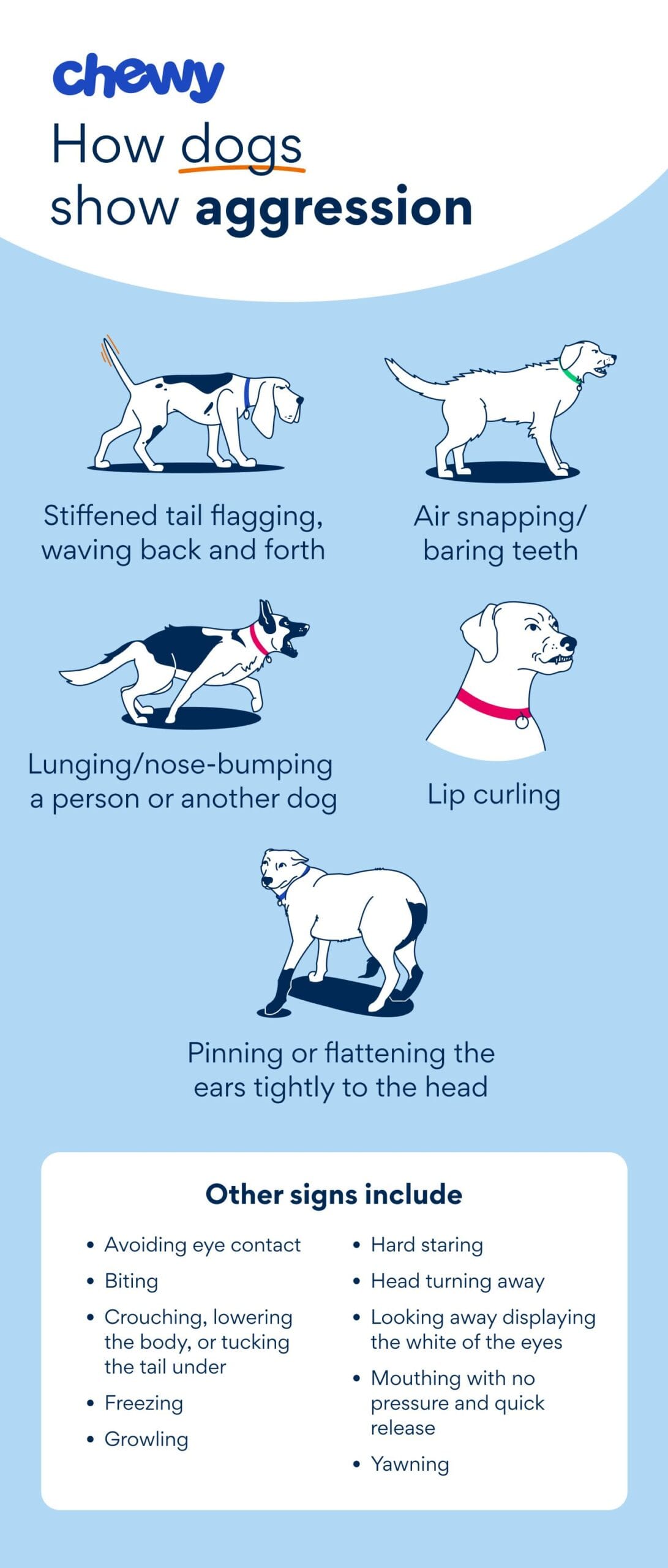
The concept of canine aggression can be a source of fear for pet parents, as it challenges the image of our dogs as solely loving companions. However, aggression is a natural communication tool in the dog world, stemming from various reasons such as pain, fear, or confusion, and it’s not always an offensive act. Understanding the different forms of dog aggression is key to finding effective solutions and ensuring your dog’s well-being.
Recognizing the Signs of Aggression in Dogs
“Aggression” is a broad term that encompasses many canine communications that humans may misunderstand. While growling and snapping are obvious signs, aggression exists on a spectrum. Subtle, early signs of discomfort are often missed until the behavior escalates. These early indicators can include:
- Yawning
- Freezing
- Hard staring
- Lip curling
- Lip licking
- Baring teeth
- Nose bumping (a “light punch” or “almost bite”)
- Air snapping
- Growling
- Lunging
- Mouthing with no pressure and quick release
- Biting with enough pressure to cause bruising or torn skin
Breed-Specific Aggression: Fact vs. Fiction
The media often perpetuates the idea that certain breeds are inherently aggressive. However, “aggressive” is a loose description of behaviors that cannot be applied universally to specific breeds. While some breeds may be perceived as more aggressive due to their physical characteristics and potential to inflict injury, there is no such thing as an inherently aggressive breed nature.
Aggressive behaviors develop from a combination of factors:
- Genetics: A mother dog who is shy or fear-aggressive may produce puppies with similar tendencies.
- Development: A dog raised in a deprived environment might exhibit resource-guarding behaviors.
- Trauma: Past abuse, such as being kicked, can lead to reactive behaviors towards feet.
Because aggression is a response to various scenarios, it cannot be solely attributed to a breed type.
Common Types of Dog Aggression
Understanding the specific type of aggression is crucial for effective intervention. Common forms include:
- Leash Aggression: Reacting to stimuli like other dogs, people, cars, or bikes while on a leash.
- Barrier Aggression: Barking and lunging at stimuli when behind a fence.
- Fear Aggression: Escalated aggressive behaviors when a nervous dog’s subtle attempts to increase distance are ignored.
- Pain-Based Aggression: A rapid reaction involving barking, snapping, or biting in anticipation of or response to touch.
- Redirected Aggression: A dog unable to direct their arousal towards a target (e.g., a squirrel) may lash out at a nearby person or another dog.
- Possession Aggression (Resource Guarding): Guarding valued items, from food bowls to garbage, when approached.
- Territorial Aggression: Reacting when their perceived living space is threatened.
- Dog-Dog Aggression: Aggressive reactions toward other dogs, whether familiar or unfamiliar.
- Dog-Human Aggression: Aggressive reactions toward people, which can stem from fear, pain, or redirection.
Understanding Sudden Aggression
A sudden onset of aggression in a dog warrants an immediate veterinary visit, as pain can be a contributing factor. Changes in environment or routine, such as new people in the house or nearby construction, can also trigger aggressive responses. However, what appears as “sudden” aggression may be the result of unnoticed, subtle warning signals. Dogs may escalate their behavior when their early indicators of stress are not recognized. For instance, subtle resource guarding behaviors might go unnoticed until the dog resorts to more overt actions like lunging and barking.
How to Calm an Aggressive Dog
When dealing with an aggressive dog, it is vital not to respond with further aggression or punishment. Aggression is a form of communication. While the method may be undesirable, understanding the underlying message is key to addressing the root cause. Punishing a dog through corrections, yelling, or physical discipline may suppress the immediate reaction but will not alter the emotional drive behind the behavior.
Punishing a dog’s warning signals, such as a growl, can teach them to skip this communication, potentially leading to more dangerous reactions like biting without prior warning. To effectively calm an aggressive dog, a comprehensive understanding of the behavior is necessary, including its frequency, duration, and targets.
Strategies to Stop Dog Aggression
Preventing aggression involves thorough, dog-centric socialization and consistent training throughout a dog’s life. However, some forms of aggression can develop despite these efforts. Seeking guidance from a qualified, positive reinforcement trainer is the most effective approach. They can help create a behavioral modification plan tailored to your dog’s specific triggers and situation.
Management techniques, such as temporarily removing your dog from stressful situations, may be recommended. Training protocols like desensitization and counterconditioning can also be beneficial. In some cases, veterinary intervention and anti-anxiety medication may be necessary to manage aggression.
Aggression can be a defensive or offensive reaction. By identifying the core reason for aggressive responses and implementing the correct strategy, harmony can be restored to your household.
References:
- Original Article Content
