
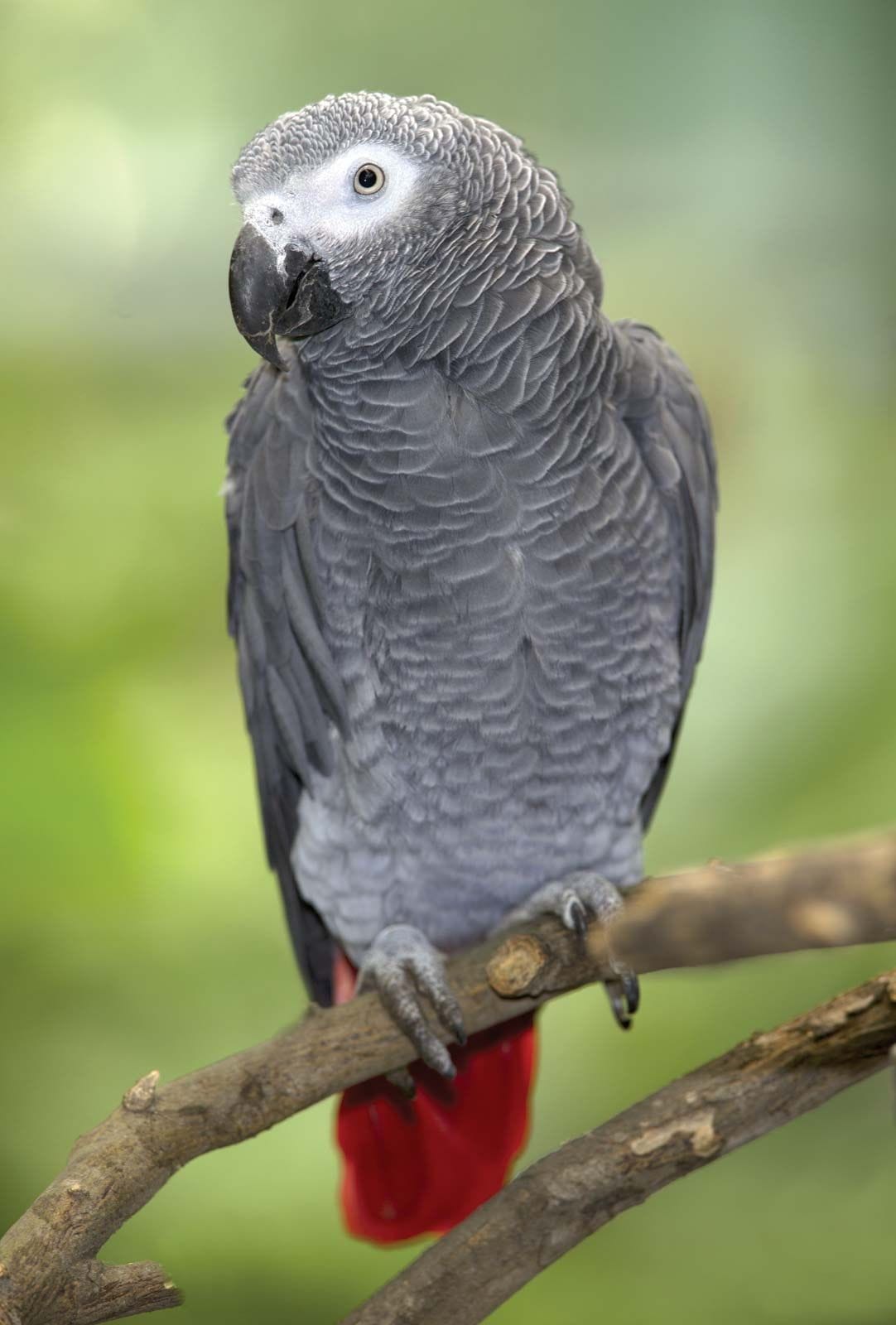
The African Grey parrot, particularly the Congo African Grey, is one of the most popular pet parrot species, yet it remains one of the most misunderstood. With a history stretching back to biblical times, these birds are known for their intelligence and remarkable talking ability. This article delves into the intricacies of African Grey parrot behavior, care, and the unique qualities that make them such beloved companions.
The Author’s Experience with Greys
My personal journey with African Greys spans nearly three decades, encompassing breeding, training for free flight, rehabilitation, and behavior consultation. I’ve dedicated significant time to understanding these birds, publishing information about them since 1998. Currently, I share my home with six African Greys – three males and three females.
Timneh vs. Congo African Greys
Historically, the Timneh and Congo Greys were considered subspecies of Psittacus erithacus. However, in 2012, they were officially designated as two separate species. While some sources still reflect the older classification, personal experience and observed behavioral differences strongly suggest they are not alike. Timneh Greys exhibit behaviors more akin to Poicephalus parrots, contrasting with the distinct nature of the Congo Grey.
Natural Habitat and Social Structure
African Greys are native to the equatorial region of Africa, inhabiting dense rainforests, forest edges, clearings, gallery forests, and mangroves. They are also found in cultivated areas and gardens, often roosting in tall trees near water. Unlike many New World parrot species, Greys are highly social, congregating in large communal roosts of up to 10,000 individuals. Foraging expeditions involve smaller groups traveling significant distances, and while they may breed in close proximity, each pair maintains its own nest cavity.
The young fledge around 12 weeks of age and are fed by their parents for an additional four to five weeks. After becoming independent, they remain with their family groups for several years, receiving continued care and education from older flock members. In the wild, Greys are highly vocal, producing a diverse range of sounds, including mimicry, particularly at dawn and dusk. Their diet is varied, encompassing oil palm fruit, flowers, seeds, berries, tree bark, snails, insects, and occasionally carrion.
The Allure of the African Grey Parrot
Vocal Prowess
The African Grey’s exceptional talking ability is a primary reason for its popularity. Coupled with their well-documented intelligence, these traits captivate owners. Research, notably by Irene Pepperberg, has highlighted their remarkable cognitive skills. Their ability to use words in context, understand human communication, and even interact with devices like Alexa showcases their advanced cognitive functions. This propensity for vocalization is deeply rooted in their wild behavior, where constant vocal communication is essential for flock bonding.
Social Intelligence and Emotional Attunement
Beyond their vocal talents, African Greys possess discerning personalities and a keen ability to attune to their owners’ emotions and body language. This deep connection makes them less likely to be relinquished to rescue organizations. My personal observations confirm their intense focus on human activities, bordering on the uncanny, suggesting they perceive us with a clarity that reveals our true emotions. Gretel Ehrlich’s words aptly describe this: “What is obvious to an animal is not the embellishment that fattens our emotional resumes but what’s bedrock and current in us: aggression, fear, insecurity, happiness, or equanimity. Because they have the ability to read our involuntary tics and scents, we’re transparent to them and thus exposed – we’re finally ourselves.”
While often described as monogamous and forming strong pair bonds with a single human, my experience indicates these bonds can be relatively loose. Unlike species such as Amazons or cockatoos, Greys rarely exhibit aggression towards other family members.
Inter-Species and Intra-Species Relationships
African Greys generally interact best with other Old World parrots. While peaceful cohabitation with New World parrots is possible, it requires careful introductions and managing expectations, as they may not become close friends. My own Greys have shown intolerance towards Amazon parrots and have even attacked macaws, necessitating physical segregation of Old World and New World parrots in my home.
Within their own species, Greys maintain a social dynamic similar to their wild counterparts. Even when hand-raised, older Greys have shown a willingness to interact with and even care for younger birds. Introducing adult Greys to each other typically results in a period of adjustment, after which they coexist peacefully. Interestingly, male Greys often form strong bonds with each other, sometimes displaying mating rituals, and may prefer each other’s company over that of females. Scientific evidence supports the benefits of companionship, with studies indicating that Greys housed in pairs have longer telomeres than those living in isolation.
Physical Health Considerations
African Greys are susceptible to several serious health issues in captivity. Atherosclerosis, a lifestyle disease linked to diet and lack of exercise, is a significant threat. They are also prone to Vitamin A and D deficiencies, as well as hypocalcemia (low calcium levels), which can lead to neurological symptoms in adults and bone development issues in juveniles.
Seed-based diets have been implicated in these deficiencies, but the role of sunlight is also crucial. Studies suggest that exposure to UV-B light can increase serum ionized calcium levels, possibly compensating for dietary deficiencies, as wild Greys live in shaded areas with ample sunlight exposure. My own observations noted that Greys spent significantly more time sunbathing compared to New World parrots.
Feather damaging behavior is another distressing issue, often resulting from a complex interplay of factors including poor early development, lack of foraging or bathing opportunities, insufficient exercise, inadequate sunlight, limited out-of-cage time, lack of learning opportunities, over-dependence, malnutrition, and chronic stress. Addressing feather damage often requires a holistic approach that prioritizes liberty, outdoor time, and balanced social interaction.
Key Recommendations for African Grey Owners
To foster a successful and enriching life for your African Grey parrot, consider the following:
- Companionship: Consider housing more than one Grey to provide social interaction.
- Diet: Offer a high-quality pellet diet supplemented with vegetables rich in betacarotene.
- Enrichment: Provide ample foraging and learning opportunities.
- Independence: Encourage self-sufficiency and reduce over-dependence.
- Outdoor Access: Set up an outdoor aviary for sunbathing when weather permits.
- Early Rearing: If adopting a baby, prioritize parent-reared individuals or those with exposure to multiple adult Greys. Consider adopting an older bird if such a baby is unavailable.
- Flight: Avoid clipping wings if your parrot is capable of flight.
- Absences: Arrange for attentive care during your absences, avoiding caregivers who only visit once or twice daily.
- Liberty: Maximize out-of-cage time and encourage choice-making.
- Respect: Never engage in power struggles with your Grey.
Conclusion: Honoring the Complexity of the African Grey
African Greys are undeniably complex and intelligent creatures. For many who have had the privilege of sharing their lives with them, the Grey is the ultimate parrot companion. Their unique gifts are fully realized when we approach them with an exceptional level of understanding and care. Honoring their developmental timelines, supporting their physical, mental, and social growth, and respecting their sensitivities are paramount to a fulfilling relationship.
References:
Aydinonat D, Penn DJ, Smith S, Moodley Y, Hoelzl F, Knauer F, et al. (2014) Social Isolation Shortens Telomeres in African Grey Parrots (Psittacus erithacus erithacus). PLoS ONE 9(4): e93839.
Costa P, Macchi E, Valle E, De Marco M, Nucera DM, Gasco L, Schiavone A. 2016. An association between feather damaging behavior and corticosterone metabolite excretion in captive African grey parrots (Psittacus erithacus) PeerJ 4:e2462.
Griffin, Jenny (13 February 2012). “Species Spotlight on the African Grey Parrot”. Brighthub.
Holman, R. 2008. “Psittacus erithacus” (On-line), Animal Diversity Web.
Juniper, Tony and Parr, Mike. Parrots: A Guide to Parrots of the World. New Haven: Yale University Press. 1998.
Lafeber Company. 2019. African Grey Parrot.
Mikolasch, Sadra, Kotrschal, Kurt and Schloegl, Christian. African grey parrots (Psittacus erithacus) use inference by exclusion to find hidden food.
Reuell, Peter. 2017. Discerning Bird. The Harvard Gazette.
Sanford, Michael, BVSc, MRCVS. 2004. The Effects of UV-B Lighting Supplementation in African Grey Parrots. Selected Papers from the International Conference on Exotics 2004. ICE Proceedings. Exotic DVM, Vol. 6.3.
Seibold-Torres C, Owens E, Chowdhary R, Ferguson-Smith M, A, Tizard I, Raudsepp T. 2015. Comparative Cytogenetics of the Congo African Grey Parrot (Psittacus erithacus) Karger Cytogenetic and Genome Research.
Stromberg, Joseph. 2012. African Grey Parrots Have the Reasoning Skills of 3-year-olds.
Valla, Daniela. 2019. 5 Surprising Facts About African Grey Parrots.
