
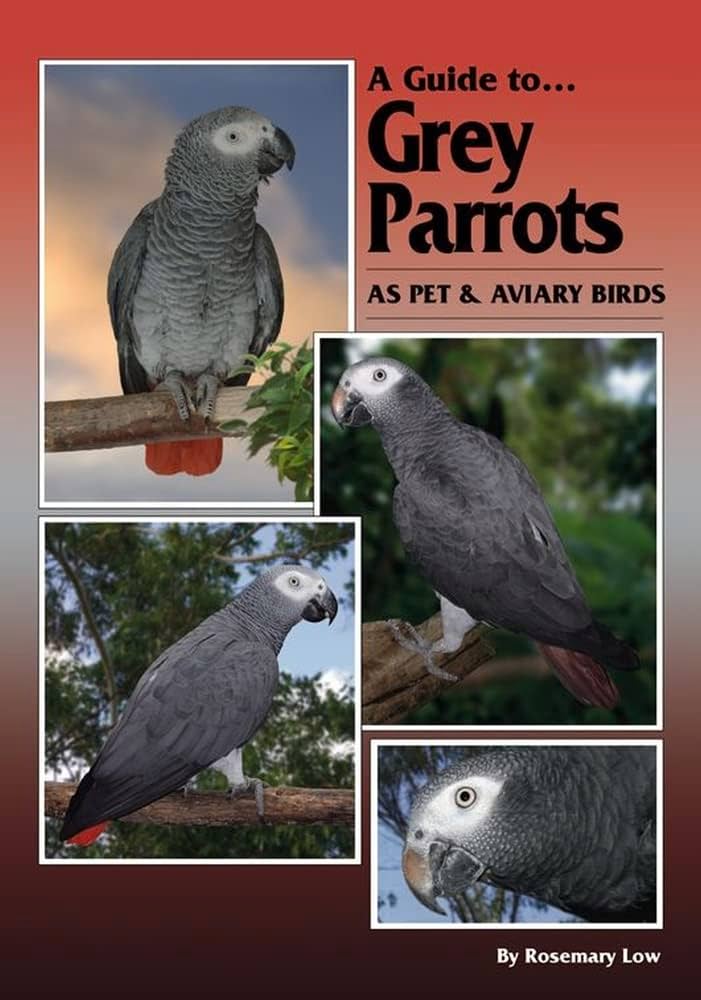
The African Grey parrot, a species with a history as a beloved companion dating back to biblical times, remains one of the most popular pet parrots globally. However, despite its long-standing presence in human homes, it is also one of the most misunderstood avian species. This article delves into the complexities of the African Grey, separating myth from reality to provide a comprehensive understanding for potential and current owners.
My Life with Greys
My personal journey with African Greys spans nearly three decades, during which I specialized in breeding them, successfully trained them for free flight, rehabilitated numerous individuals, and worked as a behavior consultant and veterinary technician. My extensive experience has been documented through publications since 1998, and I currently share my home with six African Greys – three females and three males.
Timnehs and Congos: Distinct Species
It’s crucial to distinguish between the two recognized species of African Grey parrots: the Congo African Grey (Psittacus erithacus) and the Timneh African Grey (Psittacus timneh). Previously considered subspecies, they were officially designated as separate species in 2012. My personal experience confirms significant differences in their coloring and behavior, with Timneh Greys exhibiting more similarities to Poicephalus parrots than to their Congo counterparts.
Understanding the African Grey Parrot
Habitat and Social Structure
African Greys are Old World parrots native to the equatorial regions of Africa. In the wild, they inhabit dense rainforests, forest edges, gallery forests, and mangroves, often congregating in large communal roosts of up to 10,000 individuals. Smaller flocks break off for foraging expeditions, traveling considerable distances. While hundreds of pairs may nest in a single area, each monogamous pair maintains its own nest cavity.
Development and Vocalizations
Young African Greys fledge at approximately 12 weeks old and are fed by their parents for an additional four to five weeks. They remain with their family groups for several years, receiving further care and education from older members. In the wild, Greys are highly vocal, producing a wide array of sounds, including mimicry of other animals. Their vocalizations are most frequent at dawn and dusk, both while perched and in flight.
Diet in the Wild
Wild African Greys forage in both the canopy and on the ground, consuming oil palm fruit, flowers, seeds, berries, tree bark, snails, and insects. They have also been observed feeding on carrion.
The Allure of African Greys
Exceptional Talking Ability and Intelligence
The African Grey’s popularity as a pet is largely attributed to its remarkable talking ability and intelligence. Research, including that by Irene Pepperberg, has highlighted their cognitive prowess.
Discerning Personalities and Emotional Attunement
Beyond their vocal talents, African Greys possess discerning personalities and an uncanny ability to attune to their owners’ emotions and body language. This deep connection contributes to their low relinquishment rates to rescue organizations.
Vocal Nature and Mimicry
Their inherent tendency to vocalize within large flocks in the wild translates to impressive mimicry skills in captivity. Many Greys can use human language contextually, leading to anecdotal accounts of them performing complex tasks. The pleasure they derive from vocalizing with each other, and the detailed repetition of sounds, is a testament to their innate vocal nature. However, excessive vocalization in a single-bird household may also be a reflection of isolation. Greys that are flighted and live in a multi-grey environment often rely more on natural Grey vocalizations than human speech.
Social Dynamics of African Greys
Greys and Humans
Congo Greys are known for being discerning, highly attuned to emotions and body language, and possessing a keen sense of humor. They observe their human companions intently, forming an intimate understanding of their lives. This attunement allows them to perceive our true emotional states.
Greys often form strong pair bonds with a single human, though their bonds can be relatively fluid. Unlike some other parrot species, Greys are less prone to displaying severe aggression towards other family members.
Greys and Other Bird Species
African Greys generally interact well with other Old World parrots, such as cockatoos and Eclectus parrots. However, they can exhibit intolerance towards New World parrots, necessitating physical segregation in some multi-species households. Careful introductions and managing expectations are key when housing Greys with other species.
Greys and Other Greys
African Greys tend to get along well with other Greys, a trait reflecting their social structure in the wild. In captivity, they often form strong bonds with conspecifics. Even young Greys separated from their parents often receive care and education from older Greys. My observations suggest that male Greys may form particularly close bonds with each other, sometimes exhibiting pair-bonding behaviors. Scientific evidence indicates that social isolation can negatively impact telomere length in Greys, suggesting that housing them in pairs may be beneficial for their long-term health.
Physical Considerations for African Greys
Captive Health Concerns
African Greys are susceptible to several health issues in captivity. Atherosclerosis, a lifestyle-related disease linked to diet and lack of exercise, is a significant threat. They are also prone to vitamin A and D deficiencies, and hypocalcemia (low calcium levels), which can lead to neurological issues and bone development problems.
Nutritional and Environmental Needs
Seed-based diets have been implicated in health problems, but environmental factors also play a role. Studies suggest that exposure to UV-B light may be crucial for adequate vitamin D production and calcium absorption. Wild Greys often spend prolonged periods in direct sunlight, and their captive counterparts may benefit from similar exposure. My observations indicate that Greys actively seek out sunbathing opportunities.
Feather Damaging Behavior
Feather damaging behavior is a complex issue in African Greys, often resulting from a combination of factors including poor early development, lack of environmental enrichment (foraging, bathing), insufficient exercise, limited social interaction, and malnutrition. Chronic stress, often exacerbated by these factors, is a significant contributor. Providing opportunities for flight, outdoor time, and balanced social interaction are primary elements in addressing this behavior.
Recommendations for African Grey Owners
To foster a successful and enriching environment for an African Grey parrot, consider the following:
- Companionship: Consider housing more than one Grey to provide social interaction.
- Diet: Offer a high-quality pellet diet supplemented with plenty of dark green and colorful vegetables rich in betacarotene.
- Enrichment: Provide ample foraging and learning opportunities. Encourage independence and problem-solving.
- Environment: Set up an outdoor aviary to allow for sunbathing when weather permits.
- Early Rearing: If acquiring a baby, seek one that has been parent-reared or has had exposure to multiple adult Greys. Alternatively, consider adopting an older bird.
- Flight: Avoid clipping wings if flight capability is present.
- Absences: Arrange care for absences carefully, ensuring a caregiver provides sufficient interaction.
- Liberty: Maximize time out of the cage and encourage choice-making.
- Relationship: Avoid power struggles; focus on positive reinforcement and building trust.
Final Thoughts on African Greys
African Greys are complex and rewarding companions. Their intelligence, vocal abilities, and capacity for deep connection make them exceptional pets for those willing to invest the time and understanding they require. Honoring their innate developmental timetables, allowing for physical, mental, and social growth, and respecting their sensitivities are paramount to a harmonious relationship.
References:
Pamela Clark. My Life with Greys.
Seibold-Torres C, Owens E, Chowdhary R, Ferguson-Smith M, A, Tizard I, Raudsepp T. 2015. Comparative Cytogenetics of the Congo African Grey Parrot (Psittacus erithacus). Karger Cytogenetic and Genome Research. 147:144-153.
Holman, R. 2008. “Psittacus erithacus” (On-line), Animal Diversity Web.
Valla, Daniela. 2019. 5 Surprising Facts About African Grey Parrots.
Juniper, Tony and Parr, Mike. Parrots: A Guide to Parrots of the World. 1998.
Stromberg, Joseph. 2012. African Grey Parrots Have the Reasoning Skills of 3-year-olds.
Reuell, Peter. 2017. Discerning Bird. The Harvard Gazette.
Lafeber Company. 2019. African Grey Parrot.
Pamela Clark. The Deliberations: Their Vocal Nature.
Gretel Ehrlich.
Pamela Clark. The Deliberations: Their Social Nature.
Pamela Clark. The Deliberations: Greys and Us.
Pamela Clark. The Deliberations: Greys and Other Species.
Pamela Clark. The Deliberations: Greys and Other Greys.
Aydinonat D, Penn DJ, Smith S, Moodley Y, Hoelzl F, Knauer F, et al. (2014) Social Isolation Shortens Telomeres in African Grey Parrots (Psittacus erithacus erithacus). PLoS ONE 9(4): e93839.
Pamela Clark. Their Physical Nature.
Sanford, Michael, BVSc, MRCVS. 2004. The Effects of UV-B Lighting Supplementation in African Grey Parrots.
Pamela Clark. Observations from Rehab Period.
Pamela Clark. Feather Damaging Behavior.
Costa P, Macchi E, Valle E, De Marco M, Nucera DM, Gasco L, Schiavone A. 2016. An association between feather damaging behavior and corticosterone metabolite excretion in captive African grey parrots (Psittacus erithacus). PeerJ 4:e2462.
Pamela Clark. My Grey Conclusions.
