
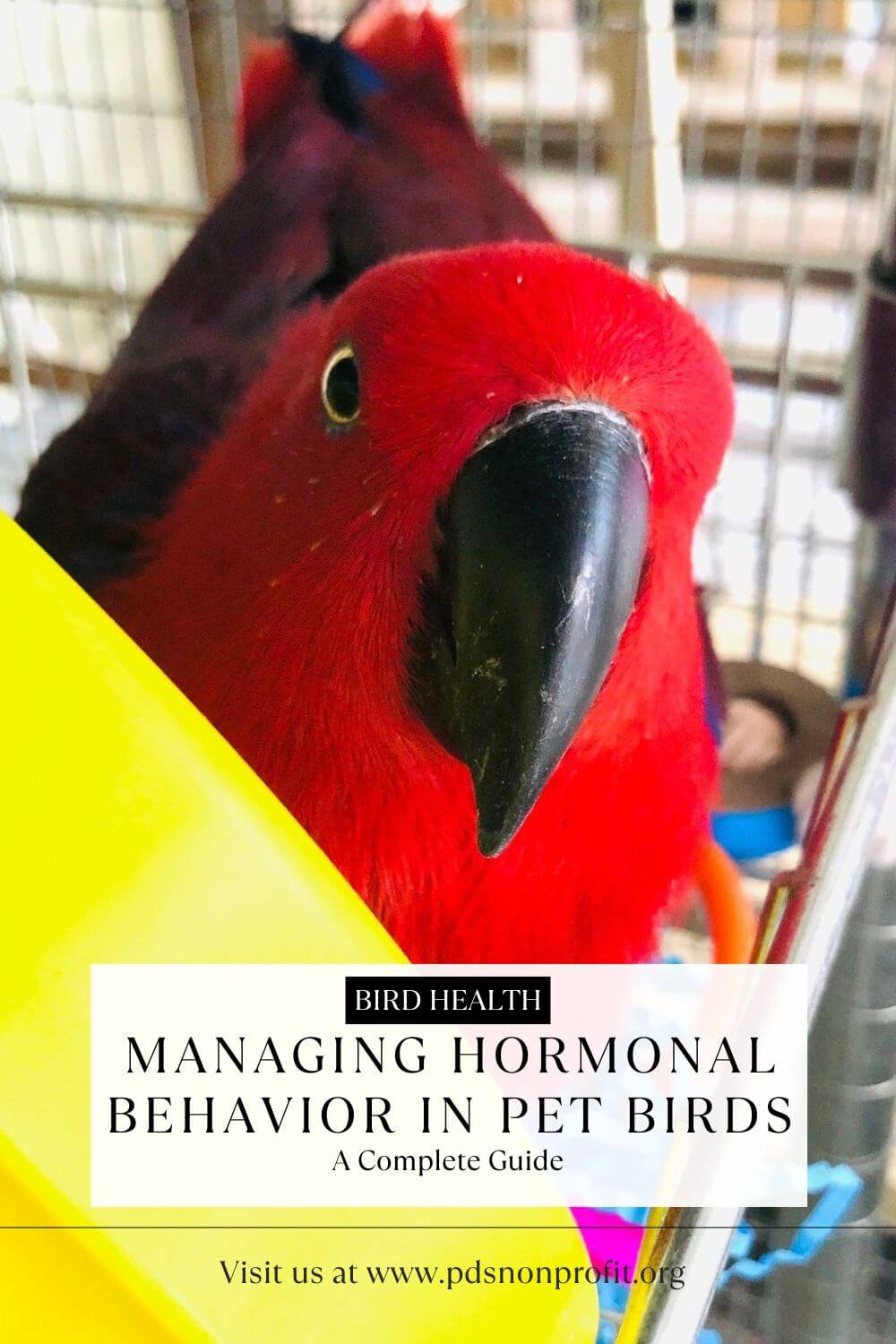
As a devoted pet bird owner, you might notice your feathered friend exhibiting changes in behavior, particularly around certain times of the year. These shifts are often linked to hormonal fluctuations, a natural part of a bird’s life cycle. This guide will delve into understanding and managing these hormonal behaviors, ensuring a harmonious relationship with your avian companion.
Understanding Hormonal Behavior in Birds
Pet birds experience hormonal cycles at least once a year, with these phases typically being temporary. However, for young birds, especially those bred in captivity, sexual maturity can be reached at an earlier age than in their wild counterparts. While physically ready, they may not possess the mental maturity to handle the complexities of breeding, including caring for a mate, eggs, or chicks. African Greys, for instance, are notoriously difficult to breed even under ideal conditions. Introducing an immature bird to breeding can lead to negative outcomes, such as a lack of interest, abandonment of eggs, or an inability to care for young. Both parents are crucial in incubating eggs and feeding chicks, a responsibility a hormonally-driven young bird may not be prepared for.
If your bird is a beloved pet you interact with regularly, introducing a new bird for breeding purposes can fundamentally alter your relationship. Once bonded, both birds may become territorial and aggressive, resorting to biting to protect their nesting area. This necessitates significant adjustments to your living space and equipment. A large breeding cage is essential, along with an externally affixed nest box. The sheer size and weight of the nest box require a robust cage to provide adequate room for courtship and mating. Furthermore, if the male is not receptive enough, the female may become aggressive towards him. Breeding birds is a complex endeavor that extends beyond simply housing a male and female together; it requires a deep understanding of avian social dynamics and reproductive behaviors.
A specialized diet is also critical for breeding pairs, consisting of a nutritionally balanced staple, such as pellets, supplemented with fruits, vegetables, multi-grain bread, and cooked eggs. The eggshells should be thoroughly washed, then cooked with the egg to provide essential calcium. Prospective breeders must also be prepared for hand-feeding chicks in case the parent birds fail to do so. It’s important to remember that successful breeding is not guaranteed and depends heavily on the birds’ compatibility and readiness.
Managing Hormonal Triggers in Pet Birds
If your primary goal is to maintain your bird as a pet, there are several effective strategies to reduce and manage hormonal behavior:
- Modify petting practices: When interacting with your bird, restrict physical contact to the head and neck. Petting on the body can be a significant hormonal trigger, as only a bonded mate is typically allowed to groom a bird’s body.
- Limit nesting materials and enclosed spaces: Avoid providing materials that encourage nesting or allow your bird to confine itself. This includes avoiding bird tents, boxes, or similar structures.
- Adjust feeding routines: During breeding season, which often coincides with warmer weather and longer days, consider reducing or temporarily stopping the offering of fresh foods. This can help in managing their hormonal drive.
Further Resources on Hormonal Bird Behavior
For those seeking more in-depth information, Lafeber recently hosted two valuable webinars addressing hormonal behavior in pet birds:
- “Spring Is In the Air: How To Deal With Your Pet Bird’s Hormonal Behavior!”
- “Pet Birds & Hormonal Behavior: Part 2!”
These resources offer expert insights and practical advice for navigating this common aspect of bird ownership.
Conclusion
Understanding and managing hormonal behavior in pet birds is key to a thriving and happy relationship. By recognizing the triggers, adjusting your interactions, and providing appropriate environmental cues, you can help your bird navigate these natural cycles with greater ease.
References:
Lafeber. “Webinar: Spring Is In the Air: How To Deal With Your Pet Bird’s Hormonal Behavior!”. https://lafeber.com/pet-birds/webinar-spring-is-in-the-air-how-to-deal-with-your-pet-birds-hormonal-behavior/
Lafeber. “Webinar: Pet Birds & Hormonal Behavior: Part 2!”. https://lafeber.com/pet-birds/webinar-pet-birds-hormonal-behavior-part-2/
