
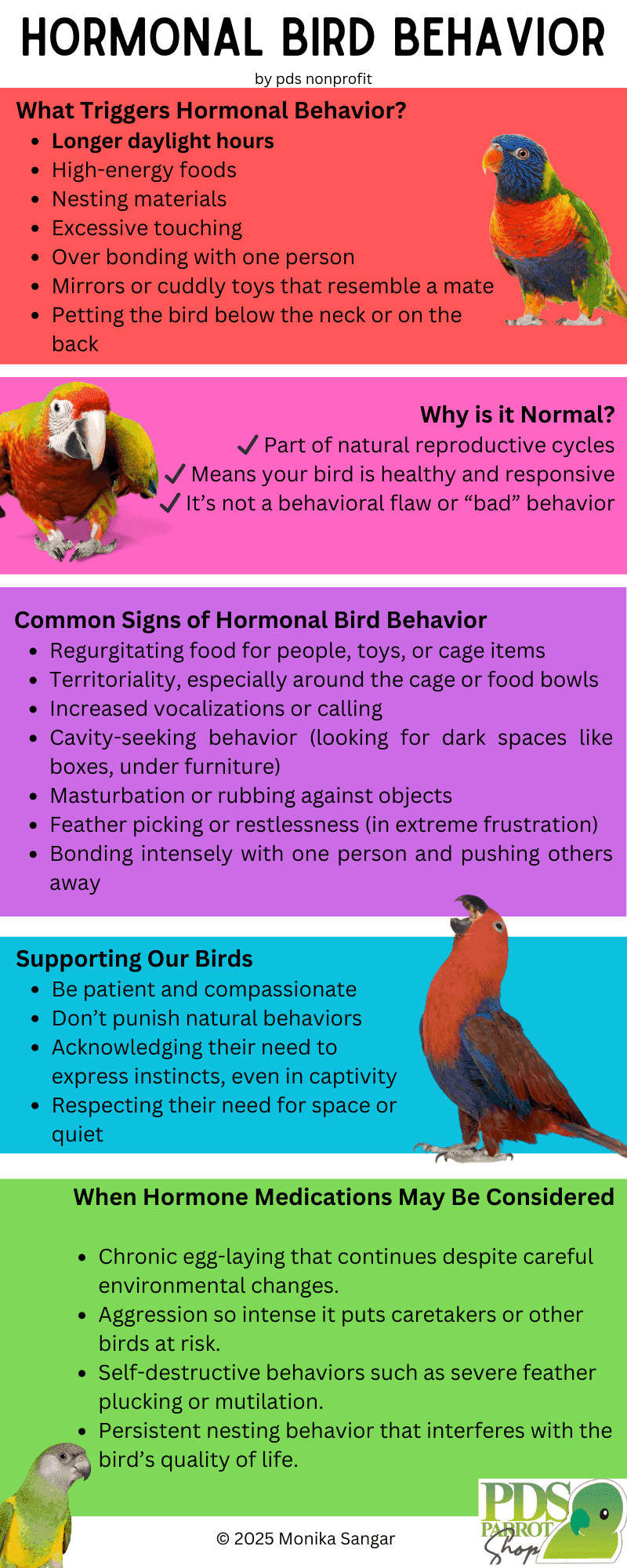
Hormonal behavior in pet parrots is a common concern for owners, often stemming from a misunderstanding of their natural cycles and the impact of a captive environment. Unlike their wild counterparts, which experience distinct breeding seasons, pet parrots are exposed to constant warmth and abundant food year-round, leading to a perpetual hormonal state. This can manifest in various behavioral and health issues, underscoring the importance of managing these cycles for a parrot’s well-being. This article aims to provide a comprehensive understanding of hormonal behavior in parrots and offer practical strategies for owners.
The Impact of Hormones on Parrot Behavior and Health
In the wild, parrots typically have one breeding season per year. This seasonal trigger initiates hormonal changes, leading to breeding, chick-rearing, and subsequent rest periods. In captivity, the absence of distinct seasons, coupled with consistent environmental conditions and readily available food, can disrupt these natural cycles. Furthermore, the presence of nesting materials or inappropriate physical contact, such as petting certain areas of the body, can signal to the parrot that it is time to mate. This can lead to a chronic hormonal state, which is not normal or healthy for the bird.
Behavioral Manifestations
Chronic hormonal states can lead to a range of behavioral changes in parrots. Male birds may become aggressive and territorial, making them difficult to handle. Larger parrot species can even pose a danger to their owners. Both male and female parrots can experience significant frustration due to their constant hormonal state. This frustration can manifest as feather plucking, where birds compulsively pull out their own feathers, or in some females, self-inflicted wounds on their bodies, possibly due to ovarian discomfort.
Health Complications
Beyond behavioral issues, prolonged hormonal activity can lead to serious health problems, particularly in female parrots. Chronic egg-laying, a common consequence, can be life-threatening if not managed properly. Unlike domesticated fowl bred for egg production, wild parrots are not physiologically adapted for year-round egg-laying. This can result in depleted health, egg binding (where an egg gets stuck), the laying of soft-shelled eggs, or cloacal prolapse. The strain on their system can ultimately be fatal. Male birds can also suffer from cloacal prolapse, often caused by excessive masturbation or straining to defecate. This condition can become permanent, requiring lifelong veterinary care. Many parrots end up in rescue organizations due to unpredictable or anti-social behaviors stemming from hormonal imbalances. While some owners may tolerate territorial behavior around specific objects, allowing this year-round can contribute to frustration and the aforementioned health and behavioral issues.
Managing Hormonal Behavior in Pet Parrots
Responsible management of hormonal behavior is crucial for the mental and physical health of pet parrots. Instead of viewing it as an inconvenience, owners should prioritize addressing the underlying causes.
Mimicking Natural Cycles
One effective strategy is to mimic the natural breeding and non-breeding cycles of wild parrots. This involves allowing hormonal behaviors, such as shredding materials for nesting, for a limited period of 4-6 weeks. After this period, owners should redirect the parrot’s attention to other activities for several months, such as foraging exercises or training. This cyclical approach helps prevent a constant state of hormonal arousal. For captive breeding pairs, responsible breeders often remove nest boxes between clutches to ensure a rest period of approximately six months, limiting them to a maximum of two clutches per year. This practice highlights the importance of controlled breeding cycles for avian health.
Diet and Nutrition
A balanced diet plays a vital role in managing hormonal behavior. Approximately 80% of a parrot’s diet should consist of a nutritionally balanced daily food source, such as pellets or specialized foraging diets. The remaining 20% can include fruits, vegetables, greens, and healthy table foods. Parrots are less likely to overeat when their nutritional needs are met. Issues arise when the nutritional value of their diet is diluted by excessive treats or loose seeds. Therefore, as long as owners are mindful of these high-calorie offerings, they do not need to strictly limit or measure the amount of their nutritionally balanced daily diet.
Environmental Enrichment
Providing a stimulating environment through foraging activities and training can help redirect a parrot’s energy and focus away from hormonal behaviors. Engaging their minds and bodies with these activities can reduce frustration and promote overall well-being.
Conclusion and Call to Action
Understanding and managing hormonal behavior in pet parrots is essential for their long-term health and happiness. By recognizing the signs, addressing the underlying causes, and implementing appropriate management strategies, owners can help their avian companions lead healthier, more balanced lives. This includes mimicking natural cycles, providing a species-appropriate diet, and offering consistent environmental enrichment. If you are experiencing significant challenges with your parrot’s behavior, consulting with a veterinarian or avian behavior specialist is highly recommended. For more insights into parrot care and behavior, explore our other resources on avian health and well-being.
