
The rich tapestry of American equestrian history is often painted with a single brush, depicting a world of Kentucky derbies and sprawling westerns that omits a crucial thread. The often untold African American Horse Stories reveal a profound, complex, and enduring relationship between Black people and horses, a legacy forged in bondage, honed on the racetrack, and tested on the rugged trails of the American West. This narrative is not a footnote; it is a foundational chapter of America’s history, demonstrating resilience, extraordinary skill, and an unbreakable spirit that has shaped the equestrian world in ways that are only now being fully recognized. From the anonymous enslaved grooms who were the first expert horsemen of the South to the celebrated jockeys who dominated the nation’s most prestigious races, their contributions have been immense, yet frequently overlooked.
This exploration seeks to reclaim that history, to shine a light on the Black horsemen and women whose skill, dedication, and love for these magnificent animals left an indelible mark. It’s a journey back in time to understand how this deep connection was formed and how it continues to evolve today, inspiring a new generation of equestrians to take up the reins.
The Unseen Foundation: Black Horsemen in Early America
Long before the founding of the United States, the expertise of African and African American horsemen was the bedrock of the southern colonies’ agrarian economy. On plantations, enslaved individuals were tasked with every aspect of equine care. They were the breeders, the trainers, the farriers, and the carriage drivers. This was not merely labor; it was a field of immense knowledge and skill, often passed down through generations.
These men developed an intuitive understanding of equine health, behavior, and genetics. Plantation owners relied heavily on this expertise to manage their most valuable assets—the horses used for transportation, farm work, and the burgeoning sport of horse racing. An enslaved man who could calm a nervous stallion or heal a sick mare was invaluable. This role, while born of oppression, fostered a unique and deep-seated bond. The stables became a place where Black men could exercise a degree of autonomy and command respect for their unparalleled abilities, creating the first chapter in the long history of African American horse stories.
The Expertise Behind the Scenes
The horsemanship of enslaved individuals was not accidental. Many Africans brought to America, particularly from regions like Senegambia, already possessed a rich equestrian heritage. This cultural knowledge was adapted to their new, brutal environment. They were the first true horse whisperers of the South, developing training methods based on patience and understanding rather than force.
“To understand American horse culture, you must start on the plantations,” explains Dr. Eleanor Vance, a historian specializing in colonial agriculture. “The entire system—from breeding for speed and stamina to daily care—was managed by enslaved African Americans. They were the nation’s first professional horsemen, even if they were never given the title or the freedom.”
This mastery laid the groundwork for the sport of kings in America. The very horses that would later thunder down the tracks at Churchill Downs were often bred, raised, and trained by these uncredited experts.
Riding for Glory: The Reign of Black Jockeys
In the post-Civil War era, horse racing exploded in popularity, becoming America’s most-watched sport. And for a time, it was a sport dominated by Black athletes. The nation’s first celebrity sports figures were not baseball players or boxers, but African American jockeys. Having grown up in the stables, they possessed a natural advantage, combining a lightweight physique with a fearless riding style and an intimate knowledge of their mounts.
This was their stage, and they were masterful performers. In the very first Kentucky Derby in 1875, 13 of the 15 jockeys were Black, including the winner, Oliver Lewis, who rode a colt named Aristides to victory. This was not an anomaly; it was the norm. Black jockeys won 15 of the first 28 Kentucky Derbies.
Who was the most famous African American jockey?
Isaac Burns Murphy is widely considered the greatest jockey of his era and one of the best of all time. Born into slavery in 1861, his career was nothing short of legendary. He won the Kentucky Derby three times—a record that stood for decades. His most remarkable achievement was his incredible win rate; it is estimated that he won an astounding 44% of his races. Murphy was celebrated for his honesty, intelligence, and “magic hands” on the reins. He became a wealthy and famous figure, a symbol of Black excellence in a deeply divided America.
However, the golden era for Black jockeys was short-lived. As the purses grew and the sport became more lucrative, systemic racism began to push them out. The rise of Jim Crow laws, coupled with intimidation and collusion from white jockeys and owners, created a hostile environment. By the early 1900s, African American jockeys had all but vanished from the nation’s premier tracks, their legacy nearly erased from the sport they helped build.
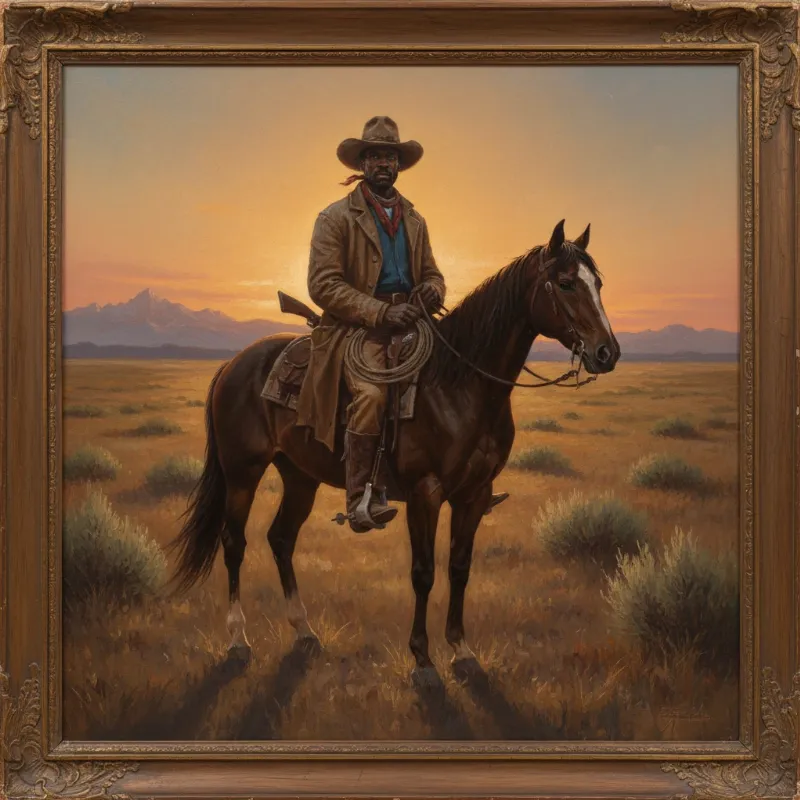 An alt-text for an image about African American horse stories, featuring a black cowboy.
Beyond the Myth: The Truth of the Black Cowboy
The iconic image of the American cowboy—a lone, white hero riding across the plains—is one of the most powerful and persistent myths in American culture. It is also one of the most inaccurate. Historical estimates suggest that after the Civil War, as many as one in four cowboys in the American West was Black. The story of the Wild West is inseparable from these African American horse stories.
Fleeing the racial oppression of the Reconstruction-era South, thousands of newly freed Black men sought opportunity and a measure of freedom on the frontier. Many were already skilled horsemen from their time on ranches and plantations. They found work in the booming cattle industry, taking on the grueling and dangerous job of driving massive herds across thousands of miles of untamed territory.
They were cowboys in every sense of the word. They were expert riders, ropers, and drovers. They faced the same dangers as their white counterparts—stampedes, harsh weather, and conflicts—while also enduring the constant prejudice of a segregated society.
Notable Figures of the Black West
While many of their names are lost to history, the stories of some have survived.
- Nat Love: Also known as “Deadwood Dick,” Love was born into slavery in Tennessee. He became a famous cowboy after gaining his freedom, known for his remarkable skills in roping and shooting. He published an autobiography, “The Life and Adventures of Nat Love,” which, though likely embellished, provides a rare first-hand account of a Black cowboy’s life.
- Bill Pickett: The man who invented the rodeo sport of “bulldogging” (steer wrestling). Pickett’s innovative technique involved biting the steer’s lip to gain control, a feat of incredible bravery and showmanship. He became a rodeo star, performing across the country and even in Europe with the Miller Brothers’ 101 Ranch Wild West Show.
- Bass Reeves: One of the most legendary lawmen of the West. A former slave, Reeves became a Deputy U.S. Marshal in the treacherous Indian Territory. He was a master of disguise, an expert marksman, and was known for his dedication to justice. Over his long career, he arrested over 3,000 felons and was a towering figure of law and order.
These men, and thousands like them, were essential to the westward expansion of the United States. Their exclusion from popular culture has created a skewed perception of one of America’s most defining eras.
Modern Trailblazers: Reclaiming the Legacy
While their presence may have diminished in certain arenas, the connection between African Americans and horses never disappeared. Today, a new generation of riders, trainers, and enthusiasts are writing the next chapter of African American horse stories. They are breaking barriers in sports like dressage, show jumping, and polo, while also working to make the equestrian world more inclusive.
Organizations like the Black Stallion Literacy Project and The Compton Cowboys use horses to mentor and inspire at-risk youth, connecting them with the powerful therapeutic and character-building benefits of horsemanship. These groups are not just teaching kids how to ride; they are teaching them about their own rich history and providing them with a sense of pride and possibility.
In professional sports, riders like Brianna Noble, who famously rode her horse Dapper Dan during a Black Lives Matter protest in 2020, are using their platforms to bring visibility to Black equestrians. They are challenging stereotypes and creating pathways for others to follow, ensuring that the legacy of their ancestors is not only remembered but also carried forward into the future.
Frequently Asked Questions (FAQ)
What role did African Americans play in the history of the Kentucky Derby?
African Americans were foundational to the early success and history of the Kentucky Derby. They dominated the sport as jockeys in its first few decades, winning 15 of the first 28 races. The very first winner, Oliver Lewis, was Black, as was the legendary three-time winner Isaac Murphy.
Why did Black jockeys disappear from horse racing?
The decline was a direct result of systemic racism and the implementation of Jim Crow laws at the end of the 19th and beginning of the 20th centuries. White jockeys and owners organized to push them out of the sport through intimidation, collusion to deny them mounts, and physical violence, effectively ending their era of dominance.
How many cowboys in the Old West were Black?
While exact numbers are impossible to verify, historians estimate that approximately 1 in 4 cowboys who worked the cattle drives in the American West between the 1860s and 1890s was African American. This amounted to several thousand individuals who were essential to the cattle industry.
Are there organizations that support Black equestrians today?
Yes, several organizations are dedicated to supporting and promoting Black equestrians. Groups such as the Saddle Up and Read, The Compton Cowboys, and the Black Equestrians network work to increase visibility, provide resources, and build a community for African Americans in the horse world.
Who was Bill Pickett?
Bill Pickett was a legendary Black cowboy and rodeo performer who is credited with inventing the sport of steer wrestling, also known as “bulldogging.” His unique and daring technique made him a star performer in Wild West shows around the world in the early 1900s. He was the first Black honoree inducted into the National Rodeo Hall of Fame.
A Legacy That Rides On
The history of America cannot be honestly told without including the deep and lasting contributions of its African American horsemen. Theirs is a story of extraordinary talent in the face of unimaginable adversity. From the foundational expertise in the stables of the Old South to the record-shattering victories on the racetrack and the rugged resilience on the western frontier, these African American horse stories are woven into the very fabric of the nation. By uncovering and celebrating this hidden legacy, we not only honor the past but also inspire a more inclusive and truthful future for the entire equestrian community. The reins are being passed to a new generation, ready to ride forward.
