
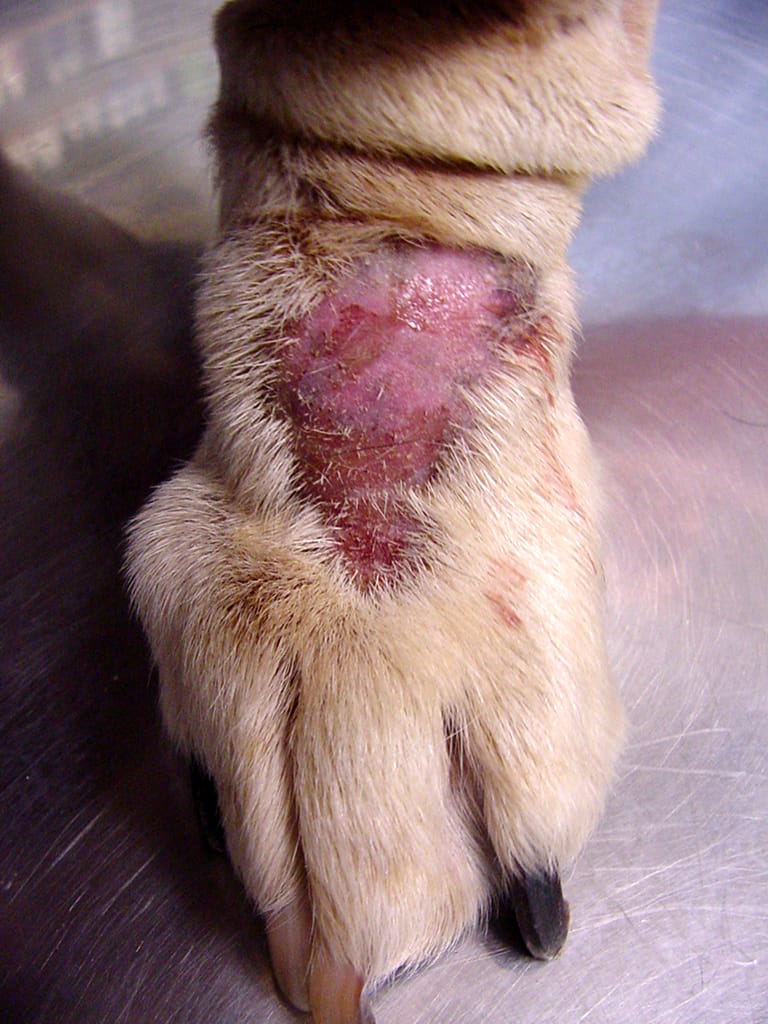
Acral lick granulomas, also known as acral lick dermatitis, are skin lesions that can affect both dogs and cats, though they are more commonly observed in dogs. This condition arises when a cat excessively licks a specific spot, typically on its leg or paw, leading to hair loss and the development of thickened, red, and moist skin. These granulomas, often around the size of a dime or nickel but capable of growing larger, are most frequently found on a cat’s lower legs or between its toes. The persistent licking behavior is often a symptom of an underlying issue, such as allergies, anxiety, pain, or boredom.
Symptoms of Acral Lick Granulomas in Cats
Owners may notice several key indicators if their cat is suffering from an acral lick granuloma. These include:
- Itchiness: The affected area may be a source of discomfort for the cat.
- Excessive licking: This is the primary behavior that leads to the development of the lesion.
- Hair loss: The constant licking will cause the fur to fall out in the affected area.
- Redness of the skin: Inflammation is a common symptom.
- Thickened skin: The skin in the lesion area becomes leathery and firm due to chronic irritation.
- Scabbing: Open sores or scabs may form.
- Moist skin: The area can appear wet and raw.
- Odor: A foul smell may be present if a secondary infection has developed.
Causes of Acral Lick Granulomas in Cats
The development of acral lick granulomas is a consequence of an underlying problem that triggers persistent licking. Potential causes include:
- Allergies: Environmental or food allergies can cause generalized itching, leading to localized over-grooming.
- Anxiety and Boredom: Stress, separation anxiety, or lack of stimulation can manifest as compulsive licking.
- Joint Pain: Discomfort from arthritis or injury can cause a cat to lick the affected limb.
- Skin Infections: Bacterial or fungal infections can cause irritation and itching.
- Parasites: Mites, such as those causing mange, can lead to intense itching.
- Trauma: An injury to the limb might cause a cat to lick the area excessively.
- Foreign Material: Splinters or other irritants lodged under the skin can cause localized discomfort.
- Insect Bites: Reactions to insect stings or bites can lead to localized irritation.
Regardless of the initial trigger, the repetitive licking leads to hair loss and the formation of a raised, ulcerated plaque known as a granuloma. The term “acral” refers to the legs and feet, the common locations for these lesions, while “lick” denotes the causative behavior. This condition does not appear to be breed-specific.
Veterinary Diagnosis of Acral Lick Granulomas
Diagnosing acral lick granulomas in cats involves a comprehensive approach by a veterinarian, including a thorough medical history, a physical examination, and various diagnostic tests. It is crucial for the veterinarian to understand the cat’s history of licking, when the behavior began, and any recent changes in its environment, diet, or household composition.
During the physical exam, the veterinarian will carefully inspect the cat’s skin for fleas, parasites, and signs of infection. The following diagnostic tests may be recommended to confirm the diagnosis and rule out other skin conditions:
- Tape Impression: This involves applying tape to the lesion, staining it, and examining it under a microscope for bacteria or yeast, indicating a skin infection.
- Fungal Culture: Used to detect ringworm, this test involves culturing a sample of fur and skin from the edge of the lesion.
- Fine Needle Aspirate and Cytology: Cells are collected from the lesion with a fine needle and examined microscopically to differentiate between benign and cancerous growths.
- Skin Biopsy: A small section of the affected skin is surgically removed and sent to a pathologist for detailed analysis, especially when the cause is unclear.
- Skin Scrapings: This test examines scraped skin cells for the presence of mites.
- Skin Culture: A swab from the lesion is cultured to identify bacteria and determine antibiotic sensitivity for resistant infections.
- Allergy Testing: Blood tests or intradermal skin tests can identify environmental allergies to allergens like pollen or dust mites.
- Food Trial: A strict limited-ingredient diet, often with novel or hydrolyzed proteins, is fed for several weeks to diagnose or rule out food allergies.
- X-rays: Radiographs of the affected limb can help identify underlying issues such as arthritis, trauma, or the presence of a foreign object causing pain and subsequent licking.
Treatment and Management of Acral Lick Granulomas
Effective treatment of acral lick granulomas hinges on several key strategies:
- Preventing Licking: This is paramount. Without preventing the cat from licking the lesion, healing is impossible. An Elizabethan collar (e-collar or cone) is often the most effective method. Topical products with a bitter taste, like Yuck! No Chew Spray, may also discourage licking, though their effectiveness can vary.
- Treating Secondary Infections: If bacterial or yeast infections are present on the granuloma due to constant moisture and irritation, they must be treated with prescribed oral and/or topical medications.
- Cold Laser Therapy: This therapeutic approach, administered by veterinary professionals multiple times a week, can help reduce inflammation at the lesion site.
- Addressing the Underlying Cause: Identifying and treating the root cause of the granuloma (e.g., allergies, anxiety, pain) is crucial for resolution and preventing recurrence. Treatment plans will vary significantly based on the identified cause.
- Surgery: In some cases, surgical removal of the granuloma may be considered, but it is typically a last resort, especially if the underlying cause remains untreated, as licking and recurrence are possible post-surgery.
The recovery period for acral lick granulomas can range from weeks to months. Consistent prevention of licking, prompt treatment of any secondary infections, and addressing the underlying cause are vital for successful healing. It is important to monitor the lesion daily for improvement and report any worsening symptoms, such as increased redness, swelling, or odor, to your veterinarian immediately. Bandaging the lesion is generally not recommended as it can trap moisture, potentially exacerbating inflammation and infection.
Preventing Acral Lick Granulomas
Early intervention is key to preventing the development and worsening of acral lick granulomas. If you observe your cat licking an area excessively, immediately fit it with a properly sized e-collar to stop the behavior. Carefully examine the site for any signs of trauma, such as wounds, crusts, hair loss, redness, swelling, or odor. Schedule a veterinary appointment as soon as possible, ideally within a few days of noticing the excessive licking, to ensure prompt diagnosis and treatment. Addressing the behavior early can prevent the formation of a more severe granuloma.
Featured Image: iStock.com/cunfek
